HD DVD vs Blu-ray: Key Differences and Why Blu-ray Won

Summary: Blu-ray won over HD DVD because it offered higher disc capacity, stronger studio and console support, and a larger long-term hardware ecosystem. HD DVD was cheaper to manufacture and region-free, but it was discontinued in 2008 and now mainly matters to collectors or users with legacy discs and players.
HD DVD and Blu-ray were both high definition disc formats designed for HDTV playback, but they are not compatible with each other. HD DVD movies cannot be played on a Blu-ray player, and Blu-ray discs cannot be played on an HD DVD player.
Blu-ray eventually became the dominant home video format after HD DVD production was officially discontinued on February 19, 2008. With larger storage capacity, stronger industry support, and better current device compatibility, Blu-ray remains the main choice today, while HD DVD is mostly found in used or remaining stock markets. In this article, I will compare HD DVD vs Blu-ray in terms of storage capacity, playback hardware, region coding, movie availability, and current use cases.
Quick Verdict: Is Blu-ray Better than HD DVD?
Blu-ray is the practical winner today. Both HD DVD and Blu-ray were high-definition optical disc formats, and both could support 1080p HD video. The difference is that Blu-ray offered larger disc capacity, stronger studio support, and a much larger hardware ecosystem. HD DVD is now a discontinued legacy format that mainly matters to collectors or users who still own working HD DVD players.
HD DVD did have real advantages during the format war. It used a disc structure closer to DVD, was cheaper to manufacture, and did not use traditional region coding. But those advantages were not enough once the market shifted toward Blu-ray hardware, Blu-ray movie releases, and Blu-ray retail support.
What Are HD DVD and Blu-ray?
HD DVD and Blu-ray were competing high-definition disc formats in the mid-2000s. They were not the same as standard DVD, and they were not compatible with each other. A Blu-ray player normally cannot play HD DVD discs, and an HD DVD player cannot play Blu-ray discs.
What is HD DVD?
HD DVD was a high-definition optical disc format backed mainly by Toshiba. It was designed as a successor to DVD and used a disc structure that was easier for some manufacturers to adapt from existing DVD production lines. A single-layer HD DVD held 15GB, and a dual-layer HD DVD held 30GB.
HD DVD supported 1080p HD video and advanced audio formats, so the format was technically capable of high-quality home video playback. Its problem was not that it could not deliver HD movies. Its problem was that the market, studios, retailers, and hardware ecosystem moved away from it.
What is Blu-ray?
Blu-ray is the high-definition optical disc format that became the long-term physical HD standard. A single-layer Blu-ray disc holds 25GB, and a dual-layer Blu-ray disc holds 50GB. This larger capacity gave Blu-ray more room for higher-bitrate video, lossless audio, bonus features, and longer movies.
Blu-ray later became the surviving physical HD disc standard and formed the base for newer disc formats such as Ultra HD Blu-ray. The reasons behind that shift are explained in the format-war section below.
HD DVD vs Blu-ray: What Are the Differences?
The main differences between HD DVD and Blu-ray are capacity, bitrate headroom, ecosystem support, player compatibility, and current availability. The two formats could both deliver 1080p HD video, but Blu-ray's larger storage capacity and stronger industry support made it more practical for long-term use.
| Feature | Blu-ray | HD DVD |
| Storage Capacity | 25GB single-layer, 50GB dual-layer | 15GB single-layer, 30GB dual-layer |
| Video Resolution | Supports 1080p HD video | Supports 1080p HD video |
| Video Bitrate | Higher maximum video bitrate headroom | Lower maximum video bitrate headroom |
| Video Codecs | MPEG-2, AVC/H.264, VC-1 | MPEG-2, AVC/H.264, VC-1 |
| Audio Support | LPCM, Dolby TrueHD, DTS-HD Master Audio support on many releases | LPCM, Dolby TrueHD, and optional DTS-HD Master Audio support |
| Region Coding | A, B, and C region system; some discs are region-free | No traditional region code restrictions |
| Player Compatibility | Works with Blu-ray players, Blu-ray drives, many game consoles, and UHD Blu-ray players | Requires HD DVD player or compatible legacy hardware |
| Hardware Ecosystem | Large ecosystem supported by players, drives, PS3, and later UHD Blu-ray hardware | Discontinued hardware ecosystem |
| Current Availability | Still widely available, including many new and catalog releases | Discontinued in 2008; mostly second-hand or collector market |
| Best Use Today | Physical HD movie playback, collection building, disc backup, and home theater use | Collector use, legacy playback, and unavailable editions |
Why Did Blu-ray Win the Format War?
Blu-ray won the format war because its technical advantages aligned with stronger market support. HD DVD had real strengths, including lower manufacturing barriers and region-free playback, but Blu-ray gained the hardware, studio, and retail momentum needed for long-term survival.
Larger Storage Capacity
Blu-ray's 25GB and 50GB disc structure gave it more room than HD DVD's 15GB and 30GB structure. This difference mattered for long movies, bonus content, high-bitrate video, and multiple audio tracks. Storage capacity did not automatically make every Blu-ray release better, but it gave studios more space to work with.
PlayStation 3 and Hardware Ecosystem
The PlayStation 3 included a Blu-ray drive, which placed Blu-ray playback hardware into millions of homes. This hardware base helped Blu-ray move beyond standalone players and gave the format a stronger path into the living room. HD DVD did not have the same console advantage.
Studio, Retailer, and Rental Support
Major studio and retail decisions pushed the market toward Blu-ray. Warner Bros. moved to Blu-ray exclusivity in early 2008, and major retail and rental channels also shifted support away from HD DVD. Once movie availability and store placement moved toward Blu-ray, HD DVD became much harder to sustain.
Toshiba's HD DVD Exit in 2008
Toshiba officially ended its HD DVD business in 2008. That decision effectively ended the format war. After that point, HD DVD discs and players remained only as existing stock, second-hand products, and collector items, while Blu-ray continued as the surviving physical HD disc format.
Can You Still Use HD DVD Today?
HD DVD can still work, but only in a narrow legacy setup. Before keeping or buying HD DVD discs, the first thing to check is whether you still have a reliable player or compatible computer drive.
Can Blu-ray Players Play HD DVD?
Most Blu-ray players cannot play HD DVD discs. The two formats use different disc systems, so a normal Blu-ray player should not be treated as an HD DVD player. If you still own HD DVD discs, you need an HD DVD player, a compatible HD DVD computer drive, or another device that explicitly supports HD DVD playback.
Are HD DVD Discs Still Worth Keeping?
HD DVD discs may still be worth keeping when they are part of a collection, include an edition that is hard to find on Blu-ray, or have personal value to the owner. They are not ideal for everyday playback unless the player is still reliable and easy to connect to a modern TV.
What to Check Before Buying Old HD DVD Discs or Players
Before buying old HD DVD hardware, check the player condition, remote control, HDMI output, disc tray, drive noise, and return policy. Before buying old discs, check disc condition, edition details, playback notes, and whether the movie is already easier to find on Blu-ray or digital platforms.
Best Software to Convert HD DVD/Blu-ray to Digital
After comparing HD DVD and Blu-ray, the choice today is no longer about which format to buy new. Blu-ray has clearly become the format most users still own, play, and archive. The more practical question is how to keep a Blu-ray collection accessible when discs can be scratched, drives may become harder to find, and not every device has a Blu-ray player. Blu-ray ripping software solves this problem.
DVDFab Blu-ray Ripper is designed for users who want more than simple disc playback. It can load Blu-ray discs, Blu-ray ISO files, and Blu-ray folders, then convert the main movie or selected titles to common video and audio formats such as MP4, MKV, M2TS, MP3, and FLAC. It also gives you control over subtitles, audio tracks, output profiles, resolution, bitrate, and file size, which is useful when you want a smaller file for mobile playback or a higher quality copy for local media storage. For users who still collect Blu-ray discs, it offers a more flexible way to keep movies playable across modern devices.
- Compatible with both Windows and Mac OS system.
- Best Blu-ray Decrypter that supports the newest released copy-protected Blu-rays.
- Rip Blu-ray discs, ISO images or folders to 1000+ 2D/3D video & audio formats.
- Support 260+ preset devices as the output, like Apple, Huawei, Google, etc.
- Customize the output video with Advanced Settings and built-in video editor.
- Rip Blu-ray with lossless video and audio quality.
- Support batch Blu-ray conversion at GPU-hardware accelerated speed.
Similarly, you can convert DVD and HD DVD to a digital format using DVDFab DVD Ripper. This software can also rip and convert any copy-protected DVD (ISO file) to various digital formats, including MP4, AVI, MOV, MPEG, FLV, WAV, MP3, and others. For your easy use, DVDFab integrate the Blu-ray Ripper and DVD Ripper features into one "Ripper" module.
How to Convert HD DVD/Blu-ray to Digital with DVDFab Blu-ray Ripper:
Step 1: Launch DVDFab and load Blu-ray disc/ISO/folder
Run DVDFab 13 and opt for the Ripper module. Insert BD into the external Blu-ray drive, navigate it through the Add button, or drag and drop an ISO file or folder onto the main UI.
Free Download Windows 11/10/8.1/8/7
Free Download macOS 10.13 - 15.x
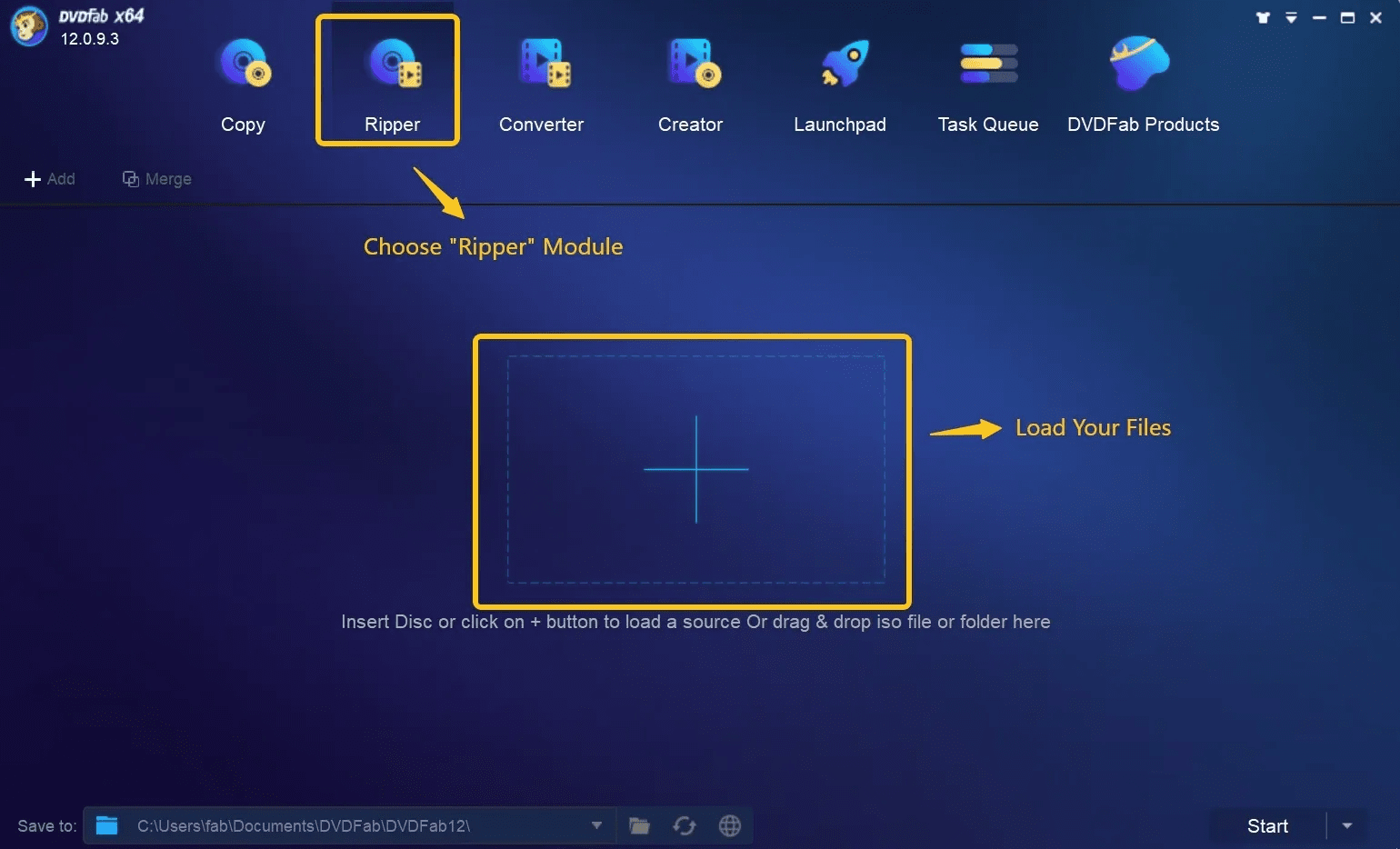
Step 2: Choose one profile and customize the output video.
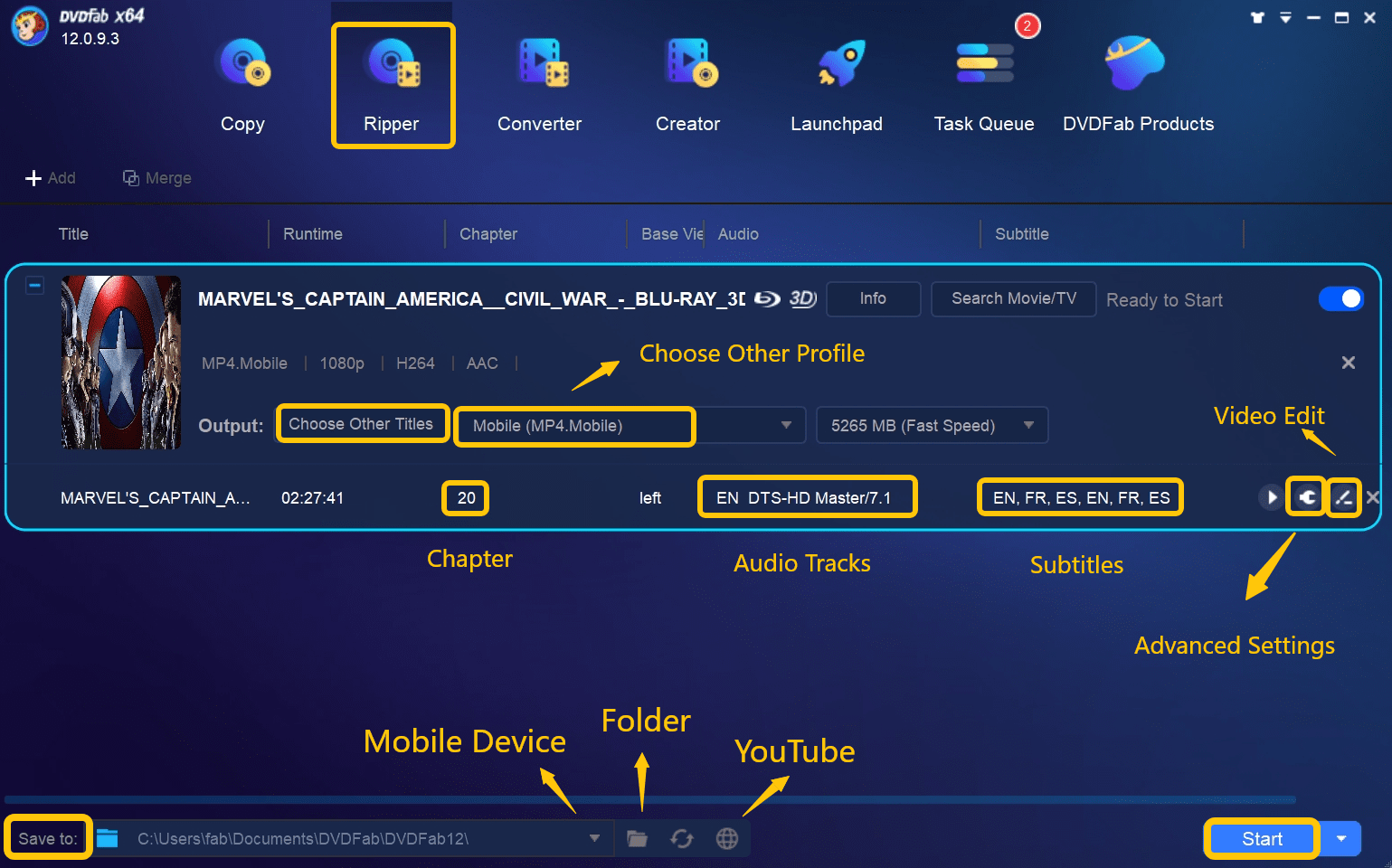
Click Choose Other Profile to select your desired profile. Select the titles, audio tracks, and subtitles you want to retain. Turn to the 'Advanced Settings' and built-in 'Video Editor' to customize the output video.
Step 3: Start to rip a Blu-ray
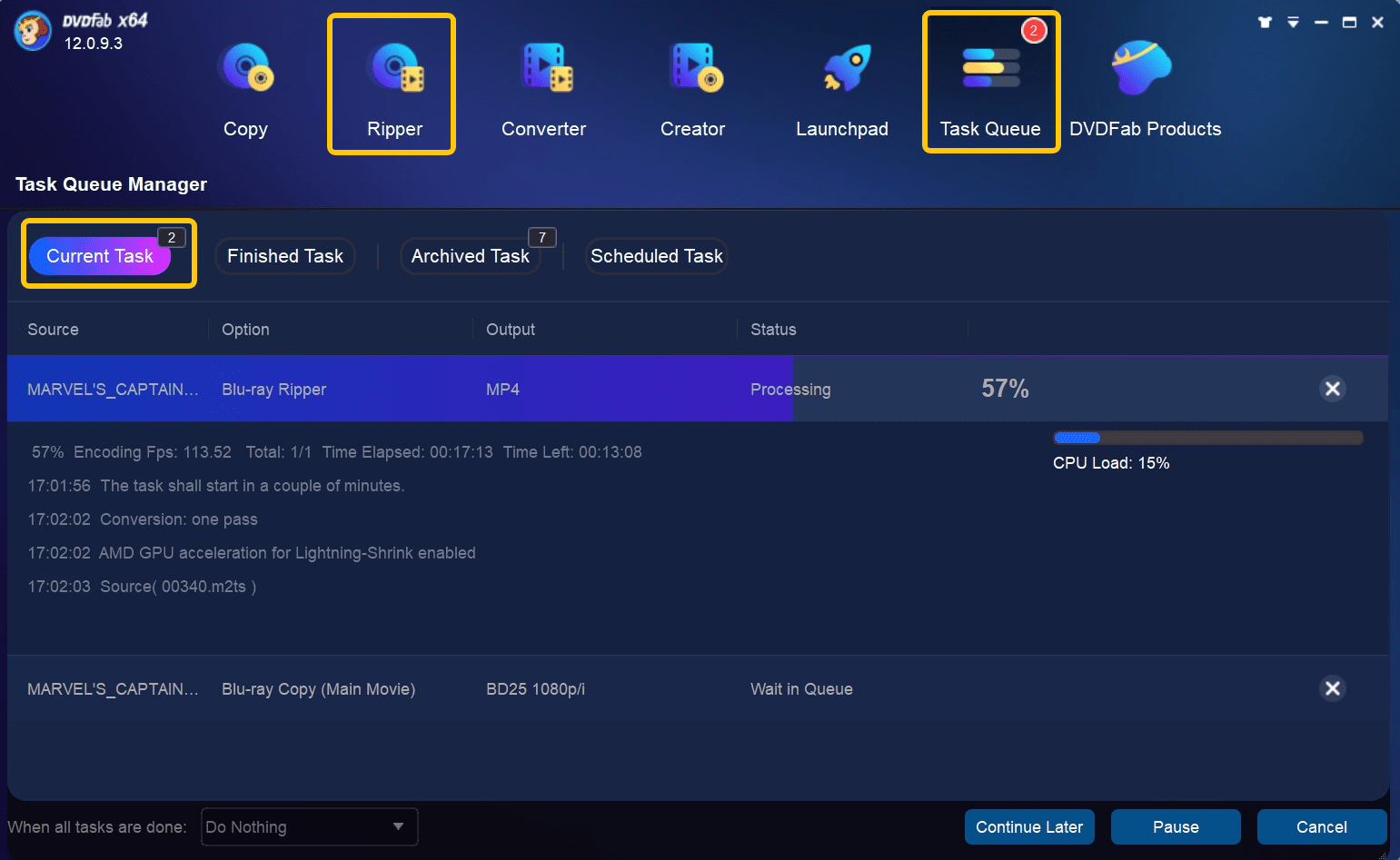
Save your video on your HDD or Mobile device. Click the Start button, and DVDFab will promptly begin ripping Blu-ray and show detailed progress information.
FAQs
Is HD DVD the same as a standard DVD?
No. HD DVD was a high-definition optical disc format, while standard DVD is a lower-capacity standard-definition disc format. HD DVD used a DVD-like structure, but it required HD DVD playback hardware and was not the same as a normal DVD.
Does HD DVD look worse than Blu-ray on every movie?
Not always. Both formats can support 1080p HD video, so the visible result depends on the movie transfer, codec, bitrate, and mastering. Blu-ray had more storage and bitrate headroom, but a well-authored HD DVD release could still look good.
Are HD DVD discs region-free?
HD DVD did not use the same traditional region coding system as Blu-ray. However, region-free playback does not solve the main problem today: you still need working HD DVD hardware to play the disc.
Should I buy HD DVD movies today?
HD DVD movies are mainly worth buying for collection value, unavailable editions, or use with a working HD DVD player. For normal playback and long-term access, Blu-ray is usually the safer choice because players, drives, and replacement discs are easier to find.
Conclusion
HD DVD vs Blu-ray now matters less as a buying decision and more as a compatibility question. Blu-ray is easier to play, collect, and preserve because current players, drives, and movie releases still support the format, while HD DVD depends on aging hardware and second hand discs. If you own both formats, check playback hardware first, then decide whether each disc is worth keeping for collection value or content availability. For digital backup, DVDFab Blu-ray Ripper can help you convert Blu-ray discs to formats such as MP4, MKV, and M2TS for easier playback and personal media storage.

![How to Rip and Extract Hi-Fi Audio from Blu-rays? [2026 Update]](https://r4.dvdfab.cn/upload/resource/en/how-to-convert-blu-rays-to-hi-fi-audio-files-AGcW.jpg) How to Rip and Extract Hi-Fi Audio from Blu-rays? [2026 Update]By Diana Smith - Sep 1, 2026
How to Rip and Extract Hi-Fi Audio from Blu-rays? [2026 Update]By Diana Smith - Sep 1, 2026 How to Convert BDMV to MKV/MP4 on Windows or macOS: 6 Tested ToolsBy Diana Smith - Aug 31, 2026
 How to Rip 3D Blu-ray to MVC, SBS or TAB for Quest 3, Projectors & PCBy Wenny Yan - Aug 26, 2026
 How to Convert 3D Blu-ray to SBS 3D MKV/MP4: Detailed Guide in 2026By Diana Smith - Aug 18, 2026