How to Rip DVD to Facebook and Upload the Video in 2026

Summary: This guide explains how to convert an authorized DVD clip into a Facebook-ready MP4, choose between DVDFab DVD Ripper and HandBrake, and publish through Facebook Reels. It also covers aspect ratio, captions, audio checks, partial reads, missing files, and destination-specific upload failures.
Table of Contents
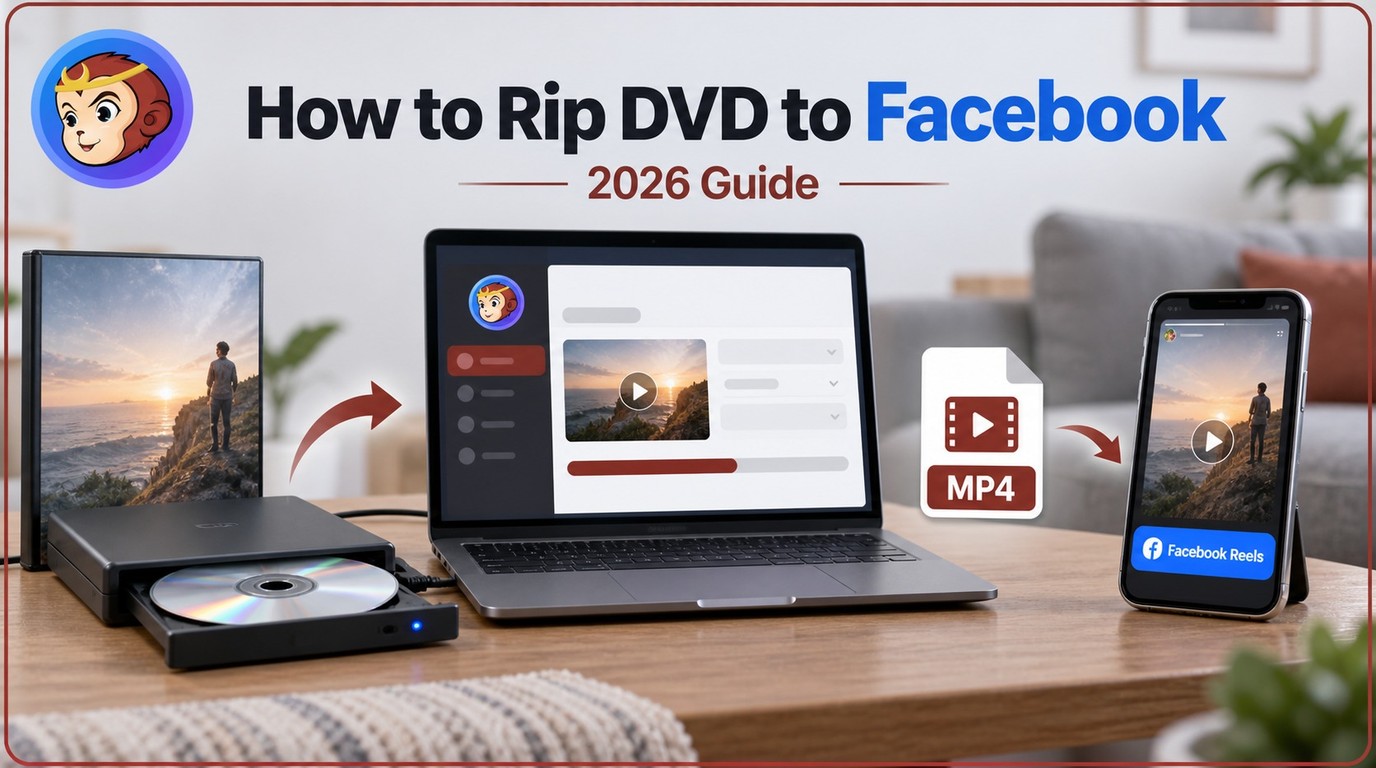
A DVD cannot be posted directly to Facebook. To rip DVD to Facebook, you first need to convert the disc into a compatible video file, confirm that you have the right to share the material, and inspect the finished clip before uploading it. The job has two stages: create a Facebook-ready MP4 on a computer, then publish the authorized clip through Facebook Reels.
When I plan how to rip DVD to Facebook, I separate two questions: can the disc be read, and can the footage be published? That distinction prevents a settings hunt. The sections below cover tool choice, export settings, Reels upload, and the failure checks that matter.
Rip DVD to Facebook in Two Stages
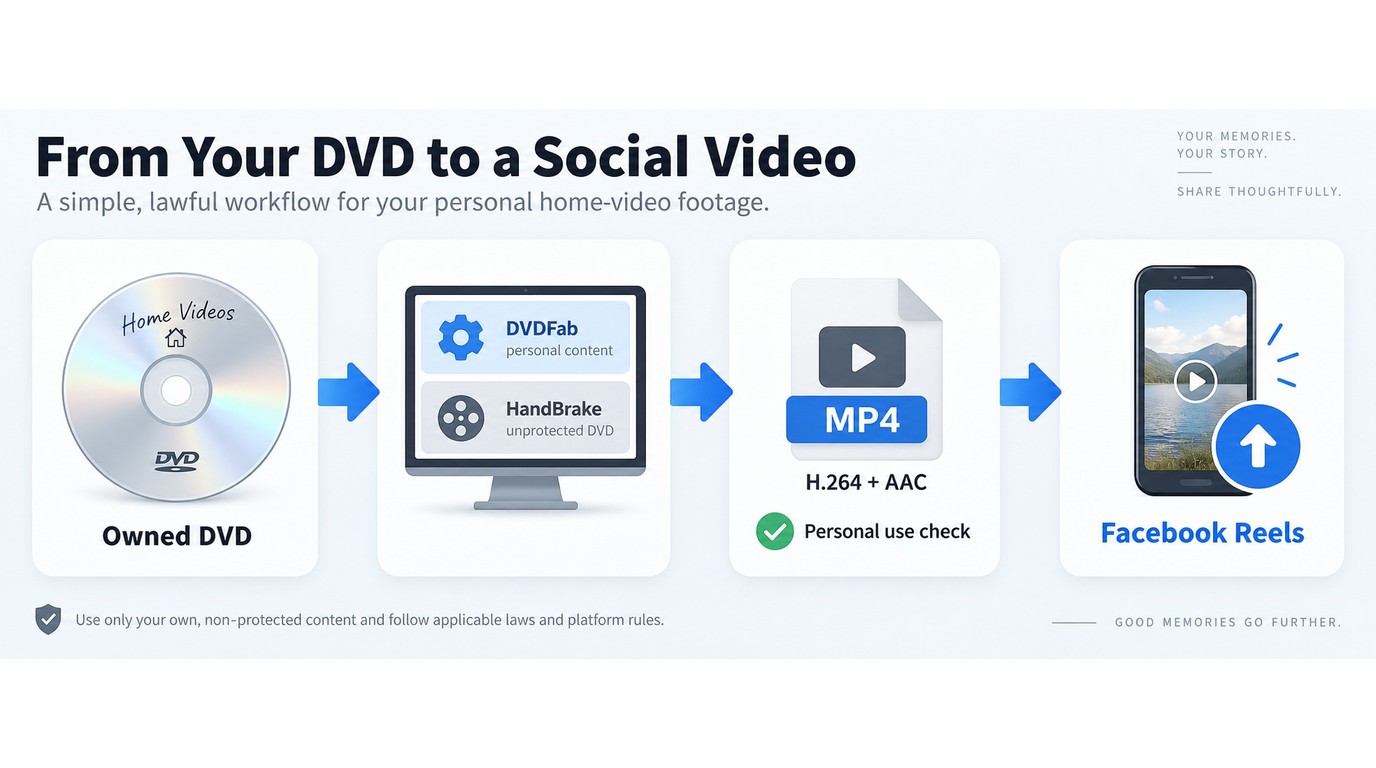
The task has two stages: convert the disc to a Facebook-ready MP4, then upload footage you are entitled to publish. Choose the conversion tool by disc type, but settle the sharing rights before you begin.
Choose a Tool for the Disc Type
HandBrake works with homemade or unprotected DVDs that your drive can read. A commercial or copy-protected DVD needs DVD ripper software with disc-reading support; this guide to rip copy-protected DVDs explains that narrower disc task.
My deciding check is the title list. If the software cannot identify the correct movie or recorded segment, its export presets will not rescue the result.
Confirm You Have Upload Rights
Post footage you created, material covered by explicit permission, or content you are otherwise authorized to share. Do not redistribute commercial movie, concert, or television footage without the necessary rights. Follow applicable law and Facebook terms; the answer is specific to the material and intended use.
Facebook-Ready MP4 Settings
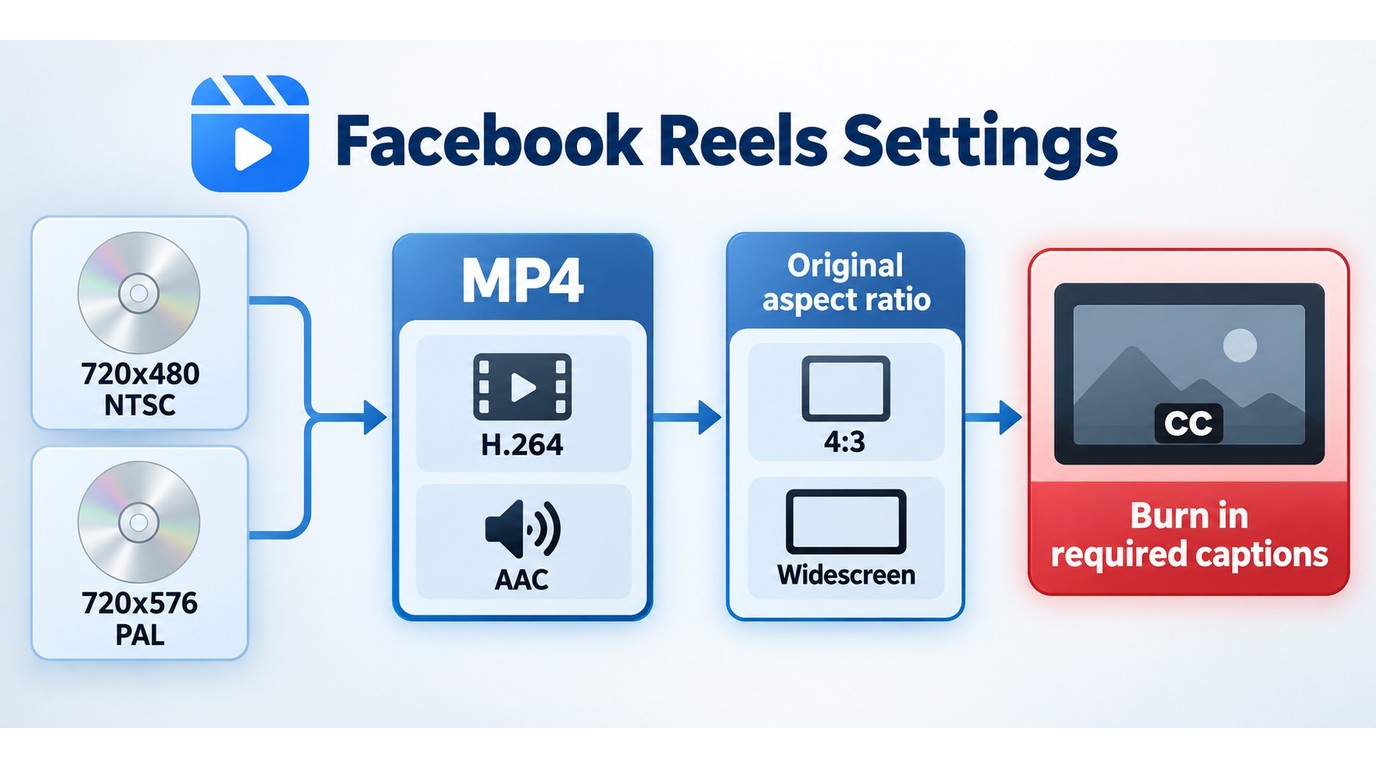
A Facebook-ready MP4 pairs the MP4 container with H.264 video and AAC audio. For a Facebook Reels upload, preserve the DVD's aspect ratio and make required captions part of the picture.
Video and Audio Settings
Facebook recommends 1080p for Reels, but a DVD upscale does not recover detail that the source never captured. NTSC DVD source resolution is 720×480, while PAL is 720×576. Use H.264 video and AAC audio for broad playback compatibility.
| Setting | Compatible choice | Editing note |
| Container | MP4 | Upload-ready wrapper |
| Video codec | H.264 | Broad device playback |
| Audio codec | AAC | Prevents silent playback |
| Aspect ratio | Match the DVD | Avoid stretching |
| Resolution | Keep source detail | 1080p adds no missing detail |
| Subtitles | Burn in required captions | Soft tracks may disappear |
In a July 2026 run on Windows 10 with an Intel i7-6700, RTX 4060 Ti, and 16GB RAM, DVDFab encoded the 6.13GB 8mile.iso source to H.264 MP4 in 5m31s. That measured result belongs to this hardware and source, not to every DVD.
Aspect Ratio, Resolution, and Subtitles
Correct aspect ratio and a clean encode matter more than inflating pixel dimensions. Keep 4:3 footage at 4:3 and widescreen footage at its original shape; stretching either one makes faces and titles look wrong.
Choose one intended subtitle track and burn it into the clip when viewers must see it. The distinction between burning captions and choosing to extract subtitles from a DVD matters because Facebook does not expose a DVD's subtitle menu.
How to Rip Copy-protected DVDs to Facebook with DVDFab
A copy-protected DVD needs DVD ripper software that can read the disc before conversion. DVDFab DVD Ripper processes protected DVD content for authorized personal backups and combines title detection, track selection, editing, and MP4 export.
- Process protected DVD content, including CSS and Region Code, for authorized personal backups
- Convert DVD sources to MP4 for Facebook upload and other supported formats DVD to MP4
- Use GPU acceleration on supported hardware; speed reflects the CPU, GPU, memory, drive, and output settings
- Select audio and subtitle tracks, trim scenes, crop the frame, and adjust output settings
- Input: DVD disc, ISO, and DVD folder
- Output: MP4, MKV, AVI, WMV, MOV, FLV, M2TS, WebM, MP3, FLAC, and more
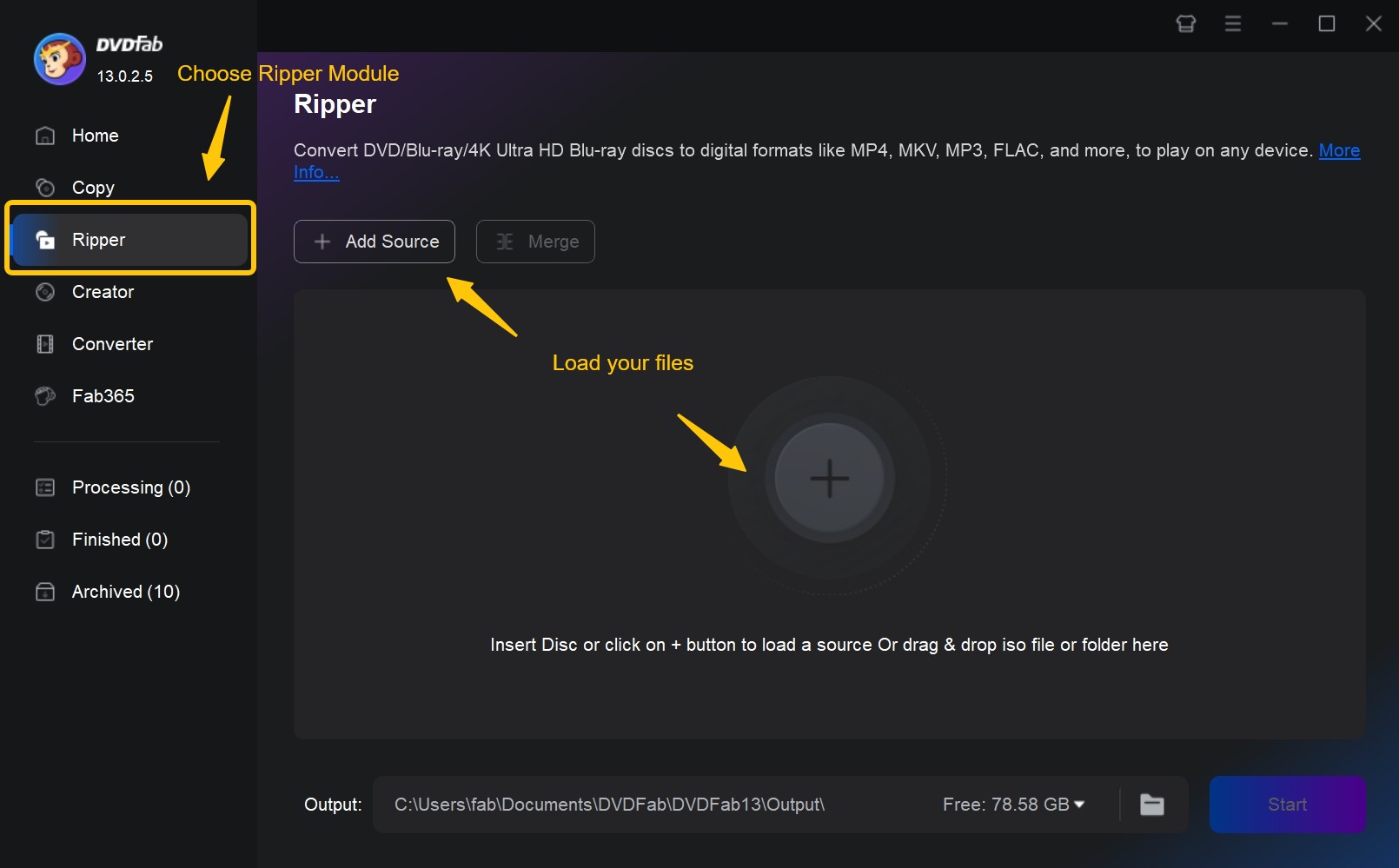
Step 1. Launch DVDFab and load the DVD source
Install DVDFab, open the Ripper module, and insert the authorized DVD. You can also load an ISO or DVD folder. Select the title that matches the intended movie or scene before changing output settings.
Free Download Windows 11/10/8.1/8/7
Free Download macOS 12 or newer
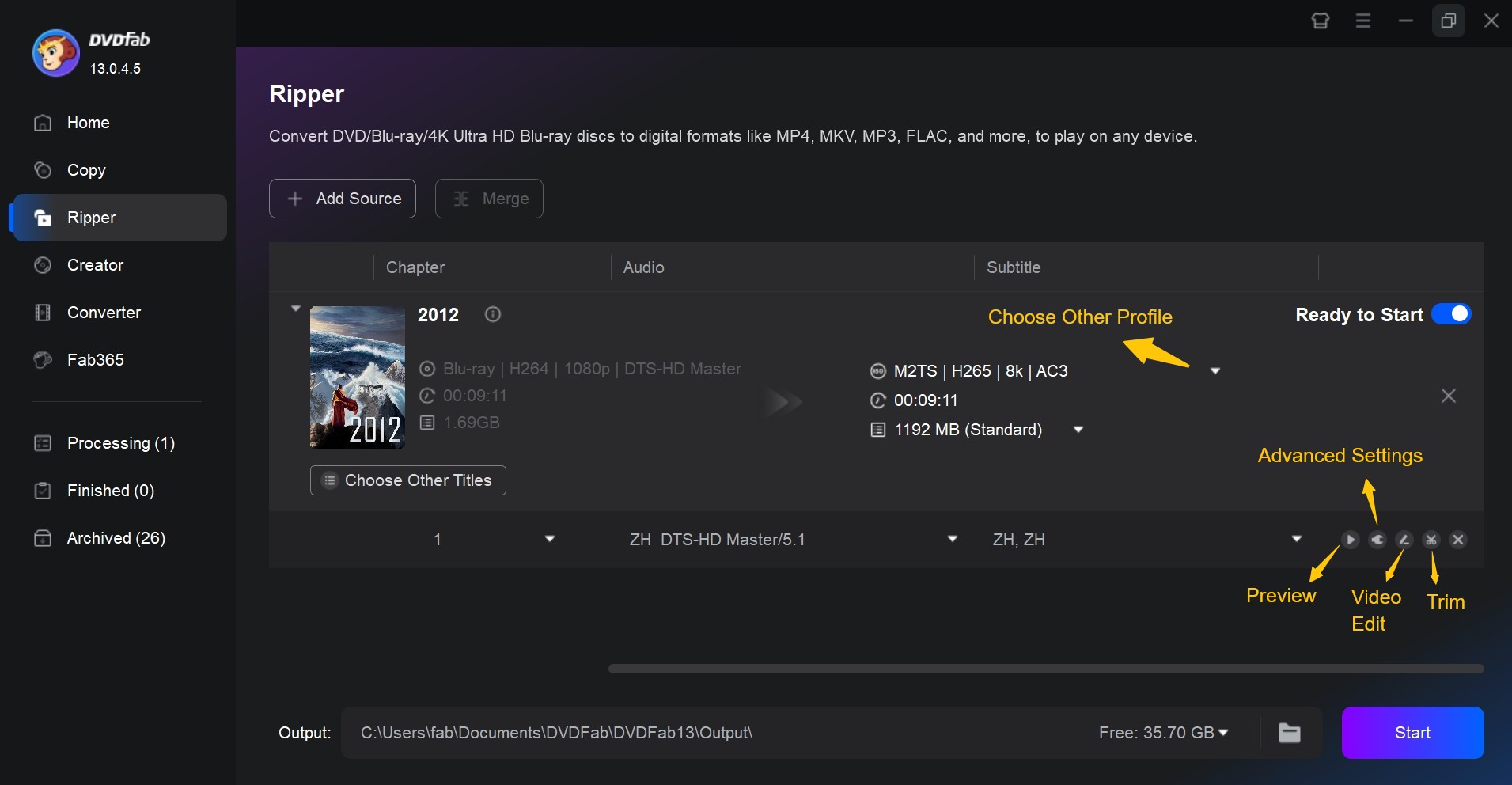
Step 2. Choose MP4 and Edit the Clip
Choose the MP4 profile when you want to convert DVD to MP4 for Facebook. Select the intended audio track and subtitle track before opening the editor.
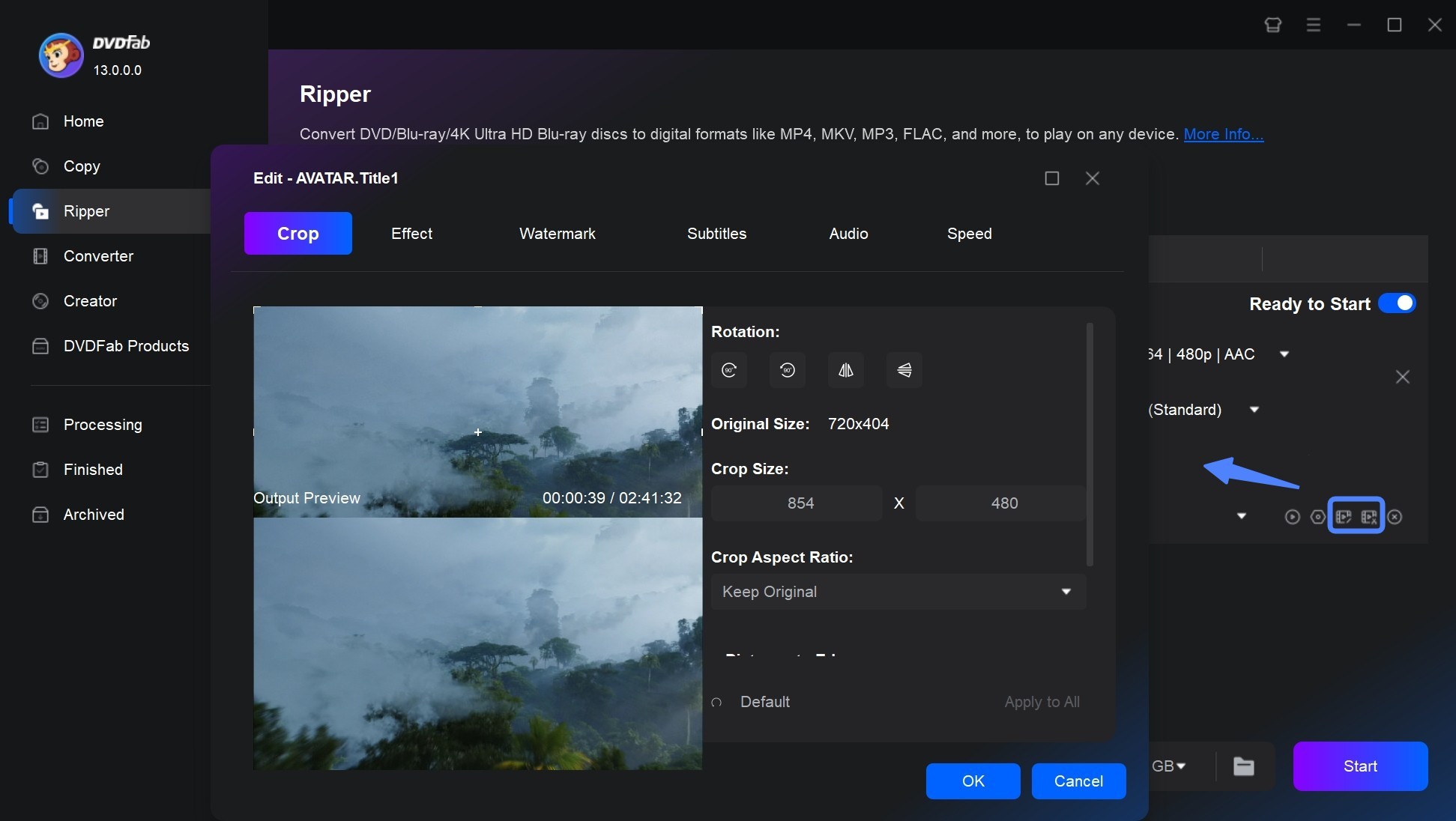
Trim the shareable scene, crop unwanted frame areas, and add text or captions when the clip needs them. Keep the DVD's original aspect ratio unless the framing itself needs correction.
Step 3. Start the Conversion
Choose a local destination and start the task. GPU acceleration supports NVIDIA CUDA, AMD VCE/AMF, Intel Quick Sync, and Apple Silicon VideoToolbox on compatible hardware, so processing time reflects the computer, drive, source, and output settings.
Play the completed MP4 from beginning to end. Check the picture, chosen audio, captions, scene boundaries, and aspect ratio before moving to Facebook.
Rip DVDs to Facebook for Free with HandBrake
HandBrake covers free DVD conversion when the source is homemade or unprotected and readable by the drive. It converts DVD to MP4 on Windows, macOS, and Linux, but protected commercial sources need a disc tool designed for that source.
- Convert readable homemade or unprotected DVDs to MP4 with H.264 or H.265
- Provide device presets and direct control over video, audio, and subtitle settings
- Run as free, open-source software on Windows, macOS, and Linux
- Include cropping, range, and chapter controls for selecting a Facebook clip
HandBrake is actively maintained and is the sensible choice when the disc is already readable and you want detailed encode controls without a license fee. It is not designed to supply the protected-disc reading step.
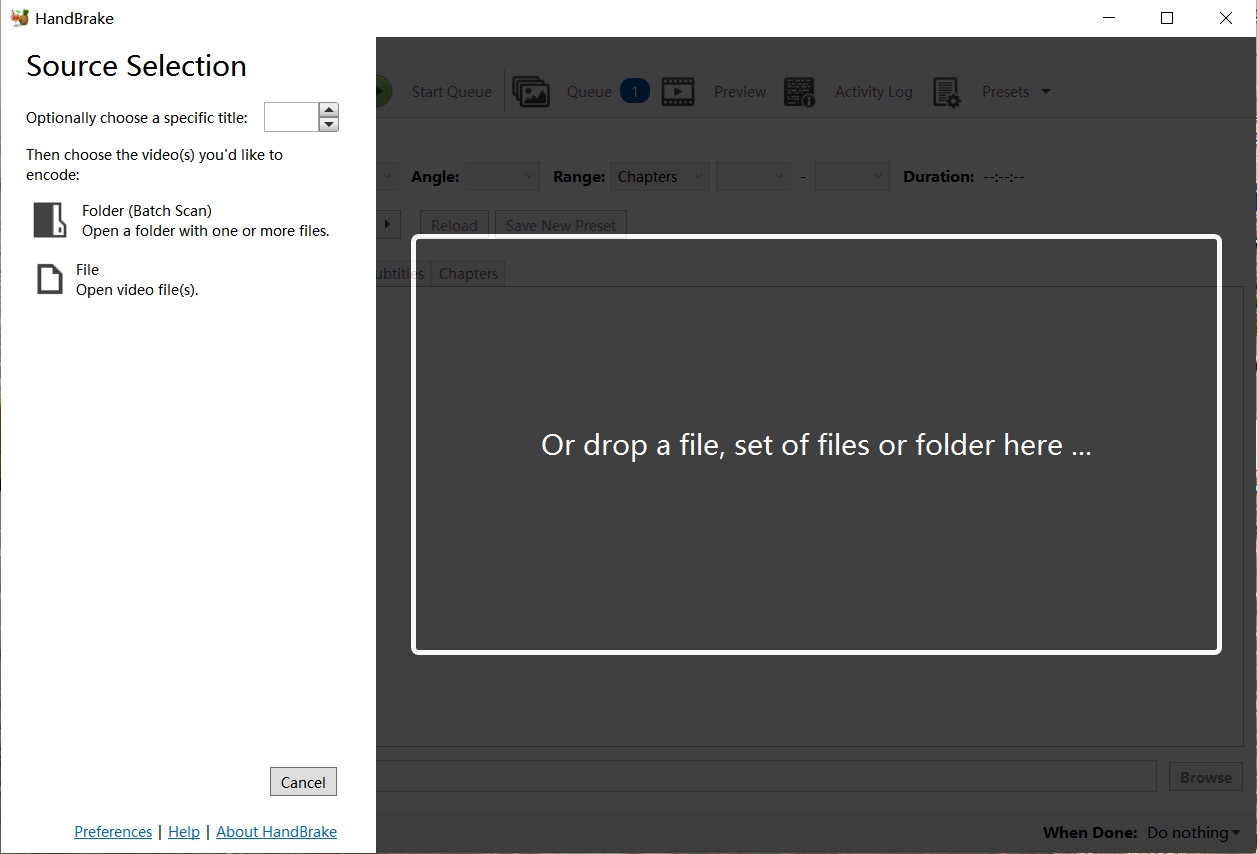
Step 1. Install HandBrake and Open the Disc
Download HandBrake from its official website, install it, and insert the DVD. Open the disc or an existing VIDEO_TS folder, wait for the title scan, then select the title that matches the clip.
Step 2. Set MP4, Audio, and Subtitle Options
Set the container to MP4, video to H.264, and audio to AAC. Select the intended audio track, choose a single subtitle treatment, match the source aspect ratio, and use the chapter or range controls to isolate the scene.
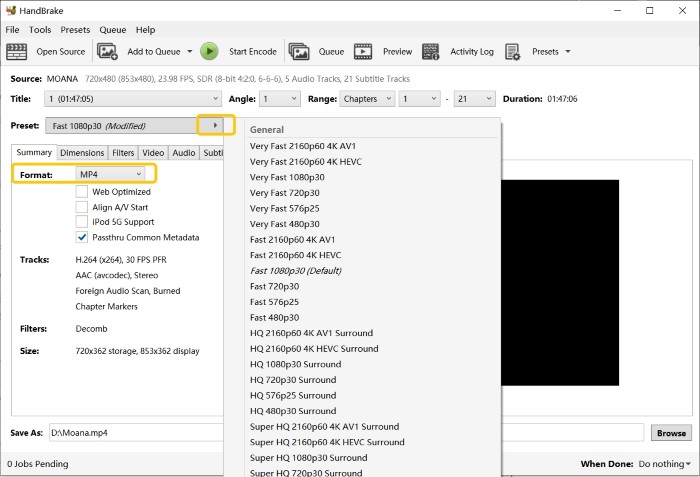
Crop black bars only when they sit outside the intended picture. For required dialogue captions, burn one selected track into the video so it remains visible after upload.
Step 3. Encode and Check the File
Choose the destination and start the encode. When it finishes, play the MP4 from start to end and inspect the audio track, captions, brightness, aspect ratio, and cut points. A readable source and a completed check matter more than a long preset list.
Upload the Video Through Facebook Reels
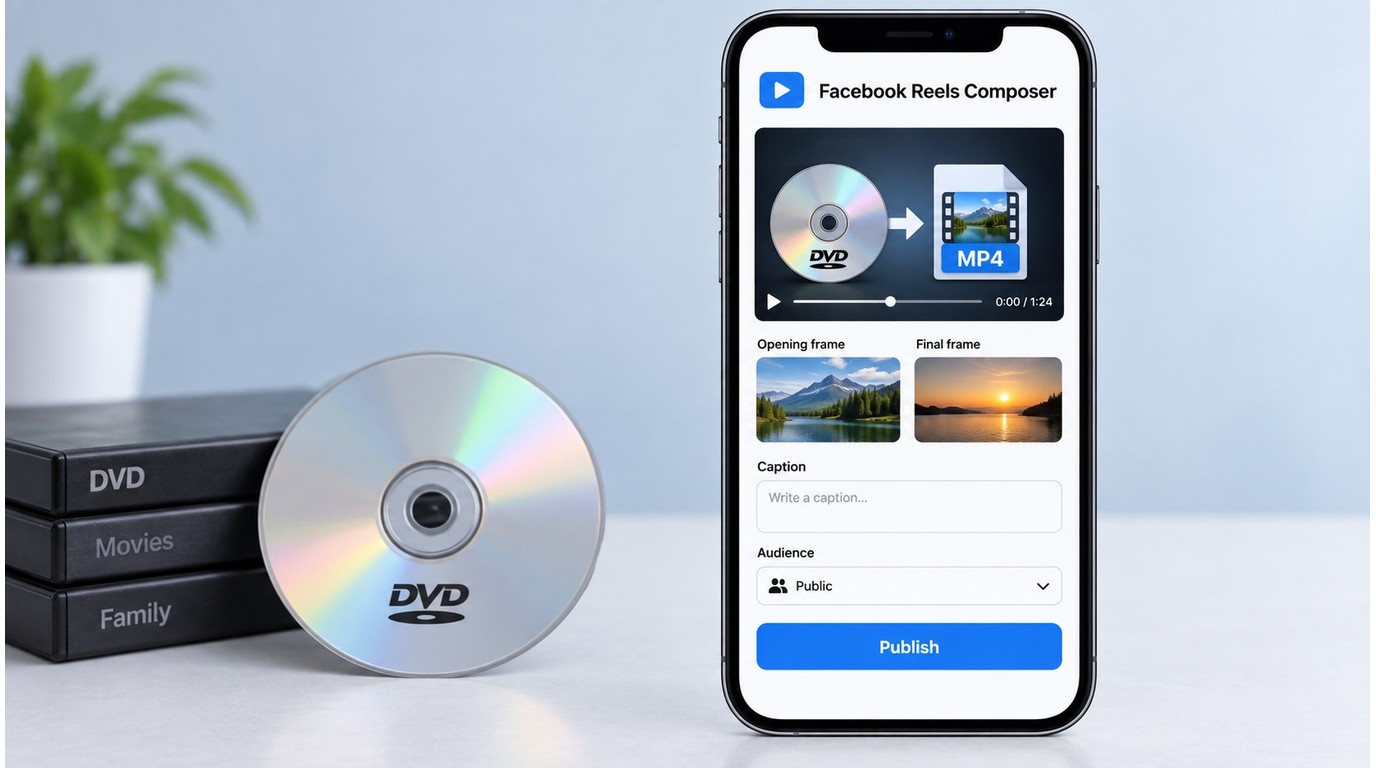
As of September 2026, Facebook shares every newly posted video as a Reel. A Facebook video upload no longer needs a separate feed-video choice, and Facebook does not impose separate Reels length or format restrictions; audience controls remain available.
Select the Converted Video
Open the Facebook profile, Page, or group where the clip belongs and start the Reels composer. Select the checked MP4 from the computer or phone, then preview the opening frame, final frame, picture shape, and sound.
Set the Audience and Publish
Add a concise caption, select the audience offered for that destination, and publish. Use the audience control as a distribution choice, not as a substitute for upload rights.
Fix Conversion and Facebook Upload Failures
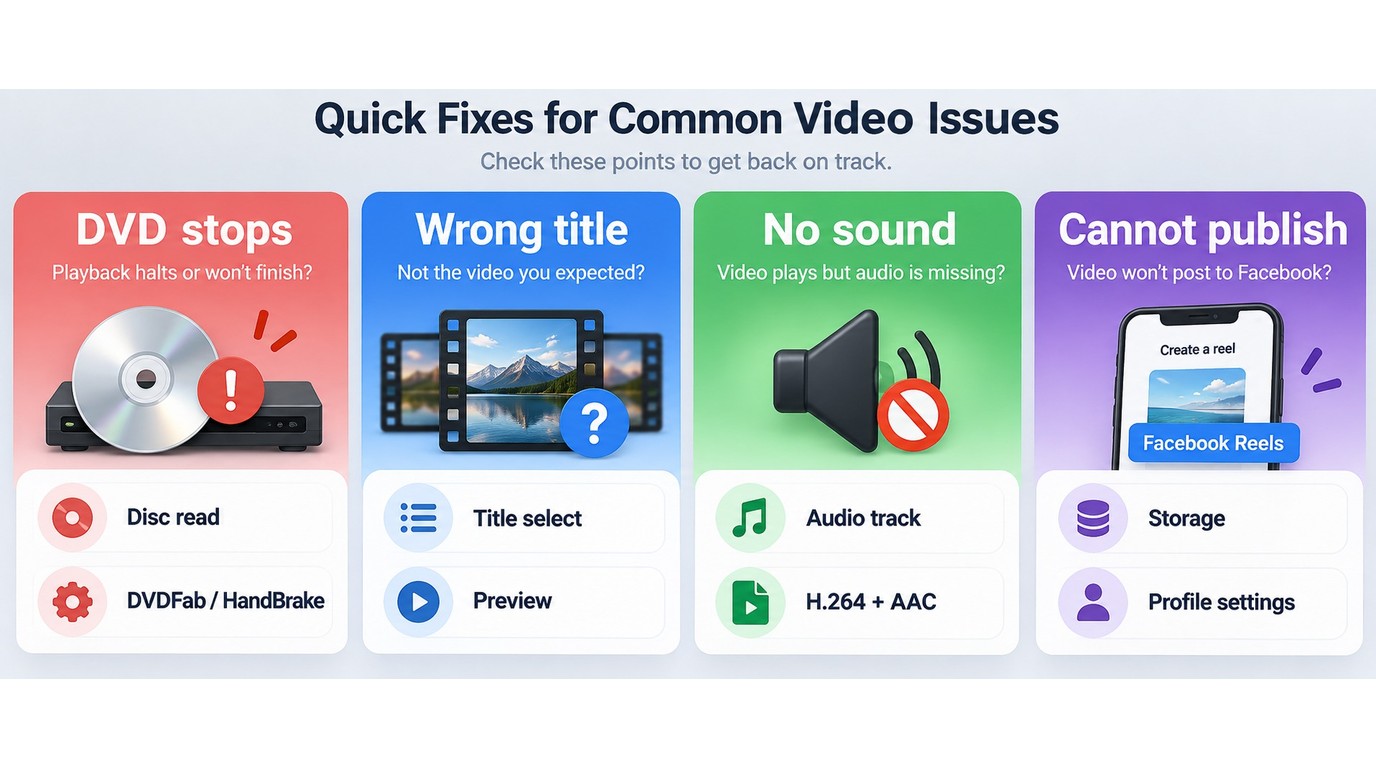
DVD conversion troubleshooting starts by naming the symptom. A disc read that stops, a defective output file, and a destination-specific Facebook video upload need different checks.
DVD Stops or Loses Audio
- The rip stops halfway: clean the disc, reseat the optical drive, and retry the same title. If an ISO made from that disc completes while the physical disc fails, focus on the disc or drive read.
- The wrong title appears: compare the runtimes and chapter layout, then select the title that matches the program instead of the first item in the list.
- The MP4 has no sound: return to the audio panel, choose the intended language track, encode a short sample, and play it outside the converter.
Our July 2026 Windows 10 measurements used the same 6.13GB ISO, i7-6700, RTX 4060 Ti, and 16GB RAM for both output modes, and both runs completed from that readable image. A physical disc that stops halfway must be diagnosed at the read stage before codec changes.
Subtitles, File Size, or Quality Look Wrong
- Several subtitles overlap: select one track. Burn it in when the caption must remain visible; otherwise leave captions out of the social clip.
- The file is unexpectedly large: confirm that H.264 encoding is selected instead of a passthrough or near-source-size output, then encode a short sample with a lower quality target.
- The picture looks dark or grainy: compare a short sample with the DVD before applying filters. A container change cannot repair a damaged read or restore missing image detail.
- Facebook softens the picture: return to the original aspect ratio and upload a clean H.264/AAC export. Enlarging DVD pixels does not protect the clip from Facebook's processing.
Facebook Cannot Find or Publish the File
- The mobile picker cannot see the MP4: save the file to local device storage and allow Facebook access to the relevant photo or media folder.
- The upload reaches completion but does not publish: try the same authorized clip on another profile, Page, or group you manage. If it publishes there, inspect the original destination's permissions or account status.
- The MP4 fails everywhere: play it locally from start to end, confirm H.264 video and AAC audio, then export a short sample to isolate the file from the account.
No format switch can fix an incomplete disc read or a destination-specific publishing restriction. Test the stage that actually failed.
FAQs
Is it legal to rip and upload a DVD clip to Facebook?
Upload footage you created or material you are authorized to share. Do not redistribute commercial movie or concert footage without the necessary rights, and follow applicable law and Facebook terms.
Can I convert a homemade DVD for Facebook for free?
Yes. HandBrake converts readable homemade or unprotected DVDs to MP4 on Windows, macOS, and Linux without a license fee.
What should I use for a commercial or protected DVD?
Use DVD ripper software that processes protected DVD content for an authorized personal backup. DVDFab adds title detection, track selection, editing, and conversion in one desktop app; HandBrake suits homemade or unprotected sources.
Can I complete the entire process in the Facebook app?
No. The Facebook app uploads the finished video, but DVD reading and conversion require a computer, an optical drive, and DVD conversion software.
Will any MP4 file upload correctly to Facebook?
No. Use H.264 video and AAC audio, preserve the source aspect ratio, and check the selected file and destination permissions when an upload fails.
Conclusion
Use HandBrake for a readable homemade or unprotected DVD. Choose DVDFab DVD Ripper when an authorized disc needs integrated reading, title selection, audio and subtitle control, scene editing, and MP4 conversion.
Before publishing, play the complete clip and check picture, audio, captions, audience, and upload rights. DVDFab DVD Ripper is intended for backing up discs you legally own for personal, noncommercial use. Follow local law and do not redistribute copied material.

![How to Rip DVDs for Plex: Guide to Formats, Tools, and Library Setup [2026]](https://images.dvdfab.cn/media/Screenshot_2026-09-08_at_18.53.34_j36v3l.png/public) How to Rip DVDs for Plex: Guide to Formats, Tools, and Library Setup [2026]By Diana Smith - Sep 8, 2026
How to Rip DVDs for Plex: Guide to Formats, Tools, and Library Setup [2026]By Diana Smith - Sep 8, 2026![Top 12 DVD to MP4 Converter Software for Win & Mac [2026 Tested]](https://r3.dvdfab.cn/upload/resource/convert-dvd-to-mp4-p2X3.jpeg) Top 12 DVD to MP4 Converter Software for Win & Mac [2026 Tested]By Diana Smith - Sep 4, 2026
Top 12 DVD to MP4 Converter Software for Win & Mac [2026 Tested]By Diana Smith - Sep 4, 2026 10 Best DVD Rippers for Windows & macOS: 2026 TestedBy Diana Smith - Sep 2, 2026
![How to Rip Audio from DVD with 5 Best Free DVD Audio Extractors [2026]](https://images.dvdfab.cn/media/how_to_rip_audio_from_dvd_5r8iyw.png/public) How to Rip Audio from DVD with 5 Best Free DVD Audio Extractors [2026]By Diana Smith - Aug 31, 2026
How to Rip Audio from DVD with 5 Best Free DVD Audio Extractors [2026]By Diana Smith - Aug 31, 2026