Convert Blu-ray to AVI in 4 Steps, With the Right Settings

Summary: Blu-ray to AVI is only the right choice when the target player specifically supports DivX or Xvid in an AVI container. For newer TVs, phones, or media libraries, MP4 or MKV usually makes more sense. If AVI is required, use DVDFab Blu-ray Ripper with a computer Blu-ray drive, test a short clip on the device, then adjust bitrate or resolution before converting the full disc movie.
Table of Contents
A DVD-era TV or in-car head unit will happily play a movie file, then reject the MP4 or MKV you just made from your Blu-ray because it only speaks DivX or Xvid in an AVI container. The real question behind a Blu-ray to AVI conversion is not which Blu-ray AVI converter is fastest, but whether AVI actually matches the device you want to play the file on. I hit this myself when I tried to get a Blu-ray backup running on an older DivX-certified TV in a relative's basement, and the answer was not the software, it was the format. This guide walks through when AVI still fits, what to check on your Blu-ray digitizing setup before you rip, which AVI settings to use for legacy playback, a four-step workflow in DVDFab Blu-ray Ripper, and how to fix the drive, stall, and playback issues that come up most often.
When AVI Still Makes Sense
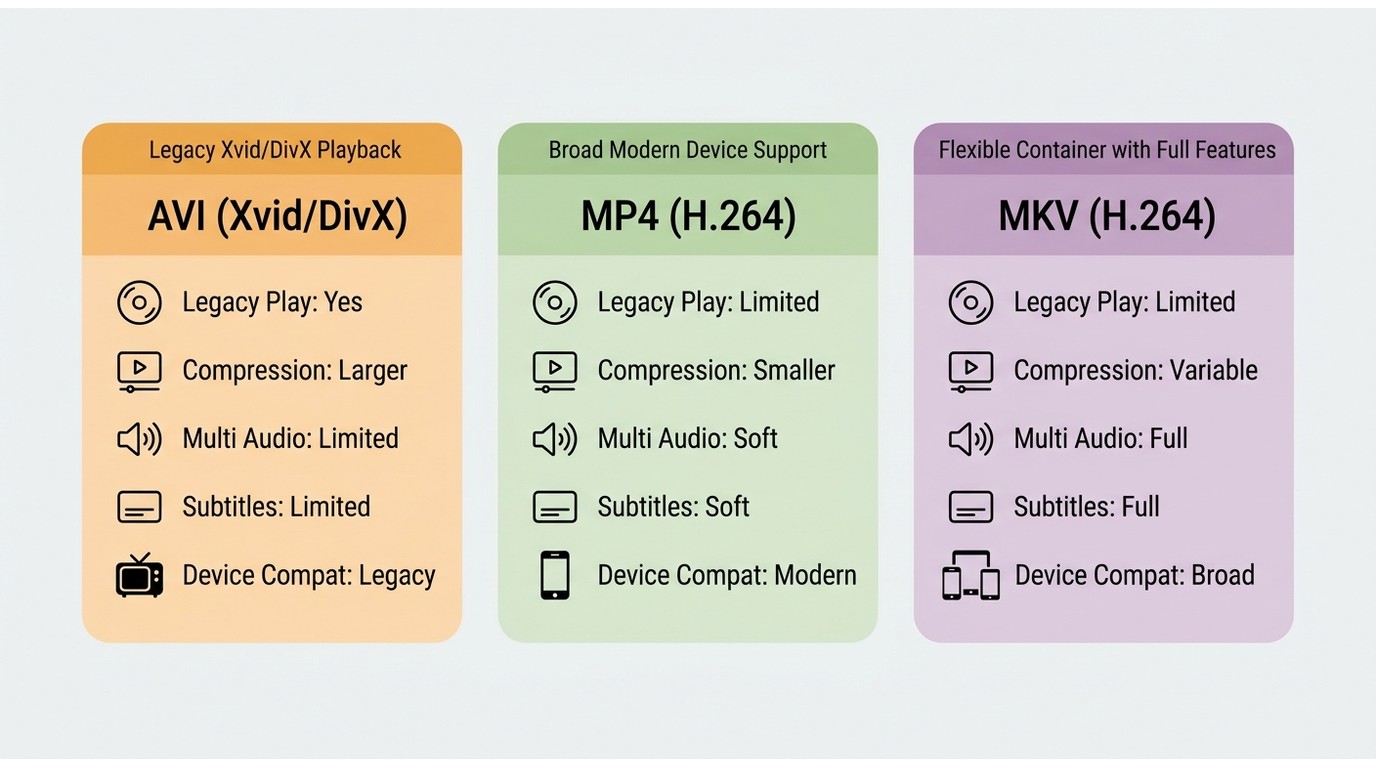
AVI is worth choosing when a specific target device only decodes DivX or Xvid video inside an AVI container: some pre-2015 flat-panel TVs, standalone DVD players with a DivX logo, older in-car head units, and certain set-top boxes. For anything newer, MP4 is usually the safer default for playback reach, while MKV is the more flexible container when you want to keep several audio tracks or subtitle streams from the disc.
AVI vs MP4 and MKV
| Dimension | AVI (Xvid/DivX) | MP4 (H.264/H.265) | MKV (H.264/H.265) |
| Best use case | Legacy DivX/Xvid device | Phones, tablets, smart TVs | Home media libraries |
| Legacy DivX/Xvid playback | Yes | Rare | No |
| Compression efficiency | Lower at 1080p | High | High |
| Multiple audio tracks | Limited | Supported | Flexible |
| Subtitle flexibility | External only | Soft subs supported | Multiple soft subs |
| Modern-device compatibility | Narrow | Broadest | Broad on media players |
My rule of thumb: I would only pick AVI when I can point to the actual device menu that lists DivX or Xvid support. If the target is a current phone or smart TV, I would rip the Blu-ray to MP4 instead; if the goal is a Plex or Kodi library with multiple audio and subtitle tracks intact, an MKV output from Blu-ray is the more forgiving container.
What You Need Before Converting
The biggest time sink I see with Blu-ray to AVI jobs is not the software, it is the hardware. A living-room Blu-ray player is not a computer ripping drive; it can spin a disc for playback but will not present the raw data your computer needs to read a title. Even a computer optical drive that opens a disc in a media player can still fail once a ripping tool tries to enumerate titles, because reading video for playback and reading raw sectors for extraction are two different jobs.
Before you start, I would check five things: the drive is a computer-attached Blu-ray drive (internal or USB), its firmware is current, the disc surface is clean and not deeply scratched, you have at least 50 GB of free space on the destination volume, and the target playback device's manual or menu actually lists DivX or Xvid support. Checking the drive and the destination device first prevents more wasted time than any amount of tweaking software settings later.
Drive and Disc Checks
Specific drive model lists age quickly, so I would focus on capability rather than a shopping list: does the drive read commercial Blu-ray discs in a file browser, and does the ripping tool see a title list within a minute of loading? If the answer to either is no, that is a hardware signal, not a settings problem.
Tested Blu-ray to AVI Converter: DVDFab Blu-ray Ripper
Once you know AVI is the right container for your target device, the job comes down to a ripper that handles a protected disc's copy protection for personal, non-commercial backup and exports directly to AVI with settings you can control. DVDFab Blu-ray Ripper fits that scope on Windows and macOS: it reads legally owned Blu-ray discs, ISO images, or Blu-ray folders, and outputs to AVI along with other common formats. Output quality depends on the codec, bitrate, and resolution you pick, not on a lossless promise.
- • Handle many old or nre Blu-ray copy protections.
- • Rip Blu-ray to MKV, AVI, MP4, MP4, and other digital video and audio formats.
- • Offer Advanced Settings such as bitrate setting to tweak video quality.
- • Title, audio track, and subtitle selection before conversion
- • The built-in video editor lets you crop or trim the video and add watermarks or external subtitles.
- • Speed up Blu-ray to AVI conversion with GPU acceleration on NVIDIA CUDA, AMD, Intel Quick Sync, and Apple VideoToolbox.
How to Convert Blu-ray to AVI in Four Steps
Step 1: Load the Blu-ray Source
With the drive and disc checks done, open DVDFab 13 and select the Ripper module in the left navigation bar. Insert your Blu-ray disc into the computer-attached optical drive, or drag an ISO image or a Blu-ray folder directly into the software. Wait until the title list appears — if it does not show up within about a minute, that is a drive or disc signal, not a step you can push past by clicking harder.
Free Download Windows 11/10/8.1/8/7
Free Download macOS 10.13 - 15.x
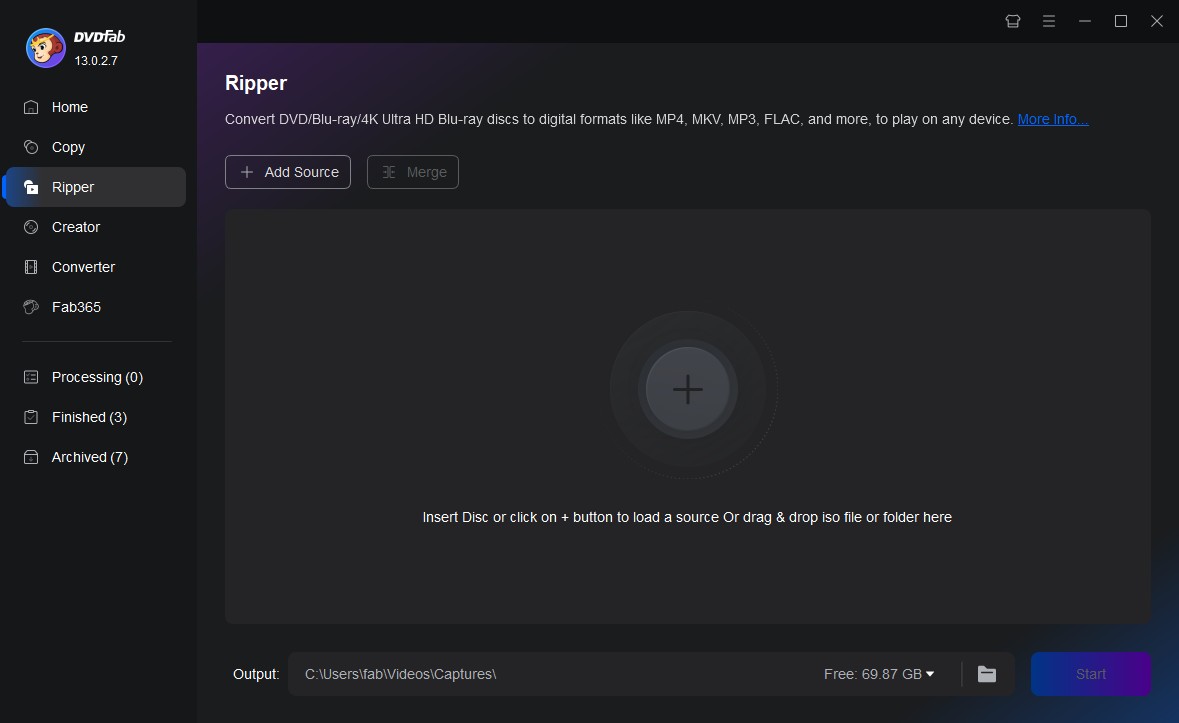
Step 2: Choose the AVI Profile
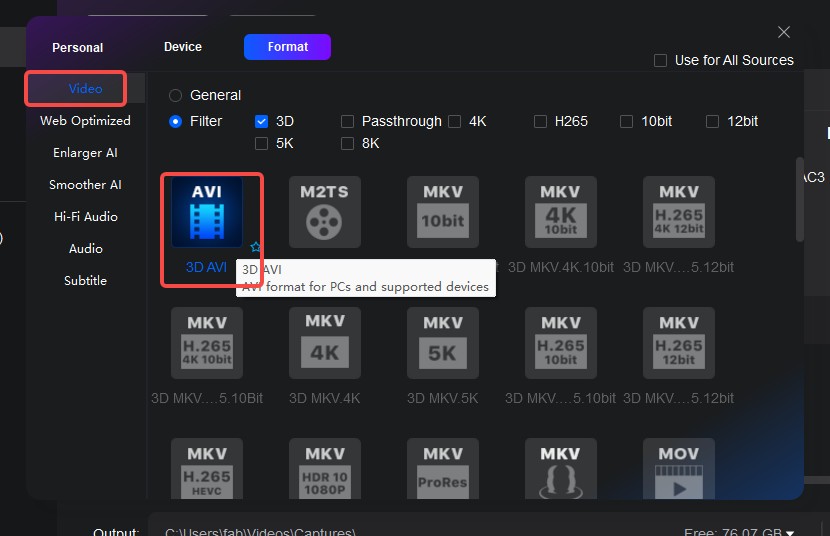
Click the "Choose Other Profile" (profile library) button on the right side of the main interface, then select Format > Video > AVI. Before you move on, double-check that your target device's menu or manual actually lists DivX or Xvid support — the codec should be dictated by what the device can play, not by what looks like the highest setting available.
Step 3: Set Quality and Size
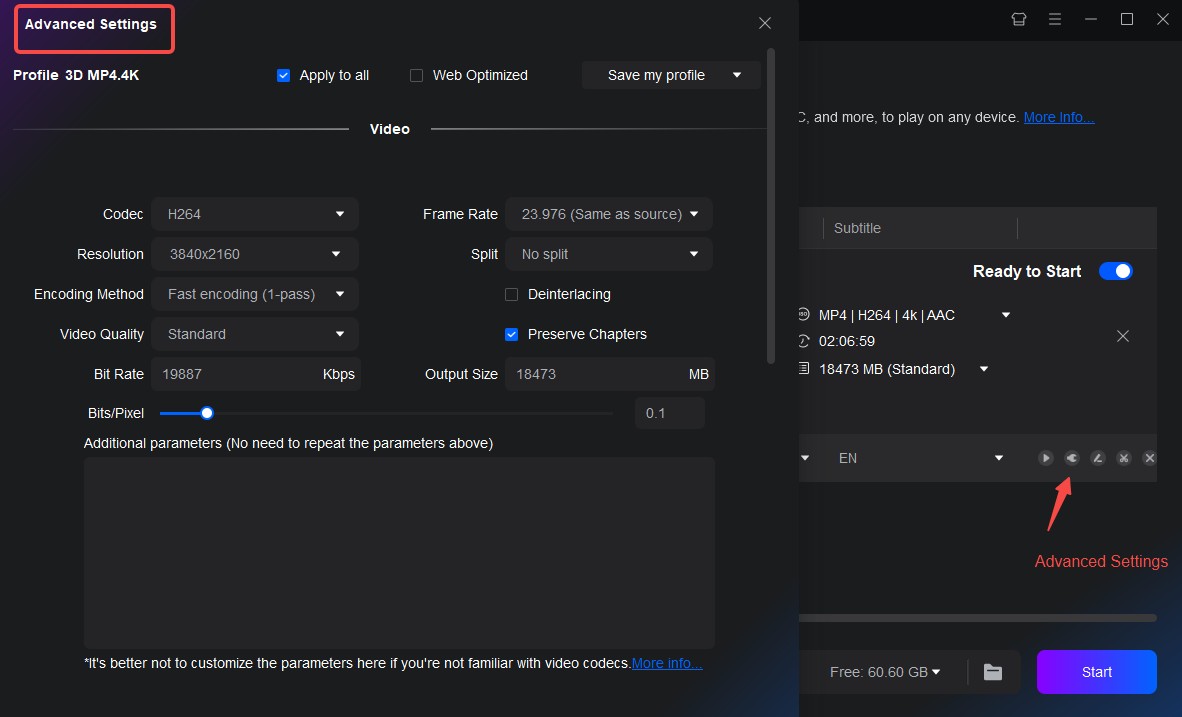
DVDFab picks the longest title (usually the main movie) by default; you can override that to pull a specific title or chapter, and choose the audio track and subtitles you want. Then click the wrench icon (Advanced Settings) to set Codec, Frame Rate, Bit Rate, Resolution, and audio parameters.
My working rule here: start from the target device's stated limit (many DivX-certified TVs cap at 720p or 1080p Xvid at a specific bitrate ceiling), then use the lowest bitrate that still passes a short playback test on that device. Higher is not automatically better if the player stutters.
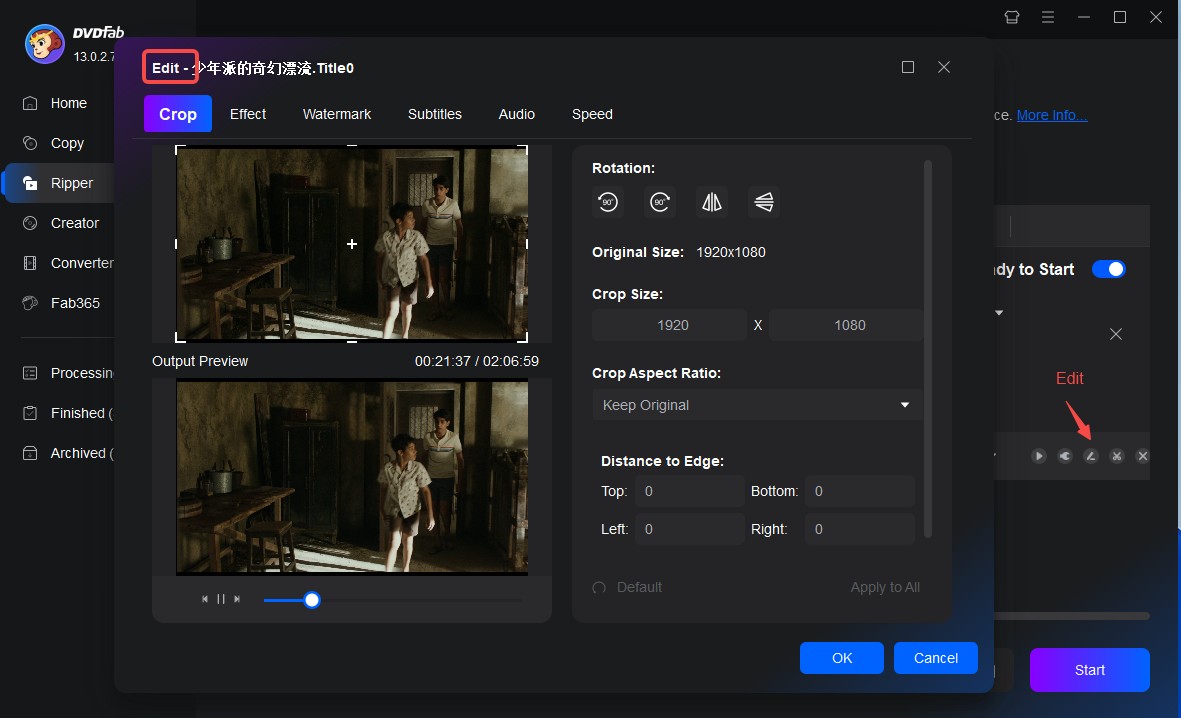
With the latest update, DVDFab Blu-ray Ripper adds an integrated video editor, enabling you to add external subtitles, rotate video, fine-tune contrast, and cut or crop unwanted segments.
Step 4: Start and Monitor Conversion
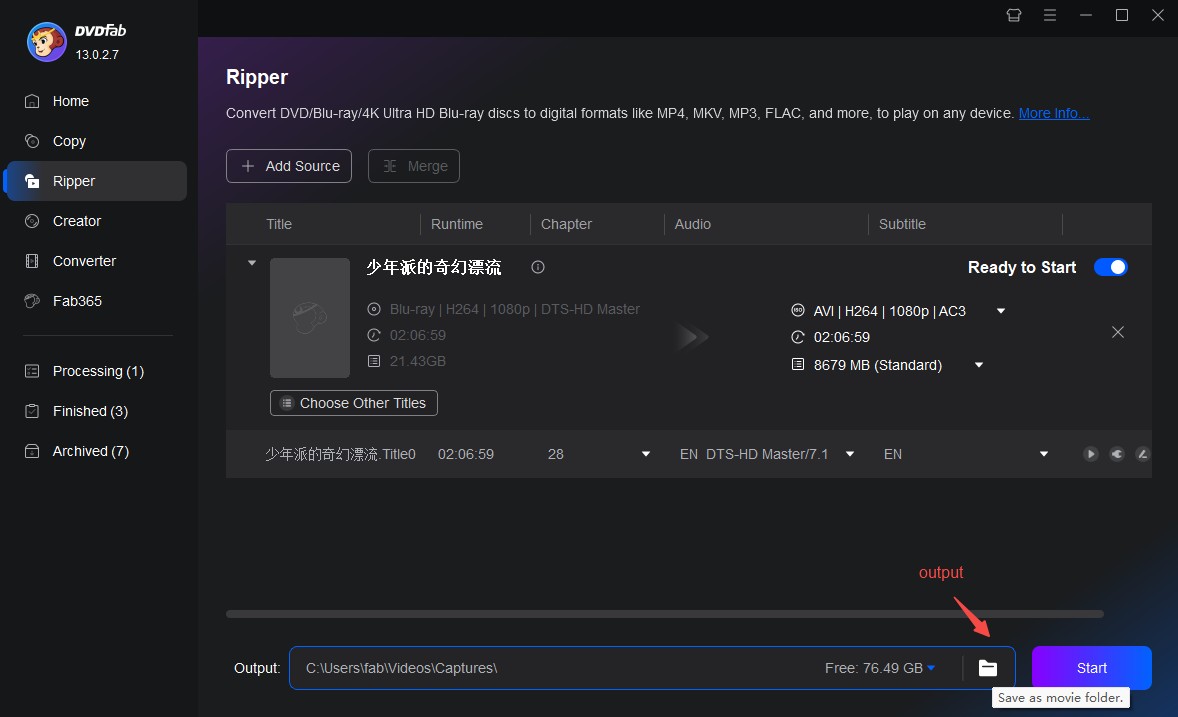
At the bottom of the interface, click the folder icon to pick a destination for the AVI file, then click Start. GPU acceleration through NVIDIA CUDA, AMD, Intel Quick Sync, or macOS VideoToolbox can shorten the job.
NOTE: Actual speed depends on your CPU, GPU, drive, and the settings you chose in Step 3, so I would not treat any specific minute-count as a guarantee. Watch the first few percent of progress — if it climbs steadily, the job is on track; if it hangs at the same position on a retry, jump to the troubleshooting section below rather than waiting it out.
AVI Settings for Legacy Playback
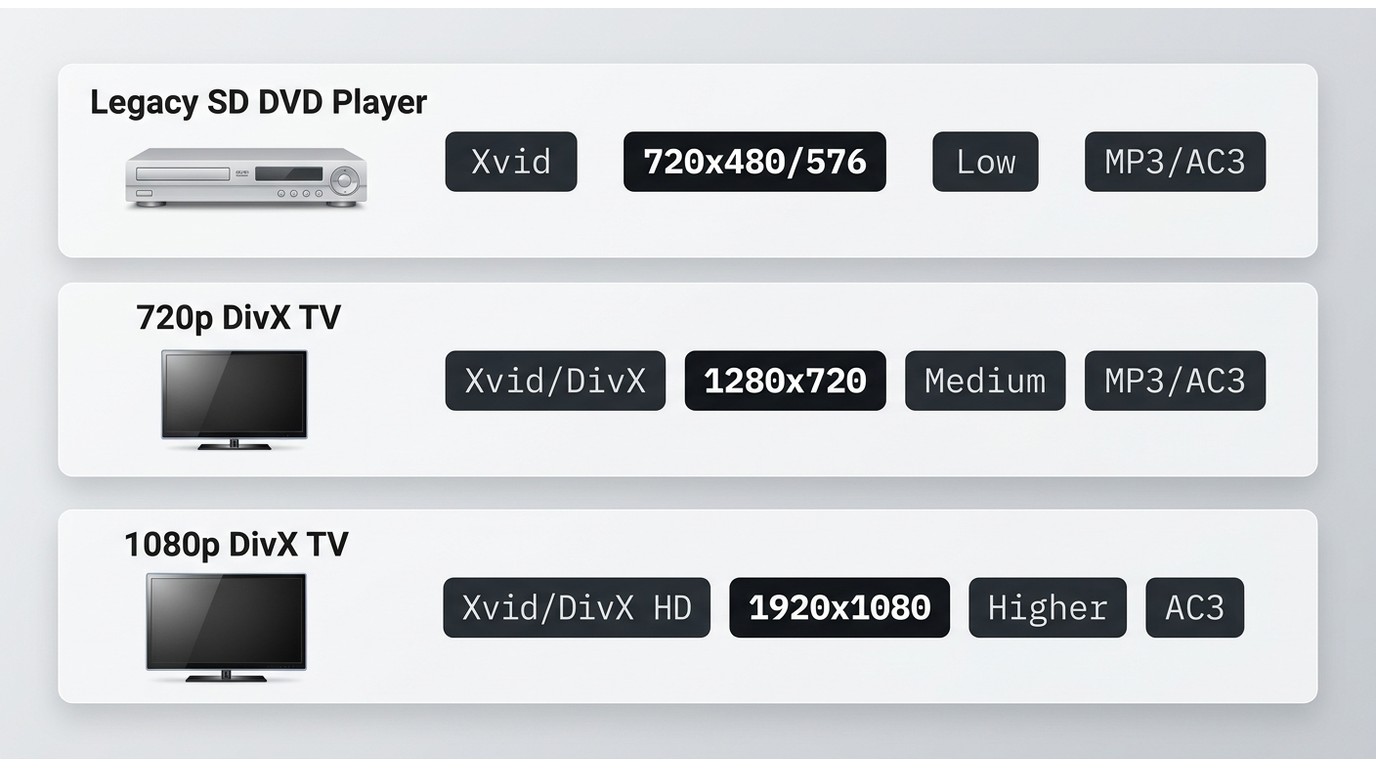
Rather than a single "best" AVI preset, I plan settings around what the target device will actually decode. The table below is a starting point — always finish with a short test encode of two or three minutes and play it on the destination device before committing a full movie.
| Playback target | Video codec | Resolution | Frame rate | Bitrate approach | Audio | Priority | Size direction |
| Legacy SD DVD player / older in-car unit | Xvid (MPEG-4 ASP) | 720×480 or 720×576 | Match source | Low; step up only if blocky | MP3 or AC3 stereo | Compatibility | Smallest |
| DivX-certified 720p TV / set-top box | Xvid or DivX | 1280×720 | Match source | Medium; test first | MP3 or AC3 stereo | Compatibility, then quality | Moderate |
| DivX-certified 1080p TV | Xvid or DivX HD profile | 1920×1080 | Match source | Higher; watch device ceiling | AC3 stereo | Quality within device limits | Largest |
Balance Quality, Size, and Compatibility
A 90 to 150 minute Blu-ray converted to Xvid at 1080p typically lands somewhere in the low single-digit gigabytes, but the actual size is driven by runtime, chosen bitrate, resolution, codec, audio, and how complex the source is (a talky drama compresses far smaller than a VFX-heavy action film). Treat any single number as a rough expectation, not a guarantee. If the file is too large for your storage or the device's file-system limit, drop bitrate before resolution, and drop resolution before codec — resolution is the setting old TVs are most likely to reject outright.
Fix Drive, Stall, and Playback Problems
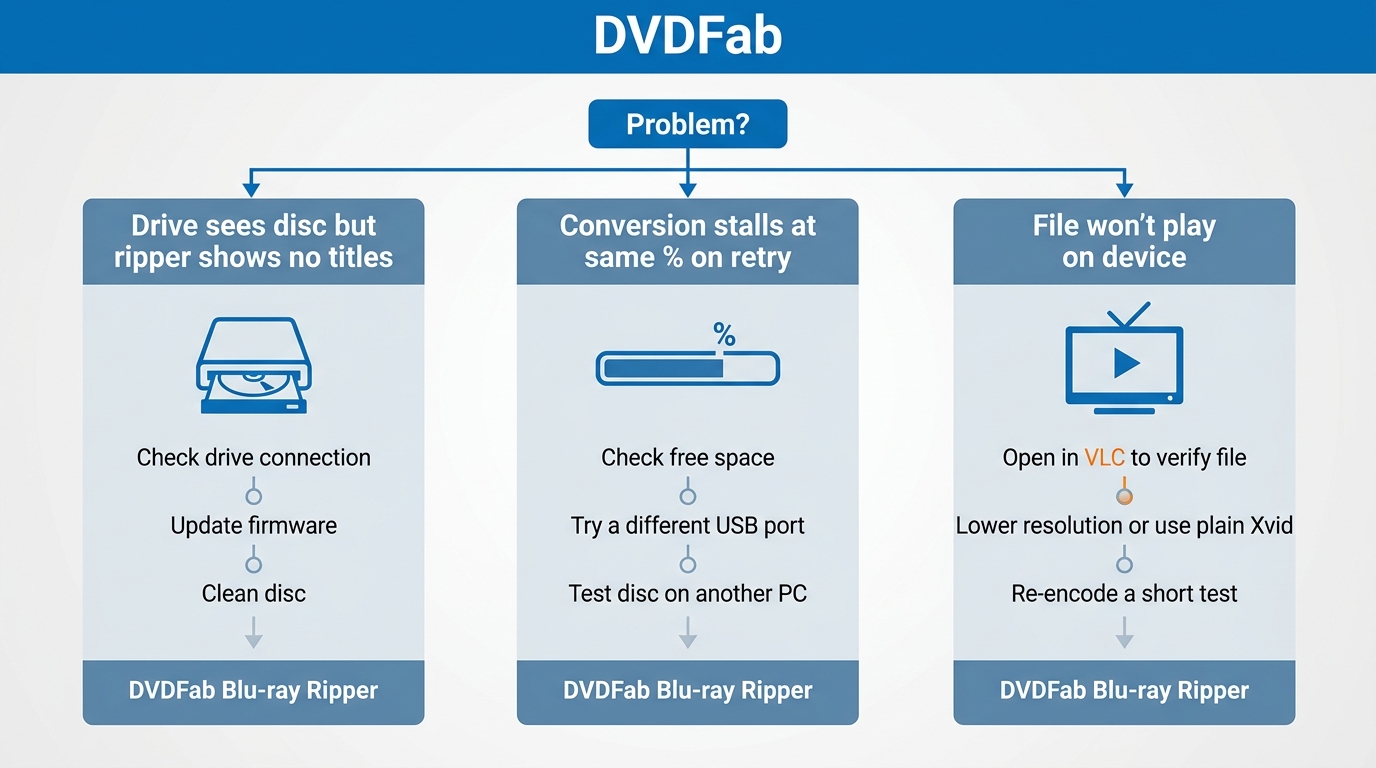
Most Blu-ray-to-AVI failures fall into three buckets: the drive cannot really read the disc, the job stalls midway, or the finished file will not play on the target device. Work through them in that order.
The Drive Reads but Cannot Rip
Symptom: a media player opens the disc, but the ripper shows no titles, an incomplete title list, or errors out during scan. Likely causes: living-room player mistaken for a ripping drive, outdated drive firmware, the disc uses a newer copy protection than the current build handles, or the disc is dirty or scratched. Steps: confirm the drive is connected to the computer and appears in the OS, update the drive's firmware from the manufacturer's support page, wipe the disc from center outward with a soft cloth, then retry. If a specific disc still fails after clean media and a current build, that disc — not your setup in general — is the bottleneck.
Conversion Stalls or Playback Fails
A repeatable stall at the same percentage on retry points first to the disc or the drive path (bad sector, dust, marginal read), not to the software settings. Check free space on the destination drive, try a different USB port or cable for external drives, and if possible test the same disc on another computer to isolate the drive. If the job finishes but the file will not play, that is a codec and container problem: the destination device probably does not decode the profile you exported. Open the AVI in a desktop player like VLC to confirm the file itself is valid, then lower resolution or switch to a plain Xvid profile and re-encode a short test clip before doing the full movie again.
Frequently Asked Questions
Can I convert a Blu-ray to AVI for free?
DVDFab Blu-ray Ripper offers a free trial with feature limitations; specific limits are listed on the product page. For a one-off conversion of a single disc your legacy device can play, running a short test title through the trial is usually enough to decide whether the paid version is worth it for you. I would not assume a free tier handles every disc or the newest protections.
Why does my AVI file have no sound or subtitles?
Usually one of three reasons: the audio track or subtitle stream you needed was not selected in Step 3, the target device does not decode the audio codec (AC3 is common, but not universal), or AVI's container simply does not carry soft subtitles the way MKV does. Check the destination device's supported audio codec first, reconvert with an AC3 or MP3 stereo track, and if you need burned-in subtitles, enable them in the video editor before re-encoding.
Is Blu-ray being phased out?
Physical Blu-ray sales have shrunk as streaming has grown, but that broader shift does not change the immediate task: if you own the disc and want it playable on a device you already have, converting to the right container is still the practical move. The point of a Blu-ray to AVI job is not to bet on the format's future, it is to keep a specific disc watchable on a specific device today.
Conclusion
My take after years of running this kind of conversion: pick AVI only when a specific legacy device — a DivX-certified TV, an older DVD player, an in-car head unit that lists Xvid support — actually needs it. For anything else, a modern container will give you broader compatibility or more room for extra audio and subtitle tracks. Run a two- or three-minute test encode on the target device before committing a full movie, keep the workflow to legally owned discs for personal, non-commercial use, and let what the device can decode drive your settings, not the other way around.

 How to Rip Blu-ray to MKV on Windows & Mac: 4 Tested ConvertersBy Diana Smith - Sep 28, 2026
 How to Convert 3D Blu-ray to 2D Video: DVDFab 3D Converter GuideBy Diana Smith - Sep 16, 2026
![How to Rip and Extract Hi-Fi Audio from Blu-rays? [2026 Update]](https://r4.dvdfab.cn/upload/resource/en/how-to-convert-blu-rays-to-hi-fi-audio-files-AGcW.jpg) How to Rip and Extract Hi-Fi Audio from Blu-rays? [2026 Update]By Diana Smith - Sep 1, 2026
How to Rip and Extract Hi-Fi Audio from Blu-rays? [2026 Update]By Diana Smith - Sep 1, 2026 How to Convert BDMV to MKV/MP4 on Windows or macOS: 6 Tested ToolsBy Diana Smith - Aug 31, 2026