Rip vs Burn CD: What's the Difference and How to Copy a CD

Summary: Ripping and burning move audio in opposite directions. Ripping copies songs from an audio CD to your computer, while burning writes files from your computer to a blank disc. To copy an audio CD with one optical drive, rip the source CD first, replace it with a blank disc, and burn the saved tracks as an Audio CD. Use MP3 when smaller files and broad playback support matter; use WAV when you want an uncompressed intermediate copy before burning another disc.
Table of Contents
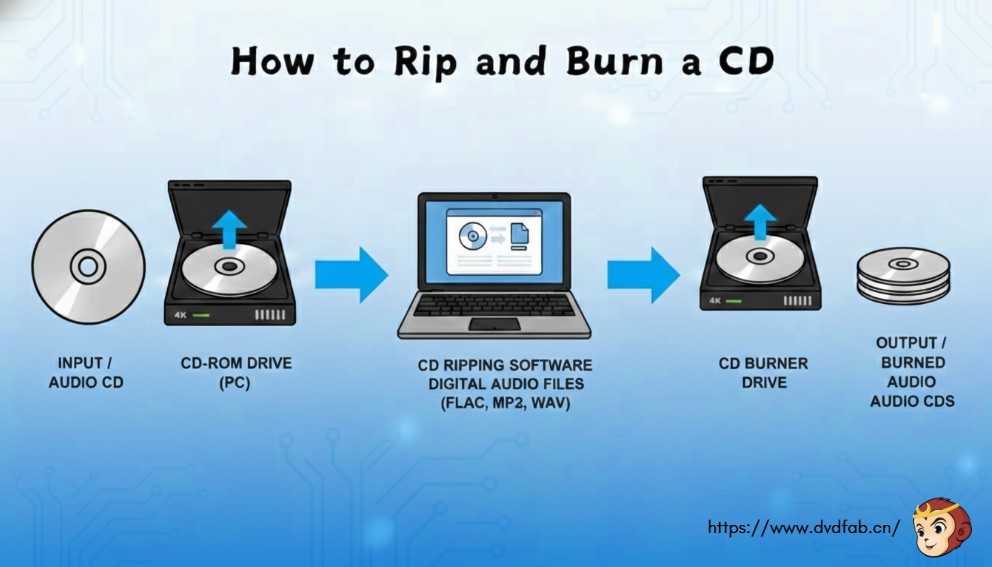
The terms rip, burn, and copy describe three related but different jobs. If you only want the music on your computer, you rip the CD. If you already have music files and want a physical disc, you burn them. If you want to copy one audio CD to another with a single drive, you normally do both: rip the source disc to the computer and burn those tracks onto a blank CD.
On Windows 11, the classic interface used for the CD ripping and burning steps below is Windows Media Player Legacy. If you cannot find the familiar Rip CD or Burn controls, check that Windows Media Player Legacy is installed and enabled.
Rip vs Burn CD: What Is the Difference?
Ripping reads music from an audio CD and saves it as files on your computer. Burning writes files from your computer to a blank disc. Copying a CD normally combines both operations when you have only one optical drive.
| Action | Direction | What You Get | Use It When |
| Rip | Audio CD → computer | Audio files such as MP3, WAV, or WMA | You want the music on your computer or another device |
| Burn | Computer → blank CD | Audio CD or data CD | You want a physical disc |
| Copy CD | Source CD → computer → blank CD | A new disc containing the selected music | You want another playable CD |
Which One Do You Need?
If you want to listen without inserting the original disc, rip it. If you already have songs on your computer and want a disc for a CD player or compatible car stereo, burn an Audio CD.
If your goal is to copy an audio CD to another CD, rip first and burn second. You do not need two optical drives for this method because the source tracks are temporarily stored on the computer.
One setting matters when copying. If you rip the source as MP3, the intermediate files use lossy compression. If you want an uncompressed intermediate copy before burning the replacement disc, select WAV instead. MP3 remains useful when smaller files and easy playback on phones or computers matter more.
How to Copy a CD to Another CD
With one writable CD/DVD drive, save the source tracks to the computer, remove the original disc, insert a blank CD, and burn the saved tracks as an Audio CD.
Only copy discs and recordings you own or have permission to duplicate, and follow the copyright rules that apply where you live.
Step 1: Rip the Source Audio CD
Step 1: Insert the source audio CD and open Windows Media Player Legacy. Select the CD from the library and clear the check box beside any track you do not want to copy.
Step 2: Open the rip settings and choose the output format, audio quality, and destination folder. MP3 creates smaller files, while WAV is useful when you want an uncompressed intermediate copy before reburning the music.
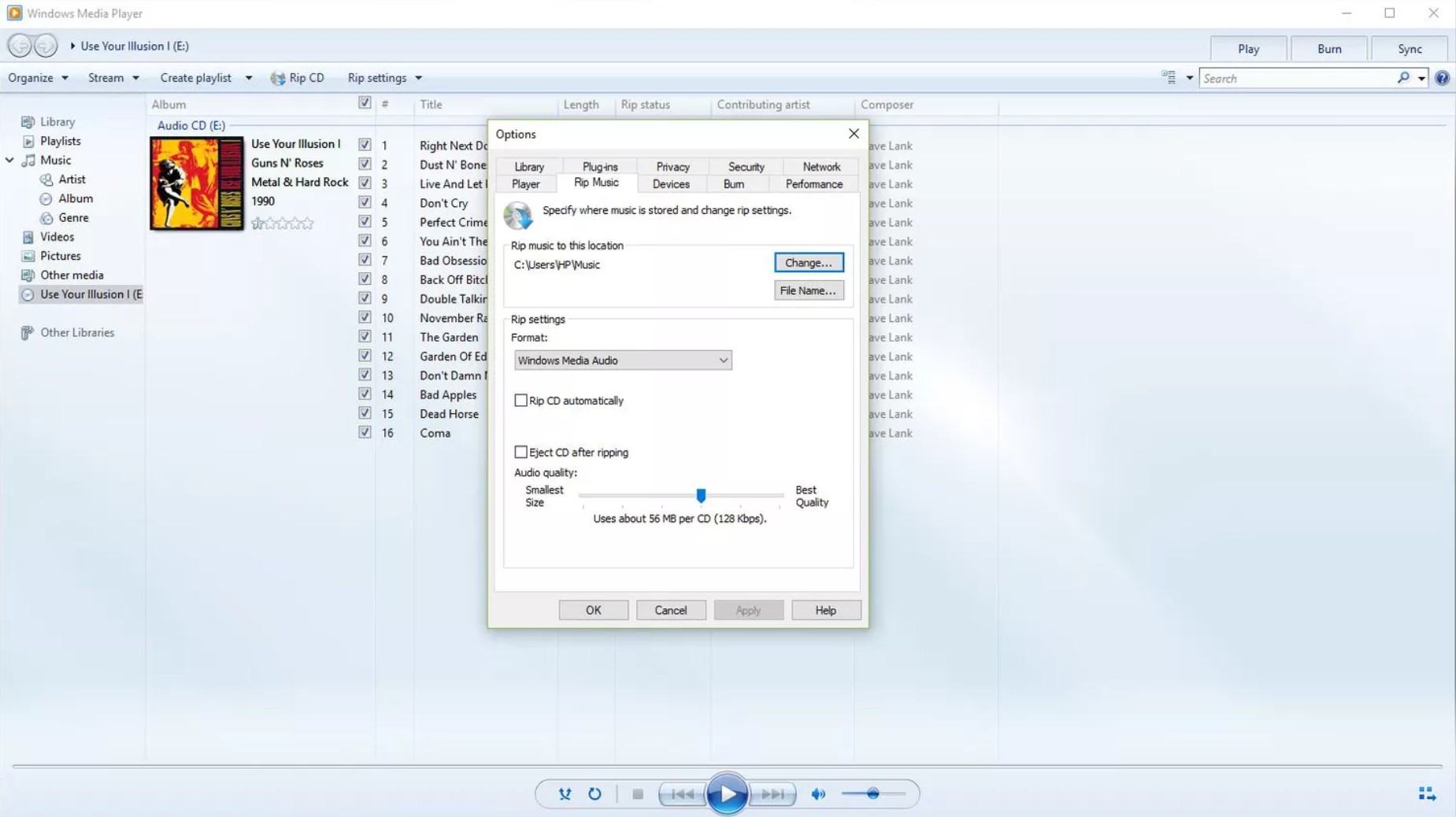
Step 3: Select Rip CD and wait for the selected tracks to be saved to the computer. Open the destination folder and check that the expected tracks are present before removing the source disc.
For more detailed Windows settings and output choices, see the guide to ripping a CD with Windows Media Player.
Step 2: Insert a Blank CD and Burn the Tracks
Step 1: Remove the source disc and insert a writable blank CD.
Step 2: Open the Burn tab in Windows Media Player Legacy. Select Audio CD if the new disc needs to play in a conventional CD player or compatible car stereo.
Step 3: Add the ripped songs to the Burn list and arrange them in the order you want.
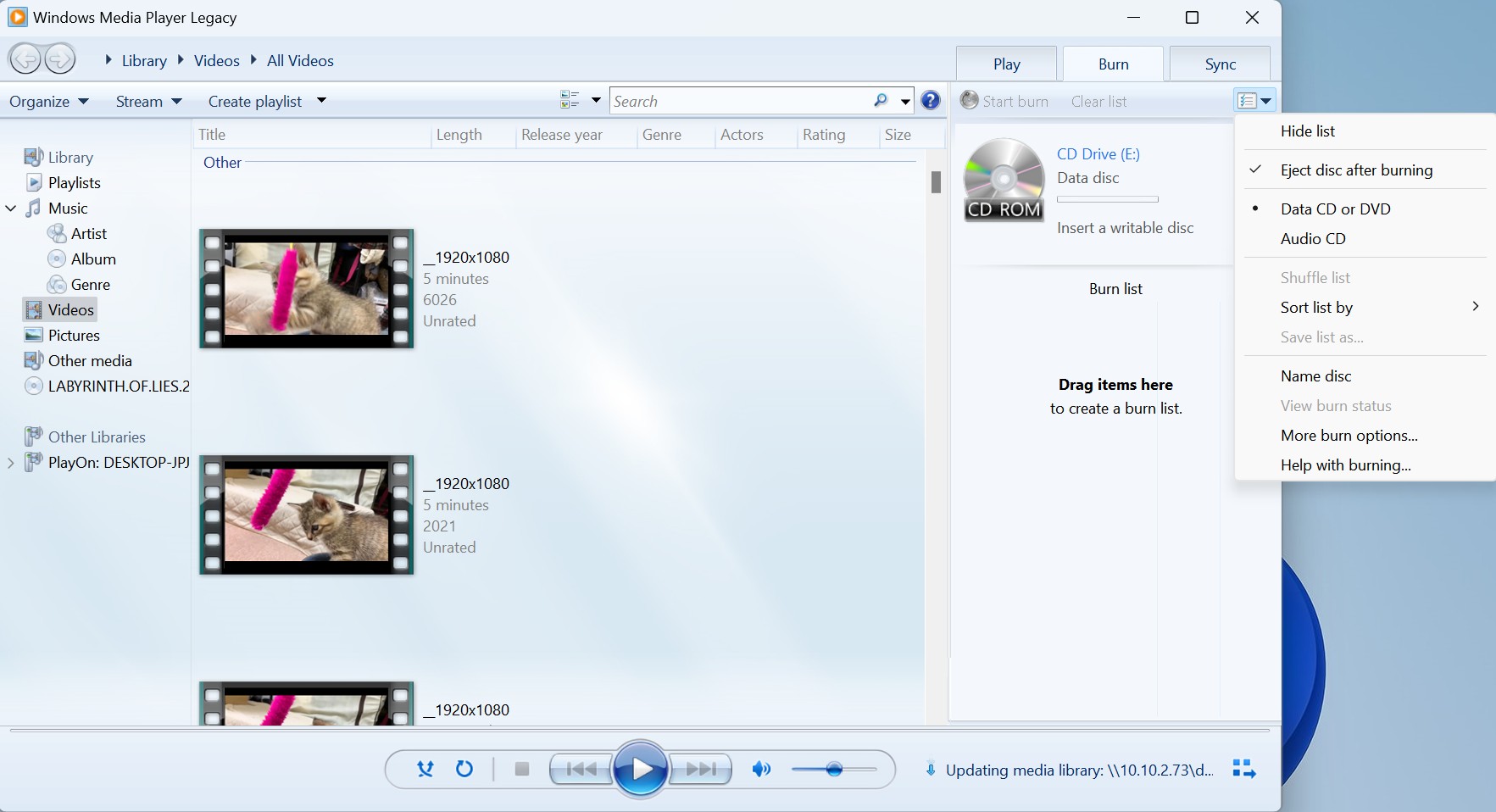
Step 4: Select Start burn. After the disc is finished, test several tracks in the player you intend to use.
Do You Need Two CD Drives to Copy a CD?
No. One writable optical drive is enough for the rip-then-burn method because the tracks remain on the computer between the two operations. Two drives are only needed for software or hardware setups that perform a direct disc-to-disc copy.
How to Rip an Audio CD to Your Computer
Ripping is enough when you want a digital copy of your music and do not need another physical disc. Windows Media Player Legacy can save selected tracks from an audio CD to your computer.
Rip a CD with Windows Media Player Legacy
- Insert the audio CD into a readable CD/DVD drive.
- Open Windows Media Player Legacy and select the inserted CD.
- Clear the check box beside any track you do not want.
- Open the rip settings and select the format and audio quality.
- Select Rip CD.
- Open the destination folder and check the saved files after the rip finishes.
If you want album, artist, and track information to be filled in automatically, keep the computer connected to the internet while the disc information is being retrieved.
MP3 or WAV: Which Should You Choose?
MP3 uses lossy compression to reduce file size. It is useful for everyday listening, phones, portable players, and music libraries where storage space matters.
WAV requires much more storage because it does not use the lossy compression of MP3. Choose WAV when you want an uncompressed intermediate copy, especially if you plan to burn the tracks to another Audio CD.
If you are building a larger archive or working with discs that repeatedly produce read errors, a dedicated CD-ripping application may provide additional format choices and disc-reading checks.
How to Burn Music to a CD
Before burning, decide whether you need an Audio CD or a Data CD. This choice determines which players can read the finished disc.
Audio CD vs Data CD
| Disc Type | Choose It When | Main Limit |
| Audio CD | The disc must play in a conventional CD player, stereo, or compatible car player | About 80 minutes of music |
| Data CD | You want to store files such as MP3 or WMA and the playback device supports those file formats | About 700 MB of data |
This distinction matters for older stereos and car players. Copying MP3 files onto a Data CD does not make it a conventional Audio CD, so a player that expects an Audio CD may not recognize the files.
Burn an Audio CD in Windows Media Player Legacy
- Insert a blank writable CD.
- Open Windows Media Player Legacy and select the Burn tab.
- Open the burn options and select Audio CD.
- Add songs from the library to the Burn list.
- Arrange the tracks in the order you want.
- Select Start burn.
If the list exceeds the available disc time, remove tracks or place the remaining songs on another CD.
Common Problems When Ripping, Copying, or Burning CDs
The Ripped Track Has Skips, Clicks, or Missing Audio
Symptom: The saved audio file skips, clicks, or contains missing sound.
Likely cause: The source disc may be dirty, scratched, or difficult for the optical drive to read.
Check: Play the same part of the original disc and inspect the disc surface. Rip the affected track again and compare the new file with the first result.
Next action: Clean the disc carefully and try again. If the same disc repeatedly produces read errors, test another optical drive or consider CD-ripping software that provides more detailed disc-reading checks.
The Burned CD Does Not Play in a Car or CD Player
Symptom: The disc works on a computer but not in the intended stereo or car player.
Likely cause: The disc may have been created as a Data CD instead of an Audio CD, or the player may not support the recordable media or file type you used.
Check: Confirm whether the disc was burned as an Audio CD. If it is a Data CD containing MP3 files, check whether the player supports MP3 data discs.
Next action: Burn the music again as an Audio CD when conventional CD-player compatibility is required. If it is already an Audio CD, test the disc in another player and check the original player's manual for supported recordable media.
Windows 11 Does Not Show Rip CD or Burn
Symptom: You opened a media player in Windows 11 but cannot find the traditional Rip CD or Burn controls.
Likely cause: The steps in this article use Windows Media Player Legacy rather than the newer Media Player interface.
Check: Search Windows for Windows Media Player Legacy. If it is not installed, check the Windows Optional Features settings.
Next action: Open Windows Media Player Legacy and insert the disc again. If the CD still does not appear, confirm that the optical drive can read the disc before changing rip or burn settings.
FAQs About Ripping, Burning, and Copying CDs
Does ripping a CD damage the original disc?
No physical data is removed from the CD during ripping. The computer reads the audio and saves a separate file, although normal handling can still scratch or damage the disc.
Do I need two CD drives to copy a CD?
No. With one writable optical drive, rip the source CD to your computer, remove it, insert a blank CD, and burn the saved tracks.
Can I copy a CD directly without ripping it first?
Some disc-copying programs can perform disc-to-disc copying with suitable hardware. With the Windows Media Player method described here, the music is first ripped to the computer and then burned to a blank CD.
Is ripping a CD the same as copying a CD?
No. Ripping saves CD tracks as files on a computer, while copying a CD to another physical disc normally combines ripping the source with burning a new CD.
Should I use an Audio CD or Data CD for my car?
Use an Audio CD when the car stereo is designed for conventional music CDs. A Data CD can store compressed audio files such as MP3, but the stereo must support those file formats.
Does ripping a CD reduce audio quality?
It depends on the selected format. MP3 uses lossy compression, while WAV avoids that lossy compression and requires more storage.
Conclusion
Use rip when you want songs from an audio CD saved on your computer. Use burn when you want computer audio files written to a physical disc. To copy one audio CD to another with a single optical drive, rip the source first and burn the saved tracks as an Audio CD.
For everyday digital listening, MP3 keeps file sizes smaller. If the files are an intermediate copy for reburning and storage space is not the priority, WAV avoids an extra lossy MP3 stage. For a traditional CD player or compatible car stereo, select Audio CD instead of Data CD.

 How to Burn MP3 to DVD: Best Audio DVD Creators Compared (2026)By Wenny Yan - Oct 15, 2026
 How to Burn Video_TS to DVD on Windows and Mac: 4 Methods That WorkBy Diana Smith - Oct 15, 2026
![Convert Video to DVD: 5 Free & Paid Video to DVD Converters [2026]](https://images.dvdfab.cn/media/convert_vidoe_to_dvd_dza0f3.png/public) Convert Video to DVD: 5 Free & Paid Video to DVD Converters [2026]By Diana Smith - Oct 14, 2026
Convert Video to DVD: 5 Free & Paid Video to DVD Converters [2026]By Diana Smith - Oct 14, 2026 How to Make Your Own DVDs on Mac and WindowsBy Wenny Yan - Oct 14, 2026