Blu-ray vs DVD: Key Differences and Buying Guide

Summary: Blu-ray is the stronger pick for sharper 1080p video, larger capacity, and richer audio, while DVD is cheaper and works better with older players; choose Blu-ray for HDTV/4K home theater or collecting, and choose DVD for budget viewing, old TVs, or legacy hardware. The main differences are capacity, resolution, audio formats, disc/player price, and compatibility.
If you are buying a movie, checking an old player, or deciding whether a collection is worth upgrading, the Blu-ray vs DVD choice should start with your screen and playback device, not with the release date of the format. A Blu-ray disc can show more detail on an HDTV or 4K TV, but a DVD may be the more practical option for an older DVD player, a smaller screen, or a lower-cost shelf collection.
There is one hard compatibility limit: a DVD player cannot read a Blu-ray disc. A Blu-ray player usually can play DVDs, but 4K UHD Blu-ray discs require a UHD-capable player; displaying their full resolution also requires a compatible 4K display.
Blu-ray vs DVD: Which Is Better for Your Setup?
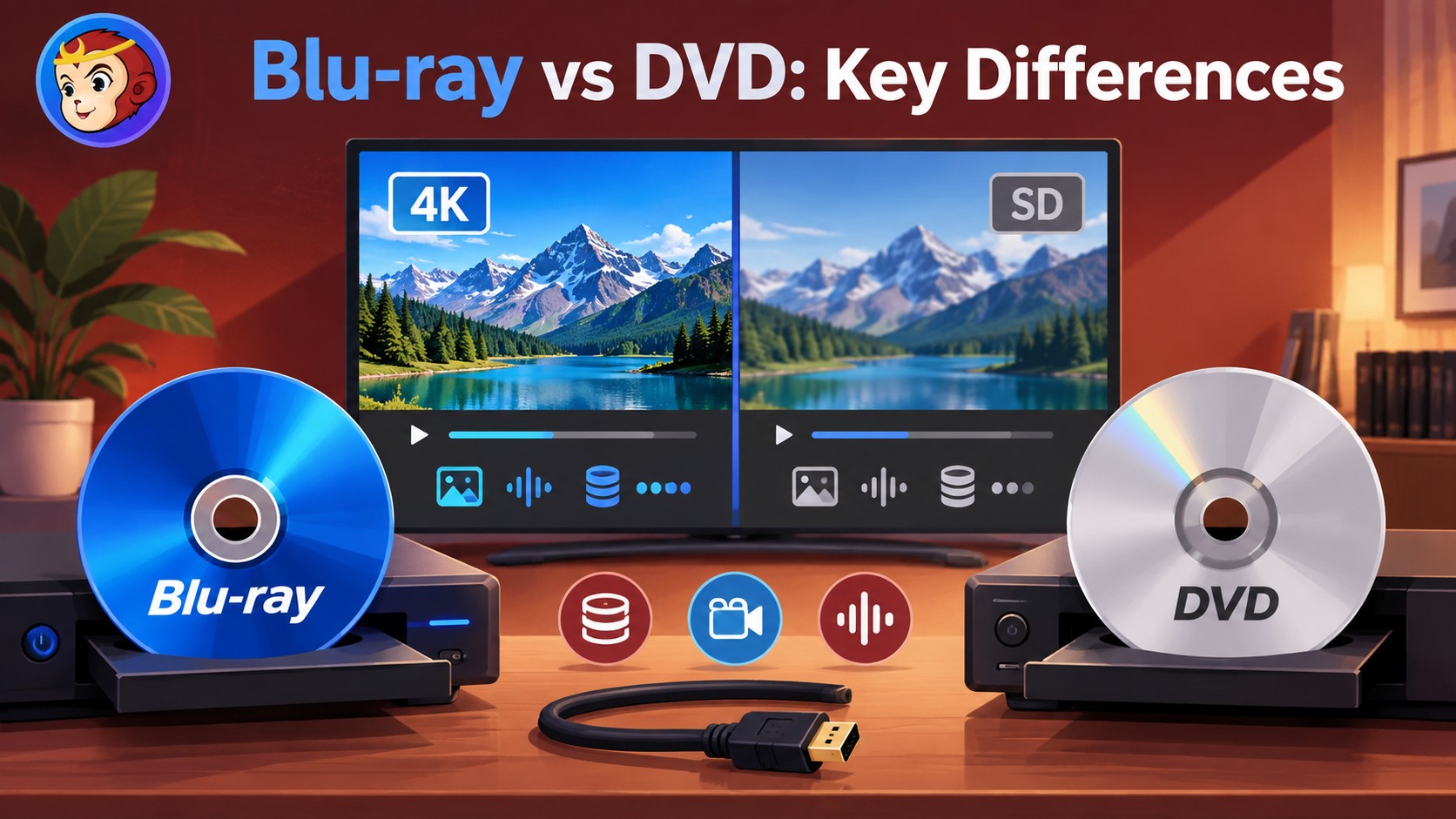
Blu-ray offers more picture detail, disc capacity, and support for modern surround audio, while DVD remains more practical for lower prices, older hardware, and broad compatibility. If you already own an HDTV or 4K TV and a Blu-ray player, buy Blu-ray for films where detail matters. If you use an older DVD player or want inexpensive discs, DVD remains practical.
The main limitation is hardware. DVD players cannot play Blu-ray discs, while Blu-ray players usually play DVDs. Upscaling a DVD can make it fit a modern screen, but it does not add native HD detail.
| Aspect | DVD | Standard Blu-ray |
| Storage Capacity | 4.7 GB single-layer; 8.5 GB dual-layer | 25 GB single-layer; 50 GB dual-layer |
| Native Video Resolution | SD | Up to 1080p HD |
| Audio Options | Commonly Dolby Digital or DTS | May include lossless or object-based audio |
| Player Compatibility | DVD player or compatible drive | Blu-ray player or compatible drive |
| Typical Cost | Generally lower | Usually higher |
| Best Fit | Older hardware and lower-cost collections | HDTVs, home theaters, and film collecting |
Blu-ray vs. DVD - What Are They
What is Blu-ray?
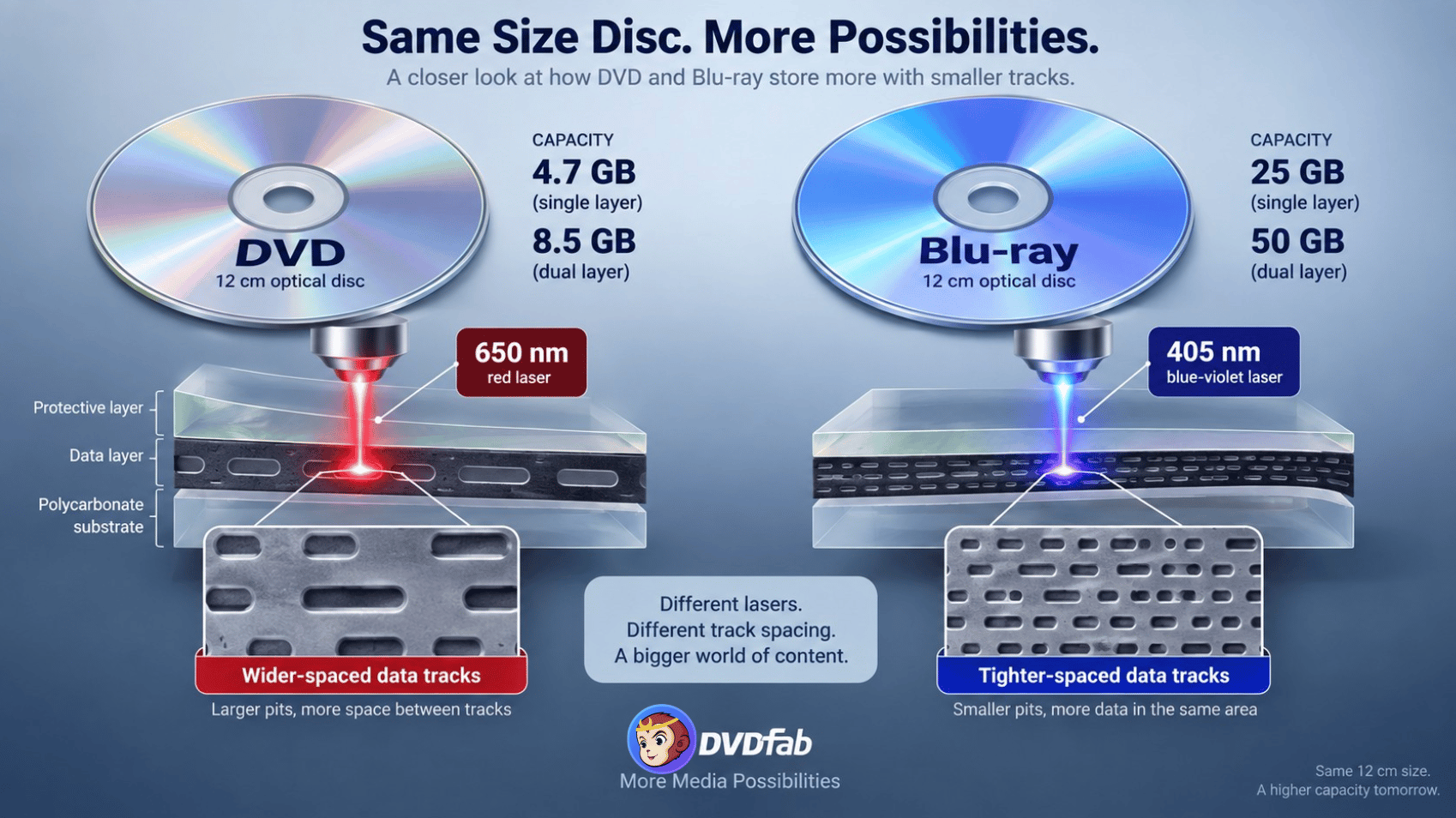
Blu-ray is a digital optical disc format that came after DVD and uses a blue-violet laser with a shorter wavelength of about 405 nm. That laser allows the disc to store more data in the same 12 cm physical size. A standard single-layer Blu-ray disc holds up to 25 GB, and a dual-layer Blu-ray disc holds up to 50 GB.
For movies, standard Blu-ray is mainly associated with 1080p HD video. That extra capacity also leaves room for higher-bitrate video, bonus features, and more capable audio tracks than DVD can typically provide.
What is DVD?
DVD, short for Digital Versatile Disc or Digital Video Disc, is an optical disc format widely used for movies, music, software, games, and other digital media. A single-layer DVD stores up to 4.7 GB, and a dual-layer DVD stores up to 8.5 GB.
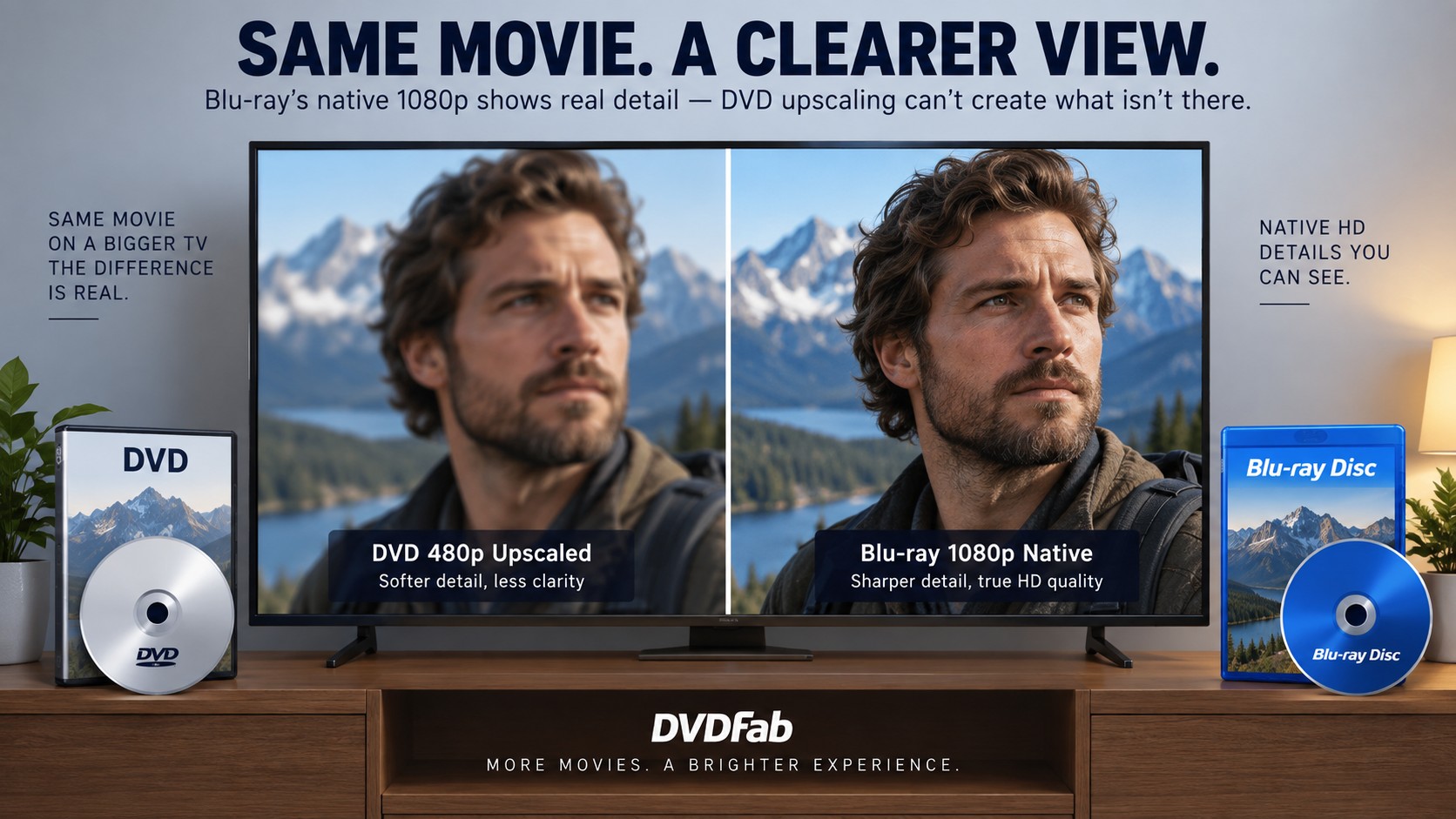
DVD video is standard definition (SD). Some DVD players, TVs, or software can upscale the image to fit a 720p, 1080p, or 4K screen, but upscaling is not the same as native HD detail. Normal playback does not reduce the digital video data, although scratches or disc damage can affect readability.
Key Differences Between Blu-ray and DVD
Storage Capacity
Capacity is one of the easiest differences to measure. The DVD storage size reaches 8.5 GB for a dual-layer disc, while a dual-layer Blu-ray holds 50 GB. That larger space is why Blu-ray can carry HD video, more bonus material, and more audio options on the same-sized disc.
Blu-ray vs DVD Quality: Image and Resolution
DVD is designed for 480p standard-definition video. Blu-ray is designed for 1080p high-definition video, so the difference is most visible on larger HDTVs and 4K TVs, especially with well-mastered movies. On a small screen or from a long viewing distance, the difference can be less noticeable.
The restoration and mastering of a specific release also affect visible detail, so the Blu-ray edition is not automatically the better transfer in every case.
Audio Quality
DVDs commonly carry lossy Dolby Digital or DTS soundtracks. Blu-ray can carry lossless Dolby TrueHD or DTS-HD Master Audio; the included soundtrack is specific to each release.
| Track type | Typical format | Playback consideration |
| Lossy surround | Dolby Digital or DTS | Supported decoding |
| Lossless surround | Dolby TrueHD or DTS-HD Master Audio | Compatible audio path |
| Object-based audio | Dolby Atmos or DTS:X | Matching track and equipment |
Dolby Atmos and DTS:X require both a matching soundtrack on the disc and compatible playback equipment. For a surround system, check the included track and the capabilities of the player, receiver, and speakers; with TV speakers, picture quality is usually the more noticeable reason to upgrade.
Compatibility
Compatibility is where DVD still has an advantage. DVD players, older computers, and many car or portable players can handle DVDs. DVD players cannot read Blu-ray discs. Standard Blu-ray players usually play DVDs but do not read UHD Blu-ray discs; UHD disc playback requires a UHD Blu-ray player.
| Player type | DVD | Standard Blu-ray | UHD Blu-ray |
| DVD player | Yes | No | No |
| Blu-ray player | Usually | Yes | No |
| UHD Blu-ray player | Usually | Usually | Yes |
A computer's DVD drive cannot read Blu-ray discs; the computer needs a Blu-ray-capable optical drive as well as compatible playback software. UHD Blu-ray also requires a UHD-capable drive or player, while displaying the full 4K resolution requires a compatible 4K display.
Data Transfer Rate
Blu-ray has a higher data transfer rate than DVD. This helps it deliver larger video and audio streams for HD playback. DVD’s lower data rate is enough for standard-definition video but limits the amount of detail it can carry.
Cost
Blu-ray discs and players usually cost more than DVD discs and players. DVD remains a good low-cost format for older titles, used discs, TV box sets, and standard-definition viewing. Blu-ray costs more, but the extra cost can be justified when you want better picture detail, larger disc capacity, or more capable audio.
When to Choose DVD or Blu-ray
Before buying or replacing a disc, check the player you own, the resolution and size of your display, the soundtrack included with that edition, the quality of its restoration or master, and whether the title is available in the format you want. For an existing collection, I would upgrade favorite films and worthwhile restorations selectively instead of replacing every DVD.
DVD:
- Older TVs and DVD players: Choose DVD if your setup is built around a DVD player, an older TV, or a computer with only a DVD drive.
- Classic Movies & TV: DVD is often enough for older standard-definition releases, budget box sets, and titles where HD restoration is not important to you.
- Low-cost collecting: Used DVDs and DVD box sets are often cheaper than Blu-ray editions.
- Small files and personal data discs: DVDs remain useful for documents, presentations, and smaller home-video projects because many older drives can read them.
Blu-ray:
- High-Definition Home Theater: Choose Blu-ray if you watch movies on an HDTV or 4K TV and want 1080p detail from a physical disc.
- Movie collecting: Blu-ray is better suited to new releases, restored films, and editions where picture detail, audio tracks, and bonus features matter.
- Large-Scale Data Archiving: Blu-ray’s larger capacity can be useful for photo/video libraries or project files that exceed DVD capacity.
- Gaming: Many PlayStation and Xbox releases use Blu-ray discs because modern games require more storage space than DVD can provide.
Is DVD Better Than Blu-ray?
DVD can be the better purchase when price and old-device compatibility matter more than HD quality. If you do not have a modern TV, already own many DVDs, or only need standard-definition playback, buying a DVD player may make more sense than replacing your setup.
Blu-ray makes more sense when your player and display can show HD detail and the specific release has a worthwhile master, soundtrack, or set of extras.
Tips: Convert DVD/Blu-ray to Digital Formats
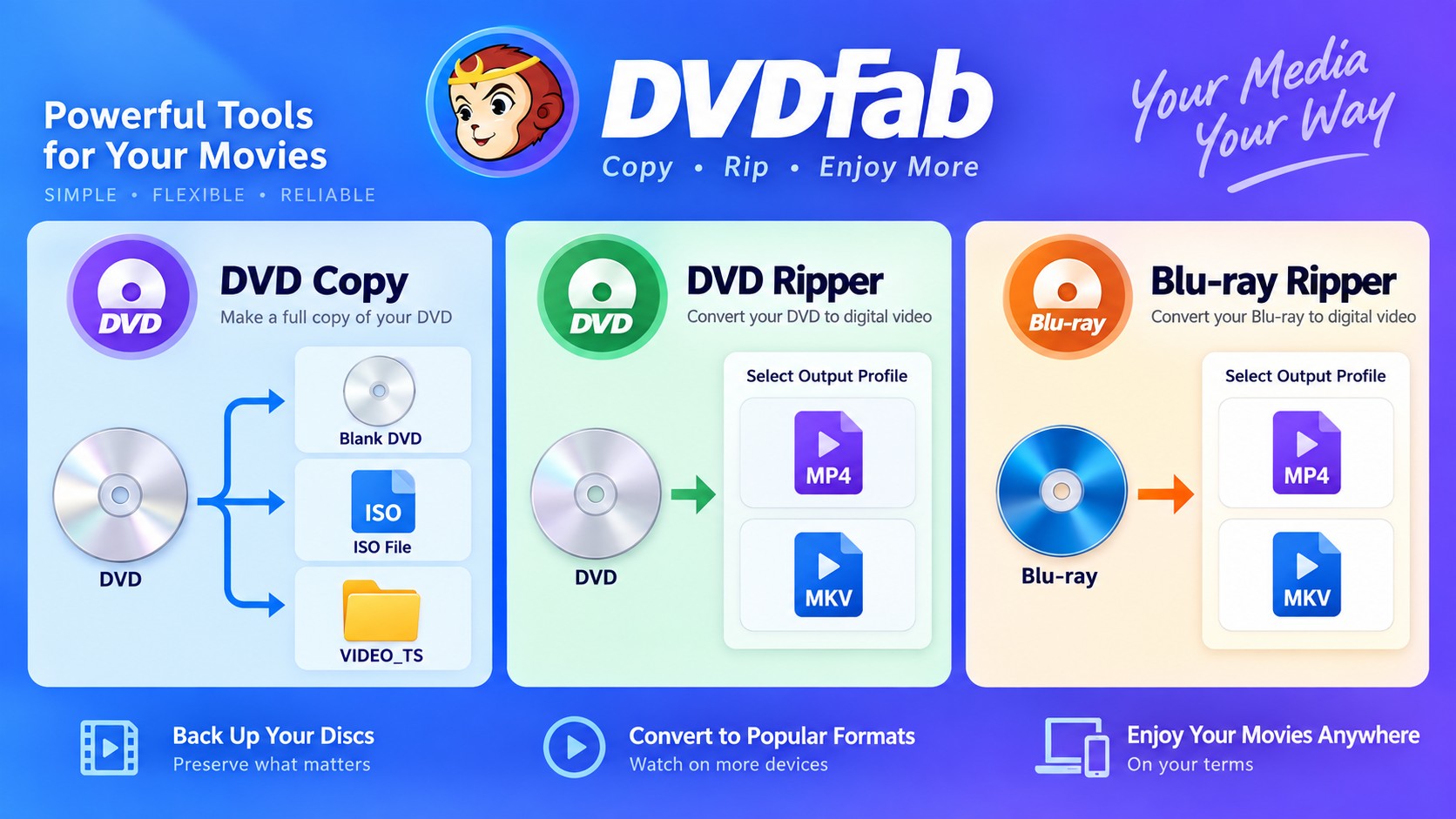
If you decide to preserve a disc you already own, first choose the output you need: a disc-style backup or a playable video file. These are different tasks.
DVDFab DVD Copy backs up DVDs to a blank DVD, ISO, or VIDEO_TS folder. DVDFab DVD Ripper and DVDFab Blu-ray Ripper convert DVD or Blu-ray sources into video files for personal offline viewing.
Use these tools to save locally only content you legally own or are authorized to access, in accordance with applicable laws and relevant terms. Do not redistribute copies or remove disc copy protection from unauthorized content; piracy is illegal. Claims of permanent or unlimited saving do not override these restrictions.
Free Download Windows 11/10/8.1/8/7
Free Download macOS 12 or newer
FAQs
Is Blu-ray better than DVD?
Blu-ray provides 1080p HD detail and more audio options, while DVD provides standard-definition video. Choose Blu-ray for HD viewing or DVD for lower-cost collecting and DVD-only hardware.
Is Blu-ray worth the money?
A well-mastered Blu-ray can be worth buying for a favorite film when your player and display support HD. Keep the DVD when the available edition offers little improvement for your setup.
What's the difference between Blu-ray and HD DVD?
HD DVD and Blu-ray were competing high-definition optical disc formats. HD DVD could hold 15 GB on a single layer and 30 GB on a dual layer, while Blu-ray holds 25 GB on a single layer and 50 GB on a dual layer. Blu-ray became the surviving consumer format, while HD DVD was discontinued.
Can I play Blu-ray on a DVD player?
No. A DVD-only player cannot read Blu-ray discs, and playback software such as PlayerFab Ultra HD Player does not replace a Blu-ray-capable optical drive.
Is DVD or Blu-ray better for old TVs?
DVD is often the more practical format for old TVs and older DVD players. Blu-ray can still work if you have a Blu-ray player with the right output connection, but the image advantage is limited if the TV cannot display HD resolution.
What is 4K Blu-ray?
4K Blu-ray usually refers to 4K UHD Blu-ray, which is distinct from standard 1080p Blu-ray and can carry video up to 2160p. Reading the disc requires a UHD Blu-ray player, while displaying its full resolution requires a compatible 4K display.
Conclusion
Blu-ray vs DVD comes down to your next playback situation: check your player first, then match the disc to your screen, sound setup, and budget. If your player is DVD-only, stay with DVD or buy a Blu-ray player before purchasing Blu-ray discs. If you already have a Blu-ray player and an HDTV or 4K TV, choose Blu-ray when a film's transfer and included soundtrack offer a meaningful upgrade; consider 4K UHD Blu-ray only when your player and TV support it. For a disc-style DVD backup, choose DVDFab DVD Copy; use DVDFab DVD Ripper or DVDFab Blu-ray Ripper when you need a video file instead.

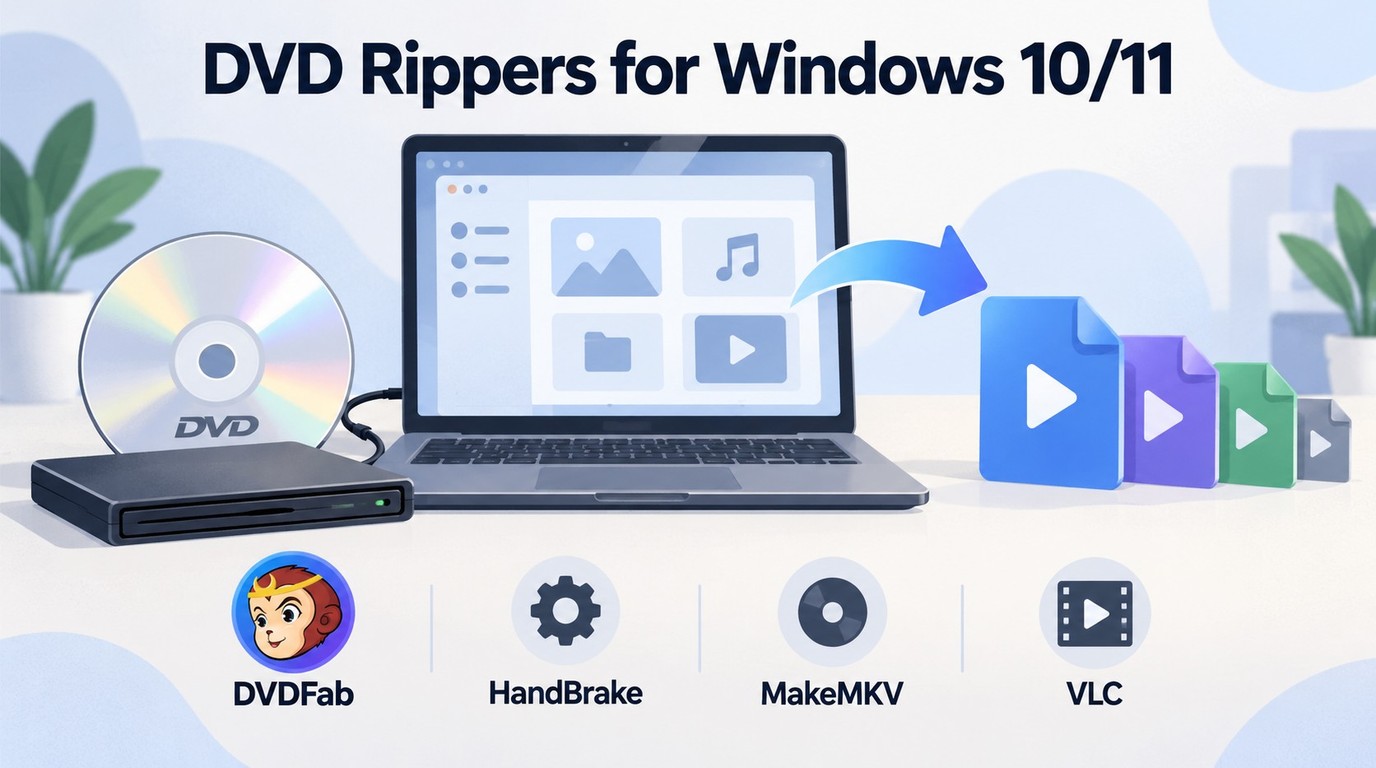 4 Free DVD Rippers for Windows 10/11: Best Tools & Step-by-Step GuideBy Diana Smith - Oct 13, 2026
![How to Convert DVD to AVI Free: 3 Current Options [2026]](https://images.dvdfab.cn/artifact/2026/09/17/2HqH4KgGwIXxwkHdUUZtp0D98DCpL4gS/feature_cover.jpg) How to Convert DVD to AVI Free: 3 Current Options [2026]By Diana Smith - Oct 12, 2026
How to Convert DVD to AVI Free: 3 Current Options [2026]By Diana Smith - Oct 12, 2026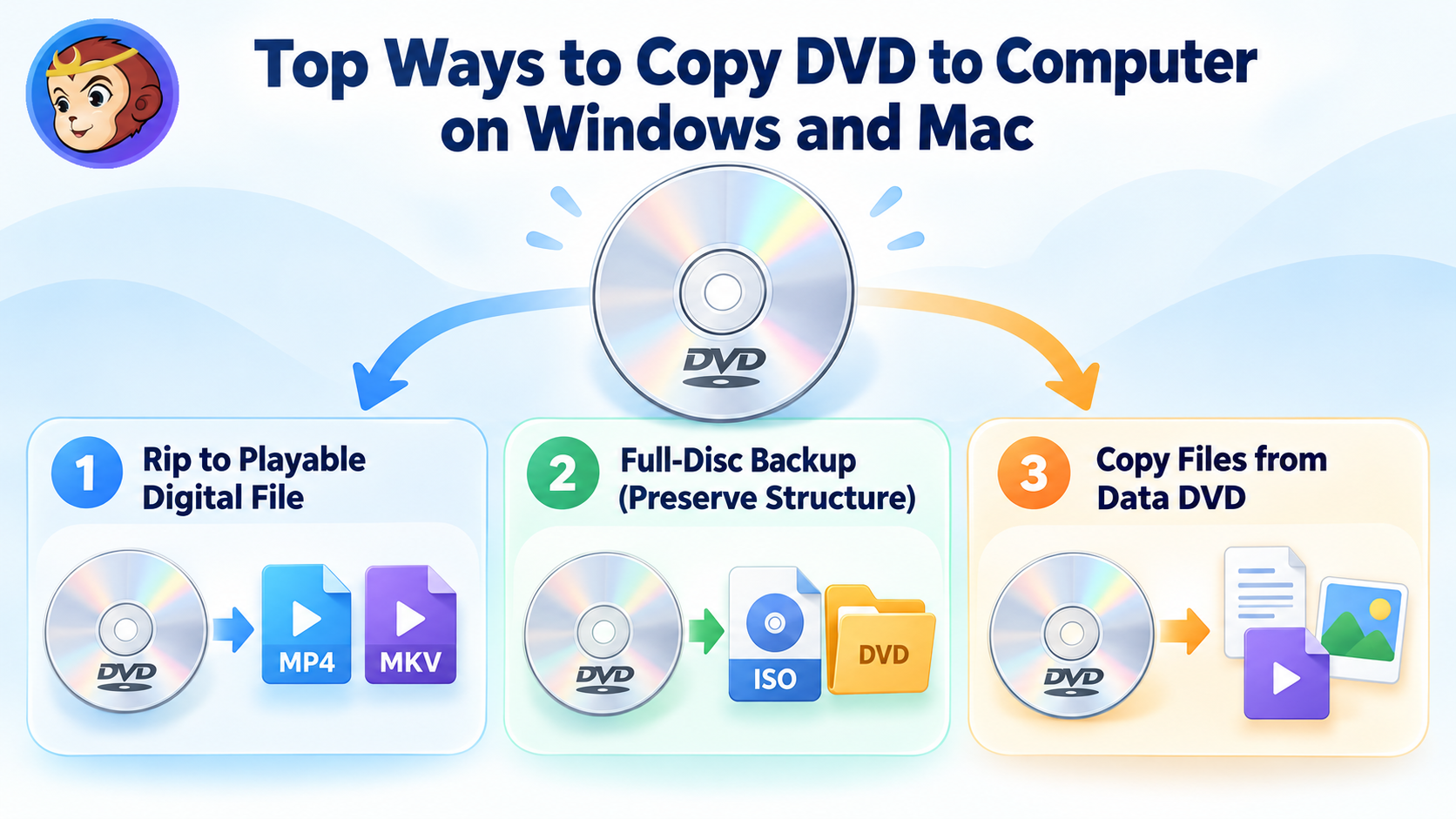 How to Copy DVD to Computer on Windows & Mac: Rip and Direct CopyBy Wenny Yan - Oct 12, 2026
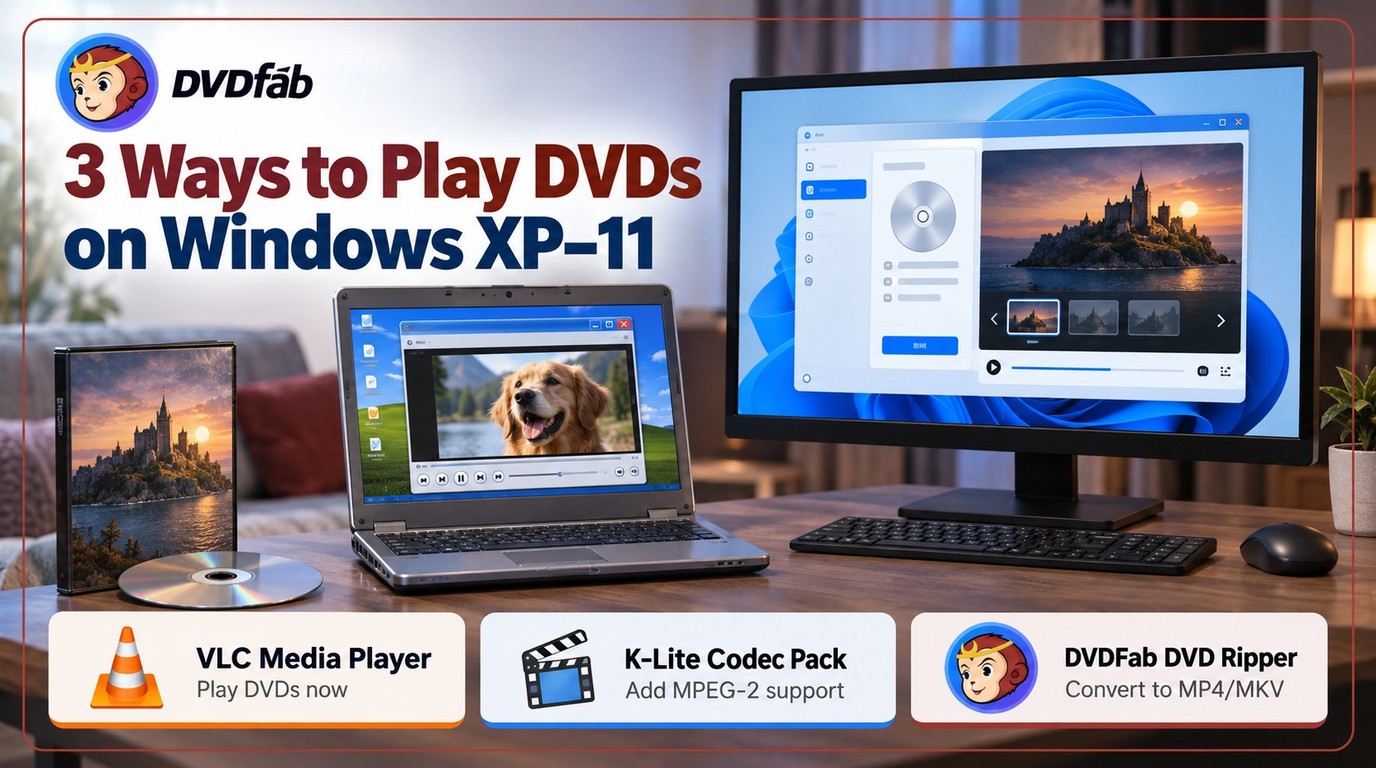 Free DVD Decoder for Windows XP and Windows 11: 3 Ways to Play DVDsBy Diana Smith - Sep 23, 2026