Burn CDs on Windows 10: Audio and Data Discs

Summary: To burn cd windows 10, you need a writable CD/DVD drive, a blank CD-R or CD-RW, and the right built-in tool: File Explorer for a data CD, or Windows Media Player Legacy for an audio CD. The newer Media Player app no longer provides CD burning, audio CDs are limited to about 80 minutes/700MB, and CD-R at a moderate speed is usually safer for old car stereos than CD-RW. Start by deciding whether the disc must play in a CD player or only store files, then insert a blank disc and follow the matching workflow below.
Table of Contents
If your car stereo will not read a USB drive, or you need a small archive disc for documents and photos, Windows already includes the tools to burn CDs on Windows 10. Choose an audio CD for standard players or a data CD for file storage.
Burning a CD in Windows 10 usually follows one of two paths: use File Explorer for a data CD that stores files, or use Windows Media Player Legacy for an audio CD that plays in a standard CD player. The newer Media Player app does not provide the old Burn tab, so do not spend time looking for Play/Burn/Sync there.
Windows 10 and 11 Burn CDs with Built-in Tools
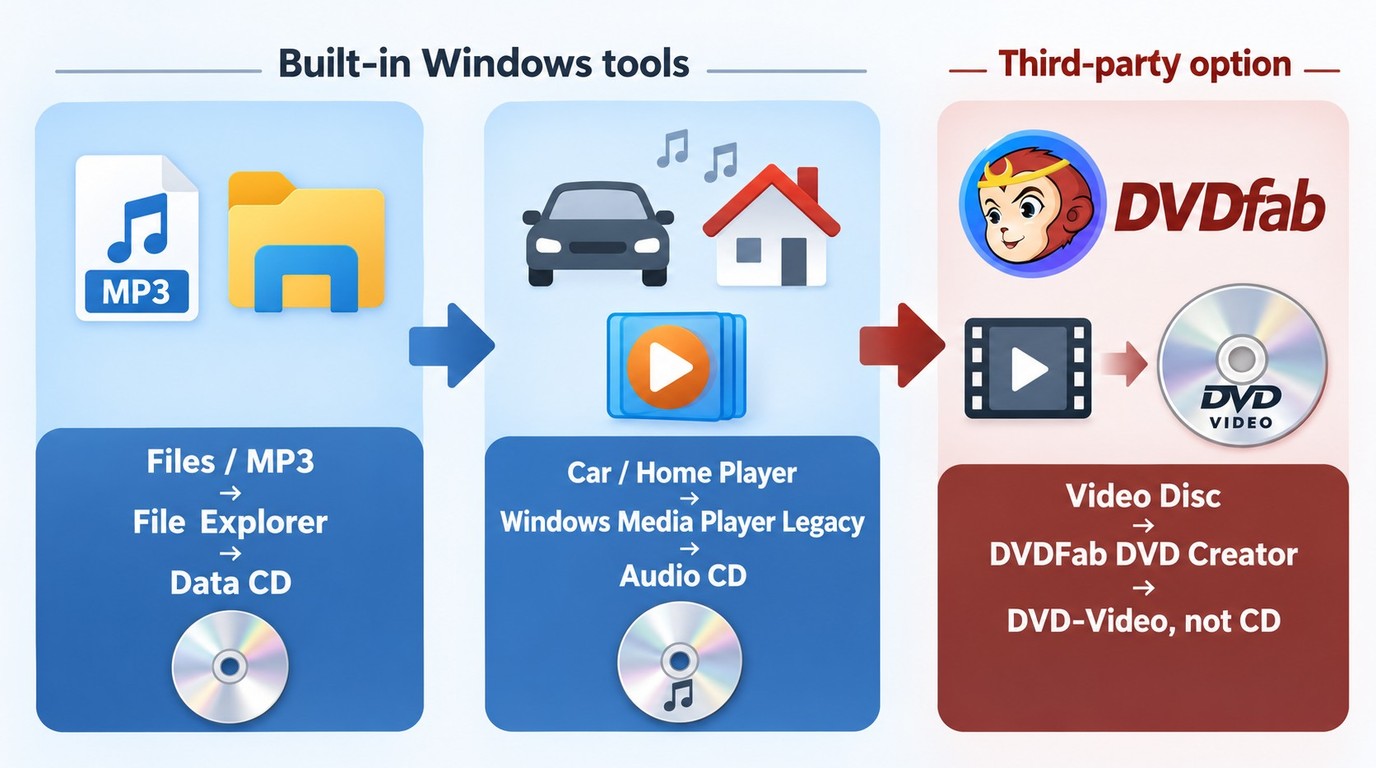
Short answer: yes, Windows can burn CDs without extra software, but the built-in tool depends on the disc type. File Explorer burns data CDs and DVDs. Windows Media Player Legacy burns audio CDs. You also need a writable optical drive, such as a CD-RW or DVD±RW drive, plus a blank CD-R or CD-RW.
| Goal | Use this tool | Key limit |
|---|---|---|
| Store files, photos, documents, installers, or MP3 files as files | File Explorer | This creates a data CD, not a standard audio CD. |
| Play music in a car stereo, home CD player, or older CD deck | Windows Media Player Legacy | Use Audio CD; total play time is usually about 80 minutes. |
| Make a video disc for a DVD player from MP4, MKV, or similar files | DVD authoring software | File Explorer stores files; DVD authoring on Windows creates playable DVD-Video. |
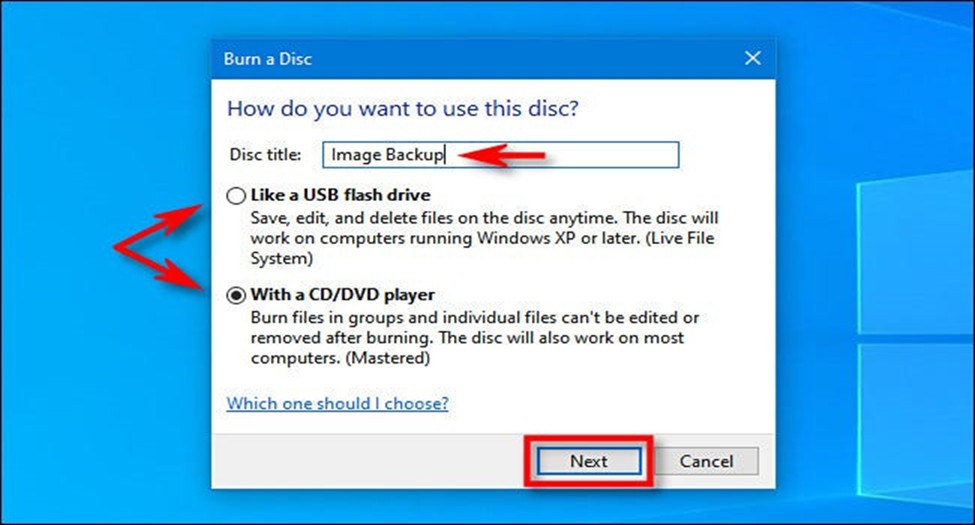
For old car stereos and standalone players, CD-R is usually easier to read than CD-RW. CD-RW is reusable, but some older drives cannot read it reliably. For data discs, Windows also asks whether to use Like a USB flash drive or With a CD/DVD player; choose the second option when compatibility matters.
File Explorer Burns Data CDs on Windows 10
Use this method when you want to store files on a CD, such as photos, PDFs, Word documents, MP3 files, ZIP files, or installers. Choosing With a CD/DVD player still creates a data disc; it does not convert MP3 files into a standard audio CD. If you want the disc to play as a normal music CD in a car stereo, skip to the Windows Media Player Legacy section instead.
Step 1. Insert a blank writable CD
Insert a blank CD-R or CD-RW into a writable optical drive. If your laptop does not have a built-in drive, use an external USB CD/DVD writer. If Windows keeps asking you to insert a blank disc, check that the drive can write discs, not only read them, and try a new unused CD-R.
Step 2. Send files to the optical drive
Open File Explorer, select the files or folders you want to burn, right-click the selection, and choose Send to > DVD RW Drive. On some Windows 11 menus, you may need to click Show more options first.
Step 3. Choose the burning mode
Windows will show the Burn a Disc dialog. Enter a disc title, then choose one of these modes:
| Option in Windows | What it means | When to use it |
|---|---|---|
| Like a USB flash drive | Live File System. You can add, rename, and delete files later on supported Windows computers. | Useful for moving files between modern PCs. Compatibility with older devices is weaker. |
| With a CD/DVD player | Mastered disc. Windows stages the files and writes them to the disc in one session. | Better for older computers, car stereos that read MP3 data discs, and general compatibility. |
Live File System: Like a USB Flash Drive
After you choose Like a USB flash drive, Windows formats the disc for Live File System use and opens the disc drive window.
Step 1. Add files to the disc in File Explorer
1. Drag and drop files and folders into the disc window, or copy and paste them there.
2. Windows writes the files to the disc in the background.
3. As long as the disc has available space, you can continue adding files. On CD-RW, you can reuse the disc after erasing it. On CD-R, deleting a file may hide it from view, but it does not restore the already written space.
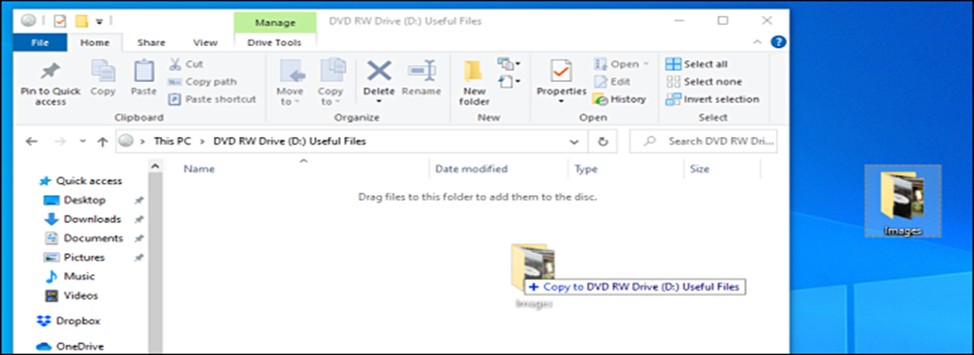
Step 2. Eject the disc when finished
1. When you are done, right-click the optical drive in File Explorer and choose Eject.
2. Wait until Windows finishes writing any pending changes.
3. Use this disc mainly on computers and drives that support Live File System discs.
Mastered Discs: With a CD/DVD Player
After you choose With a CD/DVD player, Windows copies the selected files to a temporary staging area first. The files are not written to the disc until you start the final burn. This mode creates a mastered data disc; it does not convert MP3 files into a standard audio CD.
Step 1. Add files to the staging area
1. File Explorer opens a disc window named Files Ready to Be Written to the Disc.
2. Drag and drop or copy and paste the files and folders you want to burn into this window.
3. Check the total size before burning. A standard CD holds about 700MB.
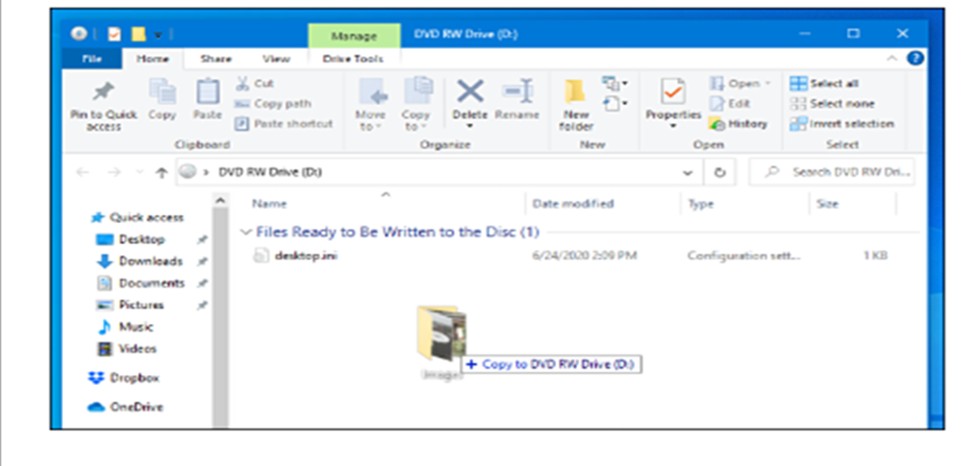
Step 2. Start burning the disc
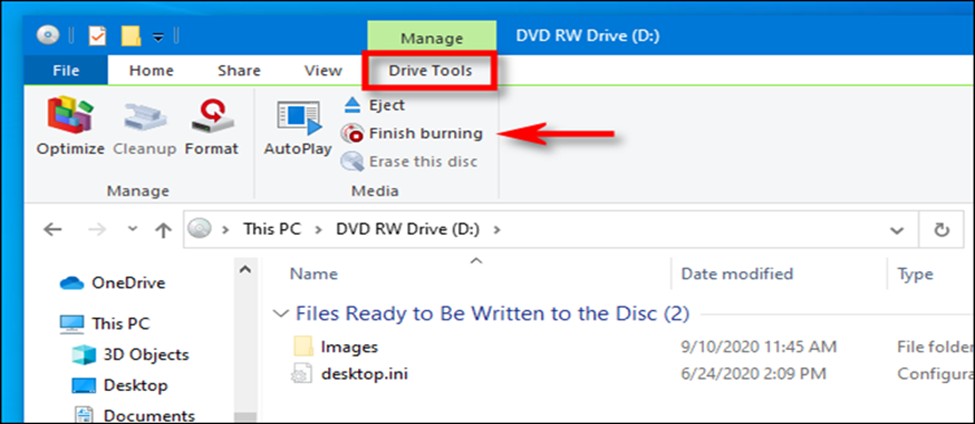
1. Open File Explorer, click Drive Tools, and then click Finish burning. You can also right-click the optical drive icon and choose Burn to disc.
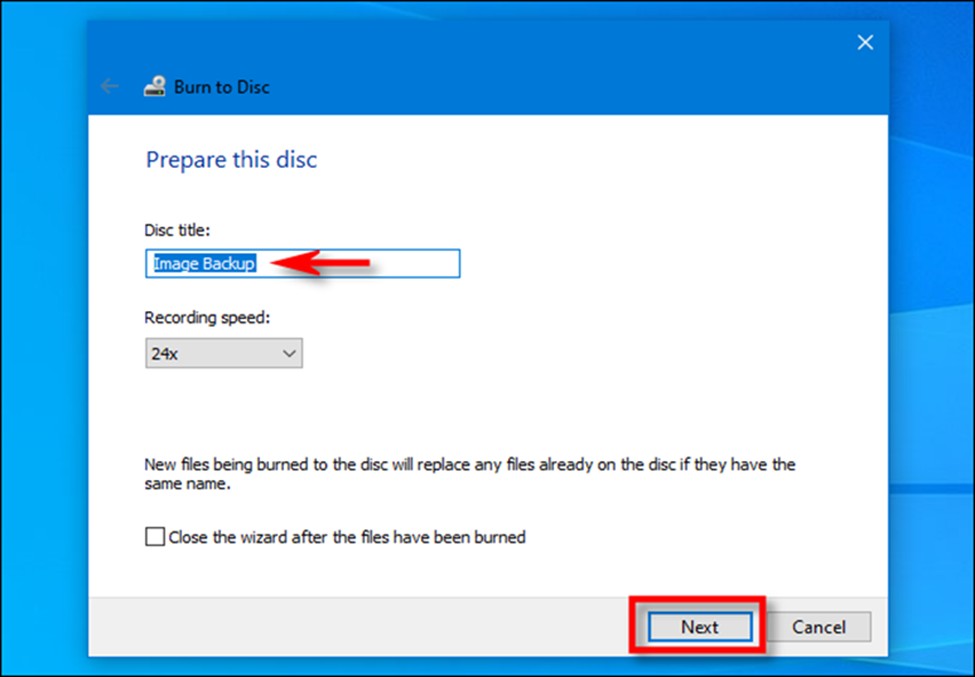
2. In the Burn to Disc wizard, enter a disc title and choose a recording speed supported by your writer and blank disc. If a burn fails, try another available speed, but changing the speed cannot make an unsupported disc type compatible with a player.
Step 3. Wait for Windows to finish
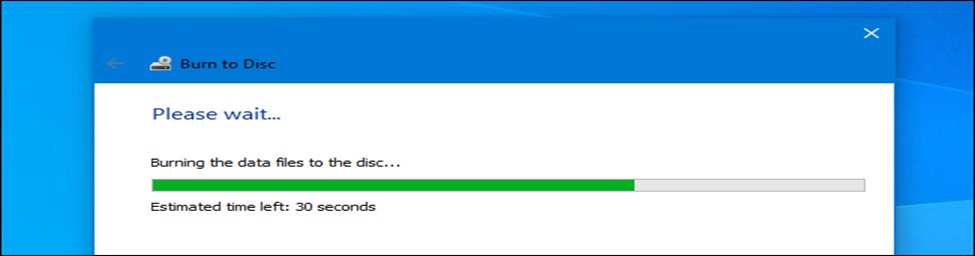
1. Windows shows a progress bar while it writes the files. Do not remove the disc or disconnect the USB optical drive during this step.
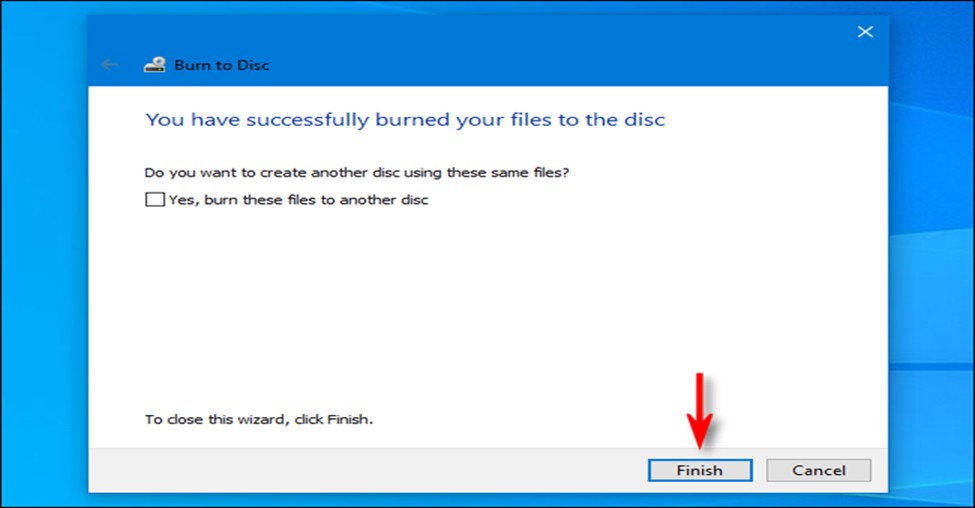
2. If Windows asks whether you want to burn the same files to another disc, choose Yes, burn these files to another disc only if you need another copy. Otherwise, click Finish.
Windows Media Player Legacy Burns Audio CDs
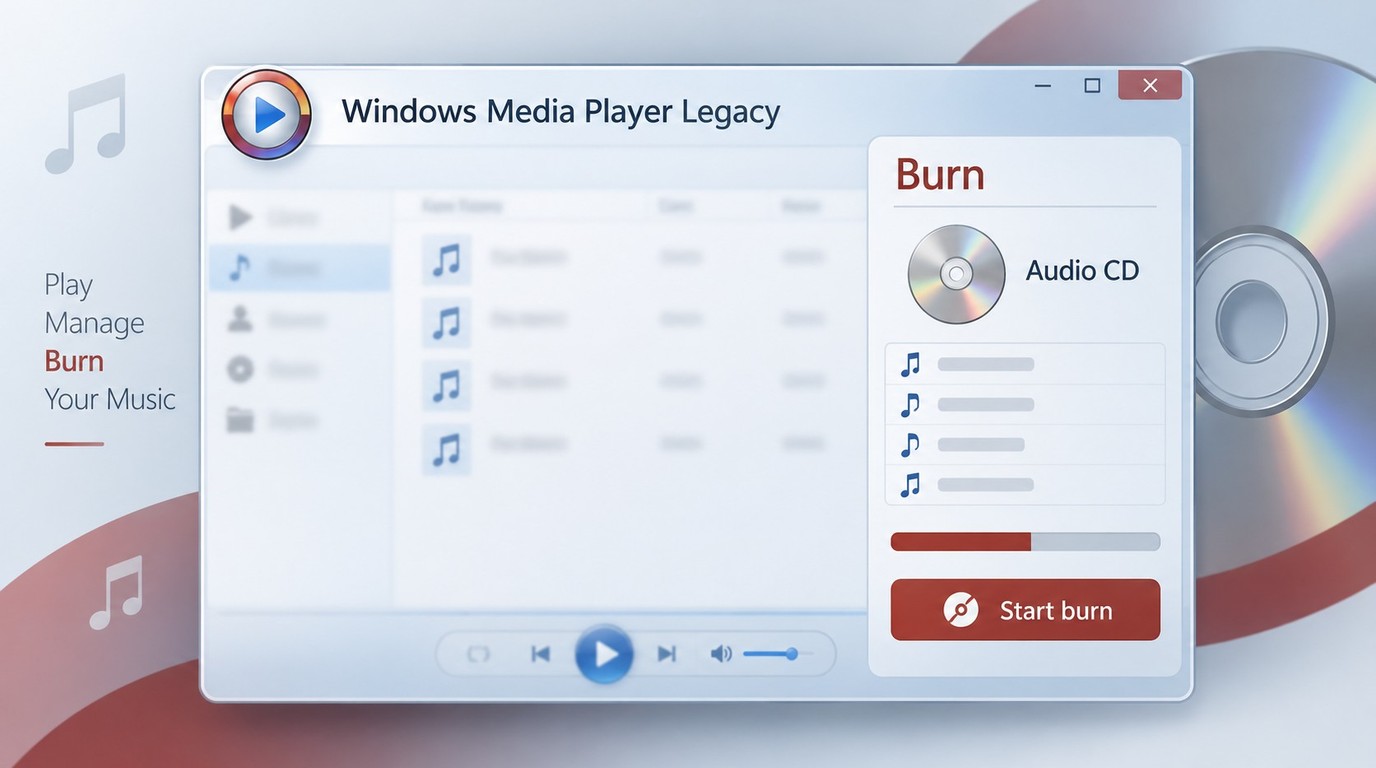
Use this method when you want a disc that plays like a regular commercial audio CD in a car stereo, home CD player, or older CD deck. For the built-in audio CD burner Windows 10 option, use the legacy Windows Media Player interface, not the newer Media Player app.
On Windows 10, search for Windows Media Player from the Start menu and open the app that shows the classic library with the Play, Burn, and Sync tabs. On Windows 11, search for Windows Media Player Legacy. If you use a Windows N edition and cannot find it, install the Media Feature Pack from Windows Settings or Microsoft Support.
Step 1. Insert a blank CD-R
Insert a blank CD-R into a writable optical drive. CD-RW can work in some drives, but CD-R is the safer choice for old car stereos and standalone CD players.
Step 2. Open the Burn tab
In Windows Media Player Legacy, click the Burn tab on the right side. If you do not see a Burn tab, you are likely using the newer Media Player app, which no longer includes CD burning.
Step 3. Choose Audio CD
Open the Burn options menu and choose Audio CD. Do not choose a data disc if the goal is normal CD player playback.
Step 4. Add songs to the burn list
Play each local audio file in Windows Media Player Legacy before adding it to the burn list. If a song was moved or is missing, restore the file or add its current local copy to the library and burn list. Drag the playable songs from your music library into the burn list. Keep the total time within the disc limit; a standard audio CD usually holds about 80 minutes.
Step 5. Start burning
Click Start burn. Do not use the PC heavily, eject the disc, or unplug an external drive while the disc is being written. If the burn fails, try a new CD-R and another recording speed supported by the writer and disc.
If your search was "burn music CD Windows 10," this is the path to use for car and home CD players. Burn only music you own or are authorized to use; unauthorized copying or redistribution may be illegal, so do not use this process for content you do not have permission to copy.
CD-R, CD-RW, and Burn Settings That Affect Compatibility
The blank disc and burn settings matter as much as the software. Check the media type, recording mode, writer capability, and the player's supported disc formats separately when a burned disc fails.
| Item | Better choice for compatibility | Why it matters |
|---|---|---|
| Disc type | CD-R for old players and car stereos | CD-R is write-once, but older devices usually read it more reliably than CD-RW. |
| Reusable disc | CD-RW only when you need to erase and rewrite | CD-RW is convenient for testing, but some older players will not read it. |
| Audio CD length | Up to about 80 minutes | An Audio CD holds up to about 80 minutes of music. A standard data CD holds about 700 MB of files. |
| Burn speed | Use a supported moderate speed | A different recording speed can be tried when a writer or blank disc reports a write problem, but it cannot make an unsupported disc type playable. |
| Data CD mode | With a CD/DVD player | Mastered discs are easier for older computers and many non-PC devices to read. |
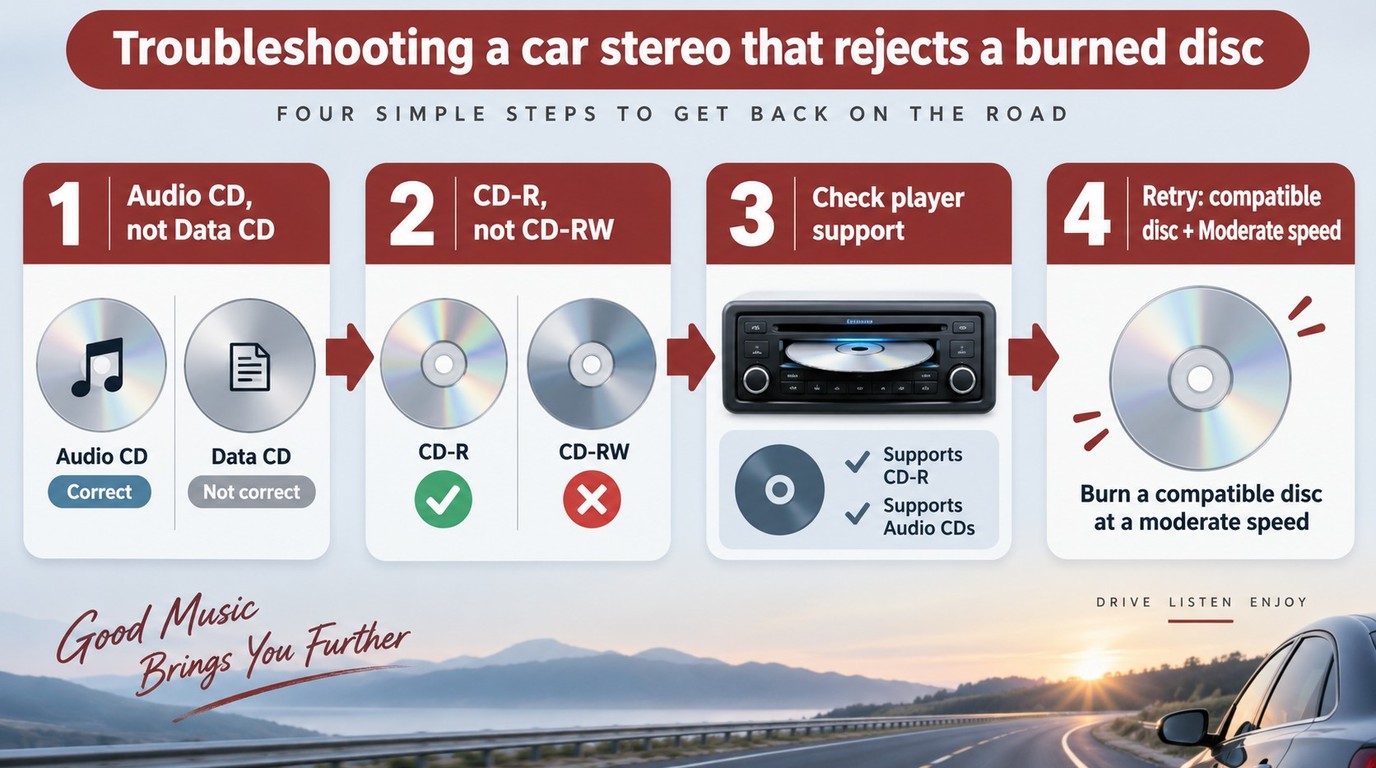
If a burned music disc will not play in a car, check three things first: whether you made an Audio CD instead of a data CD, whether the disc is CD-R instead of CD-RW, and whether the player supports the recorded disc type.
| Symptom | Check | Next step |
|---|---|---|
| A song cannot be burned | Play the local file in Windows Media Player Legacy | Restore moved files and add their current copies |
| A data CD is rejected by an audio-only player | Check whether the disc contains files instead of Audio CD tracks | Burn an Audio CD with Windows Media Player Legacy |
| The burn fails or the disc is blank | Check the writable drive and compatible blank media | Try supported media or a different recording speed |
Windows CD Burners for Tasks Beyond Built-in Tools
For basic data CDs and audio CDs, start with Windows tools. Third-party software becomes relevant only when you need a workflow Windows does not provide, such as disc-image formats or controls beyond Windows' built-in ISO burner, broader audio format support, or video DVD authoring. If a tool includes disc copying or ripping functions, use those functions only with content you own or are authorized to handle, and follow local laws.
For a broader Windows utility list, see this CD/DVD burner resource, but keep the disc type in mind before installing anything.
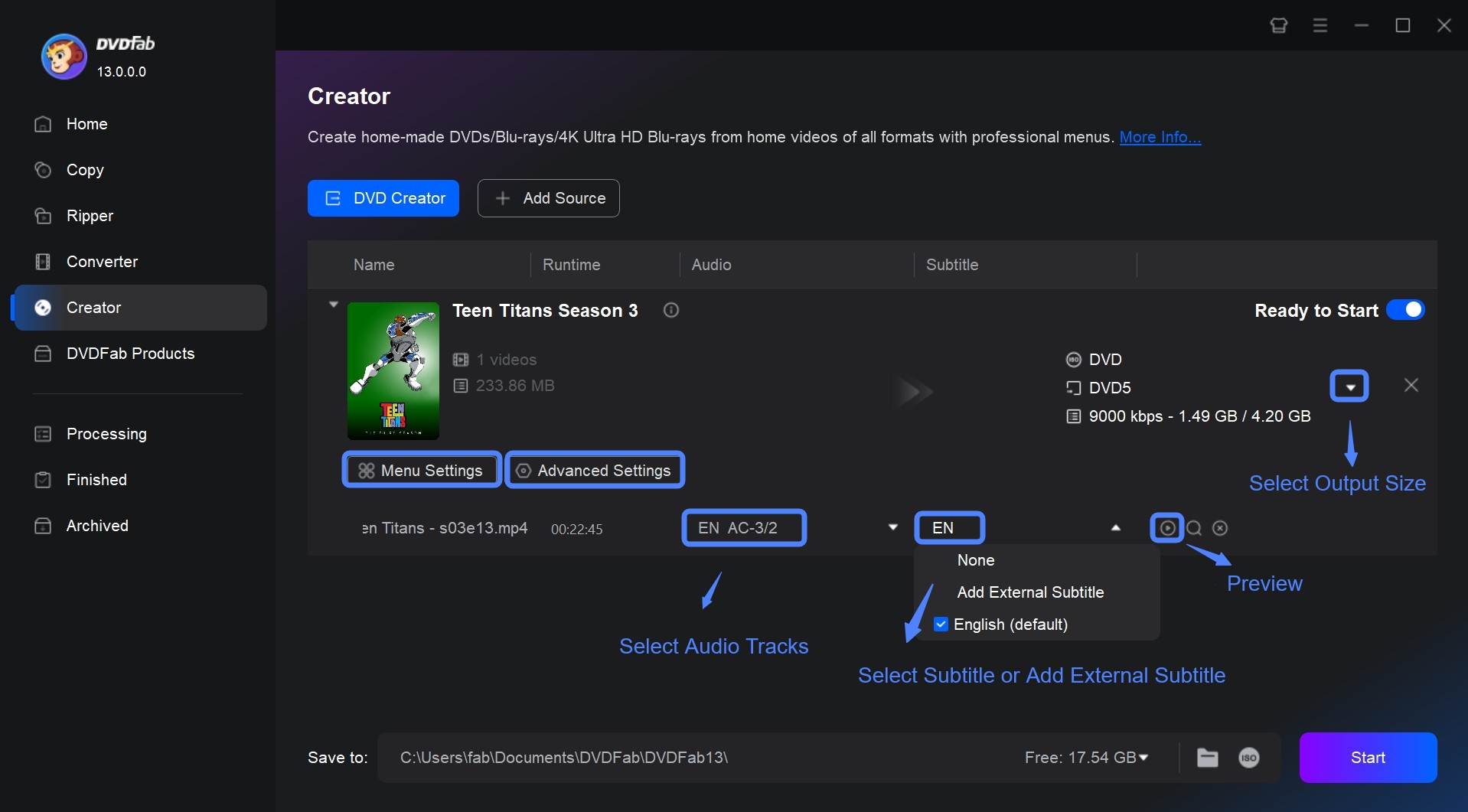
DVDFab DVD Creator
DVDFab DVD Creator is a professional disc burner that works with Windows 10. It can burn a lot of different video formats to DVDs, like MP4 and MKV. It also has advanced features like the ability to customize DVD menus and process multiple files at once. It gives great results and is good for people who want more control over the burning process.
It can only make DVDs, not burn MP3 to DVD or CD, but there is a way around this that works better. You can convert your audio files into video files, burn them to a DVD with DVDFab, and then play that DVD in your car player just like a regular CD. This is because many modern devices can play both CDs and DVDs. I have tried this method, and in my experience, the sound quality is better than what you get when you burn music with the built-in Windows 10 burning tool. A DVD also has a lot more space to store things. When you want to burn CDs on Windows 10, I suggest you give this method a try.
💻Available on:
Free Download Windows 11/10/8.1/8/7
Free Download macOS 12 or newer
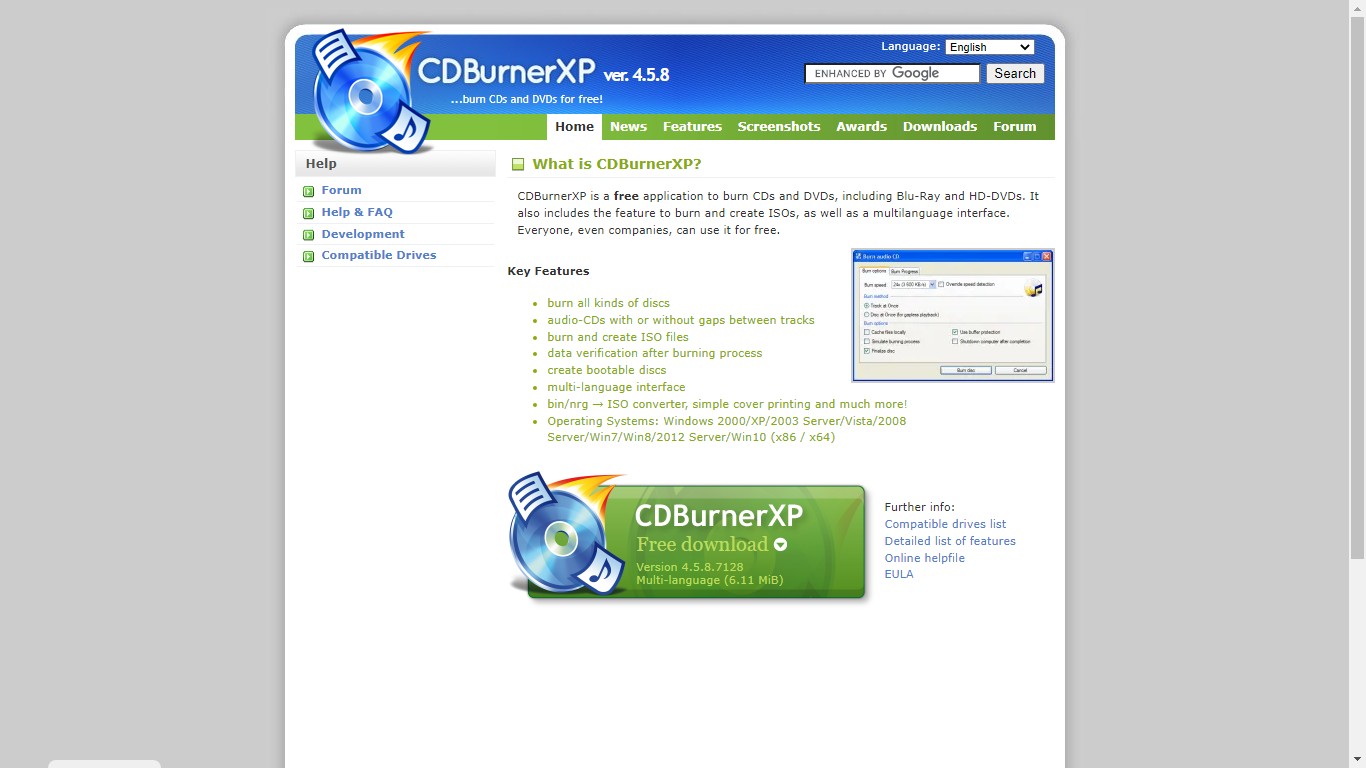
CDBurnerXP - Free Windows CD Burning
For ordinary data CDs and audio CDs, Windows File Explorer and Windows Media Player Legacy already provide the necessary built-in tools. Use a separate Windows CD burner only when you need a task that the native tools do not cover, such as a specific disc-image operation.
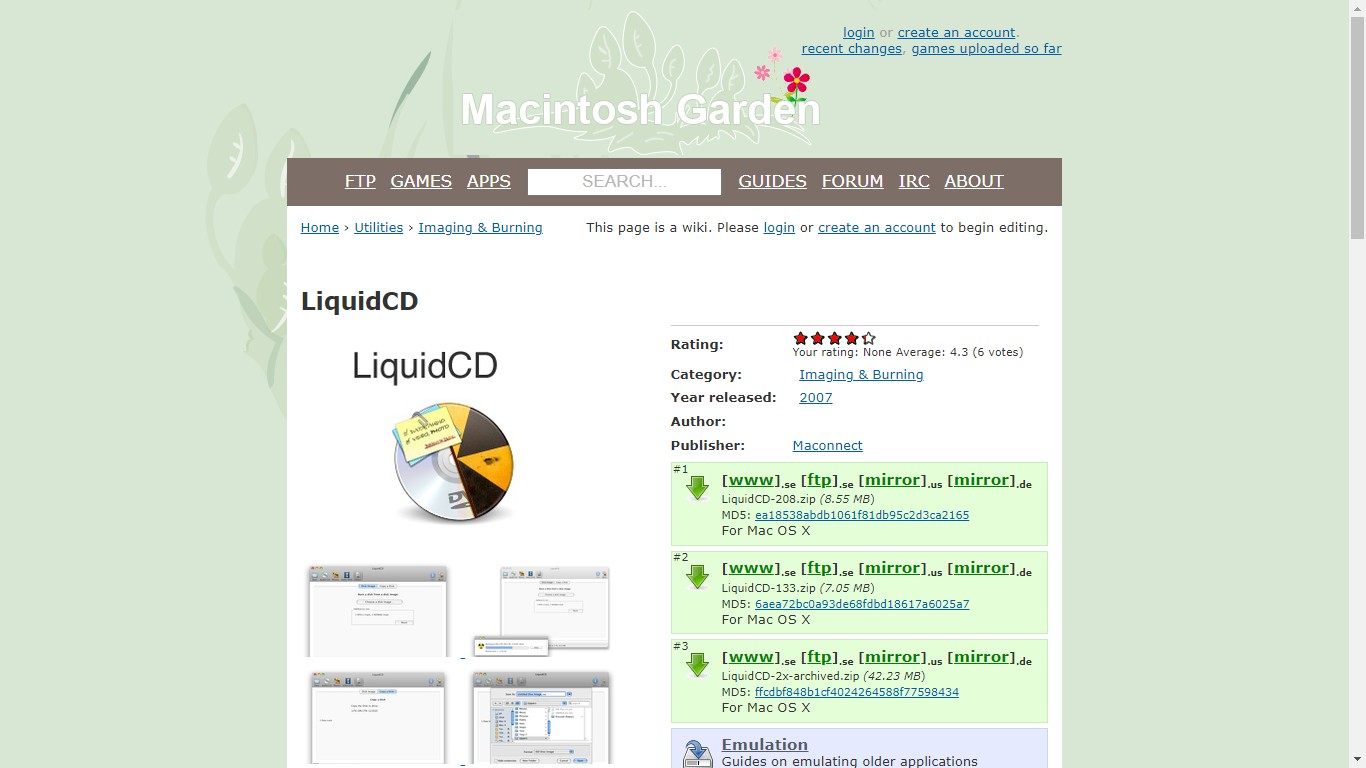
LiquidCD - Audio CD or Data CD
Choose an Audio CD when the disc must play in a standard audio-only player. Choose a data CD when the target computer or player supports the files you are storing, such as MP3 tracks; copying MP3 files to a disc does not create standard Audio CD tracks.
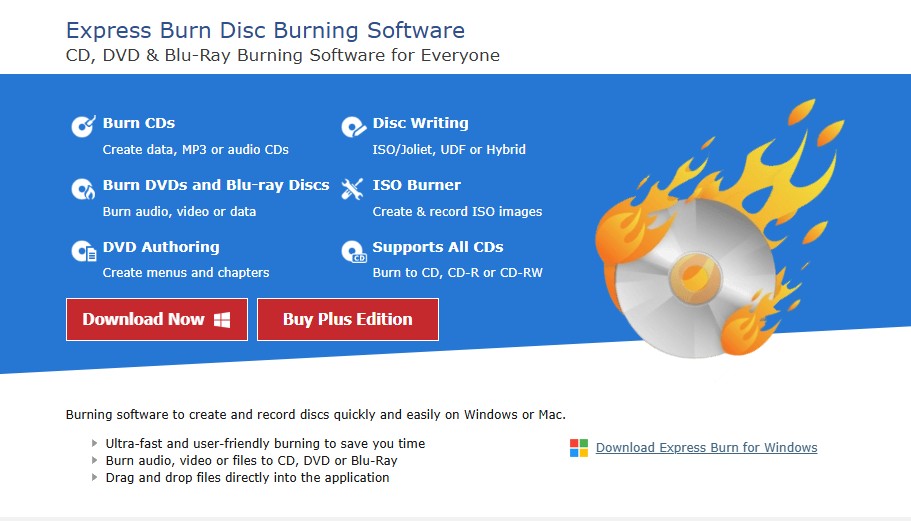
Express Burn Free
Express Burn Free by NCH Software is an alternative to Windows Media Player Legacy for burning local tracks to an audio CD. It supports WAV, MP3, WMA, OGG, and FLAC audio inputs. Its free version is for non-commercial audio and data CD burning; DVD and Blu-ray burning are paid features.
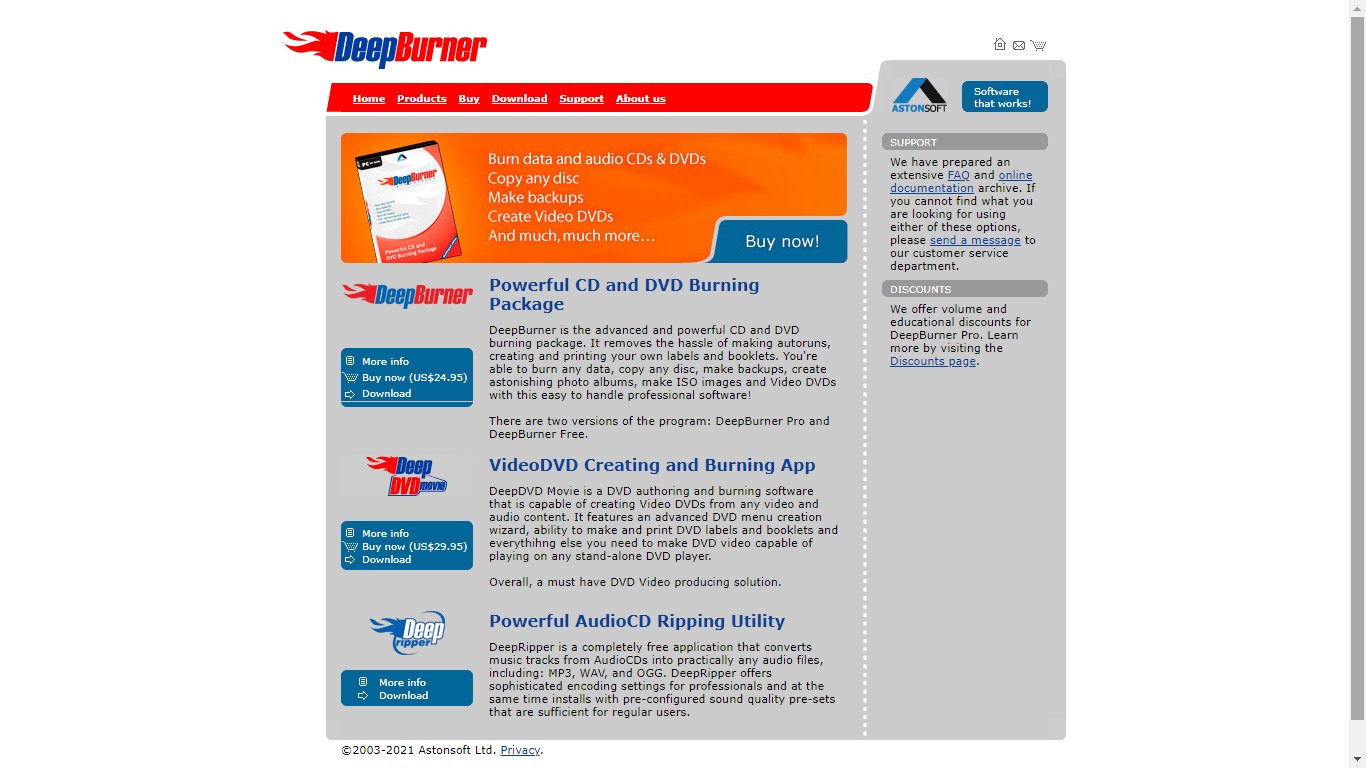
DeepBurner Free
DeepBurner Free supports data CDs and data DVDs; video-DVD authoring is a DeepBurner Pro feature.
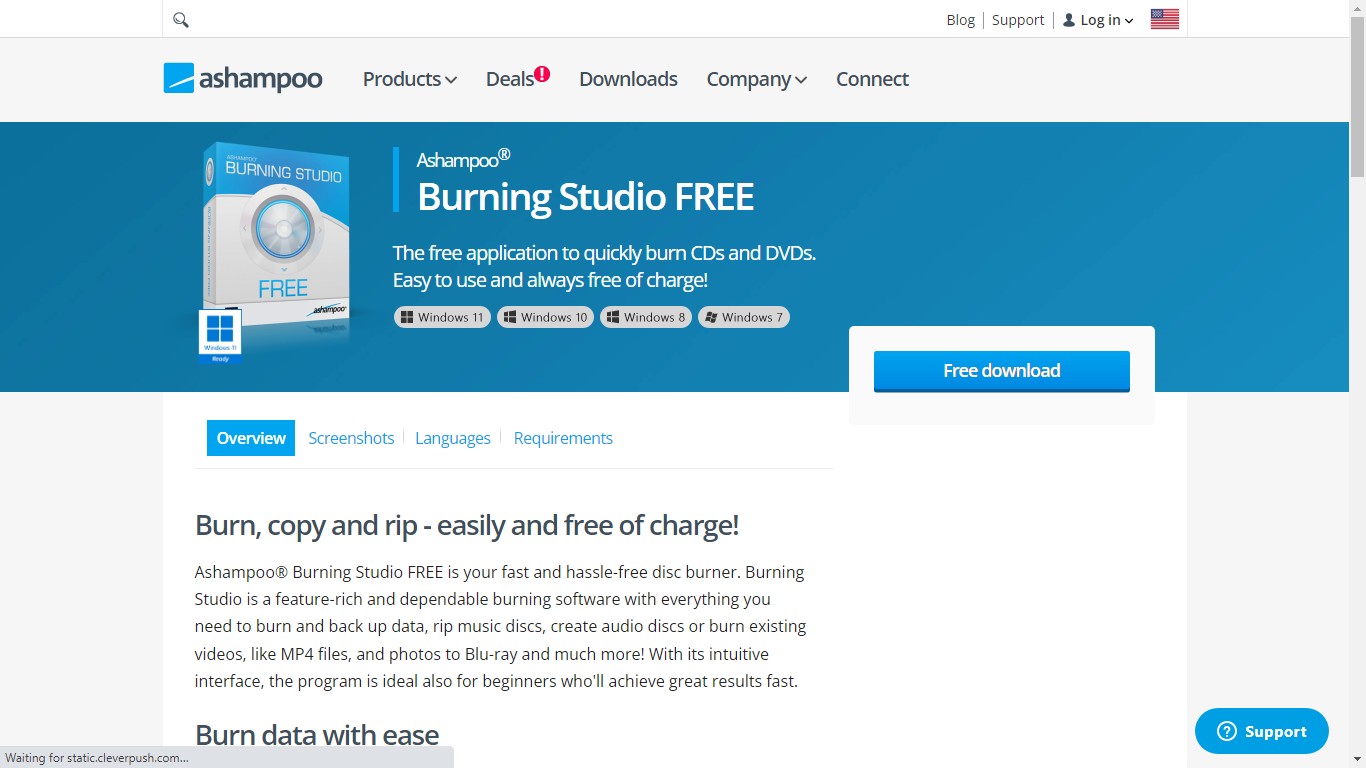
Ashampoo Burning Studio Free
As of October 2026, Ashampoo Burning Studio 27 is the current paid edition, while Ashampoo Burning Studio Free is a separate product for Windows 10 and Windows 11. The Free edition burns audio CDs and data discs and requires one-time registration, making it an option when the built-in Windows tools do not cover the task.
FAQs
Can I use MP3 files to make an audio CD?
Yes. In Windows Media Player Legacy, insert a blank CD-R, open Library, select Burn, choose Burn options > Audio CD, drag playable local MP3 tracks into the burn list, and select Start burn.
An Audio CD is limited by total track duration, up to about 80 minutes. An MP3 data disc is limited by file size instead and requires a player that supports MP3 data discs.
Why does Media Player say a song cannot be burned?
Play the song in Windows Media Player Legacy first. If the file was moved, renamed, or deleted, restore it or add its current local copy to the library and burn list because a library entry or playlist is not the audio file itself. If every selected file plays correctly but recording still fails, check that the optical drive can write discs and try a compatible blank disc.
Can I burn an ISO image with Windows 10?
Yes. Insert suitable blank optical media, right-click the ISO file, choose Burn disc image, select the recorder, and enable Verify disc after burning when available. If a recording-speed option is available, select a speed supported by the writer and disc. ImgBurn 2.5.8.0 was released on June 16, 2013; Windows 10 already includes Burn disc image for writing an ISO to suitable blank optical media.
Where is the Burn tab in Windows Media Player?
The newer Media Player app no longer includes CD burning. On Windows 10, open the classic Windows Media Player interface that shows Play, Burn, and Sync. On Windows 11, search for Windows Media Player Legacy. On Windows N editions, install the Media Feature Pack if Windows Media Player is missing.
Why won't my burned CD play in my car?
If the disc contains MP3 files copied through File Explorer, it is a data CD, not a standard audio CD. For an audio-only car stereo, burn an Audio CD in Windows Media Player Legacy, use media the stereo supports, preferably CD-R for older players, and keep the track list within the disc's labeled duration. Lowering the burn speed cannot make an unsupported disc type playable.
Final Words
To burn CDs on Windows 10, choose by playback target: File Explorer for a data CD and Windows Media Player Legacy for a standard Audio CD. For older devices, use supported CD-R media and recording settings offered by your writer. If you are actually making a playable video DVD from MP4 or MKV files, DVDFab DVD Creator software can fit that DVD authoring scenario, but it is not a direct audio CD burner.

 Convert Video to DVD: 5 Free & Paid Video to DVD Converters [2026]By Diana Smith - Oct 14, 2026
 How to Make Your Own DVDs on Mac and WindowsBy Wenny Yan - Oct 14, 2026
 How to Convert MKV to DVD: 4 Tested Tools for Playable Discs (2026)By Wenny Yan - Oct 12, 2026
 How to Transfer and Burn iPhone Videos to DVD on Windows & MacBy Diana Smith - Oct 10, 2026