DVD Regions Explained: Codes, Compatibility, and Playback Options
Summary: DVD region codes are DRM restrictions that limit playback by market. The U.S. uses Region 1, while Europe and Japan use Region 2. Region 0/ALL discs are not region-coded, but PAL/NTSC support still matters. For imported DVDs, check the disc region, video format, and player support before using a region-free player, changing a computer drive region, or making a local digital copy.
When an imported DVD will not play in a U.S. player, compare the disc’s region, its PAL or NTSC video standard, and the player’s support. Region 1 is the usual U.S. DVD region, but a matching label alone does not guarantee playback. This guide explains DVD regions, DVD region codes, and four playback options.
DVD Regions and U.S. Playback Basics
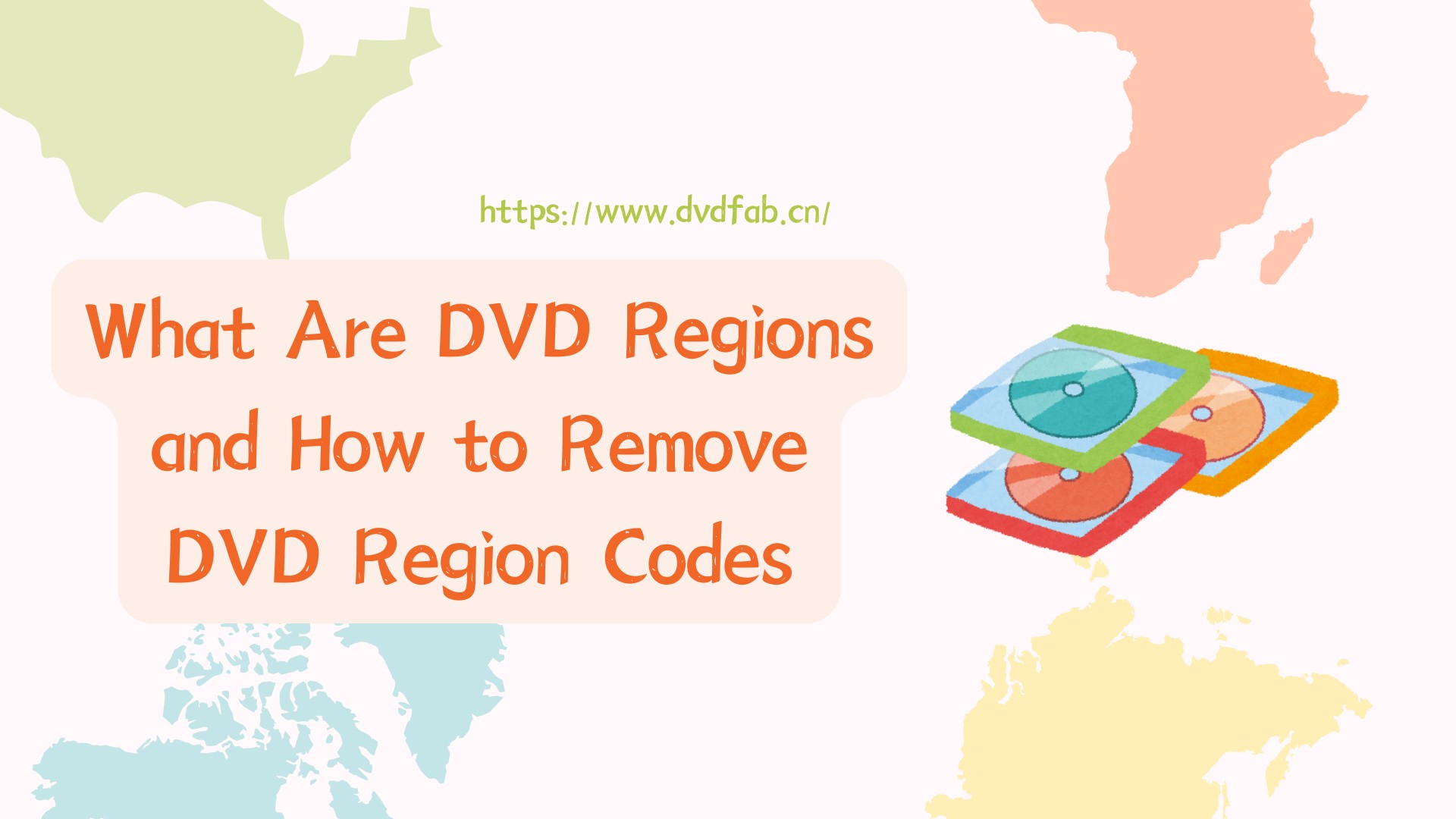
DVD regions, or DVD region codes, are digital flags on DVD-Video discs and players that restrict playback by geographic market. Standard U.S. DVD players normally use DVD Region 1 in the United States, so the disc and player generally need to match. PAL or NTSC support and the exact player or drive can still affect the result.
Many standard DVDs and Blu-rays still use region coding, while most 4K UHD movie discs are not region-coded. I treat the region label as the first check, not the final answer, because the video standard and playback device can cause the same imported-disc failure.
DVD Region Codes
| Disc label | Typical U.S. device | Video standard | Likely result | Best next check |
| Region 1 DVD | Standard U.S. player | NTSC | Usually plays | Confirm disc condition |
| Region 2 DVD | Standard U.S. player | PAL or NTSC | Usually blocked | Check player region support |
| Region 0/ALL DVD | NTSC-capable U.S. device | NTSC | Often plays | Confirm device support |
| Region 0/ALL DVD | Standard U.S. player | PAL | May fail | Check PAL output support |
| Region ABC Blu-ray | Compatible Blu-ray player | Disc-dependent | Often plays | Confirm Blu-ray support |
| Most 4K UHD movies | UHD-capable player | Disc-dependent | Usually no region block | Confirm UHD compatibility |
💡A Region 0 DVD, often labeled ALL, is not limited to one DVD region. It is also called “region-free” or “all regions,” but PAL or NTSC support and the playback device still matter.
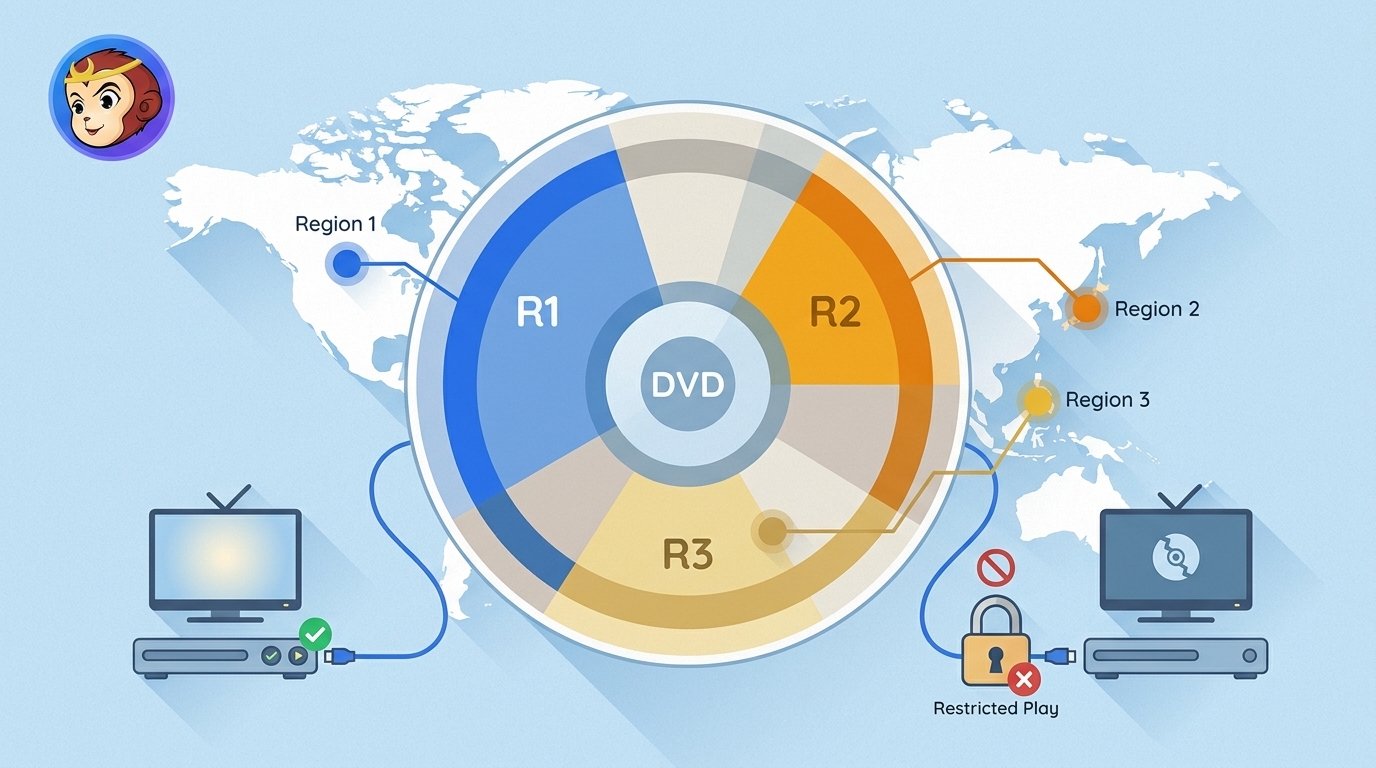
This DVD regions map shows the numbered DVD markets. Region 9 is not an official DVD disc region; it may appear only as a vendor- or firmware-specific player setting.

DVD, Blu-ray, 4K UHD, and CD Regions
DVDs use numbered regions, while Blu-ray discs use lettered regions:
- Region A covers the Americas and much of East and Southeast Asia.
- Region B covers most of Europe, the Middle East, Africa, Australia, and New Zealand.
- Region C covers Central Asia, South Asia, mainland China, and nearby areas.
Notes: Region ABC is a Blu-ray label intended for all three Blu-ray regions. Most 4K UHD movie discs are not region-coded, although you still need a UHD-capable player. Standard audio CDs do not use DVD-style geographic region codes; other disc formats can have separate compatibility rules.
Why Do DVD Regions Exist?
DVD regions exist mainly for business reasons tied to how media is released and sold. Here are a few specific reasons:
Release Dates
Movies often debut on different dates in different countries. With region-coded DVDs, studios can limit viewing before a local release.
Pricing
Prices can differ by region because of income levels, tax rules, and market conditions. DVD Region coding lets studios set different prices across regions.
Censorship and Legal Issues
Some content is illegal or censored in certain places. Region-specific DVDs help distributors comply with local laws and rules.
Control Over Content Distribution
DVD Regions give more control over where and how content is distributed worldwide, which can affect licensing deals with broadcasters and streaming services.
Checking a DVD Region Before Playback
Before buying or playing an imported DVD, check three things in order: the region label, the PAL or NTSC video standard, and the exact player or drive. If you are unsure where the disc came from, use the checks below.
- Check the back cover or disc label. Look for a small globe icon with a number inside it. A U.S. DVD normally shows Region 1. A UK or Japan DVD often shows Region 2.
- Check the product listing before buying. On Amazon, eBay, or a specialist import store, look for “Region 1,” “Region 2,” “Region 0,” “ALL,” “NTSC,” or “PAL” in the listing details. For an imported disc, I would check these details before placing the order, not after the player rejects it.
- Read the error message. A message such as "disc prohibited by area limits" or "region code error" usually means the player and disc regions do not match.
- Use a disc-info utility on a computer. Tools such as DVD Info Pro or Nero InfoTool may show region details when the disc can be read.
- Do not spend limited computer-drive region changes on testing. Windows and macOS can show or change a computer DVD reader region, but the allowed number of changes depends on the drive and system.
- My check is: region code first, PAL or NTSC compatibility second, and player or drive support third. Many imported-disc playback problems come from checking only one of those three.
Four Ways to Handle DVD Region Limits
A local video file is useful for portability, region-free hardware suits disc-first viewing, model-specific settings require verified instructions, and drive-region changes make the most sense when you mainly use one disc region on a computer.

It's essential to remember that DVD regional codes are there for a reason, and it's important to respect those regulations. The following solutions are for educational purposes only. Please bear in mind that removing DVD copy protection such as those regional codes from your DVDs is for personal use only.
Convert a DVD to a Local Video File
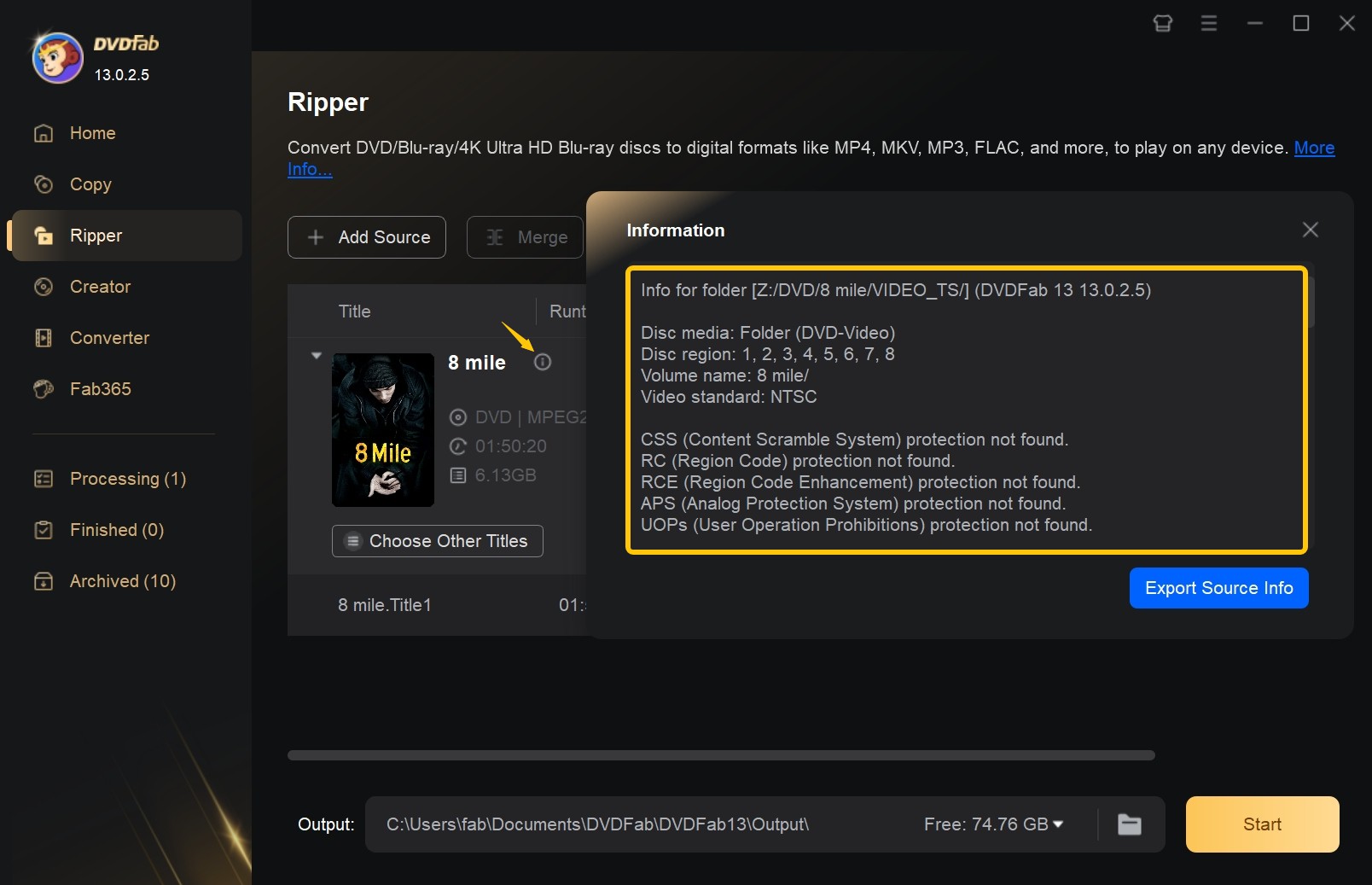
As noted above, some DVDs won't play on certain players because of regional restrictions. Ripping the disc your legally own can address this. Once converted to a digital format, the region-free video files can be transferred and played on smartphones, tablets, and other devices without a physical disc.
DVDFab DVD Ripper is a reliable software that allows you to rip content from DVDs, removing these region restrictions. Plus, DVDFab Blu-ray Ripper is designed to handle region-coded Blu-rays.
Once your load your DVD or Blu-ray source to the software, DVDFab will automatically detect and remove the DVD region code or any other copy protection. Then you are able to rip your DVDs to formats that can be played on any device, such as Media players, mobile phones, Xbox, PS3, etc.
Buy a Region-Free or Multi-Region Player
A region-free or multi-region player is the disc-first option for imported DVDs. Before buying, confirm DVD and Blu-ray region support separately, PAL or NTSC output support, HDMI availability, and the return policy for the exact model.
Compatibility depends on the exact model, disc format, region support, PAL or NTSC handling, and connected display. This option is useful when you want to keep using physical discs, but it is not a guarantee that every imported disc will play.
Keep in mind that DVDs use different video systems (NTSC and PAL), and not all TVs support both. Even with a region-free player, you still need to check that your TV can handle the disc’s video format.
Use Model-Specific Player Region Settings
Some DVD players provide a model-specific region setting, but availability depends on the model and installed firmware. Use instructions verified for the exact player, because some players do not provide a user-changeable region option. This is not a good option when you cannot confirm a procedure for your model.
Step 1: Find the model number
- Look for the model number on the back or bottom of the DVD player or check the owner's manual.
- Alternatively, you can search for the brand and model number printed on the device.
Step 2: Search for an Unlock Code
- Search the manufacturer documentation or a reliable model-specific support source using your DVD player’s exact model number.
- Reliable forums (such as VideoHelp), or manufacturer-specific communities will often have instructions and codes for various models.
- Confirm that the instructions match your player model and firmware before changing any setting.
Step 3: Apply the Unlock Code
- After powering on the DVD player, access the Setup menu. Navigate to Preferences or similar section.
- Press the sequence of buttons on the remote control specified in the code description.
- Apply only the region setting documented for your exact player. Do not treat Region 9 as an official universal DVD disc region.
Note:
- RCE-protected DVDs may still reject playback on some multi-region players. A region-free label alone does not predict the result for every disc.
Change a Computer DVD Drive Region
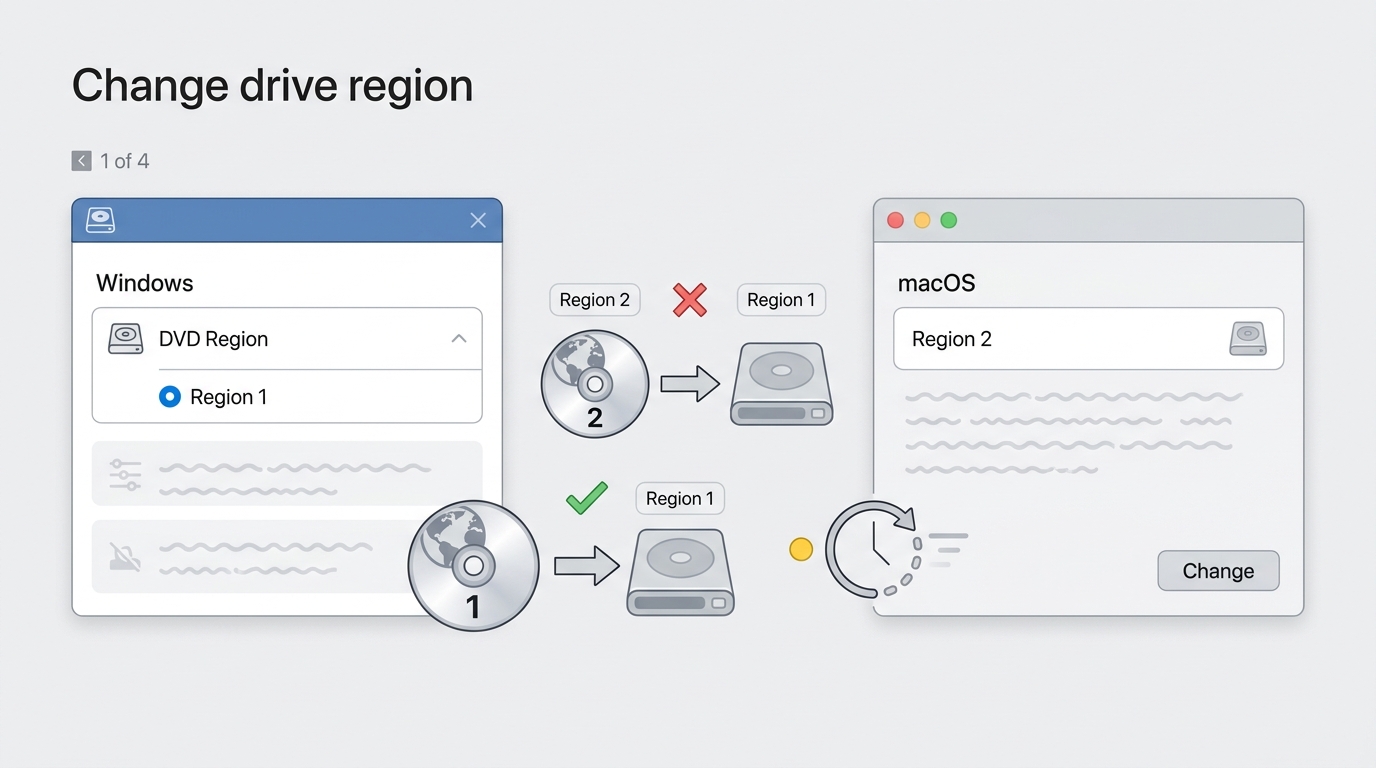
If you mainly watch on a computer, you can set the DVD drive to the same region as the disc and then try your usual playback software. Drive-region changes are limited by the drive or system. Apple documents up to five changes in DVD Player on macOS, while the exact behavior varies by hardware. This option makes the most sense when you mainly use one disc region.
🪟Windows (7/8/8.1/10/11)
Step 1: Find your optical drive in Device Manager. From the Start menu, you can look up "Device Manager." Once inside, double-click your drive to bring up the Properties pane, then expand DVD/CD-ROM drives.
Step 2: Navigate to the DVD Region tab and pick a nation that is part of your intended region. For instance, select United States to set Region 1, which is frequently utilized in the U.S. market. To preserve the setting, confirm.
Step 3: Test the disc after restarting the system if it asks you to. You can either update the driver and try again, or you can try inserting a DVD with a different region code to bring up the DVD Region tab.
🍎macOS
Step 1: Insert a DVD whose region does not match your current drive region. macOS will automatically display a dialog from DVD Player asking whether to change the drive region to match the disc.
Step 2: In the dialog, choose the same region as the disc and confirm. The system will write the region setting to the drive, after which you can use the built-in player or your usual software to play discs from that region.
Region Code Enhanced (RCE) Explained
Region Code Enhanced (RCE) is a digital rights management technique designed to prevent DVD players from playing discs that aren't encoded for the player's geographic region. This was introduced by some movie studios in the late 1990s to control aspects of a release, including content, release date, and price, according to region.
DVDs use numbered geographic regions, and players are commonly configured for one region. Some multi-region player configurations can play discs from more than one region, but that label alone does not predict how every disc will behave.
RCE was developed as a countermeasure against these multi-region players. An RCE-encoded disc contains additional software that checks if the player is not only set to the correct region but also if it's truly locked to it. If an RCE disc detects that it's being played on a multi-region player, it may refuse to play.
FAQs
1. Why can a Region 0 DVD still fail in the United States?
Region 0 or ALL removes the geographic region match requirement, but it does not guarantee U.S. playback. A PAL DVD can still fail on a device that expects NTSC, and the player or drive must support the disc format. Check the video standard and the exact playback device as well as the disc label.
2. Are standard audio CDs region locked?
Standard audio CDs do not use DVD-style geographic region codes. If an audio CD will not play, the cause is more likely to be the disc format, a copy-control implementation, the disc condition, or the playback device. DVD-Video, Blu-ray, SACD, DVD-Audio, and game media can follow different compatibility rules.
3. Will a Region 2 DVD work on a PS5 or Xbox?
It depends on the console model, its region and firmware, the disc’s region, and PAL or NTSC support. A Region 2 label alone does not confirm that a PS5 or Xbox will play an imported DVD. Check the console documentation for DVD playback support before buying the disc.
4. Can VLC play DVDs from every region?
No. VLC may read some out-of-region DVDs, but optical-drive firmware and disc-level access controls can stop the read before playback software takes over. VLC is useful for playback once the drive can access the disc, not as a universal region solution.
Conclusion
Check the disc region, PAL or NTSC standard, and exact playback device before importing a DVD. For disc-first viewing, a compatible multi-region player can be the simpler choice. For portability or a local media library, converting a DVD to a digital file can be more flexible, although the original disc menu and hardware-based playback experience may not carry over.
![How to Rip DVDs for Plex: Guide to Formats, Tools, and Library Setup [2026]](https://images.dvdfab.cn/media/Screenshot_2026-09-08_at_18.53.34_j36v3l.png/public) How to Rip DVDs for Plex: Guide to Formats, Tools, and Library Setup [2026]By Diana Smith - Sep 8, 2026
How to Rip DVDs for Plex: Guide to Formats, Tools, and Library Setup [2026]By Diana Smith - Sep 8, 2026![Top 12 DVD to MP4 Converter Software for Win & Mac [2026 Tested]](https://r3.dvdfab.cn/upload/resource/convert-dvd-to-mp4-p2X3.jpeg) Top 12 DVD to MP4 Converter Software for Win & Mac [2026 Tested]By Diana Smith - Sep 4, 2026
Top 12 DVD to MP4 Converter Software for Win & Mac [2026 Tested]By Diana Smith - Sep 4, 2026 10 Best DVD Rippers for Windows & macOS: 2026 TestedBy Diana Smith - Sep 2, 2026
![How to Rip Audio from DVD with 5 Best Free DVD Audio Extractors [2026]](https://images.dvdfab.cn/media/how_to_rip_audio_from_dvd_5r8iyw.png/public) How to Rip Audio from DVD with 5 Best Free DVD Audio Extractors [2026]By Diana Smith - Aug 31, 2026
How to Rip Audio from DVD with 5 Best Free DVD Audio Extractors [2026]By Diana Smith - Aug 31, 2026