How to Burn a DVD on Windows 10: 4 Ways for Video & Data DVDs [2026]

Summary: Windows 10 can burn files to a data DVD with File Explorer or Windows Media Player Legacy, but those built-in tools do not author a standard movie DVD for regular DVD players. To burn videos such as MP4, MKV, or MOV as a playable DVD with menus on Windows, use DVD-authoring software such as DVDFab DVD Creator or the free DVDStyler.
Table of Contents
Windows 10 can write files to a blank DVD, but the correct method depends on what I want the disc to do afterward. If I only need storage or backup, File Explorer or Windows Media Player Legacy is enough to burn a DVD on Windows 10. If the disc must play as a movie in a regular DVD player, the videos first need to be authored as DVD-Video.
I separate the methods below by final disc type so you can burn a DVD on Windows 10 without confusing a data disc with a playable movie DVD. The main checks are the writable drive, blank media, DVD-Video requirement, menu needs, and whether you also need ISO or DVD folder output.
Can Windows 10 Burn a DVD? Data DVD vs. Playable Video DVD
Yes. Windows 10 can burn a DVD with built-in tools when the goal is to store files. File Explorer can write documents, pictures, music, or videos to a data DVD, while Windows Media Player Legacy can create a data DVD from media in its library.
A playable movie DVD is different. Regular DVD players expect a DVD-Video structure rather than an MP4, MKV, or MOV file copied directly to a disc. For that job, you need DVD-authoring software that converts the source video, creates the DVD structure, and can add menus, chapters, audio tracks, and subtitles.
The With a CD/DVD player option in File Explorer does not turn an MP4 into DVD-Video. It creates a mastered data disc, so a standalone player still needs to support the individual files stored on that disc.
| Windows 10 DVD Method | Creates Data DVD | Creates Playable Video DVD | DVD Menu | ISO / DVD Folder |
| DVDFab DVD Creator | No | Yes | Yes | Yes |
| DVDStyler | No | Yes | Yes | ISO / DVD folder |
| Windows Media Player Legacy | Yes | No | No | No |
| File Explorer | Yes | No | No | No |
Method 1: How to Burn a Playable DVD on Windows 10 with DVDFab DVD Creator
Windows 10's built-in tools are enough for data discs, but a movie DVD needs authoring before it is written to disc.
DVDFab DVD Creator can burn a playable DVD on Windows 10 from more than 200 video formats, including MP4, MKV, MOV, AVI, M2TS, and VOB. It supports DVD-5 and DVD-9 projects, customizable menus, audio and subtitle selection, external SRT/ASS subtitles, chapters, and basic video editing. The finished project can be burned to a blank DVD or saved as an ISO image or DVD folder.
Key Features:
- Burn DVD on Windows 11/10/8.1/8/7 and macOS 10.13 - 15.x
- Create standard DVD disc/ISO/folder from 200+ video formats
- Burn videos to DVD in batch with fast speed and high quality
- Select audio tracks, subtitles, or add external subtitle
- Serve as a easy-to-use DVD menu creator for users to customize professional DVD menu
- Built-in editor eliminates the need for additional editing software.
- Auto-synchronize the meta information of the original video
- Support all DVD disc formats (DVD-9, DVD-5, DVD+R/RW, DVD-R/RW, DVD+R DL, DVD-R DL)
Free Download Windows 1110/8/1/8.7
Free Download macOS 10.13 - 15.x
Step 1: Add Videos to DVDFab DVD Creator
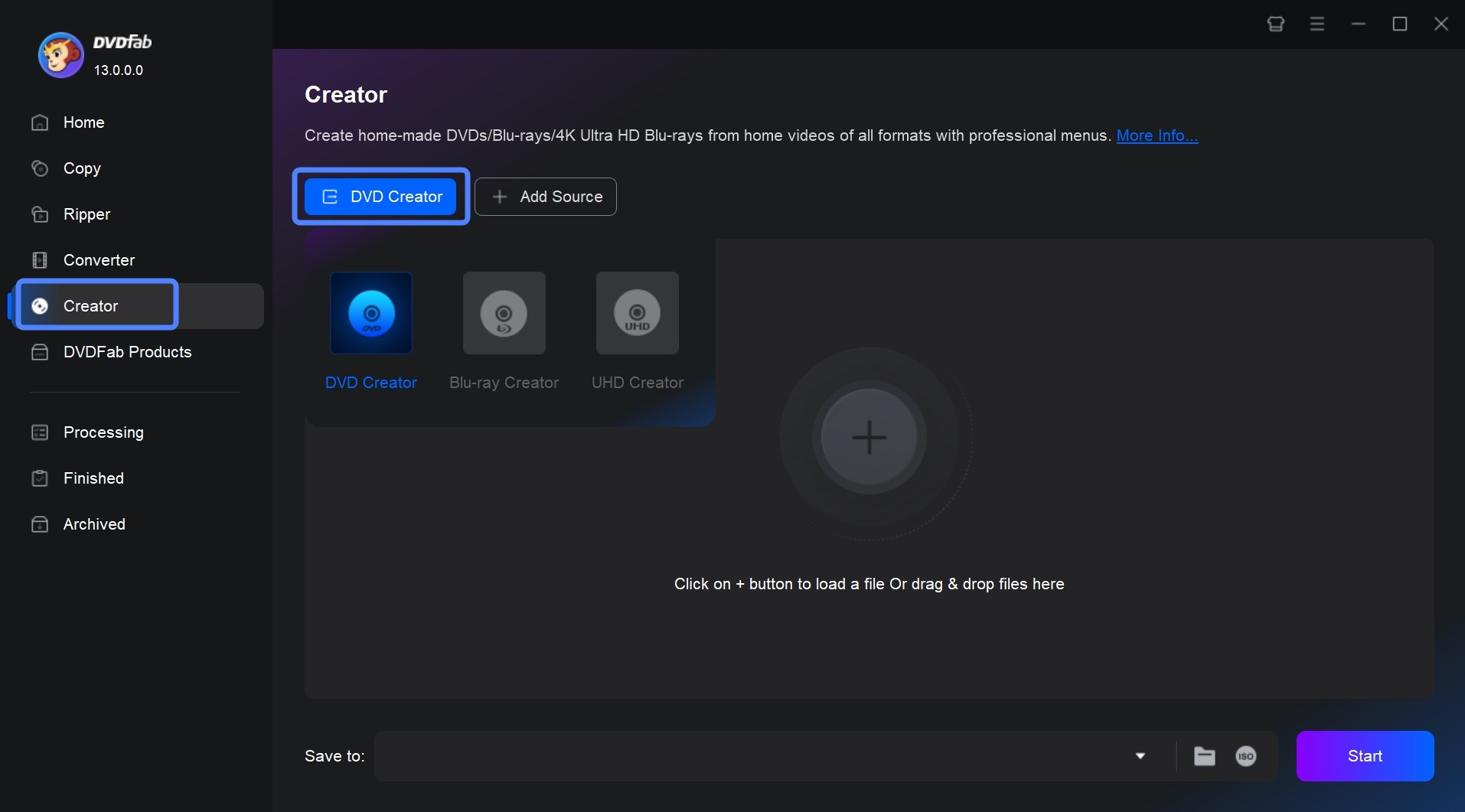
Run DVDFab 13, open Creator, and select DVD Creator. Click Add or drag the video files into the main window. If you want several videos on one disc, add them to the same project and arrange their playback order.
You can use the same process for home videos, downloaded clips, or projects such as iPhone videos to DVD. Check the audio and subtitle tracks after the source videos are loaded.
Step 2: Choose DVD-5/DVD-9 and Playback Settings
Once your source video is loaded, you can first select audio tracks and subtitles you want to burn. You can also add external subtitles to your video.
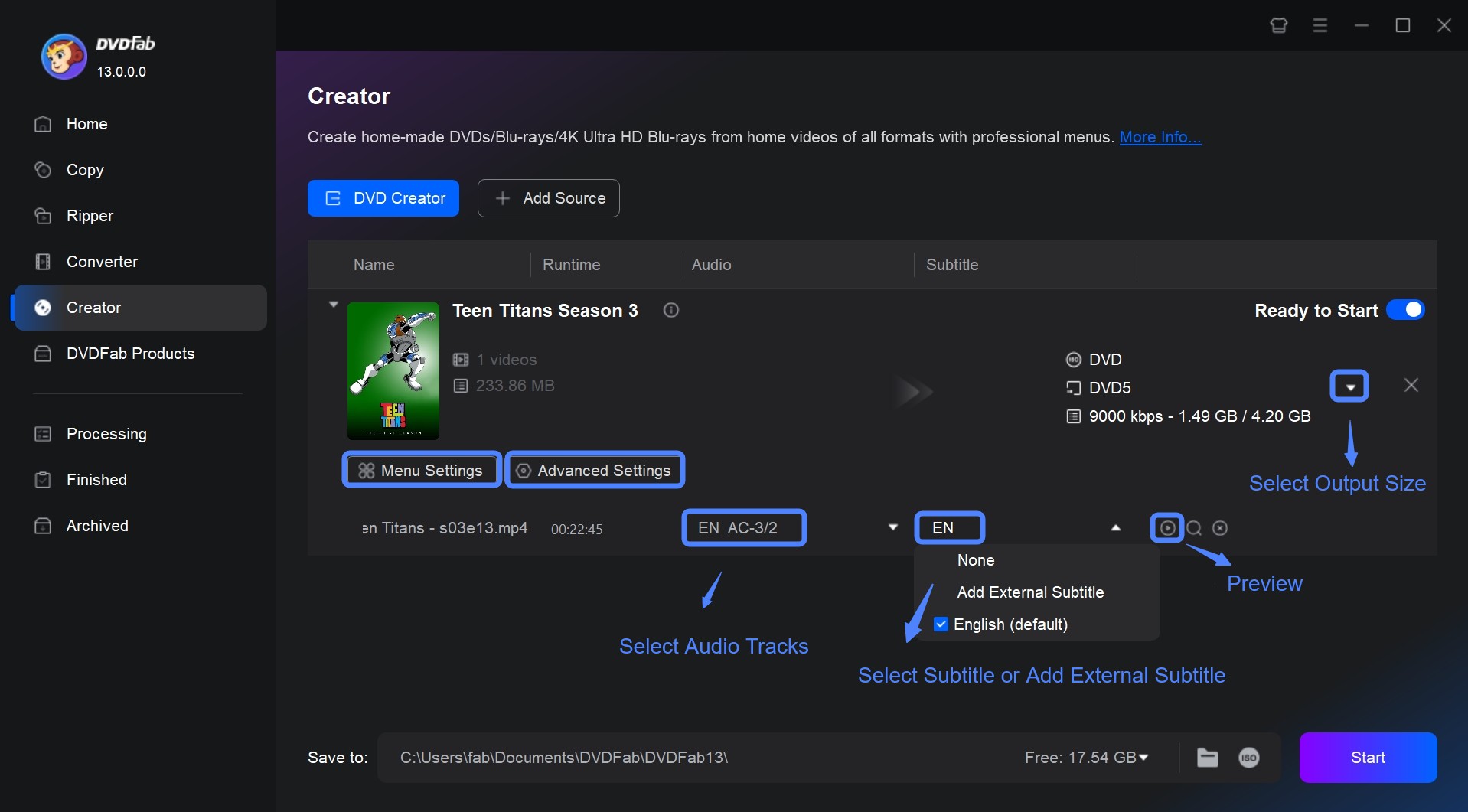
Open Advanced Settings and choose DVD-5 or DVD-9 according to the blank disc and project size. Select the required TV standard and choose 16:9 or 4:3 to match the source and target display.
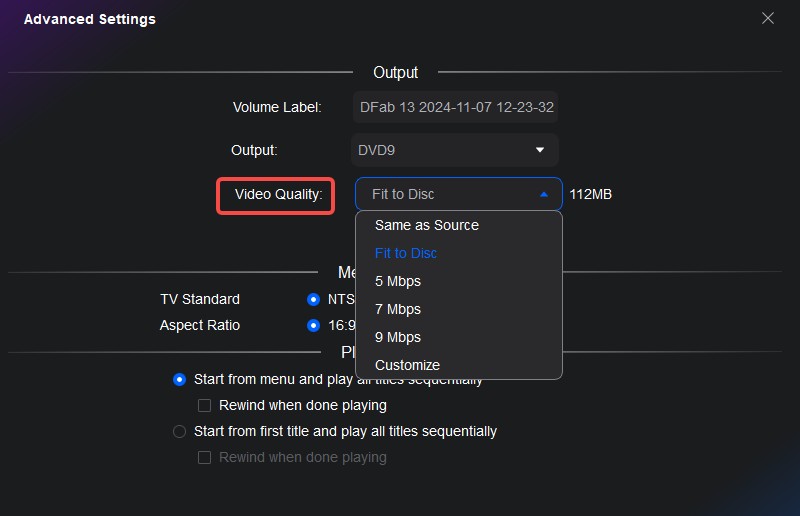
| Setting | Recommendation | Purpose |
| DVD Capacity | DVD-5 for smaller projects; DVD-9 for longer projects | Controls available disc capacity and the compression needed to fit the video |
| Aspect Ratio | 16:9 or 4:3 to match the source and playback setup | Helps prevent stretched or distorted playback |
| TV Standard | PAL or NTSC according to the target playback setup | Matches the authored DVD to the intended video system |
Step 3: Create a DVD Menu and Edit the Video
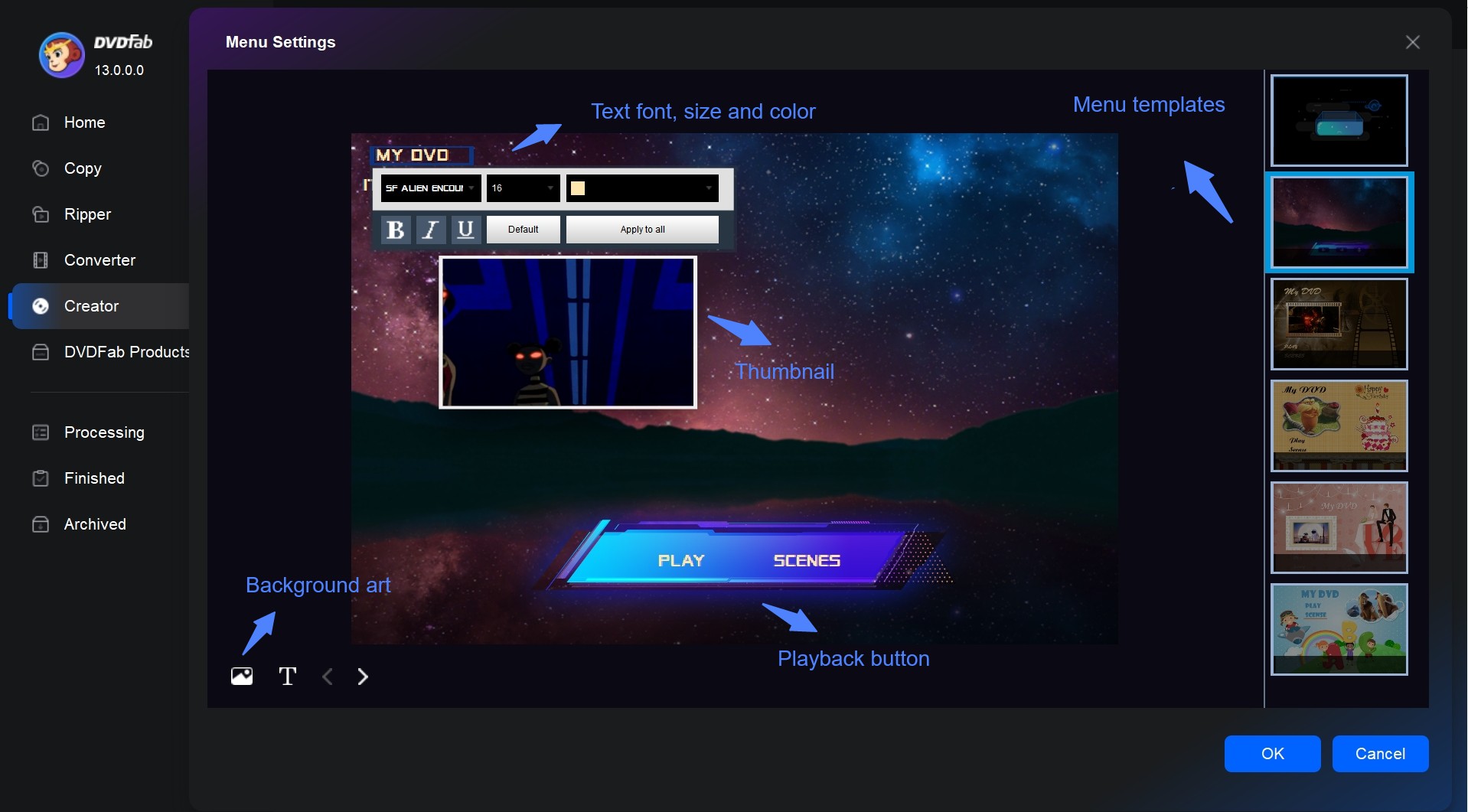
Open Menu Settings if the disc needs a title screen or navigation. Choose a template and customize the background, text, thumbnails, font, color, size, and playback buttons. Preview the menu before burning, especially when the DVD contains multiple titles.
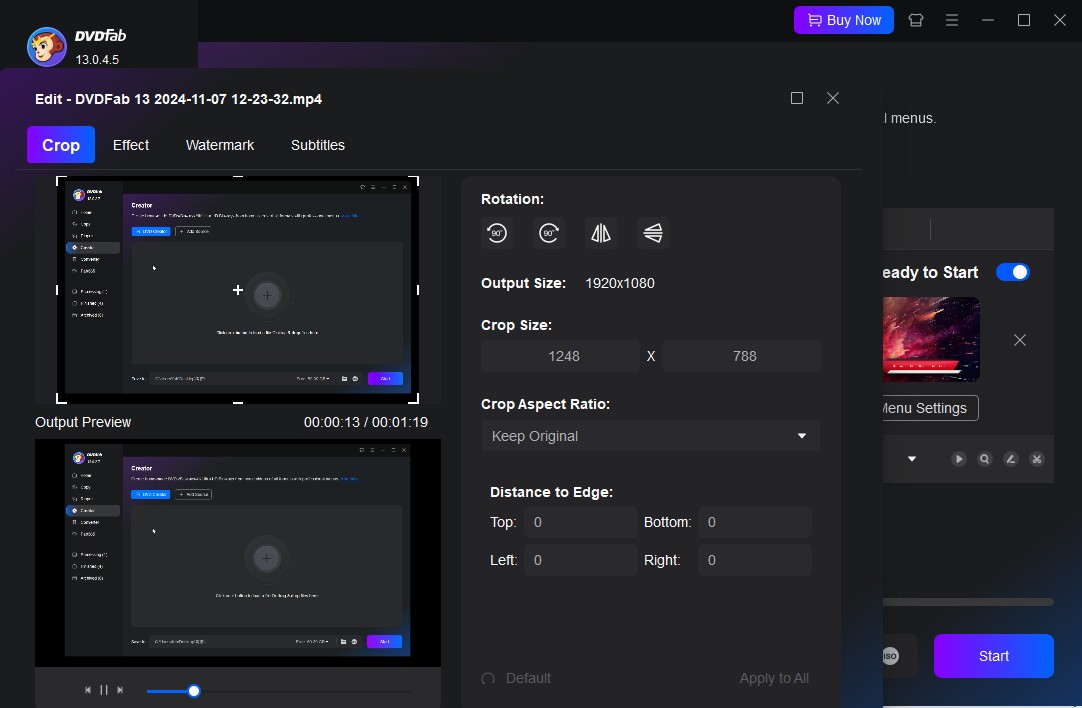
Use Video Edit when you need to crop, trim, apply filters, add a watermark, adjust brightness or contrast, or create chapter points.
Step 4: Burn the DVD or Save an ISO/Folder on Windows 10
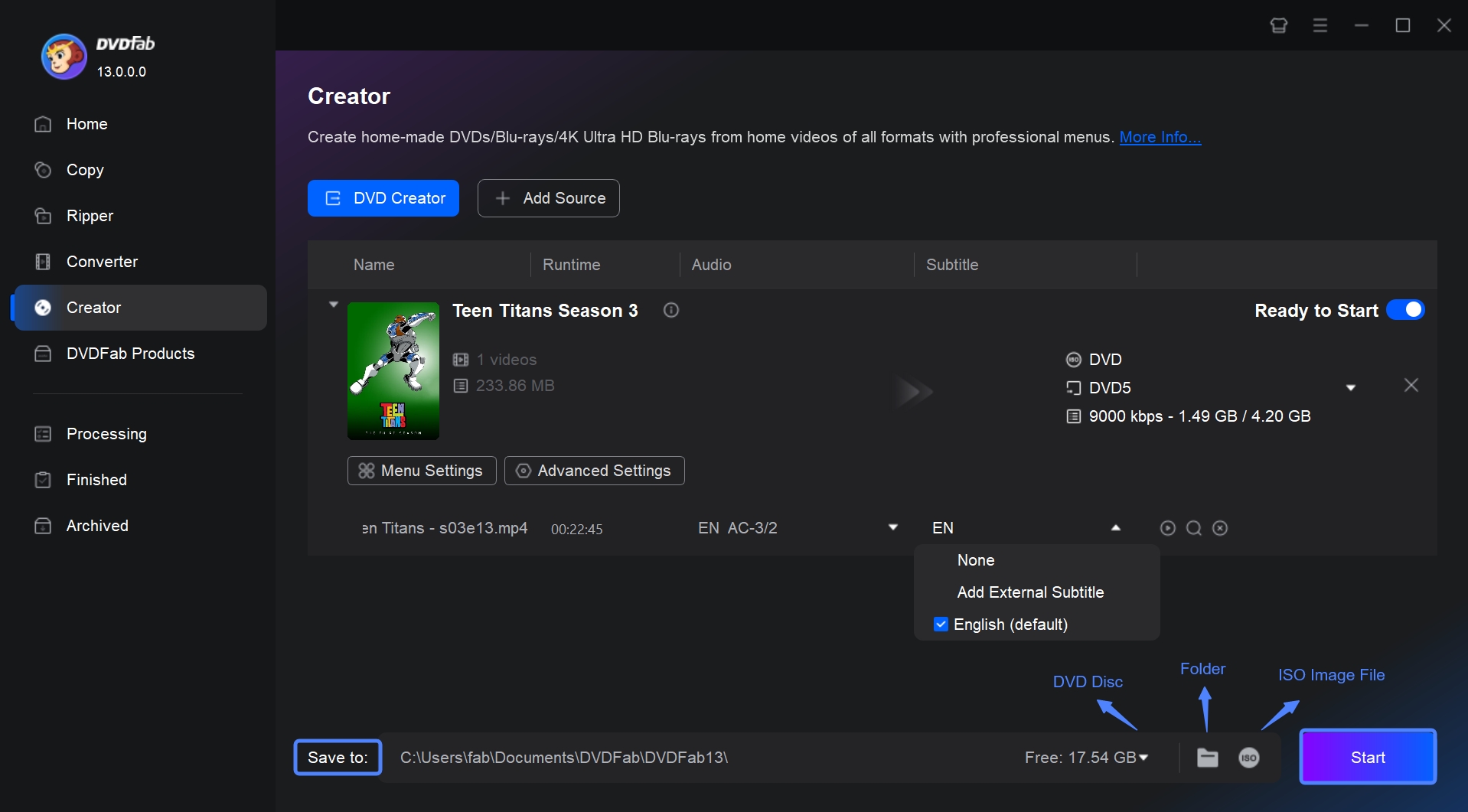
Insert a writable DVD and select the optical drive under the output destination. If you want to finish the authoring stage without using a blank disc immediately, choose the Folder or ISO output option instead.
Select the output directory in Save to Part, and click the Start button to begin burn your DVD on Windows 10/11. This DVD Creator will provide detailed progress information throughout the process.
Method 2: How to Burn a DVD on Windows 10 for Free with DVDStyler
DVDStyler is a free, open-source DVD authoring application that can turn video files into DVD-Video with interactive menus. It runs on Windows, macOS, and Linux and supports formats such as AVI, MOV, MP4, MPEG, OGG, and WMV.
The Windows 10 version is useful when you need a playable movie DVD without paying for authoring software. It provides more than 20 menu templates, drag-and-drop menu editing, titles, chapters, subtitles, and basic trimming and cropping.
- Free and open source
- Creates DVD-Video with interactive menus
- Supports common video formats including MP4, AVI, MOV, and MPEG
- Can burn directly to DVD or create an ISO image or DVD folder
- Runs on Windows, macOS, and Linux
- The interface exposes more manual menu and authoring controls than Windows built-in burning tools
- Video encoding can take longer on older Windows PCs
- The latest stable branch is older than the current beta development build
Step 1: Create a New DVD Project
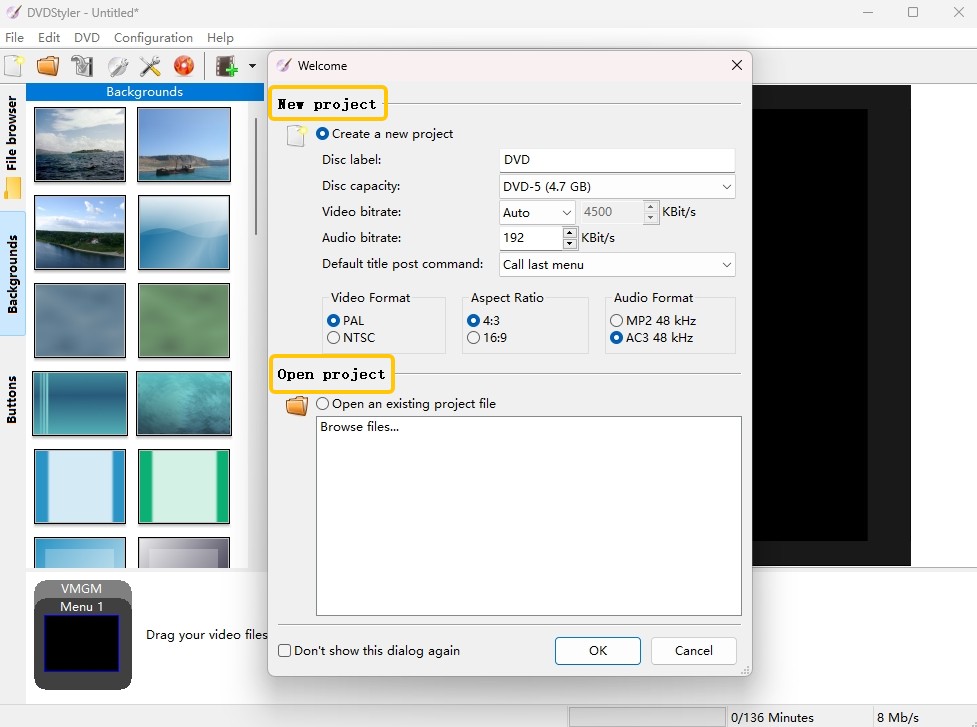
Install and launch DVDStyler, then create a new project. Set the disc label, DVD capacity, video format, aspect ratio, audio format, and video quality before adding the source videos.
On Windows 10, use the TV standard required by the target playback environment rather than treating PAL or NTSC as a DVD region setting.
Step 2: Add Videos and Arrange Titles
Drag the video files into the project and arrange them as titles. DVDStyler will convert supported source files into the format required for DVD-Video when necessary.
Check the project size as you add content. If a longer project exceeds the capacity of a single-layer disc, reduce the bitrate or use higher-capacity compatible media instead of assuming it will automatically fit.
Step 3: Create Menus and Chapters
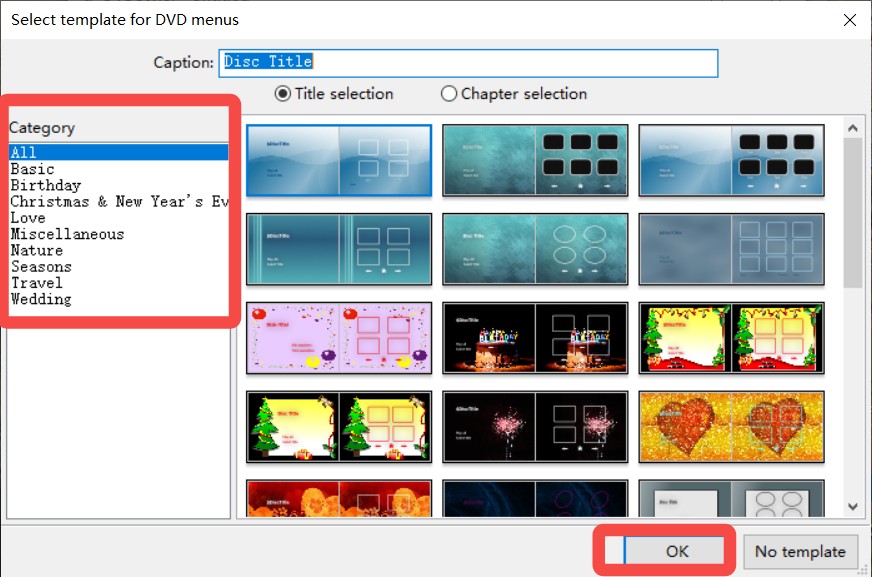
Choose a pre-designed menu template or create your own layout. You can edit menu text, backgrounds, buttons, and navigation, then add chapter points, subtitles, or audio tracks when the project requires them.
Preview the navigation before burning so each button opens the intended title or chapter.
Step 4: Burn the DVD or Create an ISO
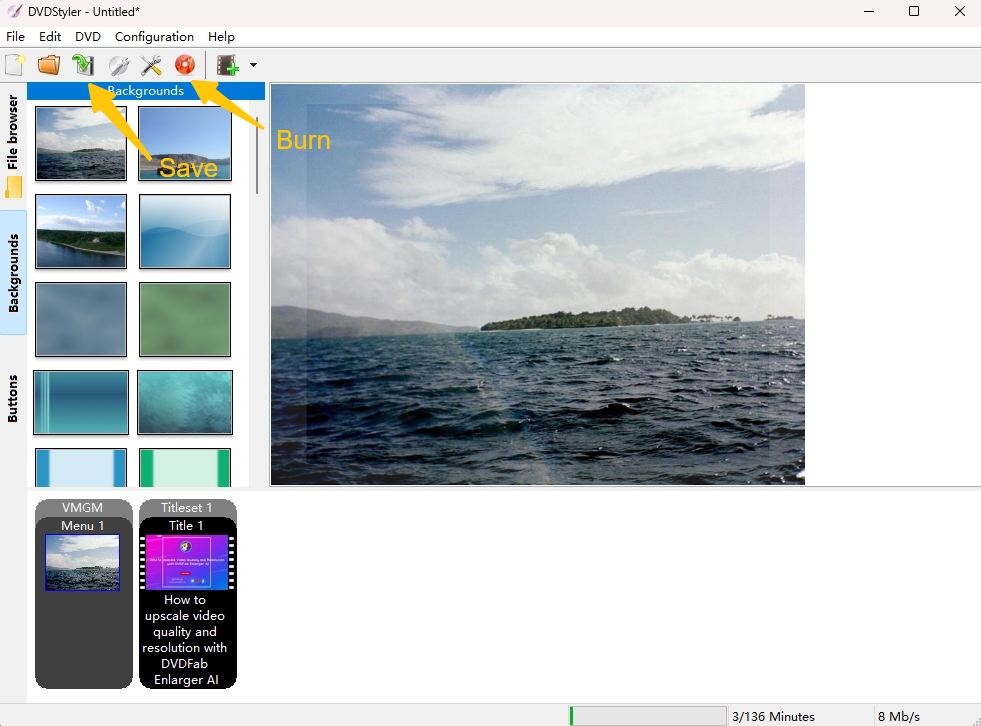
Click the Burn button and choose the DVD writer to create the physical disc. DVDStyler can also create an ISO image or DVD folder when you want to save or test the authored project before using a blank disc.
Method 3: How to Burn a Data DVD on Windows 10 with Windows Media Player
Windows Media Player Legacy can burn a data DVD on Windows 10 without third-party DVD-authoring software. This method is suitable when you want to store music, pictures, or video files and plan to open them on a computer or on another device that already supports those file formats.
Windows Media Player does not author DVD-Video, so an MP4 copied to a data DVD will not automatically become a movie DVD for a regular standalone DVD player.
Step 1: Open Windows Media Player Legacy
Open Windows Media Player Legacy. It is included in many Windows 10 installations and is available as an optional Windows feature in some editions.
If it is missing, open Start > Settings > Apps > Apps & features > Manage optional features > Add a feature, select Windows Media Player, and install it.
Step 2: Insert a Blank DVD and Create a Burn List
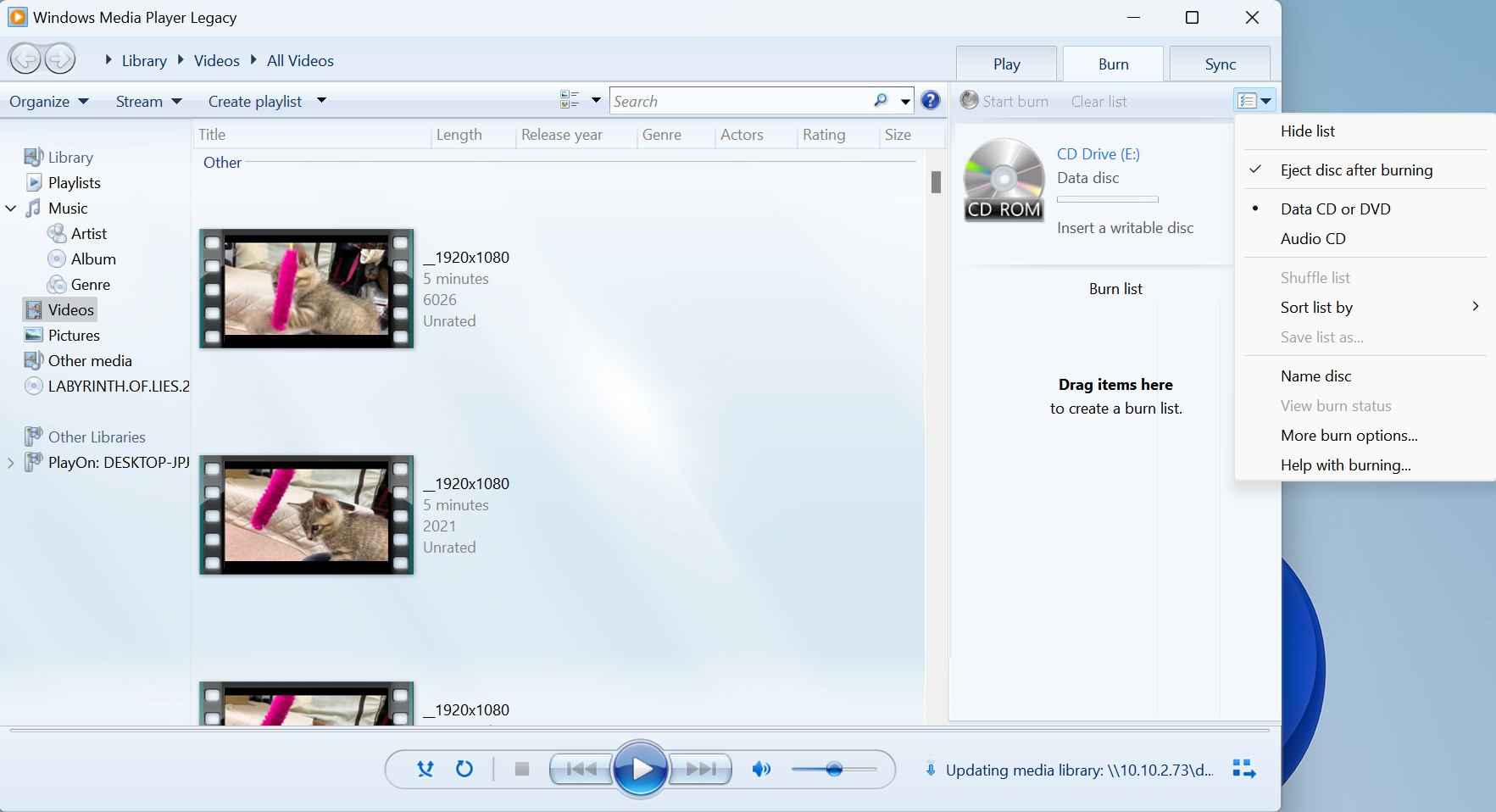
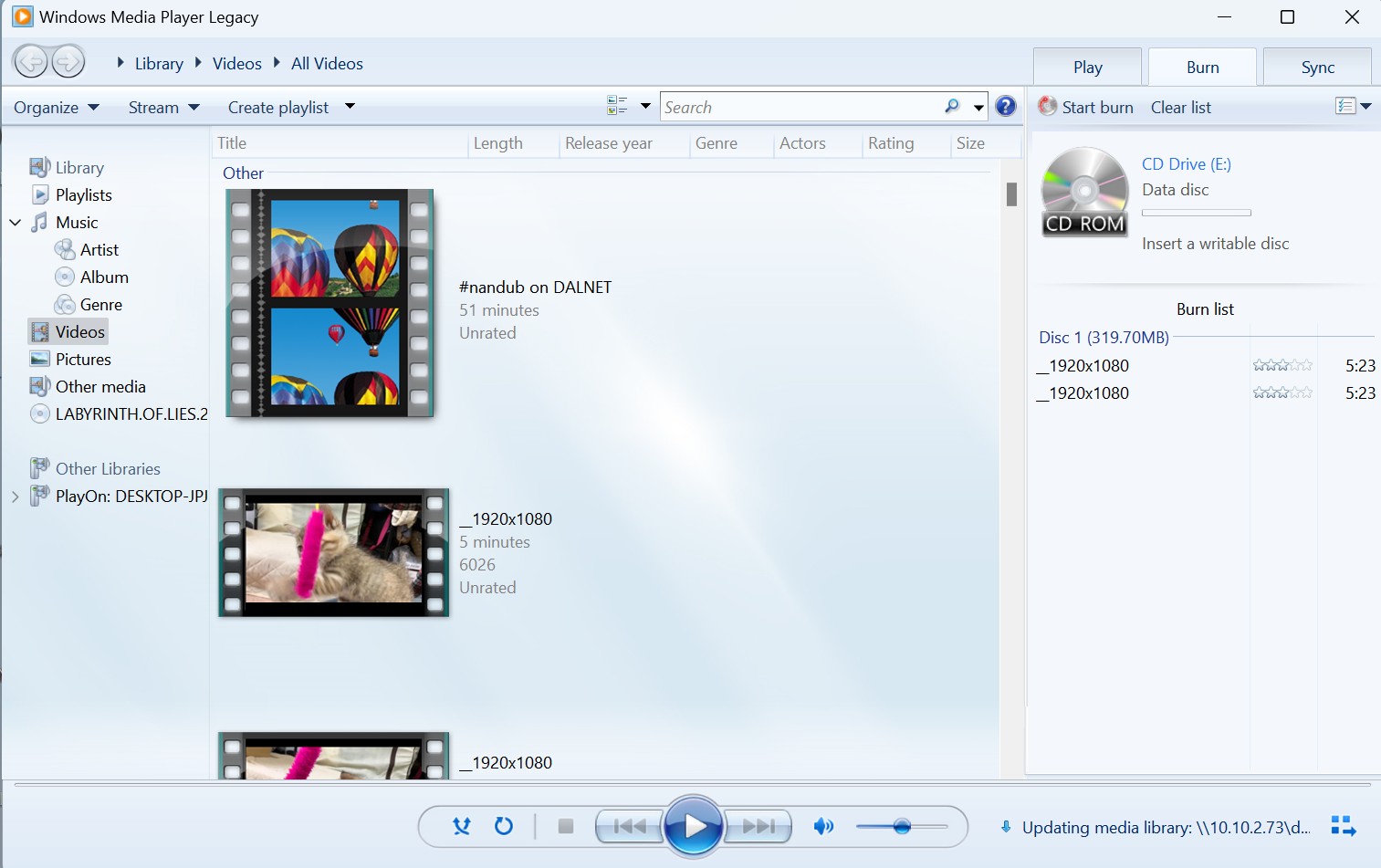
Insert a blank writable DVD into the DVD burner. In Windows Media Player, open the Burn tab, select Burn options, and choose Data CD or DVD.
Find the music, pictures, videos, or other media you want to store and drag them into the burn list on the right. Reorder or remove files before starting if necessary.
Step 3: Start Burning the Data DVD
Click Start burn and wait for Windows Media Player to finish writing the disc. Afterward, open the DVD on the computer or target device to confirm that the stored file formats are supported.
Method 4: How to Burn Files to a DVD on Windows 10 with File Explorer
File Explorer is the simplest Windows 10 method when the DVD is for file storage or backup. No separate burning program is required, but the result is a data disc rather than an authored movie DVD.
File Explorer supports both Live File System and Mastered disc behavior. The With a CD/DVD player option creates a mastered data disc; it does not convert videos into the DVD-Video structure required by traditional movie DVD players.
- Included with Windows 10, so no additional burning application is required
- Uses a simple file-copy process for documents, photos, videos, and other files
- Supports both Live File System and Mastered disc behavior
- Does not create DVD-Video for predictable playback in regular DVD players
- Does not create DVD menus, chapters, subtitle tracks, or ISO/DVD-folder authoring output
Step 1: Insert a Blank DVD and Open the Drive
Insert a blank DVD-R, DVD+R, DVD-RW, or DVD+RW supported by your writer. Press Windows + E to open File Explorer, select This PC, and double-click the optical drive.
Step 2: Choose How Windows Should Use the Disc
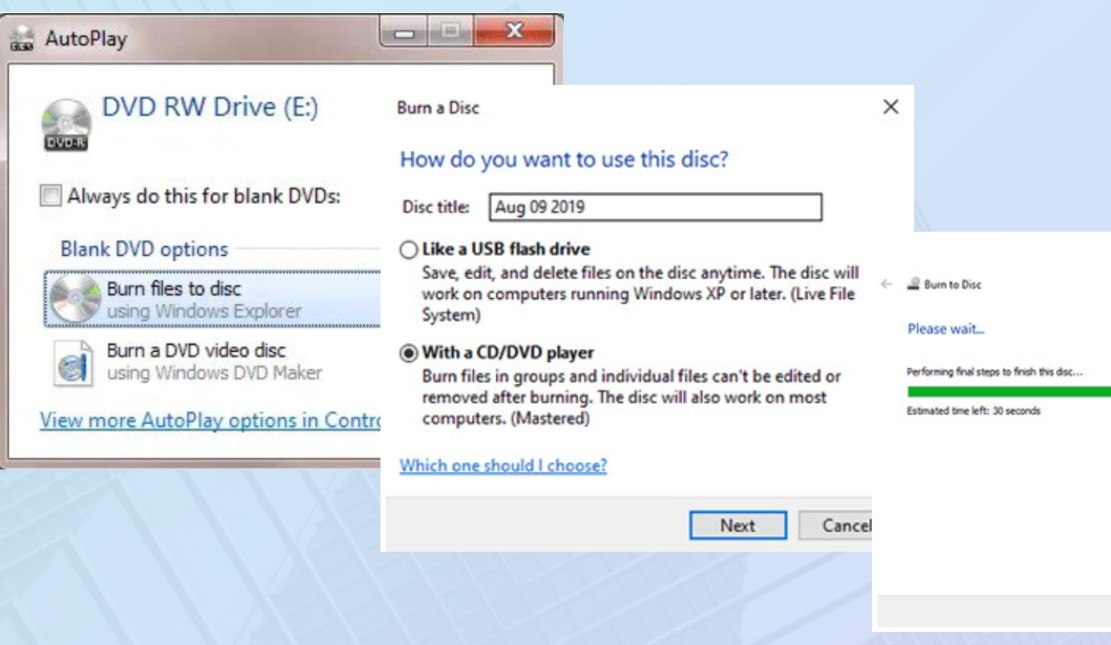
Windows will ask how you want to use the disc. Choose With a CD/DVD player when you want to prepare the files as one mastered session that can be read by a wider range of computers.
Choose Like a USB flash drive when you specifically want Live File System behavior and will mainly use the disc with compatible Windows computers.
Step 3: Copy the Files and Finish Burning
Copy or drag the files into the disc window. When everything is ready, select Finish burning, enter a disc title, and choose a recording speed supported by both the optical drive and the blank media.
Complete the Burn to Disc wizard and eject the DVD after Windows confirms that the files were written successfully.
FAQs
Why Won't My Windows 10 DVD Play in a DVD Player?
First check what kind of disc you created. A DVD made with File Explorer or Windows Media Player is normally a data DVD, so a standalone player must support the original files stored on the disc. For predictable movie playback, author the video as DVD-Video and make sure the selected PAL or NTSC TV standard matches the intended playback setup.
Why Doesn't Windows 10 Detect My DVD Drive?
Check whether the drive appears in Device Manager and whether it supports writing to the type of blank DVD you inserted. Reconnect an external drive, try another compatible disc, and reinstall or update the drive in Device Manager if Windows no longer detects it correctly.
Why Does DVD Burning Fail or Stop on Windows 10?
Check the blank disc for damage, confirm that the project fits within the available capacity, and use a write speed supported by both the burner and the media. If the failure occurs during DVD-Video creation rather than physical writing, check the source file and authoring settings separately.
Can I Burn a DVD on Windows 10 Without Extra Software?
Yes, if you only need a data DVD. File Explorer can write ordinary files to a blank DVD, and Windows Media Player Legacy can burn a data DVD from media files. Neither built-in method authors a standard DVD-Video disc with menus for regular movie DVD players.
💡Related reading: If your playable DVD also needs selectable or embedded subtitle content, see how to burn a DVD with subtitles.
Conclusion
The easiest way to burn a DVD on Windows 10 depends on what the disc needs to do. Use File Explorer or Windows Media Player Legacy when you only need a data DVD for files that another computer or compatible device can open. Neither method creates a standard movie DVD.
If the disc must play in a regular DVD player, author the video as DVD-Video first. DVDStyler covers that task for free, while DVDFab DVD Creator adds DVD-5/DVD-9 settings, menu and subtitle controls, video editing, and Disc/ISO/Folder output. Choose the method by the final playback requirement rather than simply by whether Windows reports that the burn succeeded.

 How to Burn a DVD on Mac in 2026: Video, Data, Photos & ISOBy Diana Smith - Sep 28, 2026
 How to Convert WMV to DVD: 3 Methods for Windows and MacBy Wenny Yan - Sep 16, 2026
 How to Convert MP4 to DVD Format for Free on Windows, Mac & OnlineBy Diana Smith - Sep 8, 2026
 How to Burn DVD with Subtitles: Add SRT/ASS or Hardcode CaptionsBy Diana Smith - Sep 3, 2026