
How to Fix Scratched DVD: Clean and Repair

Summary: To fix a scratched DVD, first clean it with a microfiber cloth and wipe from the center outward. Use non-gel toothpaste or mild polishing only for shallow surface scratches. Deeper damage may need professional resurfacing or quick digitizing once readable. Disc rot, cracks, and label-side damage cannot be fixed at home.
Table of Contents
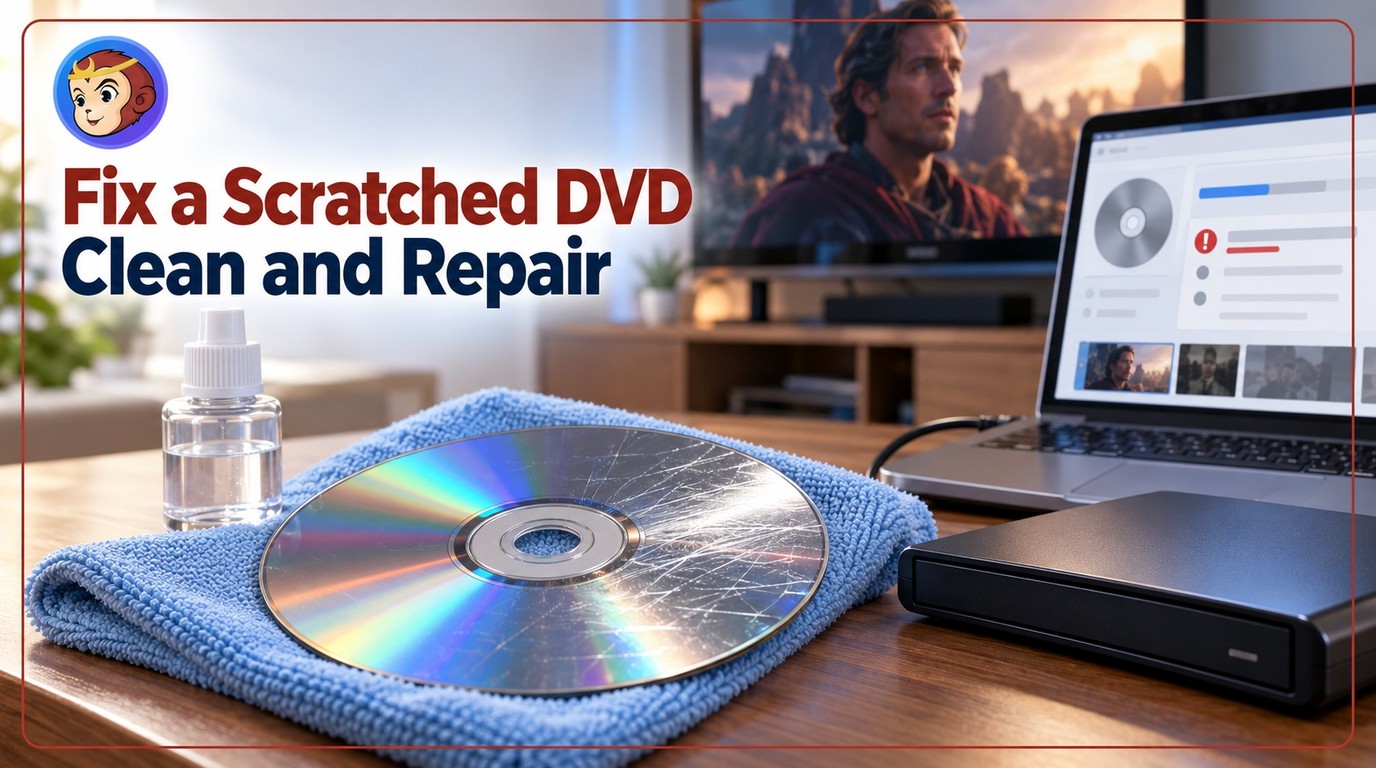
Scratches are one of the most common reasons a DVD stops playing. Your player may freeze, skip scenes, or fail to recognize the disc at all. For anyone who keeps old home videos, recordings, or important data on DVDs, this can be especially worrying.
This article explains what you can do when a DVD becomes unreadable, from simple cleaning and repair methods to options for backing up and digitizing the content before the damage gets any worse.
How to Fix a Scratched DVD: Quick Answer, Limits, and Stop Points
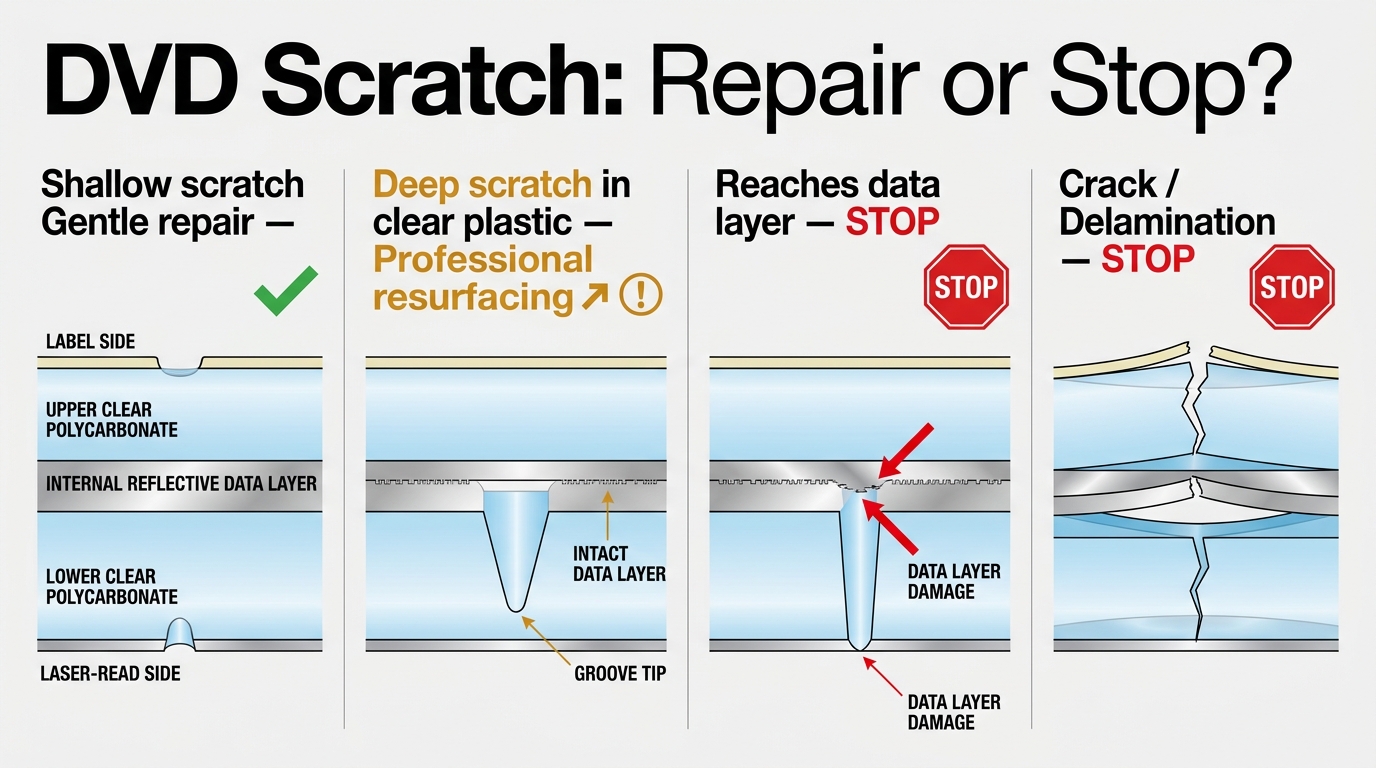
The safest repair order is: confirm whether the problem is the disc or the drive, clean the DVD, assess the damage, make one careful surface-repair attempt only for shallow scratches, and verify a recovered copy as soon as the disc becomes readable. Use professional resurfacing if the scratch is deeper but still limited to the clear plastic layer. The recording layer of a DVD sits between two plastic layers; superficial label-side scratches on a single-sided DVD are unlikely to reach it, while polishing cannot rebuild lost recording material or repair cracks and layer separation. Scratch depth, direction, and the drive's error correction affect whether the disc remains readable.
| What you see | What to try first | When to stop |
| Fingerprints, dust, oily smudges, light haze | Microfiber cloth with distilled water or isopropyl alcohol; wipe from center to Edge | Stop once playback returns; do not polish a clean disc unnecessarily |
| Fine surface scratches on the shiny side | Clean first; then use DVD-compatible polish as directed | Stop after one careful attempt if readability does not improve |
| Superficial label-side marks | Test the disc in another drive; do not polish the label side | Stop once the disc reads and save the readable content |
| Deep read-side grooves | Professional resurfacing if damage is limited to the clear plastic | Do not sand; stop if the disc is cracked or separating |
| Cracks, Edge separation, or visible layer deterioration | Do not polish or place the disc in a drive | Stop; resurfacing cannot repair structural or recording-layer damage |
Before you start polishing, run these checks:
- Wash and dry your hands. Hold the disc by the outer Edge and center hole to avoid adding oil to the read surface.
- Check whether the drive is the problem. Try the scratched DVD in another player, then try a different DVD in the same drive.
- Use a tray-loading drive for recovery. Slot-loading drives can add pressure or scrape the disc during insertion and ejection.
- Wipe in straight lines. Clean from the center ring toward the outer Edge. Do not wipe in circles, because circular scratches can follow the laser path and cause repeated read errors.
- Stop once the disc reads. The goal is to recover the content, not to make the disc look new.
Step-by-Step Home Repairs for Light DVD Scratches
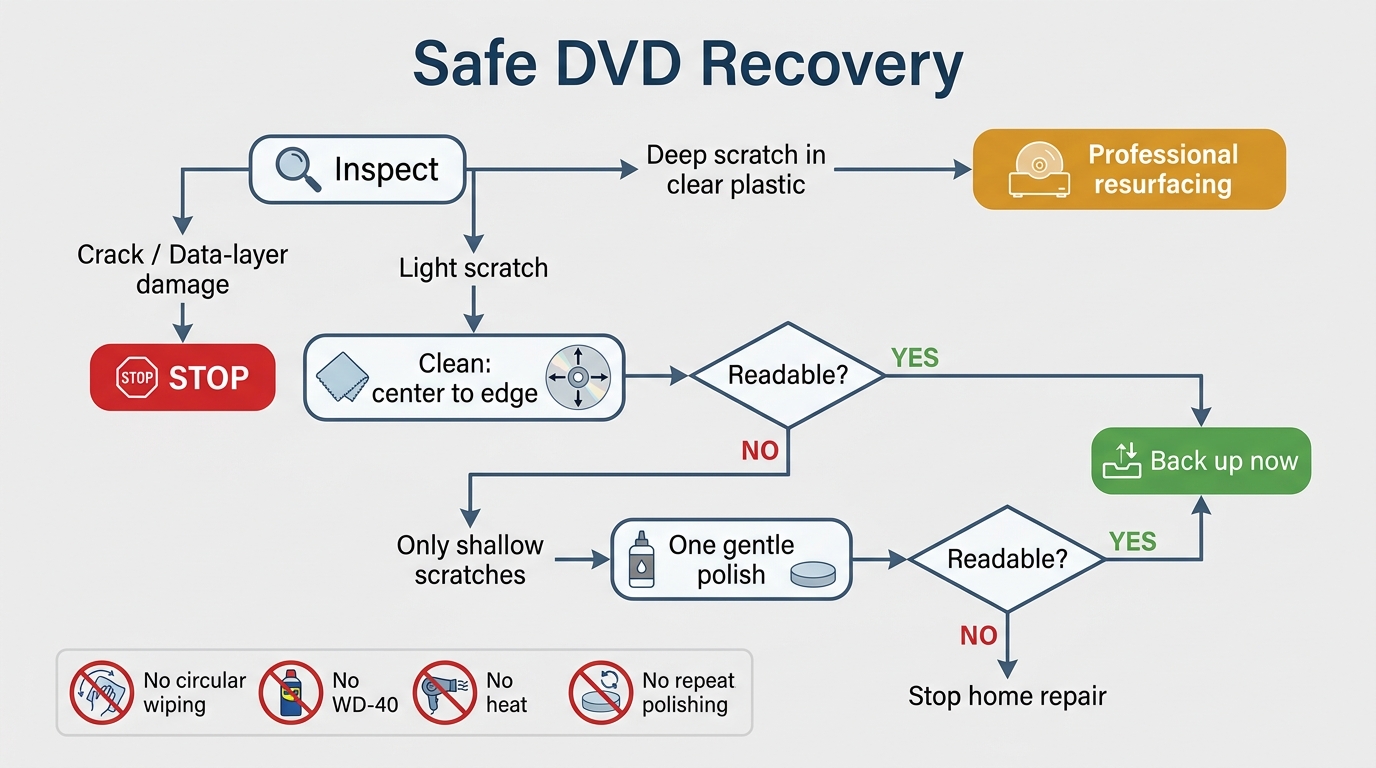
Clean the disc thoroughly before using any abrasive method
Dust and fingerprints can cause the same symptoms as scratches, including skipping, freezing, and “disc not recognized” errors. Learning how to clean DVD discs correctly is the lowest-risk first step.
Instructions:
- Place the DVD on a clean, soft surface with the shiny side facing up.
- Dampen a microfiber cloth with distilled water. For oily residue, use a small amount of isopropyl alcohol on the cloth, not directly on the disc.
- Wipe from the center hole toward the outer Edge in straight lines.
- Use a dry microfiber cloth to remove moisture, again moving from center to Edge.
- Let the disc air-dry completely before testing it.
Try DIY surface repairs only on shallow scratches
Option 1: Non-gel toothpaste
Plain, non-gel toothpaste is an abrasive that removes a small amount of the DVD's clear plastic surface. It may reduce a shallow read-side scratch, but it can also add fine marks and is not a standard repair method. It will not repair damaged data, cracks, or disc rot.
If you choose to try it:
- Apply a pea-sized amount of plain white toothpaste to the scratched area.
- Use a soft microfiber cloth to rub gently from the center toward the Edge in straight lines.
- Keep the pressure light and avoid repeated scrubbing.
- Rinse with clean water and dry with a microfiber cloth.
- Test the DVD once. If it reads, back it up before using it again.
💡Avoid whitening, charcoal, gritty, or heavily abrasive toothpaste. These formulas can add fine scratches instead of reducing read errors.
Option 2: Why Vaseline, wax, and banana residue are not repairs
Vaseline, wax, and banana residue leave a surface coating rather than removing a scratch, and they do not rebuild recorded data. Optical reading does not physically contact the laser-read area, so leaving residue on the disc introduces contamination without repairing the damaged plastic.
- Clean the disc first to remove dust or fingerprints.
- Do not apply Vaseline, wax, or food residue to the disc.
- If a coating has already been applied, remove it carefully with a clean microfiber cloth.
- Make sure the disc is clean and completely dry before placing it in a drive.
- Test the disc once and back up the content if it reads.
Option 3: Mild polishing compound
A dedicated disc polish or a very mild automotive plastic polish can help with light-to-moderate surface marks. Use it sparingly, follow the product instructions, and avoid aggressive sanding. Removing too much plastic can make the disc thinner and harder to read. These abrasive instructions apply to DVDs; do not extend them to Blu-ray discs.
Use a commercial DVD repair kit or professional resurfacing for deeper surface scratches
If a valuable DVD still fails after cleaning, use a DVD-compatible professional resurfacing service instead of repeating DIY polishing. Products such as SkipDr or JFJ Easy Pro, along with many kits sold online or in retail stores, are designed to polish or resurface the disc's polycarbonate layer, reducing visible surface scratches and improving the chance of playback. For local help, ask a used-media or game store whether it offers DVD resurfacing and request a service quote before proceeding.
What is usually included?
- A mild abrasive or polishing solution
- Manual or motorized disc polishing machine
- Polishing pad or soft wiping discs
- Cleaning cloth and sometimes even a disc protector
What not to do when repairing a scratched DVD
- Do not wipe in circles.
- Do not use paper towels, tissues, rough cloth, acetone, window cleaner, or strong solvents.
- Skip WD-40, a Magic Eraser, and baking soda. Clean the disc first, then use a DVD-compatible resurfacing service if a valuable disc still fails.
- Do not heat the disc with a hair dryer or sunlight.
- Do not bend the DVD to “flatten” it.
- Do not keep polishing after the disc becomes readable; move to backup instead.
When It Is Not Just a Scratch: Disc Rot, Deep Damage, and Read Errors
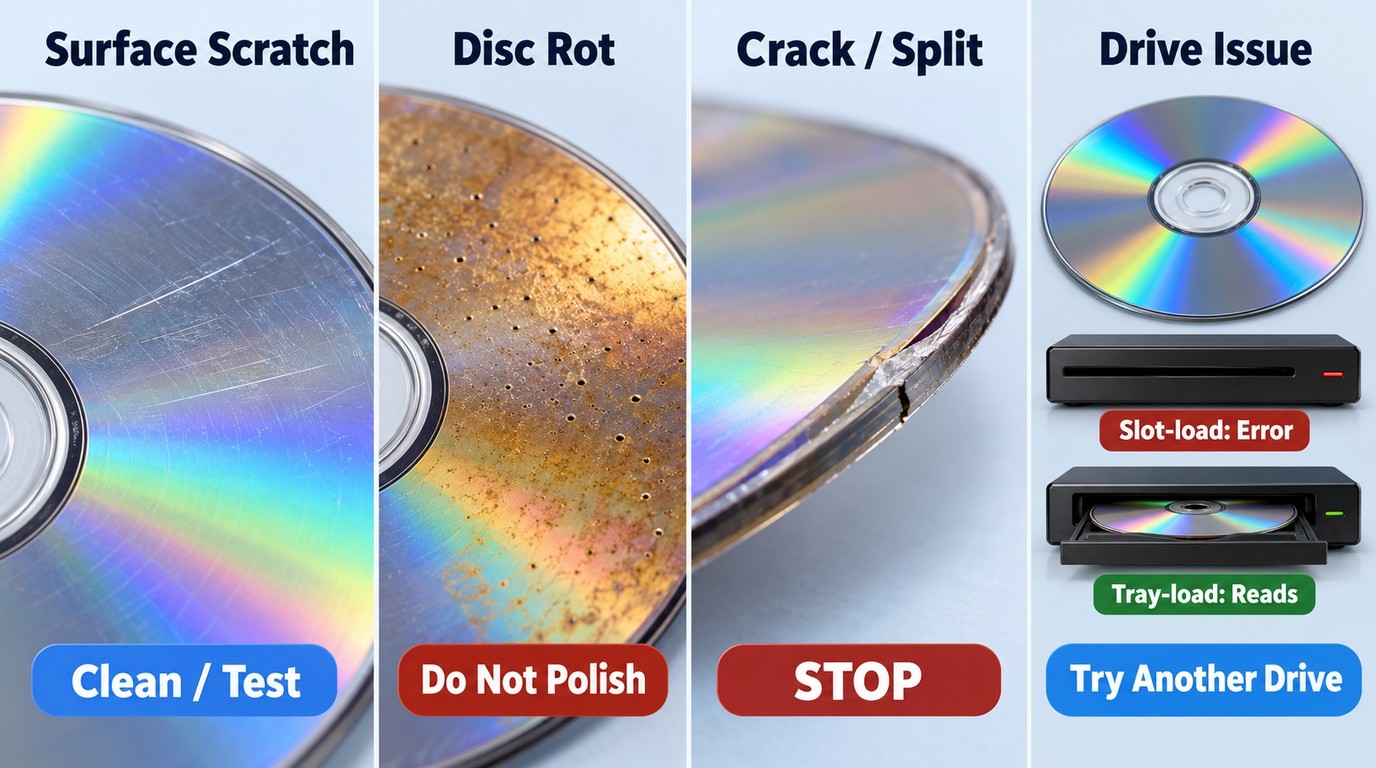
On a single-sided DVD, a superficial label-side mark does not by itself indicate recording-layer damage; cracks, Edge separation, and visible layer deterioration are different failure signs.
Disc rot is different from a scratch
Disc rot is a failure of the disc's data or reflective layer, often caused by oxidation, material breakdown, adhesive failure, or layer separation. It is not a surface scratch, so toothpaste, wax, polishing compound, and repair kits cannot rebuild the damaged data layer.
Common signs of DVD disc rot include:
- Bronze, brown, cloudy, or uneven discoloration
- Tiny pinholes when the disc is held up to light
- Visible material loss or flaking on the label side; a superficial mark alone does not indicate disc rot
- The same read failure across several players or drives
If you suspect disc rot, stop polishing. If there is no cracking, warping, or separation, try to read the DVD gently in another drive and copy whatever still reads as soon as possible.
Try reading the disc before attempting another repair
Some damaged DVDs fail in one drive but read in another. Before using a more abrasive method, try these recovery steps:
- Use a different tray-loading optical drive. A desktop or external tray-loading drive may handle damaged discs more gently than a slot-loading laptop drive.
- Reduce the read speed if your software or drive utility allows it. Slower reading can reduce errors on marginal sectors.
- Use the drive manufacturer's guidance to choose the best DVD lens cleaner for that model. A dusty lens can make a scratched disc look worse than it is.
- Copy the most important files first. Do not spend repeated full-disc read attempts before rescuing irreplaceable content.
- Test another disc in the same drive. This helps confirm whether the drive itself is failing.
If you are comparing drives because of a scratched-disc problem, look for stable tray loading, careful disc handling, and reliable low-speed reading options rather than assuming one drive can recover every damaged disc.
After recovery, store the original disc in a clean case, away from heat, sunlight, and humidity. Protective DVD storage ideas can reduce handling damage during long-term storage and organization.
After It Plays Once: Back Up the DVD Before It Fails Again
A DVD playing once does not show that every sector needed for a complete copy is readable, and software cannot physically repair a scratch. If the disc is readable, save authorized, legally accessible content locally only where permitted by applicable law and relevant terms. No method guarantees permanent or unrestricted storage. Do not redistribute the output or use it beyond the permissions that apply to the specific content and use case. Check that the task completes, then play the output through the previously failing passage and the ending. The next two sections explain when to preserve the disc structure as an ISO or DVD folder and when to create a video file.
Copy DVD to ISO/Folder: DVDFab DVD Copy
The first method is to create an ISO or VIDEO_TS folder from a readable DVD, preserving disc structure such as menus and subtitles according to the selected copy mode. Copying requires readable source data, and successful playback does not establish that every sector needed for a complete backup is readable. The free trial of DVDFab DVD Copy lets you check source recognition and whether the copy task reaches completion.

- Handle the latest DVD copy protections.
- Copy a DVD with 6 different copy modes, including Full Disc, Main Movie,
- Customize options for language, audios, and subtitles
Rip DVDs to Digital Formats: DVDFab DVD Ripper
If you want a video file instead of an ISO or folder, DVDFab DVD Ripper can convert a protected DVD to formats such as MP4 or MKV for direct file playback. Confirm that the task reaches completion, then play the file through the formerly failing passage and the ending before relying on it.

DVDFab DVD Ripper can convert readable DVDs to common video and audio formats. Processing speed depends on the optical drive, disc condition, output settings, and computer hardware.
- Handle supported DVD structures for personal or authorized backups where permitted
- Convert DVD to MP4 or another supported video format for direct file playback
- Convert DVD to MKV Passthrough video with 5.1 AC3 audio
- Use GPU acceleration when hardware and settings support it
- Make ripped DVDs available on portable devices such as iPhone
- Allow you to trim/crop/adjust your videos and audios including subtitle, etc
FAQs
Can a scratched DVD be repaired?
Yes, if the damage is limited to superficial scratches in the clear plastic layer. Start by cleaning the disc before considering a DVD-compatible polish or resurfacing service.
Deep grooves may exceed what resurfacing can correct, while disc cracks, layer separation, and recording-layer deterioration cannot be repaired by polishing. A superficial label-side mark on a single-sided DVD does not automatically mean the central recording layer is damaged. If the DVD becomes readable even once, back up the content before more testing.
Can toothpaste damage a DVD?
Yes. Cleaning removes dirt, but toothpaste abrades the DVD's clear plastic surface and can add fine marks, especially if you rub in circles or repeat the treatment. It is not a standard cleaning step. If one careful attempt does not improve readability, stop and consider a DVD-compatible professional resurfacing service for a valuable disc.
How do I know if it is DVD disc rot instead of scratches?
DVD disc rot often appears as discoloration, pinholes, cloudy patches, Edge separation, or flaking caused by layer deterioration. A superficial label-side mark on a single-sided DVD does not by itself indicate disc rot. It can also cause the same read failure across multiple drives. Unlike a surface scratch, disc rot affects the data or reflective layer, so polishing and toothpaste will not repair it.
Should I use a DVD repair machine?
A DVD repair machine or professional resurfacing service is worth considering for deeper surface scratches, especially on valuable discs. Do not use it on cracked or warped discs, or on discs with layer separation or disc rot. If the DVD contains irreplaceable content, professional handling is safer than repeated home polishing.
What should I do after the DVD plays once?
Stop testing the disc repeatedly and make a backup while it is readable. Use a stable tray-loading drive, copy the most important readable content first, and create a digital file, ISO, or folder only when you are authorized to access and copy the content. After the task reports completion, play the output through the formerly failing passage and the ending before relying on it.
Can I remove scratches from a DVD without toothpaste?
Yes. Clean the DVD first to remove dirt and fingerprints. If a superficial read-side scratch still prevents playback, a DVD-compatible resurfacing service can polish the clear plastic without toothpaste. Neither cleaning nor resurfacing can rebuild missing recording material or repair cracks and layer separation.
Conclusion
Fixing a scratched DVD starts with a clean test and should stop the moment the disc becomes readable enough to rescue. Work through the checklist in order: clean the disc, test another tray-loading drive, try one careful DVD-compatible polishing attempt for light surface scratches, use professional resurfacing for deeper surface marks, and back up authorized content after a successful read. Do not extend these abrasive DVD repair instructions to Blu-ray discs.
A superficial label-side mark on a single-sided DVD is not by itself evidence of recording-layer loss. If the disc is cracked or separating, do not place it in a drive or resurfacing machine. For disc rot or recording-layer deterioration without structural damage, skip abrasive fixes and recover any readable authorized content. For preserving the structure of a readable DVD, DVDFab DVD Copy can create an ISO or DVD folder; DVDFab DVD Ripper is the secondary option when you need a video file for direct playback. Copying still depends on readable source data, the disc condition, and your hardware. Do not redistribute the output.

 Free DVD Decoder for Windows XP and Windows 11: 3 Ways to Play DVDsBy Diana Smith - Sep 23, 2026
 How to Compress ISO Files: 4 Methods for Storage, Playback, and ArchivesBy Diana Smith - Sep 16, 2026
 How to Rip DVD to Facebook and Upload the Video in 2026By Diana Smith - Sep 15, 2026
![How to Rip DVDs for Plex: Guide to Formats, Tools, and Library Setup [2026]](https://images.dvdfab.cn/media/Screenshot_2026-09-08_at_18.53.34_j36v3l.png/public) How to Rip DVDs for Plex: Guide to Formats, Tools, and Library Setup [2026]By Diana Smith - Sep 8, 2026
How to Rip DVDs for Plex: Guide to Formats, Tools, and Library Setup [2026]By Diana Smith - Sep 8, 2026