What DVD Region Is the USA? Region 1, NTSC, and Import Playback

Summary: The USA uses DVD Region 1, and most U.S. DVDs are formatted in NTSC. For Blu-ray, the U.S. uses Region A. If an imported DVD will not play on a U.S. player, check whether the disc is locked to another region, uses PAL, or needs a region-free player, drive-region change, or personal digital conversion with DVDFab DV DRipper.
An imported DVD can have English audio and still fail on a U.S. player. The United States uses DVD Region 1, and imported-disc playback also depends on the disc type, its region label, and PAL/NTSC compatibility.
For U.S. playback, check DVD Region 1, NTSC, and, for standard Blu-ray, Region A. This article explains the U.S. DVD region code, the labels that matter on imported discs, and the playback options for a Region 2 DVD in the U.S. or another non-Region 1 release. The key conclusion is simple: confirm the disc label and your device before buying replacement hardware.
What DVD Region Is the USA?
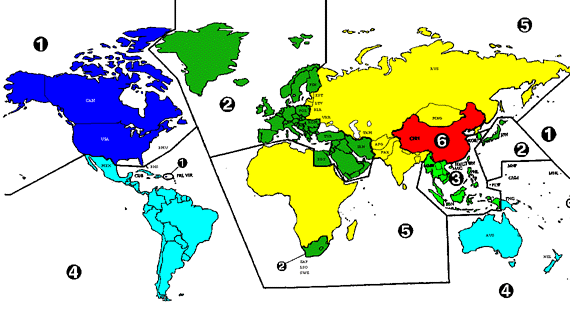
DVD Region Code Reference Chart
| Region | Primary markets | U.S. player result | Reader action |
| Region 1 | United States, Canada | Designed for U.S. players | Use a standard Region 1 setup |
| Region 2 | Europe, Japan, Middle East | Usually blocked | Check player and video format |
| Region 3 | Southeast and East Asia | Usually incompatible | Check compatible hardware |
| Region 4 | Australia, New Zealand, Americas | Usually blocked | Check region and PAL/NTSC |
| Region 5 | Russia, India, Africa | Usually requires compatible hardware | Check the player specifications |
| Region 6 | China | Usually requires compatible hardware | Check the player specifications |
Region 0 or ALL generally indicates broad regional compatibility. Codes 7 and 8 are reserved for special uses. PAL/NTSC compatibility can still affect playback even when a disc has no regional restriction.
Region 0 or ALL labels generally indicate broad regional compatibility, while codes 7 and 8 are reserved for special uses. PAL/NTSC compatibility can still affect playback even when a disc has no regional restriction.
DVD region codes are distribution markers that determine where a disc can be played. DVDs with Region Code 1 are the standard format for the United States and Canada. Region 1 also covers Puerto Rico, Bermuda, and several U.S. territories in the Caribbean and Pacific. Region codes support regional licensing, release schedules, pricing, and distribution control. When buying an import, checking the globe label is more reliable than relying on the language track or the seller's location.
Blu-ray discs use a separate system: the United States is Region A for standard Blu-ray Discs, not Region 1. Ultra HD Blu-ray Discs are region-free, while standard Blu-ray compatibility depends on the disc's Region A, B, or C label.
DVD, Blu-ray, and NTSC Labels in the USA

When a disc listing says it is made for the USA, do not check the region code alone. A disc can have English audio or be described as a U.S. release and still fail if the region, video system, or disc type does not match. For American DVD playback, look for Region 1 and NTSC. Converting NTSC to PAL addresses a separate video-system issue, not a DVD region mismatch.
A regular DVD player cannot read a Blu-ray Disc because the disc formats are different.
| Disc or label | U.S. label | What it means |
| DVD | Region 1 | Geographic DVD playback restriction |
| Standard Blu-ray Disc | Region A | Separate Blu-ray regional system |
| Ultra HD Blu-ray | Region-free | No Blu-ray region restriction |
| NTSC | U.S. video system | Separate from the disc region code |
Playing Non-Region 1 DVDs in the USA

If an imported DVD will not play in the U.S., identify the disc type first, inspect its region label, identify the playback device, and then check PAL/NTSC compatibility. Standalone players, computer drives, Xbox consoles, and PlayStation consoles can fail for different reasons. Diagnosing the mismatch before buying hardware is the more reliable first move.
| Device or issue | What you may see | What to check |
| Standalone DVD player | "Incorrect region" or no playback | Disc region and PAL/NTSC support |
| Computer drive | Prompt to change regions | Remaining drive-region changes |
| Xbox or PlayStation | Disc will not load | Console model, disc label, PAL/NTSC support |
| Blu-ray Disc | Blu-ray will not load | Region A, B, or C and player type |
There are three common options, depending on whether you want to keep using the physical disc, change a computer drive setting, or create a local file for personal viewing.
Use a Region-Free DVD Player
A region-free DVD player is a hardware choice for people who regularly play imported physical DVDs. It avoids changing a computer drive's region setting and keeps playback centered on the original disc.
Check PAL output, power input, TV connections, and any upscaling features before buying. A region-free player can address a region mismatch, but it does not guarantee that every imported disc will display correctly on every U.S. TV setup.
Change a Computer DVD Drive Region
On Windows, a DVD drive's region setting can usually be changed through Device Manager. This can help when you consistently use discs from one imported region.
Use this setting carefully. Computer optical drives may allow only a limited number of region changes and can become fixed after those changes are used. It is not a good match for a mixed-region collection that you switch between often.
Create a Personal Digital Copy
The two methods above both have drawbacks. A region-free DVD player can be relatively expensive, while changing the drive region allows only five region changes in total.
In this case, I would use DVDFab DVD Ripper when I own the disc and want a digital copy for personal playback. It can remove the DVD region code during conversion and save the video as a digital file that can be played on compatible devices in the USA.
Relevant features:
- Convert any DVD to MP4, AVI WMV, MPEG or other formats.
- Handle region code, CSS, Sony ArccOS UOPs and other DVD protections.
- Keep updates to supported newly-released DVDs
- Nvidia/Intel/AMD acceleration makes DVD conversion superfast.
- Choose from hundreds of video/audio codecs and pre-defined device profiles.
- Edit and modify your DVD video with the built-in editor and advanced settings.
Available on:
Free Download Windows 11/10/8.1/8/7
Free Download macOS 12 or newer
How to Rip and Play Non-Region 1 DVDs in the US:
Step 1: Install DVDFab DVD Ripper, then load the DVD disc, ISO file, or DVD folder you are authorized to use.
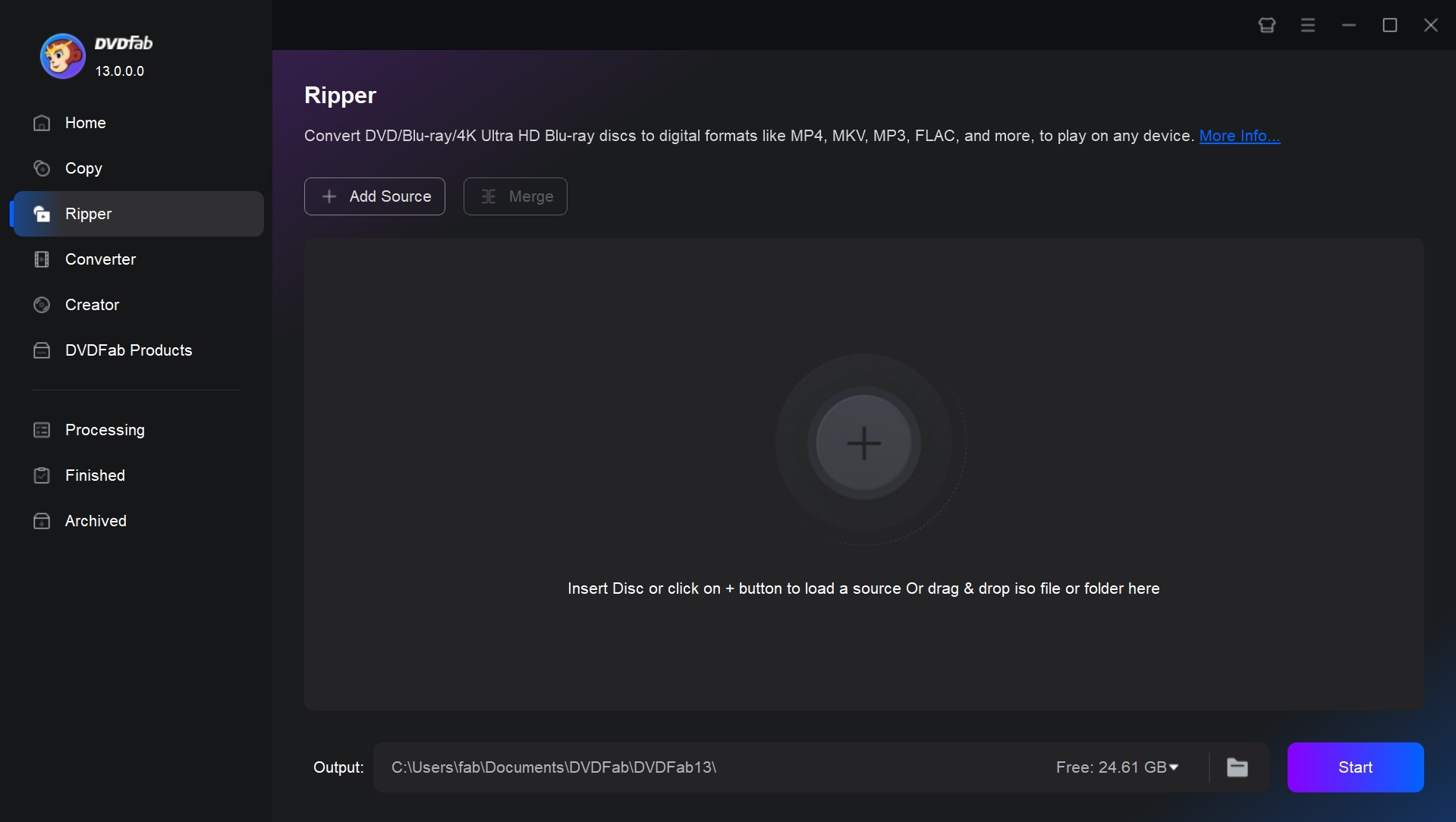
Step 2: Select the title, audio tracks, and subtitles you want to include in the local file.
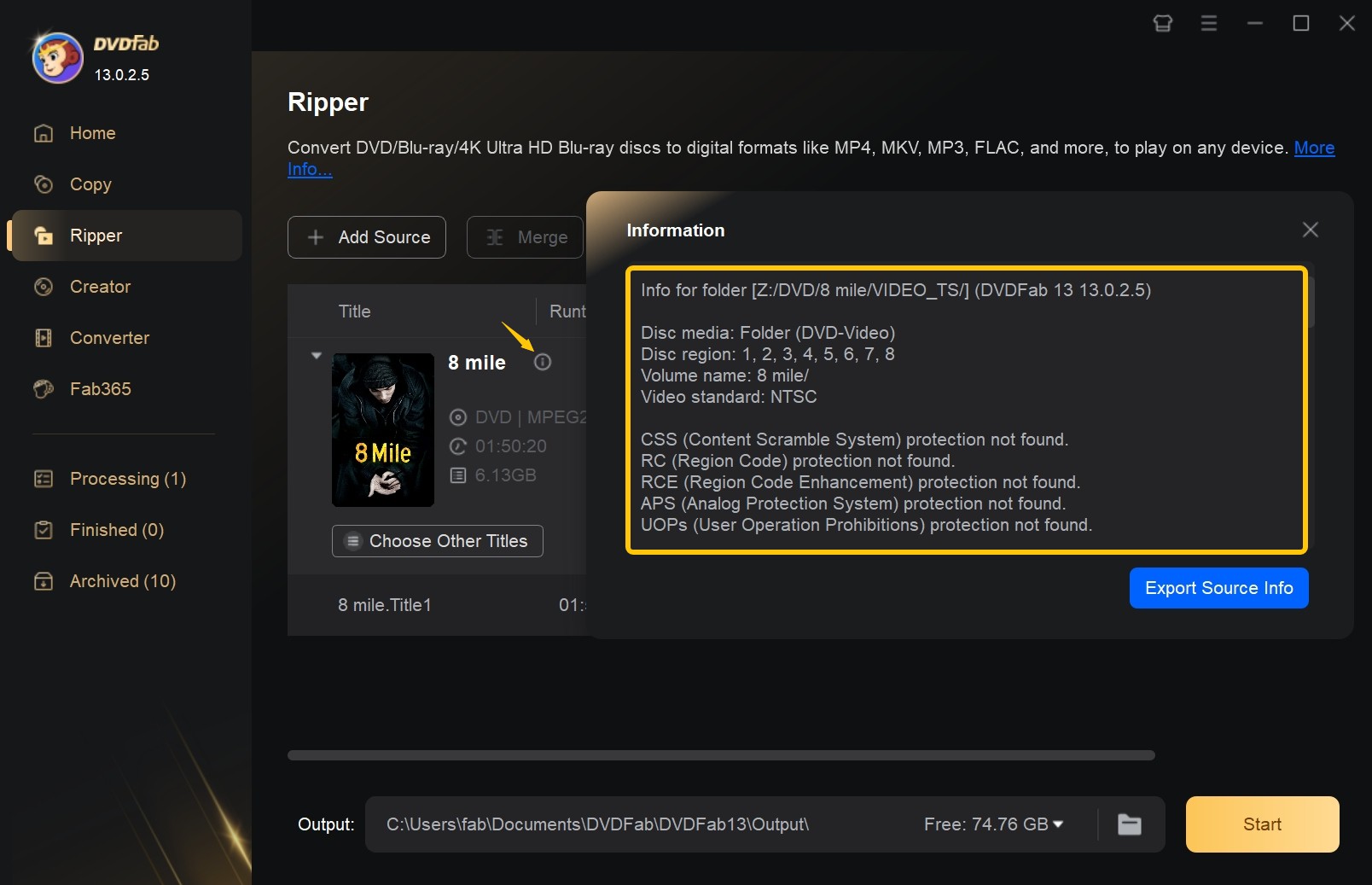
Step 3: You can tweak additional settings such as video quality, codec, and subtitle options in the customization section, if necessary.
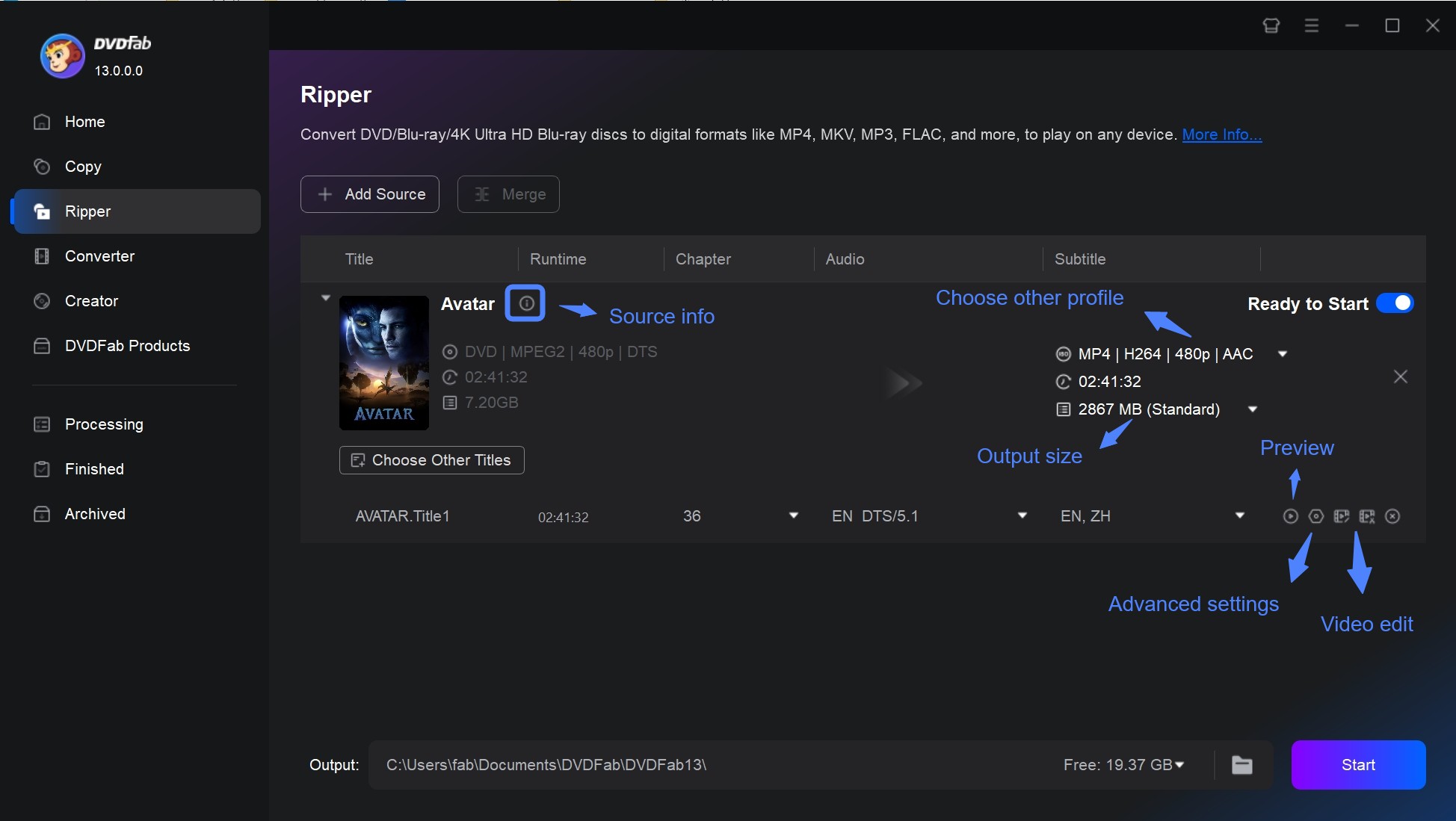
Step 4: Choose an output folder and click "Start." When conversion is finished, play the file on the device and app you intend to use.
FAQs
Is a region-free DVD player legal in the U.S.?
A region-free DVD player is a hardware option, while creating a local file is a separate software-based choice. Rules for imported-disc playback and personal copying vary by jurisdiction, so use discs you own or are authorized to access, keep copies for personal, noncommercial viewing, and do not share them.
Will an ALL disc play on a U.S. player?
A DVD region 0 or ALL disc generally has no geographic region restriction, so it may play on a U.S. player. PAL/NTSC support and the player's format compatibility still matter.
Why did my computer stop playing an imported DVD?
An optical drive may limit how often its region setting can be changed and may remain fixed after the allowed changes are used. Check the drive's current region in Windows Device Manager before changing it again, and confirm that the disc's video system matches the computer and player software.
Can a Region 2 DVD play on Xbox or PlayStation?
It depends on the console model, the Region 2 label, and PAL/NTSC support. Check the console's disc compatibility information before inserting the DVD; a game console does not provide a universal fix for a regional or video-system mismatch.
Conclusion
The U.S. DVD answer is Region 1. Before buying or playing an imported disc, check the disc type, the region label, PAL/NTSC support, and the device. A compatible region-free player suits regular physical-disc playback, a computer drive setting may suit a collection centered on one imported region, and a personal local-file option suits authorized discs when the output format works with the intended device. Use only discs you own or are authorized to access, for personal, noncommercial viewing, and follow applicable local law.

 4 Free DVD Rippers for Windows 10/11: Best Tools & Step-by-Step GuideBy Diana Smith - Oct 13, 2026
![How to Convert DVD to AVI Free: 3 Current Options [2026]](https://images.dvdfab.cn/artifact/2026/09/17/2HqH4KgGwIXxwkHdUUZtp0D98DCpL4gS/feature_cover.jpg) How to Convert DVD to AVI Free: 3 Current Options [2026]By Diana Smith - Oct 12, 2026
How to Convert DVD to AVI Free: 3 Current Options [2026]By Diana Smith - Oct 12, 2026 How to Copy DVD to Computer on Windows & Mac: Rip and Direct CopyBy Wenny Yan - Oct 12, 2026
 Free DVD Decoder for Windows XP and Windows 11: 3 Ways to Play DVDsBy Diana Smith - Sep 23, 2026