How to Transfer 8mm Film to DVD: DIY and Professional Methods (2026)

Summary: To transfer 8mm or Super 8 film to DVD, first digitize the reel with a film scanner or a professional film-transfer service. Keep the best digital copy you receive, then create a playable DVD if you still need disc playback. Video8 and Hi8 cassettes require a compatible camcorder or player and a video capture device instead of an 8mm film scanner. For fragile, damaged, valuable, or sound film, consider a transfer service that can inspect the original media before scanning.
Table of Contents
An 8mm film reel and an 8mm video cassette are two different media formats, even though both are often described as "8mm." Regular 8mm and Super 8 are motion-picture film, while Video8, Hi8, and Digital8 are cassette-based video formats. They require different playback and capture equipment.
If you have a film reel, the usual DIY process is to scan it into a digital video file first and create a DVD afterward. If you have an 8mm cassette, you need a compatible camcorder or player to play the tape while a capture device records its video signal.
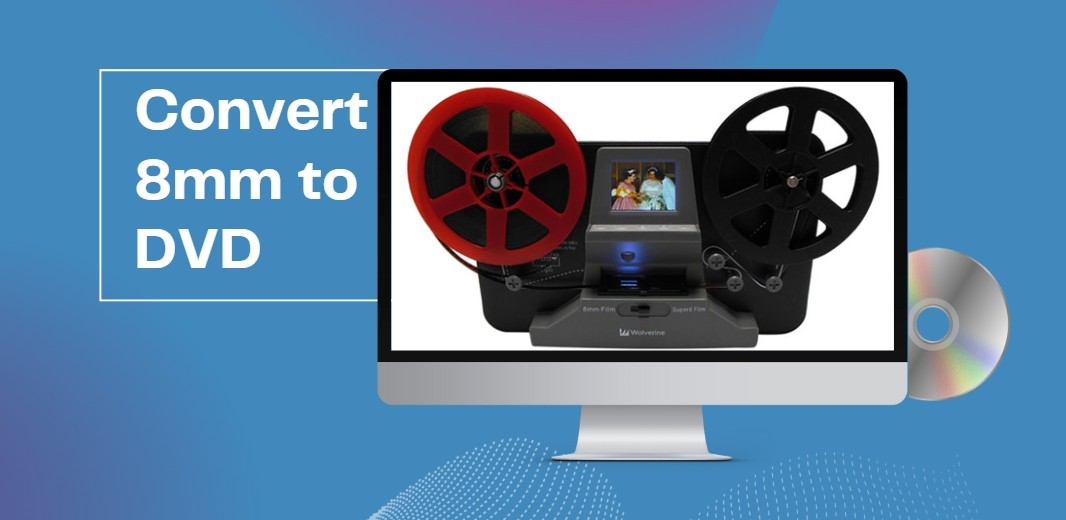
What Is the Best Way to Transfer 8mm Film to DVD?
For most 8mm or Super 8 film reels, use this sequence: film reel → digital scan → check and save the digital file → optional DVD authoring. A home film scanner works when the reels are in usable condition and you are comfortable feeding them through the machine. A professional film-transfer service is worth considering when the film has physical damage, valuable footage, sound, or condition problems that should be inspected before playback.
First, Check Whether You Have 8mm Film or 8mm Tape
| What You Have | How to Recognize It | Equipment Needed | Typical Result |
| Regular 8mm or Super 8 film | Film strip wound around an open reel | Film scanner or professional film-transfer equipment | Digital video file, then optional DVD |
| Video8 or Hi8 | Small video cassette | Compatible camcorder/player plus capture device | Digital video file, then optional DVD |
| Fragile or damaged film | Tears, damaged perforations, bad splices, warping, or feeding problems | Professional inspection and transfer | Digital copy, with DVD available if needed |
DIY or Professional Transfer?
Use a home scanner when you have several ordinary reels, want to digitize them yourself, and the film feeds cleanly. Professional transfer becomes more useful when you need film repair, sound capture, higher-resolution scanning, or less handling of the original reel.
The important distinction is that DVD creation comes after digitization in a normal DIY setup. DVD-authoring software cannot read a physical 8mm film reel by itself.
How to Convert 8mm Film to DVD at Home
A DIY transfer has two separate jobs: scan the film into a digital video file, then author that file as a DVD with a DVD burning software.
Step 1: Inspect Your 8mm or Super 8 Film
Before loading a reel, look for torn perforations, loose or damaged splices, warped sections, and film that does not move freely. Do not force a damaged section through a scanner.
If a reel looks brittle, badly damaged, moldy, or difficult to feed, stop and consider professional transfer instead of repeatedly running it through consumer equipment.
Step 2: Digitize the Reel with an 8mm Film Scanner
A film scanner captures the reel frame by frame and saves the result as a digital video file.
The Wolverine 8mm & Super 8 Reels to Digital MovieMaker Pro supports Regular 8mm and Super 8 film and saves the scan as an MP4 file. It is intended for silent film transfer, so it does not capture a film soundtrack.
The KODAK REELS 8mm & Super 8 Films Digitizer is another film-specific option. It digitizes 8mm and Super 8 reels to MP4 files saved on an SD card. It also does not capture sound.
These products belong in the film scanner category. They should not be grouped with devices that capture a Video8 or Hi8 signal from a camcorder.
Step 3: Check and Save the Digital File
Copy the completed scan to your computer and check the beginning, middle, and end for framing problems, missing footage, or an interrupted scan before putting the reel away.
Keep the best-quality digital copy you have and store another copy separately. If digital playback is all you need, you can stop here. You do not need DVD-authoring software simply to keep the MP4 file.
Step 4: Create a Playable DVD from the Digital Video
If you want a disc that works like a conventional Video DVD, import the scanned MP4 into DVD-authoring software after digitization. DVDFab DVD Creator can author a digital video as a DVD disc, ISO image, or DVD folder.
- Import a scanned video file and author it as a Video DVD
- Write the result to a blank DVD or save it as an ISO image or DVD folder
- Choose DVD size, aspect ratio, playback mode, and menu settings
- Select available audio or subtitle tracks and add external subtitles when needed
How to Convert a Scanned 8mm Video to DVD with DVDFab DVD Creator
Step 1: Copy the scanned MP4 from the SD card to your computer. Open DVDFab and choose Creator > DVD Creator, then add the video file.
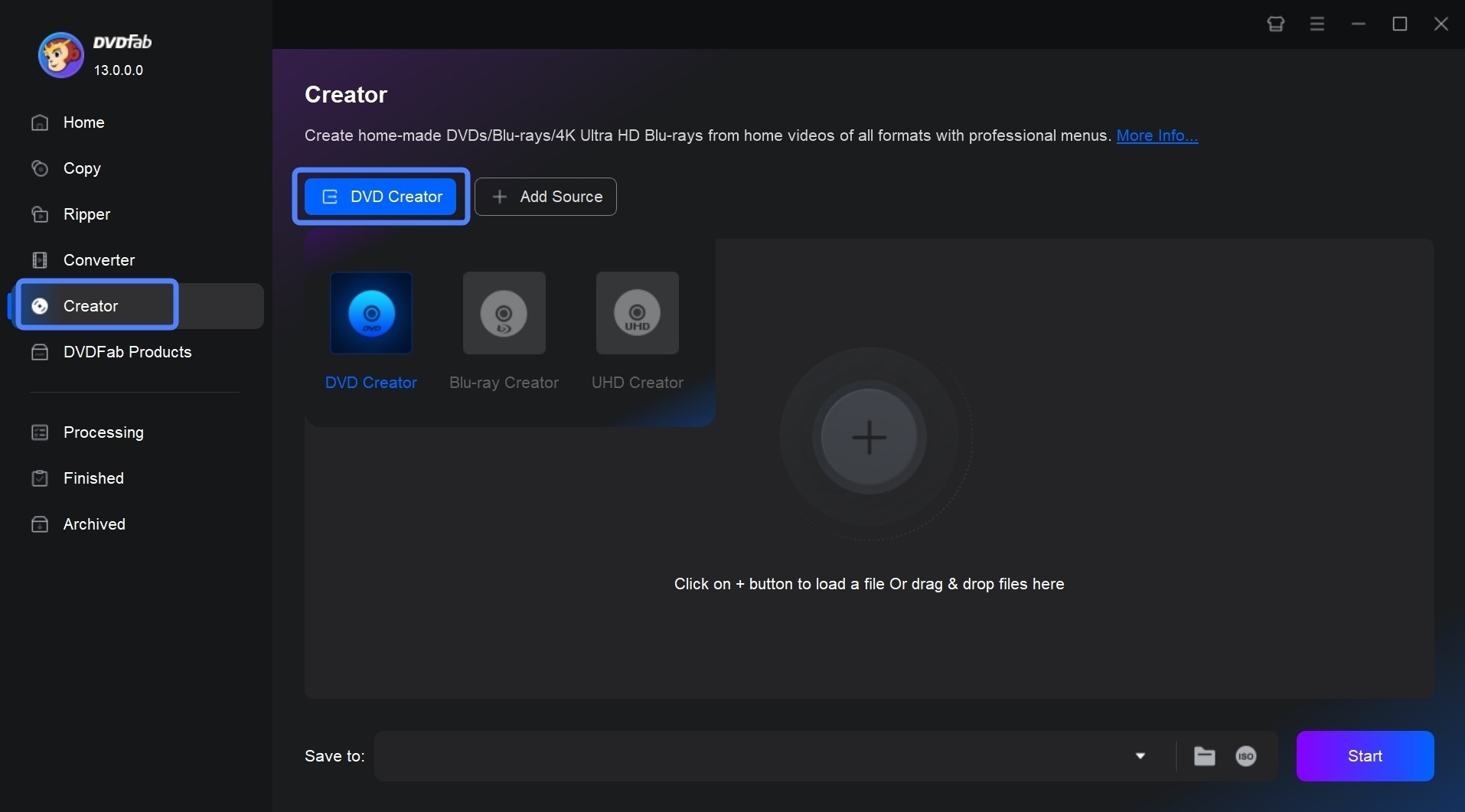
Step 2: Check the source information and select the audio and subtitle tracks you want to keep. Add an external subtitle file only if your video needs one.
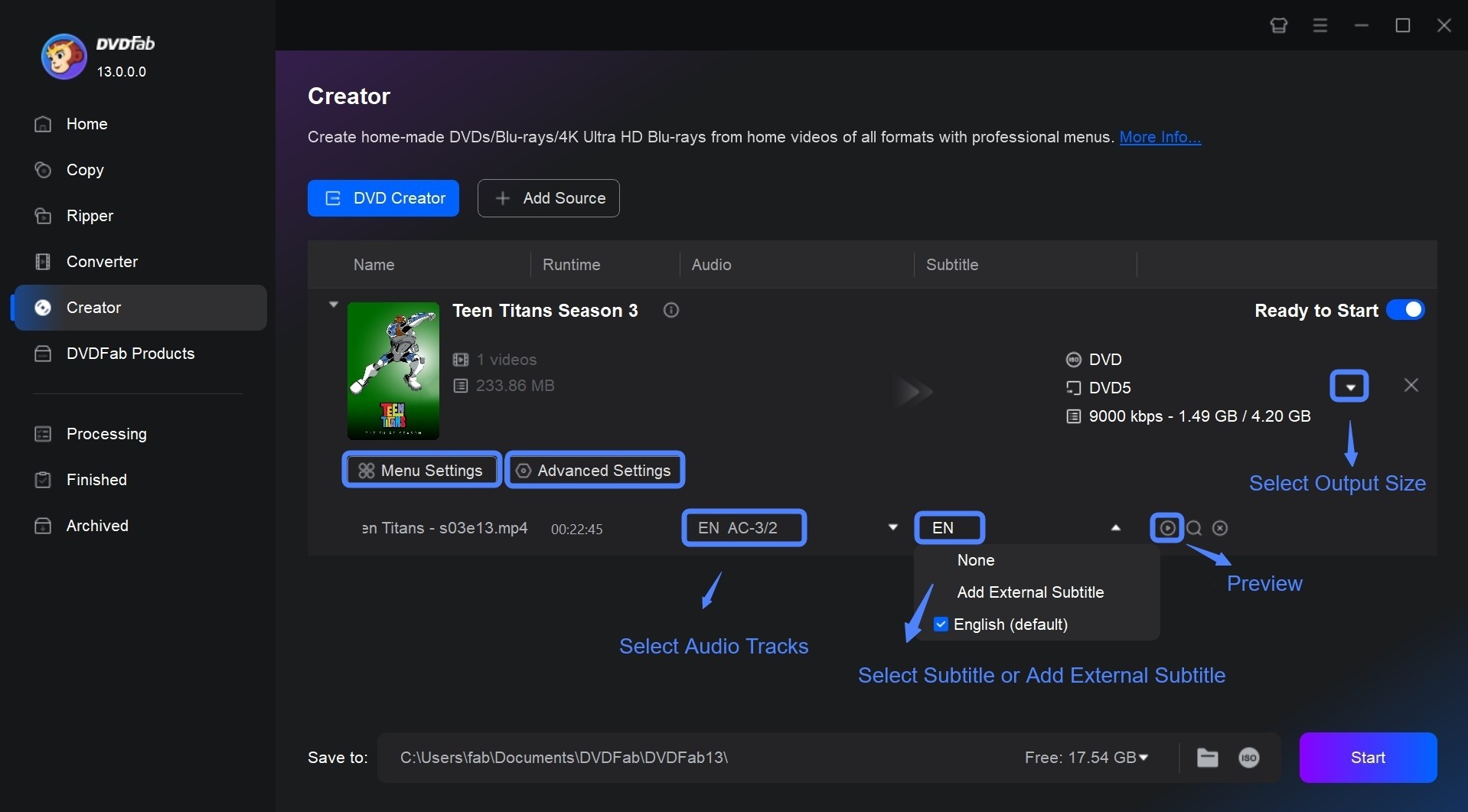
Step 3: Open Advanced Settings to choose the output DVD size, aspect ratio, playback mode, and menu options. Use the menu settings only if you want DVD navigation instead of a basic disc layout.
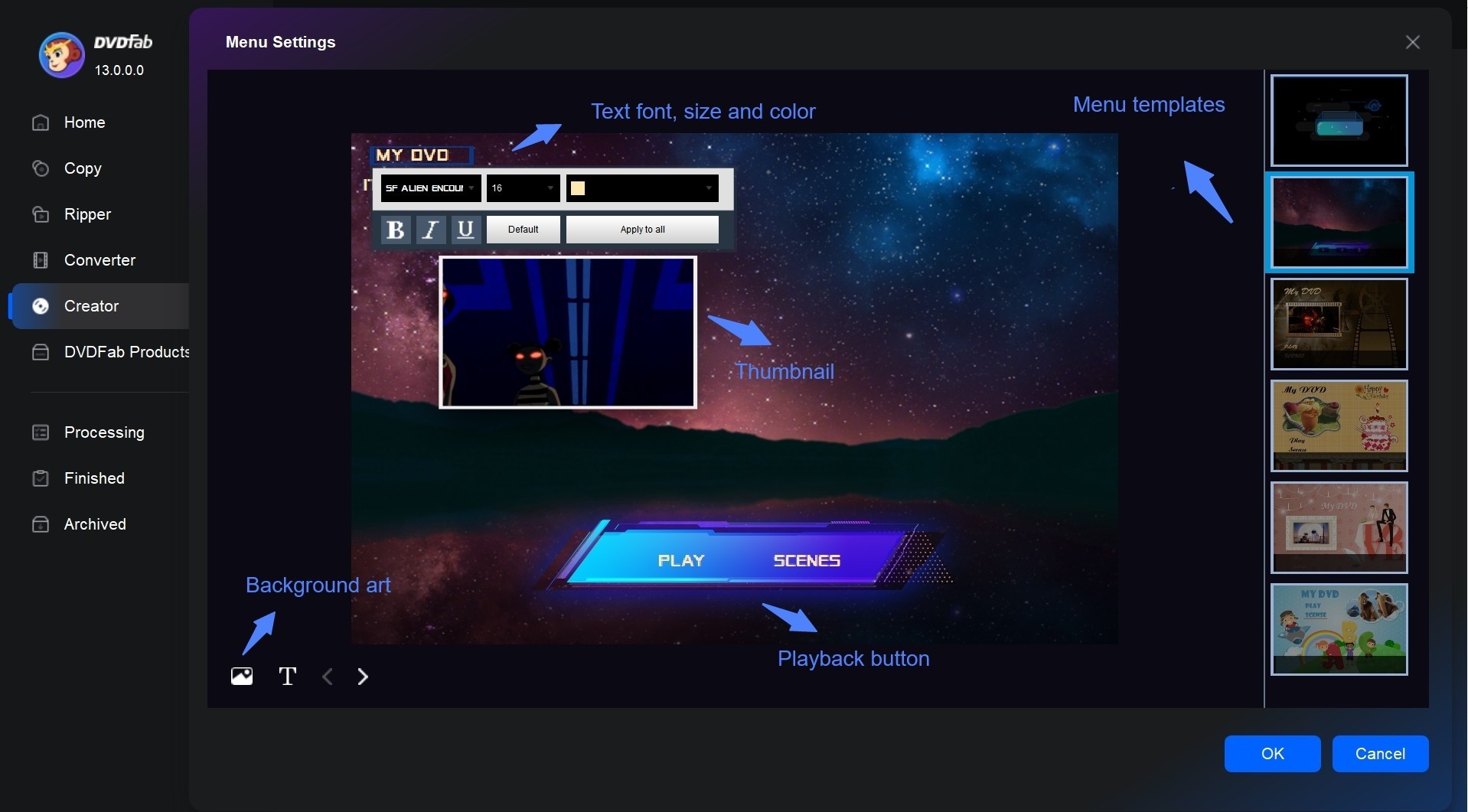
Step 4: Insert a blank DVD and choose it as the output. If you do not want to burn a disc immediately, save the authored DVD as an ISO image or folder. Select Start to begin.
When a Professional 8mm Film Transfer Service Is the Better Choice
Professional transfer is worth considering when the reel is physically fragile, contains important footage you do not want to experiment with, needs repair, or contains a soundtrack that a silent consumer scanner cannot capture.
It can also make sense when you have only a few reels. Buying a scanner solely for one small transfer job may cost more than sending those reels to a service.
What to Compare Before Sending Your Film
- Whether the service accepts Regular 8mm, Super 8, or both
- Available scan resolutions
- Whether the film is scanned frame by frame
- Cleaning and splice-repair options
- Magnetic or optical sound capture when applicable
- Digital file formats and delivery options
- DVD availability if you still need a physical disc
- Whether files are delivered separately by reel or combined
- Return shipping and handling of the original reels
- Extra charges for storage media, repairs, higher-resolution scans, or special handling
For long-term storage, ask for the best-quality digital file the service provides rather than ordering only a DVD. A DVD can remain useful for playback and sharing, but it should not be the only copy of family footage you want to keep.
Examples of 8mm Film Transfer Services
Leave A Legacy offers 8mm film transfer with digital-file and DVD delivery options. Before ordering, check the current scan resolution, cleaning or repair options, delivery format, and quote for your reel length.
Just8mm specializes in Regular 8mm and Super 8 transfer and offers digital and DVD delivery options. Check whether your order needs higher-resolution scanning, sound capture, repair, or another service that changes the final price.
Prices and service options can change, so confirm the current quote for your reel size, film condition, desired resolution, and delivery format before mailing original film.
Have Video8 or Hi8 Tape Instead? Use a Camcorder and Capture Device
If your "8mm" media is inside a small cassette rather than wound on a film reel, you are dealing with video tape. Video8, Hi8, and Digital8 require compatible video playback equipment.
What You Need for Video8 or Hi8 Tape
A typical setup is Video8/Hi8 cassette → compatible camcorder or player → video capture device → digital file → optional DVD.
The camcorder or player reads the tape. The capture device records the video signal coming from that machine.
For example, ClearClick Video to Digital Converter 2.0 records an analog AV signal from a camcorder or another supported video source to digital storage. That makes it relevant to Video8 or Hi8 transfer when you already have compatible playback equipment, but it cannot read a Regular 8mm or Super 8 film reel.
What If You No Longer Have the Camcorder?
You still need a machine capable of playing the cassette before a capture device can record it. Look for a compatible working camcorder or player, borrow one, or use a transfer service that accepts your exact cassette format.
Do not buy a capture device first and assume it can physically read the tape. The capture device receives the signal from the player; it does not replace the tape transport.
DVD or Digital File: What Should You Keep After the Transfer?
Keep the best digital copy of the transfer even if your final goal is a DVD.
A DVD is useful when you need compatibility with an older DVD player, want a physical copy for a relative, or prefer disc menus and chapters. It should not be the only copy of family footage you want to preserve.
Keep the Digital Copy Even If You Make a DVD
- Keep the best digital file produced by your scanner or transfer service.
- Store another copy on a separate storage device or in another location.
- Create smaller MP4 copies for easy sharing if needed.
- Make a Video DVD only when disc playback is useful.
Do not delete the digital file after the DVD burns successfully. It gives you a better starting point if you later need another DVD, an edited family video, a media-server copy, or a replacement format.
When Creating a DVD Still Makes Sense
A Video DVD still makes sense when the intended viewer owns a DVD player or when a physical disc is easier to share than a large video file.
If everyone watching the footage uses computers, smart TVs, phones, or a media library, the digital file may be enough. In that case, DVD-authoring software is optional rather than a required part of the preservation process.
FAQs
Can 8mm film be transferred directly to DVD?
Some professional services can deliver an authored DVD from a film transfer. For DIY work, digitizing the reel to a video file first gives you a digital copy to keep before you create the DVD.
Does 8mm or Super 8 film have sound?
Some 8mm and Super 8 film contains a soundtrack, but not every reel does. Consumer scanners such as Wolverine MovieMaker Pro and KODAK REELS do not capture film sound, so sound reels may require a service that supports the soundtrack type.
Can damaged 8mm film still be digitized?
Often, yes, but the correct treatment depends on the damage. Broken splices, damaged perforations, mold, warping, or feeding problems are good reasons to have the reel inspected before scanning.
Will a transferred DVD play in a regular DVD player?
It can if the disc is authored as DVD-Video and the player supports that disc type and video standard. A data DVD that contains only an MP4 file is different from an authored Video DVD.
Can Walmart convert 8mm film to DVD?
Walmart Photo advertises a Home Movie & Photo Transfer service, but accepted media, prices, and delivery options can change. Check its current accepted-media list before sending an 8mm or Super 8 reel.
How to transfer VHS to DVD?
To transfer VHS to DVD, play the tape in a working VCR and connect its video and audio outputs to a capture device. Record the VHS footage as a digital video file, check the recording, and then use DVD-authoring software such as DVDFab DVD Creator to create a playable DVD. If you do not have a working VCR, a professional VHS transfer service is another option.
Conclusion
For a usable 8mm or Super 8 reel, digitize the film first and keep the best digital copy you receive. Create a DVD only when disc playback or physical sharing is useful. Use a compatible camcorder and capture device for Video8 or Hi8 cassettes, and consider a professional service when the original film is damaged, valuable, or contains sound that your scanner cannot capture.

 How to Convert MP4 to DVD Format for Free on Windows, Mac & OnlineBy Diana Smith - Sep 8, 2026
 How to Burn DVD with Subtitles: Add SRT/ASS or Hardcode CaptionsBy Diana Smith - Sep 3, 2026
![18 Best Free DVD Burner Software for Windows [2026 Review]](https://images.dvdfab.cn/media/Best_Free_DVD_Burner_Software_for_Windows_16sgci.png/public) 18 Best Free DVD Burner Software for Windows [2026 Review]By Diana Smith - Sep 3, 2026
18 Best Free DVD Burner Software for Windows [2026 Review]By Diana Smith - Sep 3, 2026![How to Convert MTS/M2TS Files to DVD: Tested 2 Methods [2026]](https://images.dvdfab.cn/media/How_to_Convert_MTS_and_M2TS_Files_to_DVD_phce29.png/public) How to Convert MTS/M2TS Files to DVD: Tested 2 Methods [2026]By Wenny Yan - Aug 31, 2026
How to Convert MTS/M2TS Files to DVD: Tested 2 Methods [2026]By Wenny Yan - Aug 31, 2026