What to Do With Old DVDs: 6 Smart Options in 2026

Summary: What to do with old DVDs depends on value, condition, and whether you still want the movies. Rare or boxed sets are worth selling, usable common discs can go to thrift stores, libraries, or community centers, and damaged discs should go to electronics or media recycling instead of curbside bins. Digitize your favorite titles with tools like DVDFab DVD Ripper first so the collection takes less space while the physical discs are sold, donated, recycled, or reused for crafts.
Table of Contents
DVDs have had a good run, but the way we watch movies has changed. Blu-ray raised the bar, and streaming put entire libraries a click away. So what happens to all those discs on your shelf? Don't toss them yet. In this guide, we'll look at smart ways to handle an old DVD collection. Such as what to digitize, what to sell or donate, how to recycle, and which editions are worth keeping.
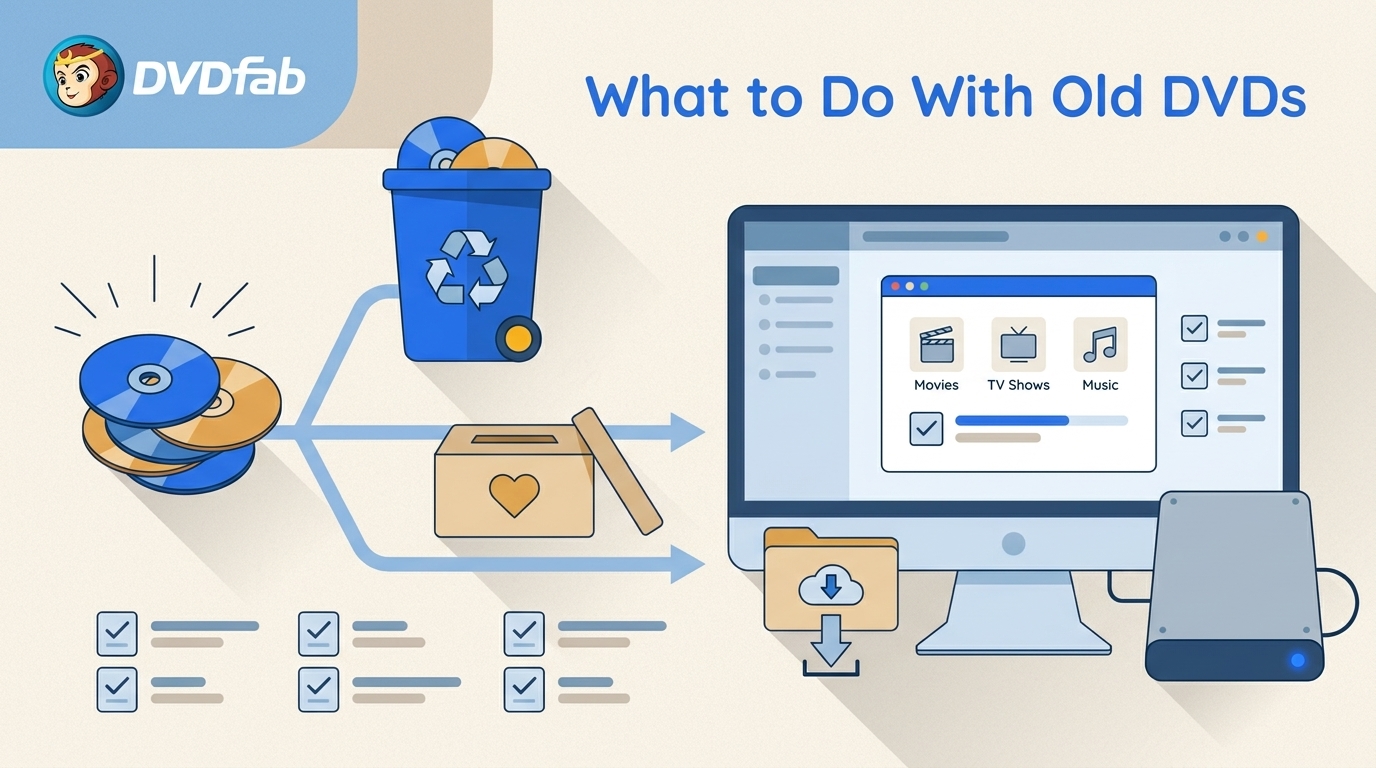
What to do with old DVDs depends on what each disc still gives you: reliable access, hard-to-find extras, resale value, or simply clutter. For an old DVD collection, the sensible answer is usually a mix of six options: keep, digitize, sell, donate, recycle, or repurpose.
| Option | Best for | Likely return | Effort | Space saved | Check first | Next step |
| Keep | Favorites, scarce editions, or discs with unique extras | Continued access | Low | None | Will you watch it again, and is the content replaceable? | Store it upright in its case, away from heat and humidity. |
| Digitize | Titles you want to watch locally without using the disc | Convenience | Medium | Moderate | Do you have storage and a second backup? | Create and test a file before deciding what to do with the disc. |
| Sell | Complete, scarce, collectible, or out-of-print editions | Varies by edition and condition | Medium | High | Exact edition, UPC, condition, and recent sold listings | List stronger titles individually and bundle common releases. |
| Donate | Clean, playable movies with cases | Helps a local organization | Low | High | Whether the organization currently accepts DVDs | Contact the location before bringing a large batch. |
| Recycle | Unwanted or unplayable discs | Material recovery where available | Medium | High | Local optical-media or e-waste acceptance | Use a specialty recycler rather than placing discs in curbside bins. |
| Repurpose | Discs that cannot be sold, donated, or recycled locally | Household or craft use | Low | High | Whether the disc contains personal data | Use it only after addressing any stored personal information. |
A mixed collection usually needs a mixed outcome, not one rule for every disc.
Old DVD Storage and Playback Problems
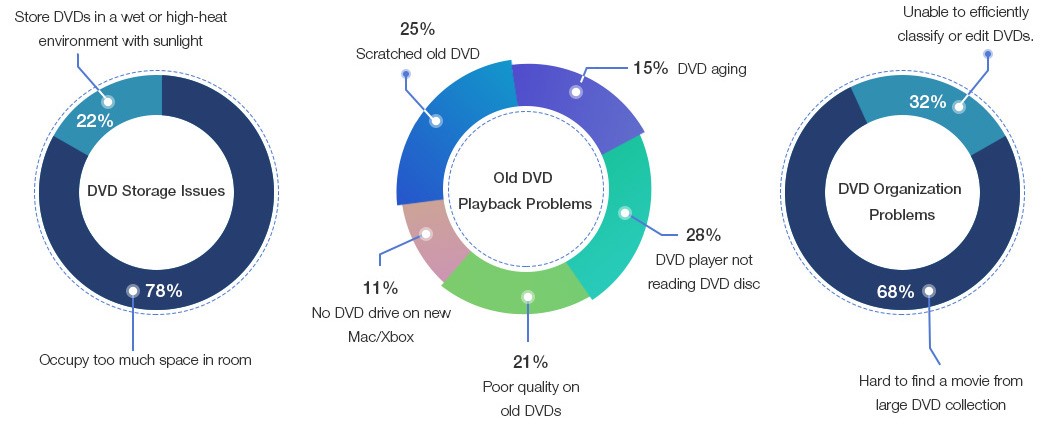
If your old DVDs will not play, several issues might be responsible. The disc may be scratched or physically damaged, the reflective layer may have begun to oxidize, or the adhesive between layers may be failing. Compatibility can also be a factor, since some players read older discs poorly. Many modern devices, including recent MacBooks and the Xbox One S, do not include optical drives, so playback is not possible on those machines. Even when discs are fine, a large DVD library takes up significant space and requires compact DVD storage ideas that prevent warping and scratches. A playback problem alone is not a reason to discard a disc if its title, extras, or replacement availability still make it worth keeping.
Why Do DVDs Deteriorate Over Time?
Layer breakdown
A DVD includes a plastic substrate, a reflective metal layer, and a protective lacquer. Heat, humidity, and light can cause these layers to separate or corrode. The result can be spots, discoloration, or warping that interferes with accurate laser reading.
Disc rot and oxidation
When the reflective layer oxidizes, it loses reflectivity. This creates dark specks or tiny pinholes that block the laser. Older or cheaply made discs are more vulnerable to this problem.
Scratches and dust
DVD data sits close to the surface. Routine handling, poor storage, or abrasive cleaning can leave scratches or trap dust. Even small marks can lead to skipping or read errors.
Organic dye fade on recordable discs
DVD-R and DVD+R use organic dyes to store data. UV exposure, heat, and age can break down these dyes, which gradually reduces readability until the disc becomes unreliable.
Quality differences in manufacturing
Not all discs are produced to the same standard. Inconsistent layer thickness, impurities, or weak adhesives shorten life span. Discs from reputable manufacturers usually last longer.
What to do with Old DVDs for Better Playback and Organization?
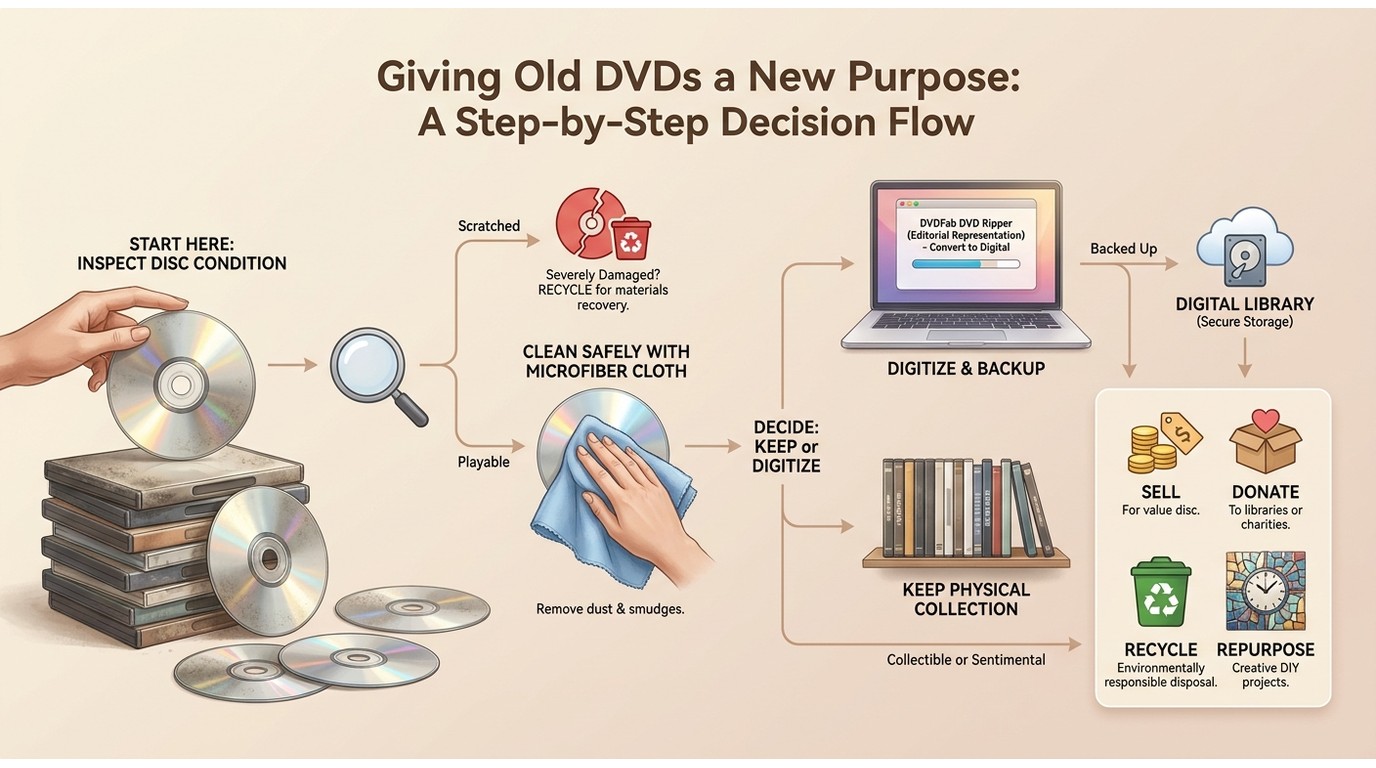
If a disc is scratched, start with safe cleaning. Use a microfiber cloth slightly dampened with distilled water or a small amount of 70% isopropyl alcohol. Wipe in straight lines from the center to the Edge. Avoid banana peels, peanut butter, and other home remedies because they leave residue and can make damage worse. For deeper scratches, use a professional resurfacing service, a dedicated repair machine, or these steps for fixing a scratched DVD. If playback skips on multiple discs, clean the player's laser with an approved lens-cleaning disc or an official kit.
Sort before you dispose of anything. Keep titles you revisit, discs that are unavailable to stream, editions with alternate cuts or commentaries, and items with sentimental value. Next, screen potentially valuable DVDs for resale, then digitize the selected titles you want for local playback. Verify each finished file, keep a second backup, and only then sell, donate, recycle, or repurpose the discs you no longer need. Shelf space matters, but it should not outweigh content that cannot be replaced.
Digitize Old DVDs with DVDFab DVD Ripper
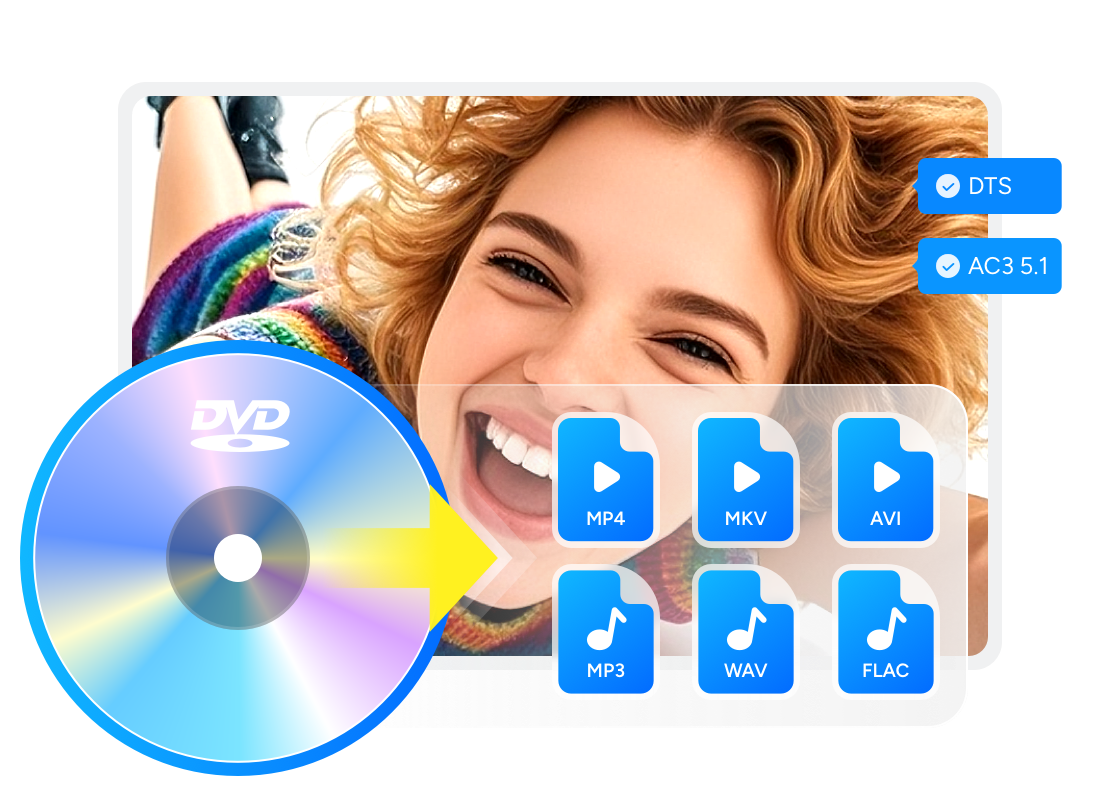
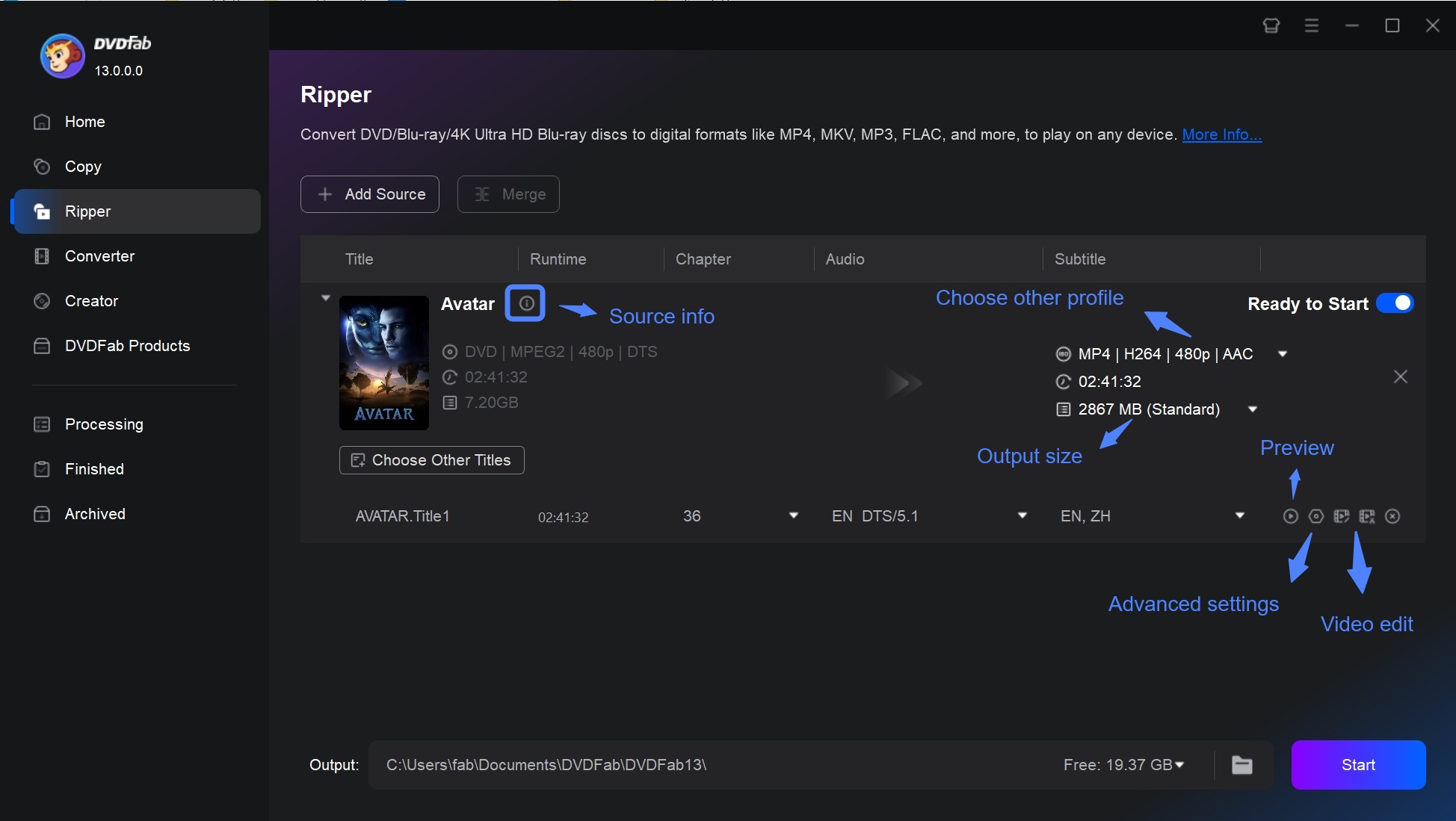
DVDFab DVD Ripper can convert old or new DVD discs, ISO images, and VIDEO_TS folders into digital formats such as MP4, MKV, AVI, MP3, and more. It supports both compressed profiles for smaller files and MKV Passthrough for keeping the original video, audio, and subtitles without re-encoding. Device presets are also available for playback on computers, phones, tablets, TVs, and media players.
Before ripping, you can select the main title, chapters, audio tracks, and subtitles, then adjust the resolution, codec, bitrate, and output quality. GPU acceleration can shorten encoding time on compatible hardware, while metadata and .nfo file support help organize digitized movies in media servers such as Plex and Kodi.
Supported OS:
Free Download Windows 11/10/8.1/8/7
Free Download macOS 10.13 - 15.x
Key Features:
- Converts DVDs to MP4, MKV, AVI, WMV, MOV for TV or PC playback
- Extracts audio as MP3, AAC, M4A, WMA
- Removes protections such as Sony ArccOS, APS, and Region Code
- Supports crop, trim, rotate, watermark, and picture adjustments
- Lets you choose audio tracks and subtitles
- Handles batch ripping for multiple discs at once
- Speeds up conversion with GPU and multi core CPU
How to Dispose of Old DVDs? Sell, Donate, Recycle, or Repurpose DVDs
After sorting the discs you intend to keep or digitize, direct the remainder according to condition, resale value, and whether they contain personal information.
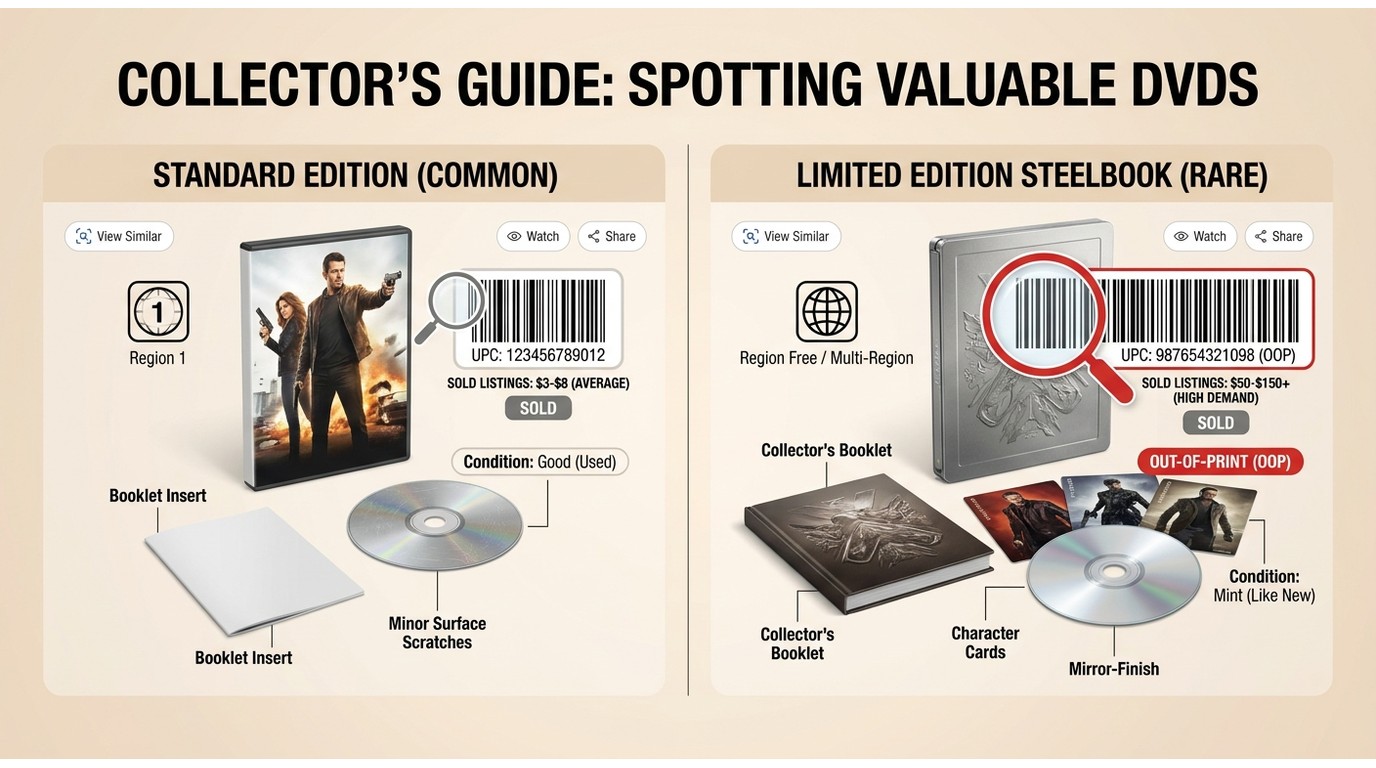
Check Value Before You Sell
Check the exact edition, UPC, region, box-set completeness, case and disc condition, out-of-print status, and whether the release is a steelbook or limited edition. Compare recent sold listings, not asking prices. List complete or scarce editions individually through places that buy used DVDs for cash, while ordinary titles usually make more sense as bundles. Most common releases are unlikely to justify a long listing period, but complete or hard-to-find editions deserve a closer look.
Donate Playable DVDs Locally
Give clean, playable commercial movie DVDs with their cases and artwork to libraries, schools, hospitals, community centers, or thrift stores that accept them. Acceptance varies by organization and location, so contact the nearby location before bringing a large collection.
Recycle or Repurpose Unwanted DVDs
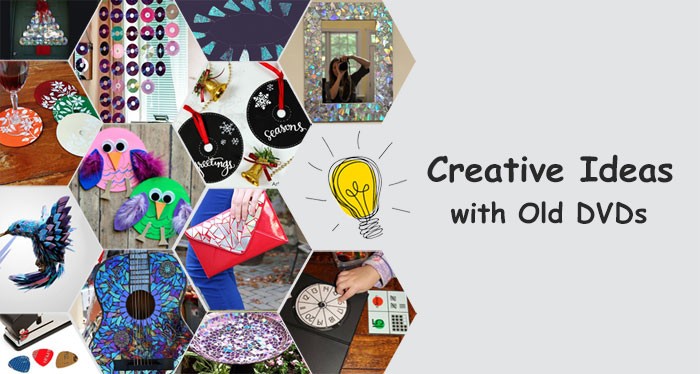
Most curbside programs do not accept optical discs. Use an e-waste or optical-media recycling service or a mail-in program, since local acceptance varies. Home-video or data DVDs may require secure destruction or a qualified recycling service because simple scratching or snapping may not reliably destroy stored information. For non-sensitive discs, reuse at home as coasters, craft projects, or reflective garden tags. Recycle plastic cases separately if your local program accepts polypropylene.
Erase and Reuse Rewritable DVDs Only
DVD-R and DVD+R are write-once formats and cannot normally be erased. DVD-RW and DVD+RW can be erased and reused with compatible hardware and software. Copy anything important first, because erasing removes the stored content.
FAQs
Are DVDs obsolete if streaming is easier?
DVDs are no longer the default viewing format, but they can still be worth keeping when they offer reliable access, unavailable titles, alternate cuts, commentaries, or bonus features that streaming does not include. Keep the discs you value and clear the rest deliberately.
Do thrift stores such as Goodwill accept old DVDs?
Acceptance varies by store and location. Call before you go, especially with a large collection. Libraries, community organizations, hospitals, and specialty charities may also accept clean, playable DVDs with cases.
What should I do if my DVDs do not sell?
Set a short deadline for individual listings. After that, bundle low-value titles, donate playable discs, and send the remainder to an optical-media or e-waste recycler. This prevents unsold boxes from becoming long-term storage.
Conclusion
Start with a small batch instead of trying to decide the fate of an entire DVD collection at once. Keep the titles that matter, check potentially valuable editions, and rip DVDs for Plex or another local library only when you want convenient access to them.
Verify and back up any files before letting the original discs go. Then sell what has value, donate playable titles, and use an optical-media or e-waste recycler for the rest. A deliberate mixed approach preserves what matters without keeping every disc indefinitely.

![How to Rip DVDs for Plex: Guide to Formats, Tools, and Library Setup [2026]](https://images.dvdfab.cn/media/Screenshot_2026-09-08_at_18.53.34_j36v3l.png/public) How to Rip DVDs for Plex: Guide to Formats, Tools, and Library Setup [2026]By Diana Smith - Sep 8, 2026
How to Rip DVDs for Plex: Guide to Formats, Tools, and Library Setup [2026]By Diana Smith - Sep 8, 2026![Top 12 DVD to MP4 Converter Software for Win & Mac [2026 Tested]](https://r3.dvdfab.cn/upload/resource/convert-dvd-to-mp4-p2X3.jpeg) Top 12 DVD to MP4 Converter Software for Win & Mac [2026 Tested]By Diana Smith - Sep 4, 2026
Top 12 DVD to MP4 Converter Software for Win & Mac [2026 Tested]By Diana Smith - Sep 4, 2026 10 Best DVD Rippers for Windows & macOS: 2026 TestedBy Diana Smith - Sep 2, 2026
![How to Rip Audio from DVD with 5 Best Free DVD Audio Extractors [2026]](https://images.dvdfab.cn/media/how_to_rip_audio_from_dvd_5r8iyw.png/public) How to Rip Audio from DVD with 5 Best Free DVD Audio Extractors [2026]By Diana Smith - Aug 31, 2026
How to Rip Audio from DVD with 5 Best Free DVD Audio Extractors [2026]By Diana Smith - Aug 31, 2026