How to Rip DVDs for Plex: Guide to Formats, Tools, and Library Setup [2026]

Summary: To rip DVDs for Plex, use DVDFab DVD Ripper for an automated, one-click solution that handles decryption and compression, or a free workflow combining MakeMKV (for lossless ripping) and HandBrake (for compression). First, convert discs to MP4 (H.264) to ensure Direct Play. Then, organize your files using proper naming conventions like Title (Year) and add them to your library. This process ensures smooth playback and accurate metadata matching on Plex.
Table of Contents
When I first started ripping DVDs for Plex, I hit a hard limit: the media server ignores raw VIDEO_TS folders and extracted ISO files. The same problem comes up in the r/PleX community, where users discuss turning DVDs into Plex-ready files while keeping subtitles and bonus features. Plex itself confirms that ISO, VIDEO_TS, and similar disc-image structures are not supported for normal playback, so disc content must first be remuxed or transcoded into a regular media file.
During my recent performance tests on Windows 10, hardware-accelerated conversion software proved useful when I processed multiple DVD titles. I compared MKV and MP4 outputs for Plex, looking at file size, processing time, metadata, and playback behavior. Those hands-on results are included below alongside the two main methods I use for ripping DVDs for Plex.
![How to Rip DVDs for Plex: Guide to Formats, Tools, and Library Setup [2026]](https://images.dvdfab.cn/media/Screenshot_2026-09-08_at_18.53.34_j36v3l.png/public)
Best Format Settings for Ripping DVDs for Plex
Plex does not support ISO, IMG, VIDEO_TS, BDMV, or similar disc-image structures for normal playback. According to Plex's official support documentation, these formats need to be converted into a regular media file before Plex can use them as normal library content.
You do not always need to re-encode the DVD. Plex officially describes two main options for converting disc-image content: remuxing and transcoding. A remux keeps the original video and audio streams in a new container such as MKV without re-encoding, while transcoding creates new video or audio streams to reduce file size or improve playback compatibility.
For a broadly compatible Plex file, H.264 video in MP4 is still a useful starting point. MKV is a better choice when you want to retain the original DVD streams or keep several audio and subtitle tracks. Neither container guarantees Direct Play, because Plex evaluates the complete media format and the capabilities of the playback client.
| Setting | Recommended Value | What to Check |
| Container | MP4 for broad compatibility; MKV for remuxing or multiple audio/subtitle tracks | Target Plex client's container support |
| Video Codec | H.264 for broad compatibility; H.265 when your main clients support it | Client codec support before converting a large collection |
| Audio Codec | AAC 2.0 for broad support; AC3/EAC3 when your playback equipment supports it | TV, receiver, and Plex app audio support |
| Resolution | Keep the DVD's source resolution unless you have a specific reason to resize | NTSC DVD is commonly 720×480; PAL DVD commonly uses 720×576 |
| Frame Rate | Match the source | Avoid forcing 30 or 60 fps solely for Plex |
| Bit Depth | 8-bit for a typical DVD source | Target client compatibility |
| Subtitles | Text subtitles such as SRT when practical; keep original DVD subtitles when needed | Some image-based subtitle streams can trigger video transcoding |
Plex determines whether a file can Direct Play, Direct Stream, or must be Transcoded from the combination of container, video codec, audio codec, bitrate, resolution, and subtitles. Plex's official Direct Play and Direct Stream documentation also notes that an incompatible subtitle stream can force subtitle burn-in and trigger a full video transcode.
How to Rip DVDs for Plex with DVDFab DVD Ripper
If you check Reddit communities, you will see a common trend: people often suggest using MakeMKV and HandBrake together. While this free method works well enough for some discs, it frequently fails when encountering modern copyright protections on commercial discs. It also gets messy when you want to keep specific subtitles, commentaries, or bonus features. You have to juggle two different programs, and after waiting hours for the video to process, you might still find your subtitles missing in Plex. DVDFab provides a single-program alternative to rip a DVD.
Step 1. Download DVDFab DVD Ripper
DVDFab DVD Ripper can convert DVD discs, ISO files, or folders to Plex-supported media formats. It supports protected DVD sources and can output MP4 with H.264 and AAC for broad client compatibility, or MKV Passthrough when you want to retain the original video and audio streams. You can also select titles, chapters, audio tracks, and subtitles, and edit the video before conversion.
DVDFab also includes a "Meta Info" feature that can generate .nfo files containing titles, cast information, and cover art. Plex Media Server 1.43.1 or newer can read local NFO metadata when the library is configured with the Plex NFO Movie or Plex NFO Series agent. This can reduce manual metadata editing when the local NFO information matches the library content.
Click the button below to download and install DVDFab DVD Ripper.
Free Download Windows 11/10/8.1/8/7
Free Download macOS 12 or newer
👍Key Features:
- Receive updates that add support for newly released DVDs.
- Convert DVD disc, ISO, VIDEO_TS folder to Plex formats like MP4, MKV, MOV, etc.
- Compress large video files efficiently to save storage space on your NAS or hard drive.
- Use GPU hardware acceleration and support batch processing for large libraries.
- Allow you to select specific audio tracks and subtitles to customize your viewing experience.
- Generate .nfo files to automatically synchronize movie metadata with Plex.
- Offer a free but limited version - DVDFab HD Decrypter - that can rip most encrypted DVD or Blu-ray to MP4 & MKV format only.
I use DVDFab DVD Ripper (v13.0.5.9) to bulk digitize my collection. Its cloud decryption reliably handles even the newest 2026 releases like Jurassic World: Rebirth. With GPU acceleration, I can batch process multiple movies at once, compressing a 6GB DVD down to a 1.9GB MP4 (saving ~69% space) without visible quality loss. And I really like its metadata feature. The software generates .nfo files alongside the video, ensuring Plex instantly loads the correct posters and cast info—saving me hours of manual fixing. The ripped files just play smoothly on Plex.
Step 2. Load the DVD and Select a Plex Supported Format
Open DVDFab, navigate to the "Ripper" module, and insert your DVD or load an ISO file/folder.
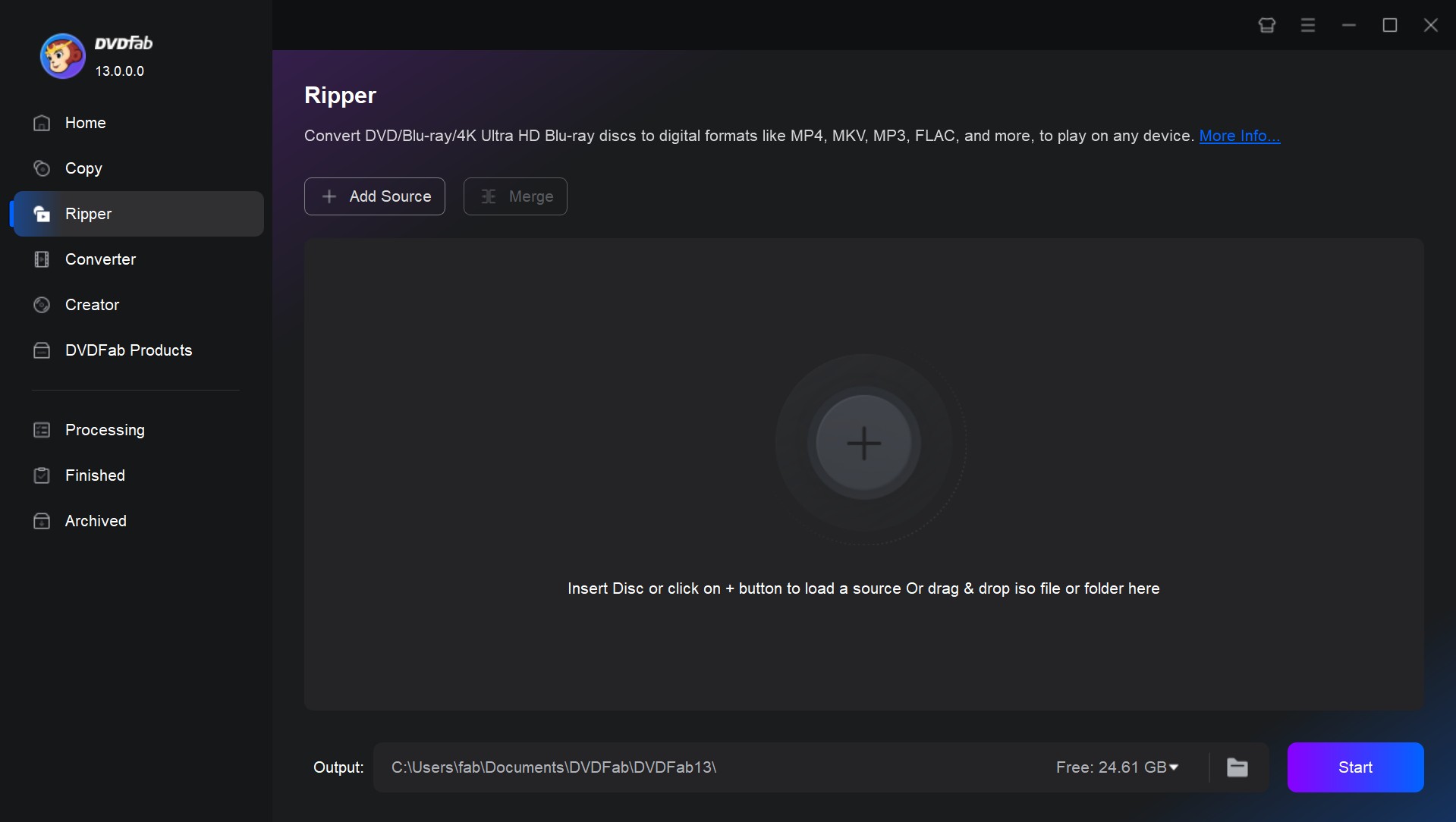
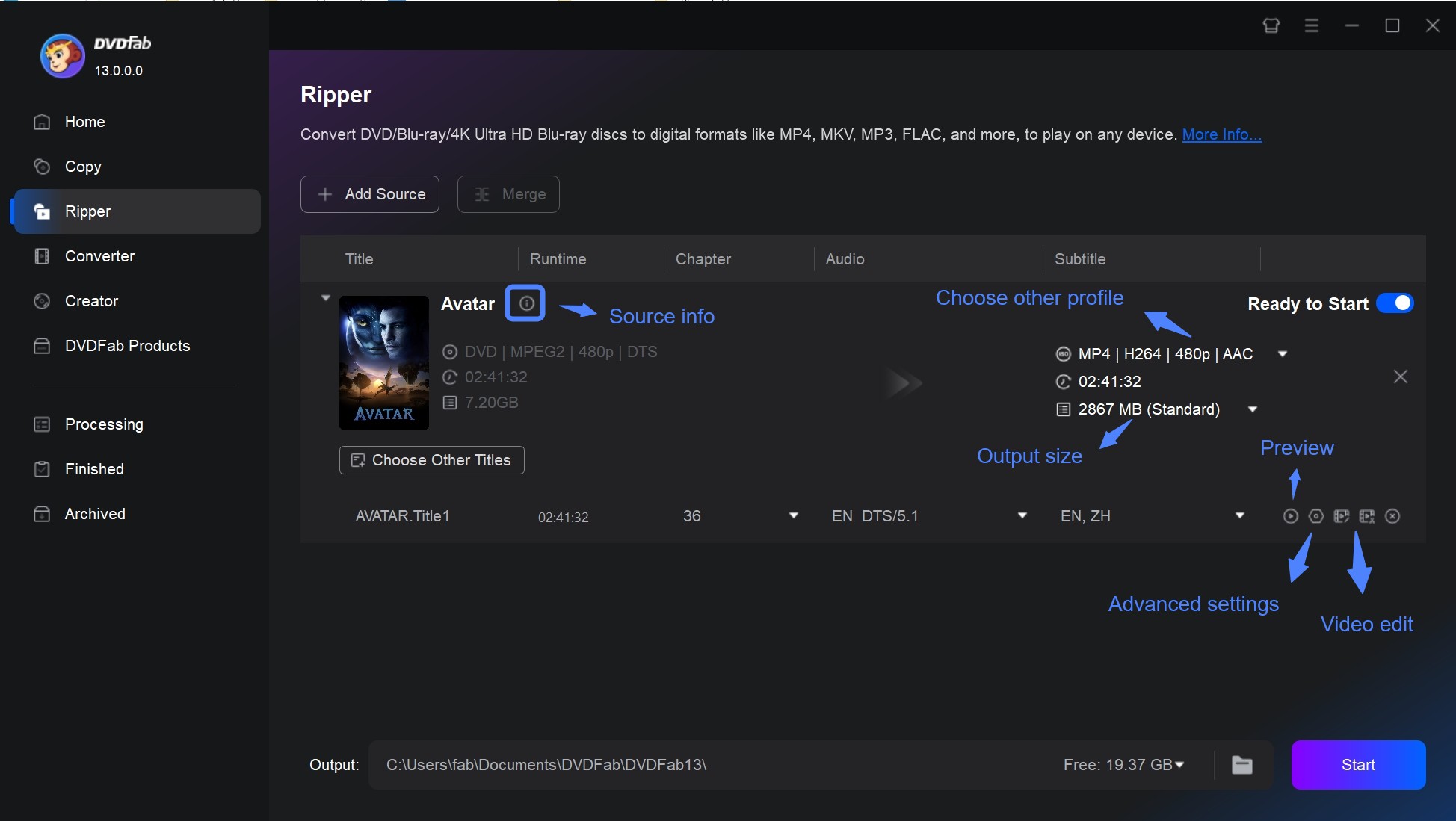
From the "Choose Other Profile" menu, select Format → Video → MP4 if you want maximum compatibility across Plex clients; this will give you an MP4 container with H.264 video and AAC audio by default. If you prefer to keep everything in a richer container, you can choose MKV instead.
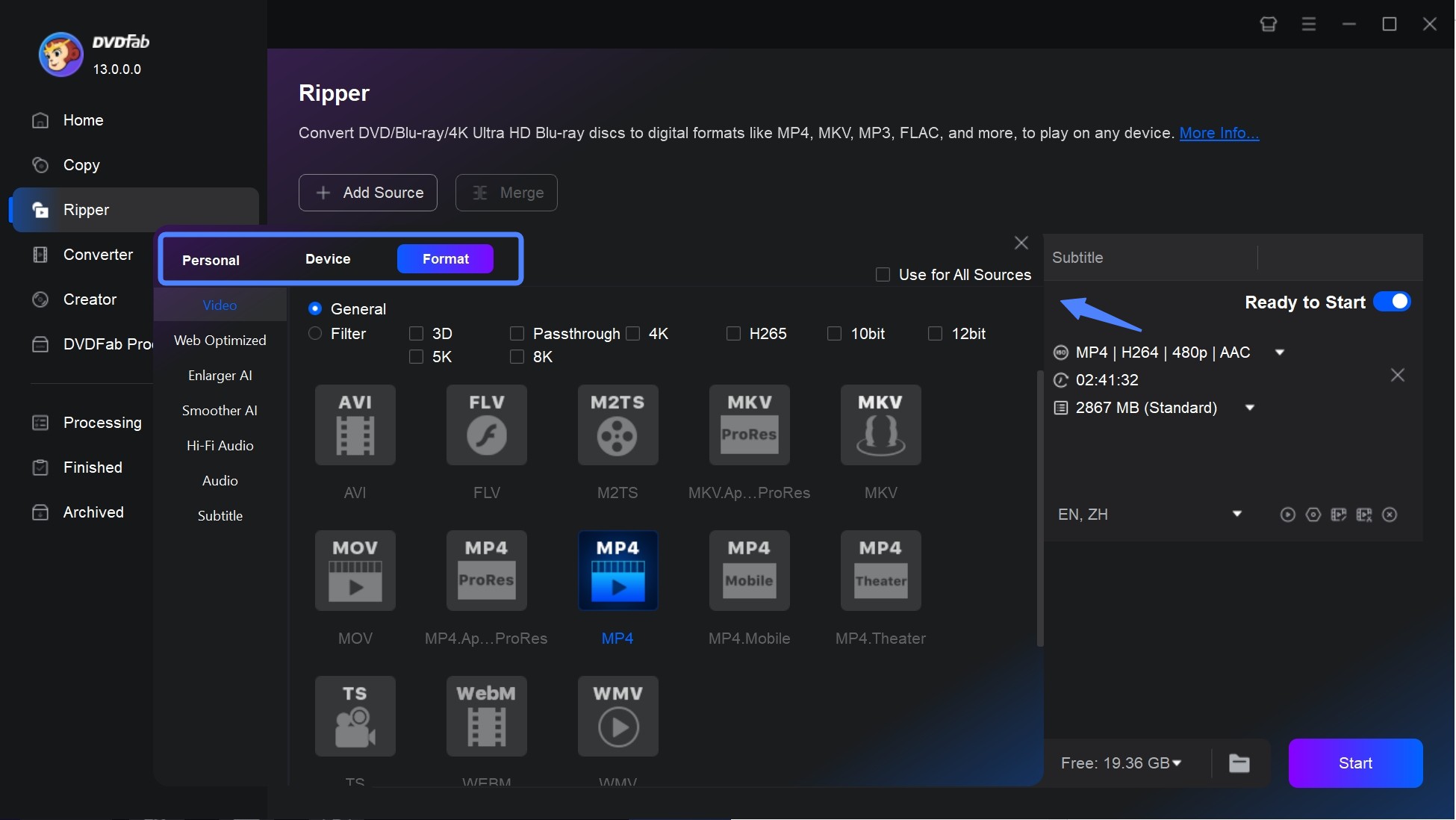
While resolution, frame rate, and bitrate are pre-set for convenience, you can still customize them in the "Advanced Settings" menu if needed.
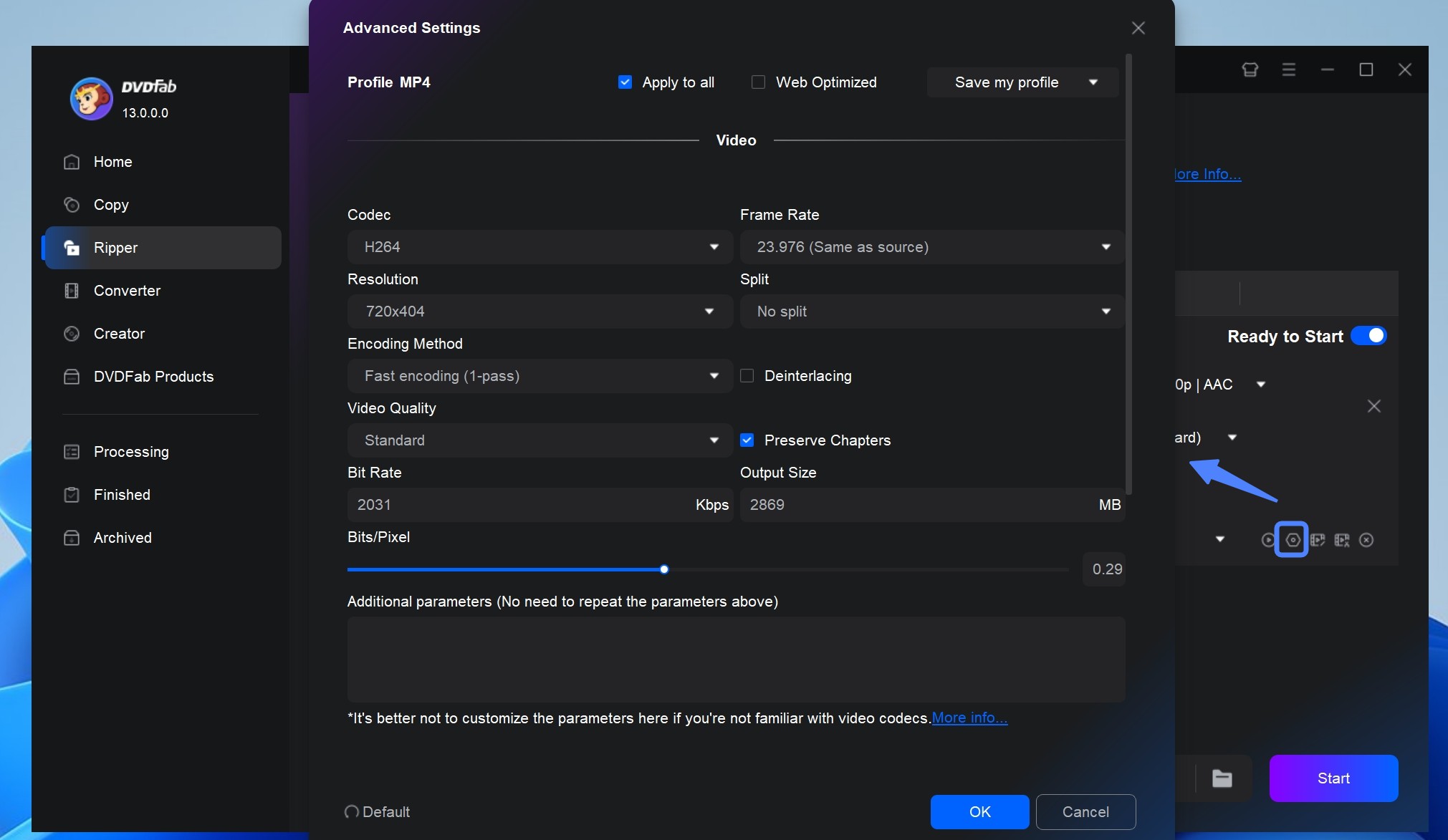
Then go back to the main interface. Here you can choose the titles you want to rip and select chapters, audio tracks, and subtitles as you like. If you also want to edit the video, like trimming, cropping, merging video, adding watermarks and subtitles, and even adjusting video color, just click on "Video Edit".
Step 3. Start to Rip DVDs to Plex
Once you are satisfied with the settings, choose a destination folder for your file at the bottom of the window. Finally, click the "Start" button.
How to Rip DVDs for Plex with MakeMKV & HandBrake (Free But Limited)
Reddit users usually recommend the MakeMKV + HandBrake combo to rip DVDs to Plex. First, you use MakeMKV to rip a raw, lossless MKV backup from your DVD, which preserves the exact video and audio quality. Then, you switch to HandBrake to transcode those large MKV files down into smaller, Plex-friendly MP4s. This free workflow is more complex, and you can run into issues such as disc-reading errors, out-of-sync audio, or missing subtitles.
NOTE: HandBrake is not required after every MakeMKV rip. If the MKV file already Direct Plays on your Plex clients and its size is acceptable, you can add it to Plex as-is.
Pros:
- This open-source combination offers a free workflow.
- MakeMKV extracts 1:1 lossless MKV remuxes.
- HandBrake utilizes HEVC encoding to compress file sizes.
Cons:
- The two-step conversion workflow extends the total processing time per DVD.
- Raw uncompressed MKV files require massive temporary local storage.
- Manual subtitle extraction and track management often cause out-of-sync audio.
- MakeMKV may not support every newer commercial disc protection.
I pick MakeMKV because it is free (while in beta). Since MakeMKV only outputs MKV, I don't have to mess with settings. It handles the encryption on some of my older discs fine, so I use it to grab the raw file first. Then, I run it through HandBrake to compress it to MP4. It saves space on my Plex server while keeping the result suitable for my playback needs, though I have to admit, the process is really time-consuming.
Step 1: Rip DVD to a Lossless MKV with MakeMKV
MakeMKV can remux DVDs and Blu-rays to MKV without re-encoding the selected video and audio streams. The resulting files can be large, potentially reaching 4GB to 8GB for a single DVD, so check that your storage has enough free space before you start. To create an MKV remux with MakeMKV, follow these steps:
- Scan the Disc: Insert your DVD and launch MakeMKV. Click the large optical drive icon to read the disc structure.
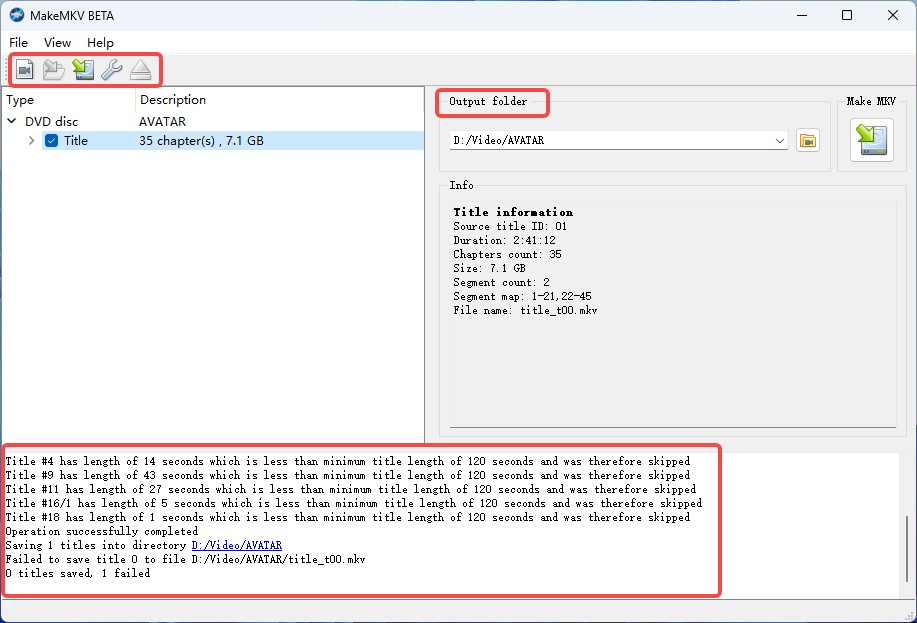
- Select the Main Title: Once the scan finishes, you will see a list of "Titles." Select the Main Movie title with the largest file size and longest duration. Uncheck the smaller clips (trailers and warnings) to avoid clutter.
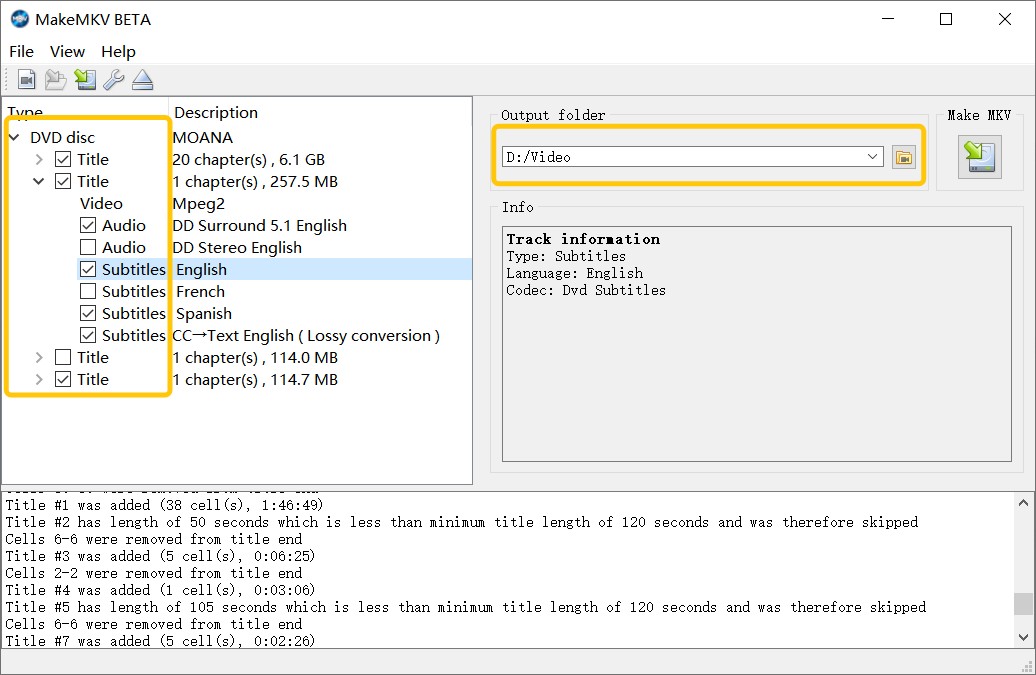
- Save the File: Select an output folder and click "Make MKV."
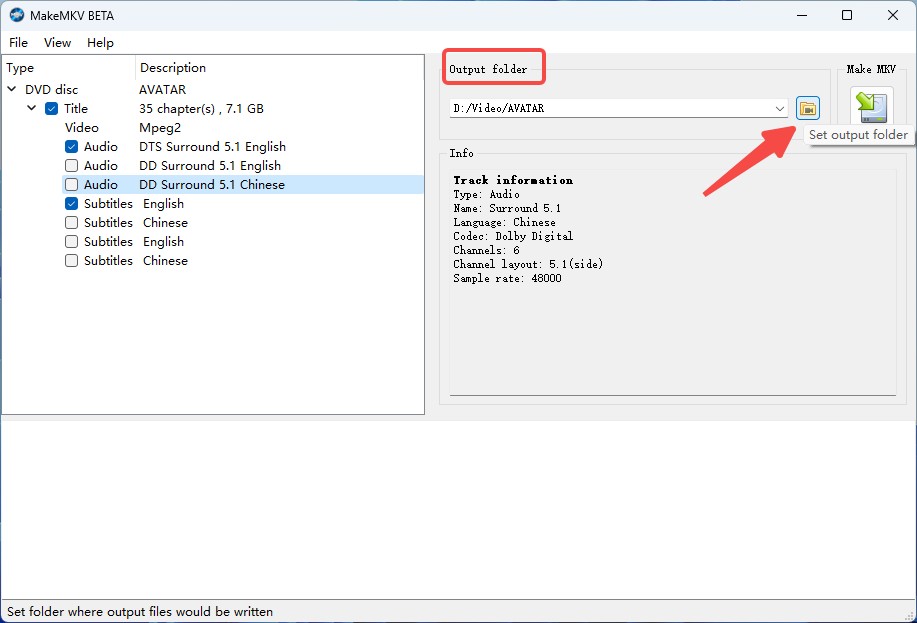
Add the MKV to Plex and test it before doing any further conversion. If it Direct Plays on the devices you use and the file size is acceptable, you can stop here.
Step 2: Convert MKV to MP4 for Plex Streaming with HandBrake
If the MakeMKV file is larger than you want or uses streams that your Plex clients cannot play directly, load it into HandBrake and transcode it. HandBrake allows you to choose the output format, adjust the video resolution, frame rate, and audio quality to optimize the Plex viewing experience. You can also add subtitles, cut the video, and use filters to enhance the image.
💡Note: You might ask, "Why not just use HandBrake directly"? Well, even if you install libdvdcss, HandBrake still struggles with the complex encryption on newer commercial discs. That's why I use MakeMKV first. It handles some protections that HandBrake cannot read on its own, giving me a clean, unencrypted file to work with in the next step.
To compress that large MKV file into a smaller MP4 (H.264/AAC) that Plex handles efficiently, follow these steps:
- Load the File: Launch HandBrake and drag your ripped MKV file into the window.
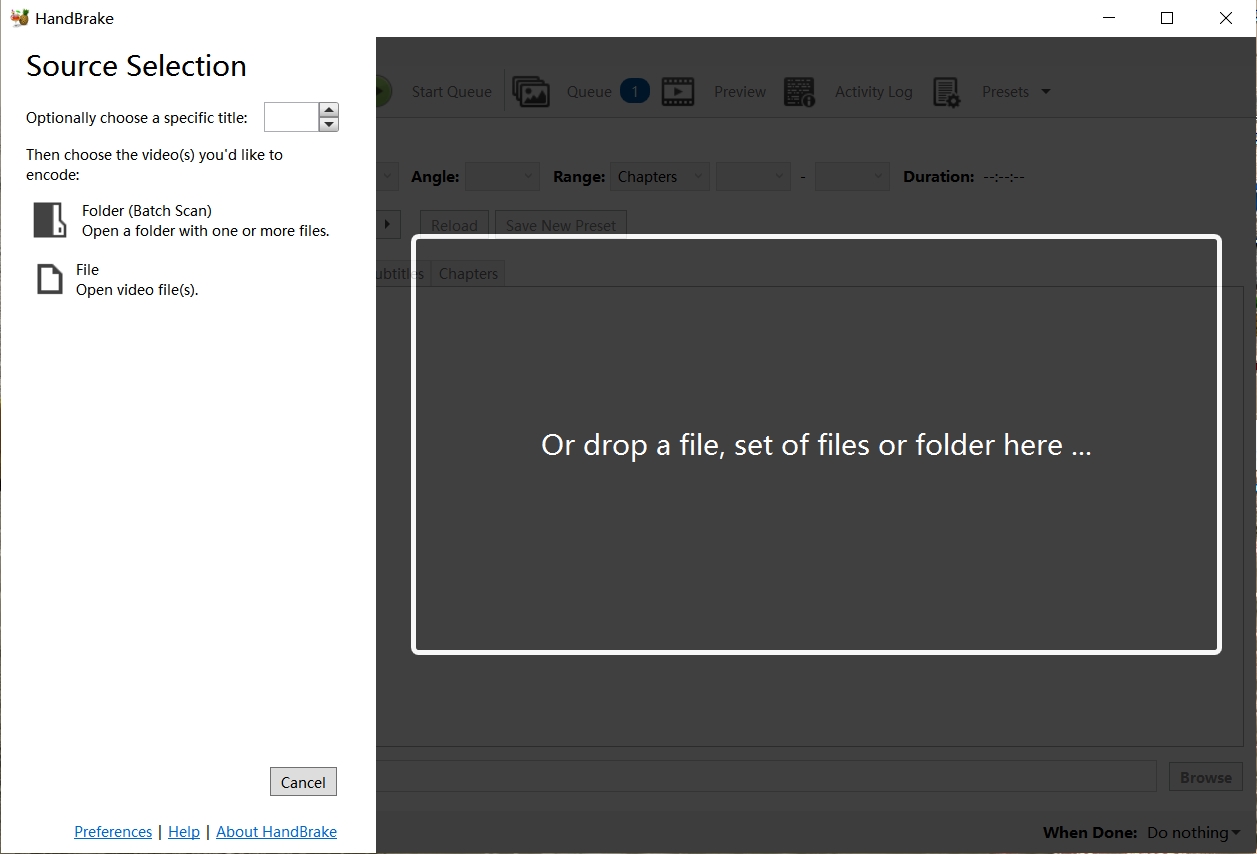
- Choose a Preset: Go to the "General" preset list and select "Fast 480p30" or "HQ 480p30", which better matches the native quality of the DVD.
- Configure for Plex: In the "Summary" tab, set the Format to MP4 and check "Web Optimized".
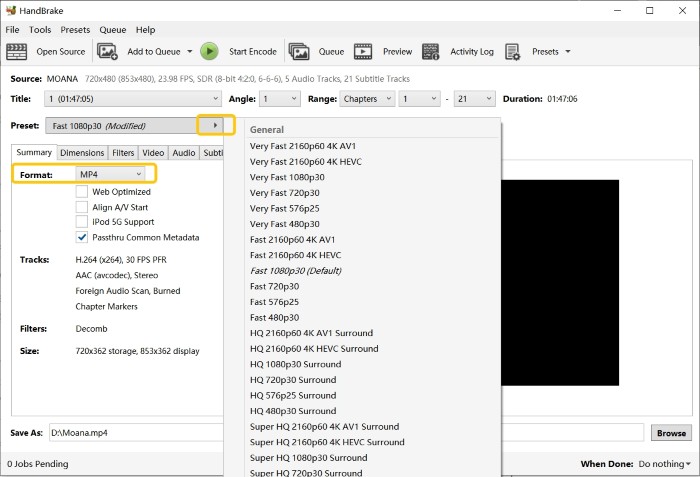
- Start Encoding: Click the "Start Encode" at the top. Once the process is complete, add the ripped file to your Plex media library.
Best DVD Ripper for Plex: DVDFab vs. MakeMKV vs. HandBrake
The comparison below summarizes the DVDFab DVD Ripper method and the MakeMKV + HandBrake method so you can compare their output, compression, batch options, and other Plex-related differences.
As of September 2026, the current versions are DVDFab 13.0.6.6, MakeMKV 1.18.4, and HandBrake 1.11.2.
| Feature | DVDFab DVD Ripper | MakeMKV | HandBrake |
| Encryption Support | CSS, RC, Sony DADC, Cinavia and more | Common protection, like Region code, AACS | Cannot handle encrypted DVDs directly |
| Lossless Ripping | Yes (MKV Passthrough) | Yes (MKV remux) | No (compresses output) |
| Output | MP4/MKV (H.264/H.265) with presets for Plex; small, stream-ready files | Lossless MKV only (no compression). Great for archival; very large files; needs a second tool to compress for Plex | Transcode only (H.264/H.265). Plex-friendly, but you must tune settings yourself |
| Compression | Optional: High-quality compression available | No compression | Highly configurable compression |
| Batch Conversion | Yes, through the task queue | Limited in GUI; batch possible via CLI (makemkvcon) only | Queue supported; some workflows need external scripts |
| Speed | GPU hardware acceleration supported for faster processing | Fast | Moderate (depends on compression settings) |
| Best For | Customizable and advanced DVD ripping | Quickly converting DVDs to lossless MKV files for Plex | Free option for tech-savvy users |
| User Rating | 4.5/5 | 3.7/5 | 3.7/5 |
📌Why professional tools still matter: Free apps are excellent for enthusiasts, but they typically don't decrypt every disc and often require two-step workflows (remux → transcode) to get small, Plex-friendly files. A professional ripper like DVDFab bundles decryption, compression, presets, batch jobs, and hardware acceleration—saving time and avoiding Plex transcoding on your devices.
How to Organize & Add Your Ripped DVD to Plex Library
Ripping the disc is only part of the job. Plex relies heavily on folder and filename structure to match movies, TV shows, subtitles, and local assets correctly.
Official Naming Conventions: Movies vs. TV Shows
Plex recommends separating movies and TV shows into different main folders.
For movies, put each title in its own folder and include the release year:
/Movies/Avatar (2009)/Avatar (2009).mkvIndividual movie folders are especially useful when a movie also has external subtitles, artwork, NFO metadata, or extras.
For TV shows, use a show folder, season folder, and the standard sXXeYY code:
/TV Shows/Show Name (Year)/Season 01/Show Name (Year) - s01e01.mkvSee the Plex movie naming rules and Plex TV naming rules when organizing a larger library.
How to Upload Ripped DVDs to Plex and Refresh Your Library
Once your files are named correctly, add the folder to the appropriate Plex library.
Step 1: If you do not already have Plex Media Server installed, set it up on your computer or NAS and sign in to your Plex account.
Step 2: Sort the ripped videos into separate movie or TV folders and use the naming rules above.
Step 3: Open Plex Media Server in your browser.
Step 4: Click the + button next to Libraries and choose the appropriate library type.
Step 5: Click Browse for Media Folder and select the folder containing the ripped files.
Step 6: Add the library or run a scan so Plex can detect the new files and match their metadata.
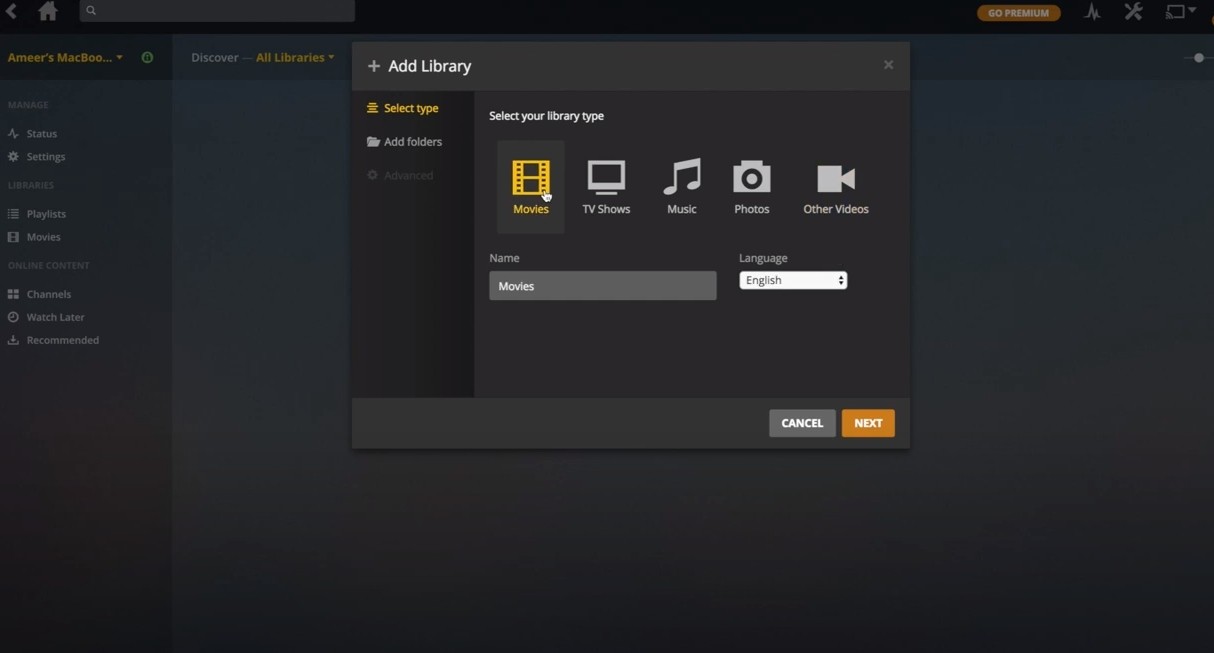
If you want Plex to read local .nfo metadata, use Plex Media Server 1.43.1 or newer and select Plex NFO Movie for a movie library or Plex NFO Series for a TV library. NFO files are not automatically used by every Plex library configuration.
How to Handle "Extras" and "Behind the Scenes" Content in Plex
DVD extras such as deleted scenes, interviews, featurettes, and trailers can be stored alongside the movie when they use Plex's recognized extras suffixes.
-deletedfor deleted scenes-featurettefor behind-the-scenes content-interviewfor cast or director interviews-trailerfor trailers
For example:
The Matrix (1999) - Lobby Scene-deleted.mp4Check Direct Play, Direct Stream, or Transcode
Play one finished DVD rip on the Plex client you use most and check whether the session is using Direct Play, Direct Stream, or Transcode. Do not infer this only from the .mp4 or .mkv extension.
If Plex transcodes the file, identify which stream causes it. A client may support the video while requiring the audio to be transcoded. An incompatible subtitle track can also require Plex to burn subtitles into the picture, which triggers video transcoding.
Fix the component that causes the transcode instead of re-encoding the entire library first. Changing the selected audio track or using a compatible text subtitle may solve the problem without changing the video stream.
If your source is Blu-ray rather than DVD, see the dedicated guide to rip Blu-ray for Plex.
FAQs
What are the common errors when adding ripped DVDs to Plex?
If Plex does not recognize a file, first check the filename, folder structure, and media format. If playback transcodes or stutters, check Plex playback information to see whether the video, audio, subtitles, or network condition is causing the conversion before re-encoding the file.
Is it possible to rip DVDs using Plex?
No. Plex Media Server organizes and streams media but does not rip physical DVDs. Use DVD-ripping or remuxing software first, save the result as a supported media file such as MP4 or MKV, and then add it to your Plex library.
Can Plex play ISO or VIDEO_TS files?
No. Plex does not support ISO, IMG, VIDEO_TS, BDMV, or similar disc-image structures for normal playback. Remux or transcode the disc content to a regular media file first.
Is MP4 or MKV better for Plex?
Neither is universally better. MP4 with H.264 is a useful broad-compatibility choice, while MKV is useful for remuxing and retaining multiple audio or subtitle streams. The actual Plex client determines whether either file can Direct Play.
Can Plex play subtitles from a ripped DVD?
Yes, but subtitle support varies by client. Text subtitles such as SRT are often easier to play across devices, while some image-based DVD subtitle streams can require subtitle burn-in and trigger video transcoding.
What should I do with my old DVDs after ripping them for Plex?
Once you've ripped your old DVDs for Plex, you don’t have to throw the physical discs away. You can keep them as a backup in case a file gets corrupted, or store them in slim cases or binders to save space.
Conclusion
To rip DVDs to Plex, first convert or remux the disc into a regular media file and then organize it with Plex-compatible folder and file names. DVDFab DVD Ripper combines disc reading and conversion in one application, while MakeMKV plus HandBrake provides a free two-step alternative. After adding the files, check Direct Play, Direct Stream, or Transcode on the Plex clients you actually use.

 4 Free DVD Rippers for Windows 10/11: Best Tools & Step-by-Step GuideBy Diana Smith - Oct 13, 2026
![How to Convert DVD to AVI Free: 3 Current Options [2026]](https://images.dvdfab.cn/artifact/2026/09/17/2HqH4KgGwIXxwkHdUUZtp0D98DCpL4gS/feature_cover.jpg) How to Convert DVD to AVI Free: 3 Current Options [2026]By Diana Smith - Oct 12, 2026
How to Convert DVD to AVI Free: 3 Current Options [2026]By Diana Smith - Oct 12, 2026 How to Copy DVD to Computer on Windows & Mac: Rip and Direct CopyBy Wenny Yan - Oct 12, 2026
 Free DVD Decoder for Windows XP and Windows 11: 3 Ways to Play DVDsBy Diana Smith - Sep 23, 2026