Windows USB/DVD Download Tool: 3 Better Options in 2026

Summary: The Windows USB/DVD Download Tool is a discontinued, Windows 7-era utility that writes an existing Windows ISO to a bootable USB drive or DVD. For Windows 10 or 11, use Microsoft's Media Creation Tool for a guided installer, Rufus when you need ISO-based UEFI/GPT or BIOS/MBR controls, or Ventoy for a reusable multiboot USB. This guide also covers the legacy workflow and fixes common USB detection, boot-mode, and write errors.
Table of Contents
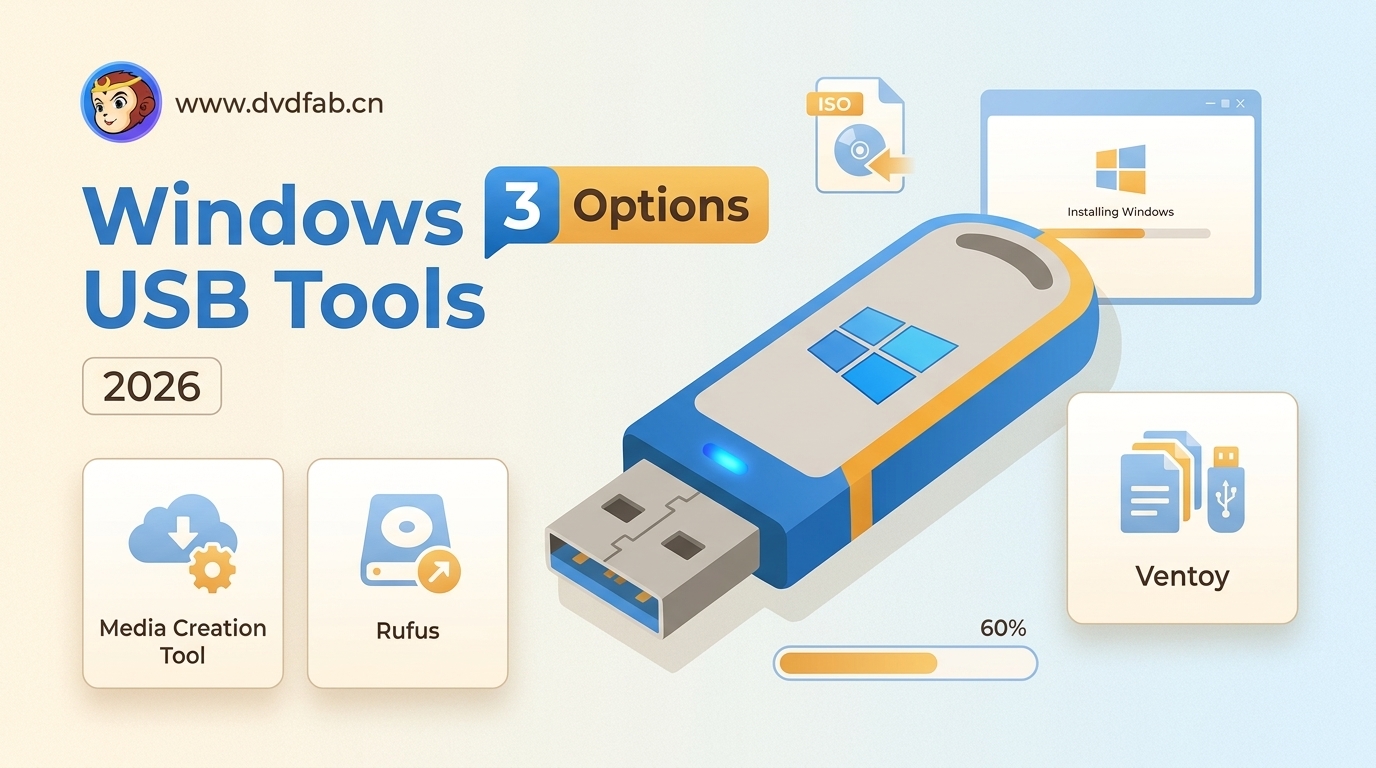
The Windows USB/DVD Download Tool belongs to an older Windows installation workflow. Today, Microsoft recommends using its Media Creation Tool to create Windows 11 or Windows 10 installation media, while Rufus and Ventoy can create a bootable USB from an official ISO. In this guide, I'll explain the status of the older utility, compare the current methods for different tasks, and show how to troubleshoot a USB drive that will not boot.
Windows USB/DVD Tool Status Today
As of July 2026, the Windows USB/DVD Download Tool is a legacy Windows 7-era utility, not Microsoft's current installation-media route. Use Microsoft's software-download pages for an official Windows download.
Use Official Microsoft Downloads
Microsoft provides separate Windows 11 installation media and Windows 10 installation media pages. Windows 10 support ended on October 14, 2025, so Windows 11 is the default for compatible hardware; Windows 10 media remains available for systems that still need it.
A mirror listing is not an official Microsoft distribution page. Start from Microsoft's Windows software-download area rather than an old download button or archived purchase-history instruction.
Prepare the USB and Back Up Data
A bootable Windows USB needs a blank drive with at least 8 GB for Microsoft's current workflow. The process erases the selected drive, so copy any files you need elsewhere before starting.
- Use a blank USB drive with at least 8 GB.
- Back up existing files because the drive will be erased.
- Use installation files or an ISO obtained from Microsoft.
- Keep a stable internet connection and enough free space on the host PC.
- Identify whether the target PC uses modern UEFI or a legacy BIOS mode before choosing manual settings.
Check Modern Media Requirements
For most current PCs, USB is the practical default. A modern Windows ISO may exceed the capacity of a standard single-layer DVD, while a USB can be recreated and used with UEFI/GPT settings more easily.
The DVD vs USB decision also depends on the target computer. A USB or DVD installer must be readable by that machine's firmware, and a Windows 11 system generally expects a UEFI-compatible setup. Use a compatible blank disc and optical drive if DVD is genuinely required.
If you only need to understand the older utility, the next section preserves its original ISO-to-USB or DVD workflow. For a current Windows 10 or Windows 11 installer, skip to the modern methods that follow it.
How to Use the Legacy Windows USB/DVD Download Tool
Microsoft no longer presents this legacy utility as its current download route. Use these steps only if the tool is already installed and you have a legitimate, compatible Windows ISO. For Windows 10 or Windows 11 media, use Microsoft's current download pages instead of obtaining the utility from an unofficial mirror.
The legacy tool writes an existing ISO to either a USB drive or a DVD:
Step 1: Open the Windows Start menu and launch Windows USB/DVD Download Tool.
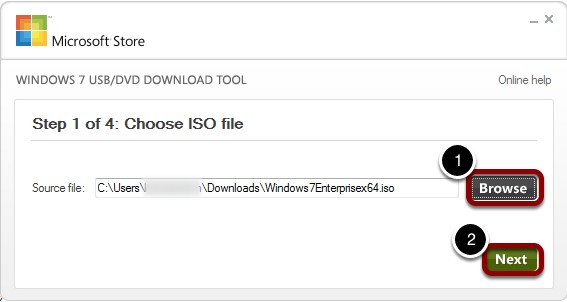
Step 2: Select Browse, choose the compatible Windows ISO, and click Next.
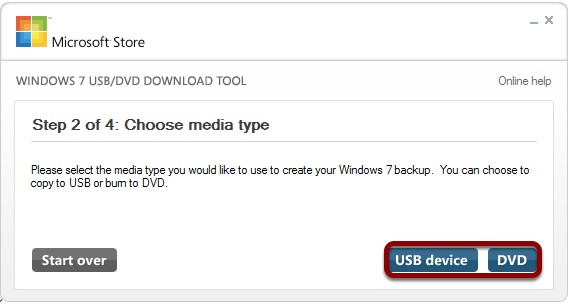
Step 3: Select USB device to create a bootable flash drive or DVD to create an installation disc.
Step 4: For USB output, select the correct drive and click Begin Copying. For DVD output, insert a compatible blank disc and click Begin Burning.
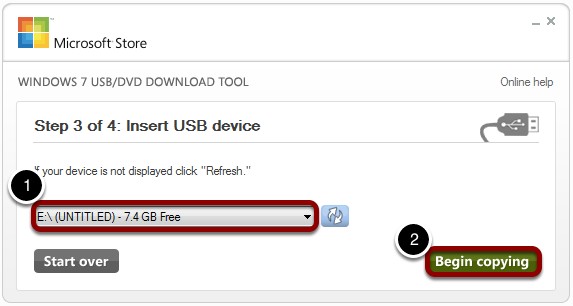
This older process only writes an ISO that you already have. It does not download current Windows files, check the target PC's hardware, or provide the boot controls available in newer tools, which is why the following methods are more suitable for present-day installations.
Create Current Windows Installation Media
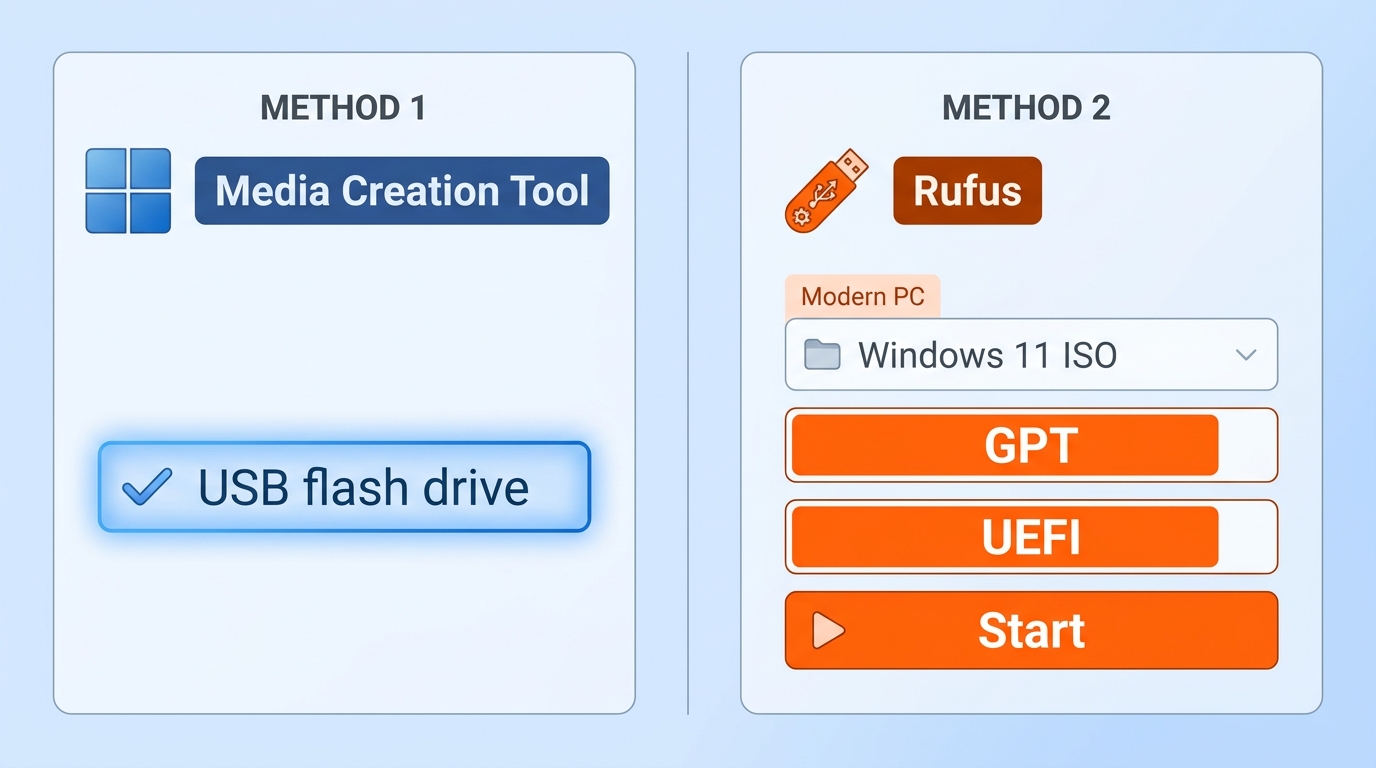
Use Media Creation Tool for the simplest official route. Use a Microsoft Windows ISO to USB workflow with Rufus when you already have the ISO, need more boot controls, or the guided tool does not complete the job.
Use Microsoft's Media Creation Tool
My default recommendation is Microsoft's guided tool because it obtains the current files and prepares the drive with fewer manual choices. It is less suitable when its Windows executable cannot run on the host computer.
- Open Microsoft's Windows 11 or Windows 10 software-download page on a Windows PC.
- Download and run the Media Creation Tool for the required Windows version.
- Choose the option to create installation media for another PC, then select the language, edition, and architecture.
- Select USB flash drive, confirm the correct blank drive, and let the tool download and write the files.
- When creation finishes, eject the drive and open the target PC's one-time boot menu to start from USB.
This guided route is best for a single supported Windows installer. It is not ideal when you need detailed partition choices, already have an ISO, or must prepare the drive from a non-Windows host.
Use a Windows ISO with Rufus
A Rufus bootable USB is the more useful fallback for experienced users who need a UEFI bootable USB, an existing official ISO, or clearer control over the partition scheme.
- Download the required ISO from Microsoft and connect a blank USB drive.
- Open Rufus on Windows and select the correct USB device.
- Choose the Microsoft ISO as the boot selection.
- Match the partition scheme and target system to the PC, typically GPT for a modern UEFI system.
- Start the write, confirm that the USB contents can be erased, and wait for completion before testing the boot menu.
Rufus is not ideal for readers who want a fully guided official flow with automatic defaults. A wrong device or partition choice can produce media that writes successfully but does not boot on the intended PC.
Choose the Right Media Tool
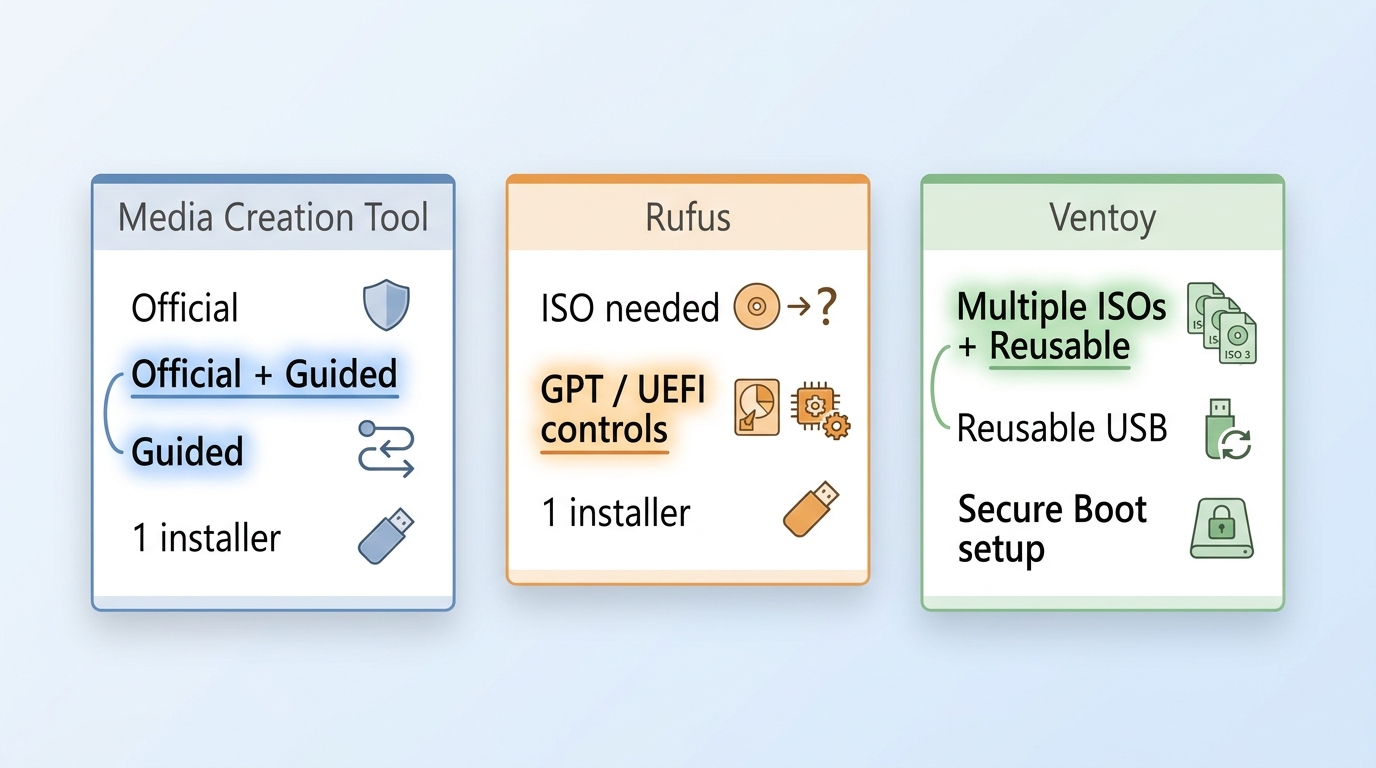
The three better options are better for current, specific workflows, not universally faster or safer than every older utility. Choose Media Creation Tool for guidance, Rufus for boot controls, or Ventoy for a reusable multiboot drive.

The legacy Windows USB/DVD Download Tool is included for context, while the three current options cover different needs. Compare the source requirement, boot controls, host system, and main limitation before choosing a method.
| Tool | Best For | Current Microsoft Route | ISO Source | Boot Control | Host / Main Limit |
| Windows USB/DVD Download Tool | Legacy ISO-to-USB or DVD jobs | No | Existing compatible ISO | Basic USB or DVD choice | Windows; outdated and unavailable as a current Microsoft download |
| Microsoft Media Creation Tool | Guided single Windows installer | Yes | Downloads files or saves an ISO | Mostly automatic | Windows; limited manual boot settings |
| Rufus | ISO-based USB with detailed settings | No | Select or download an official ISO | UEFI/BIOS and GPT/MBR | Windows; manual settings must match the PC |
| Ventoy | Reusable multiboot USB | No | One or more official ISO files | Boot menu with multiple images | Windows/Linux; extra setup and Secure Boot checks |
Media Creation Tool for Simplicity
Media Creation Tool is the clearest choice when you want an official Windows download and one installer for a supported PC. Its guided defaults reduce setup decisions, but they also provide less control when firmware compatibility needs special attention.
Rufus for Boot Controls
Rufus is actively maintained and suits Windows ISO-to-USB work that needs explicit UEFI/GPT choices. It is a fit for users who understand the target PC's boot mode; it is less suitable when a wrong setting would be hard to diagnose.
Ventoy for Multiboot Drives
A Ventoy multiboot USB is useful when one drive must hold several installer or recovery ISO files. It is actively maintained, but the initial drive setup and Secure Boot behavior add complexity that a single-installer workflow may not need.
Video DVDs Are a Different Job
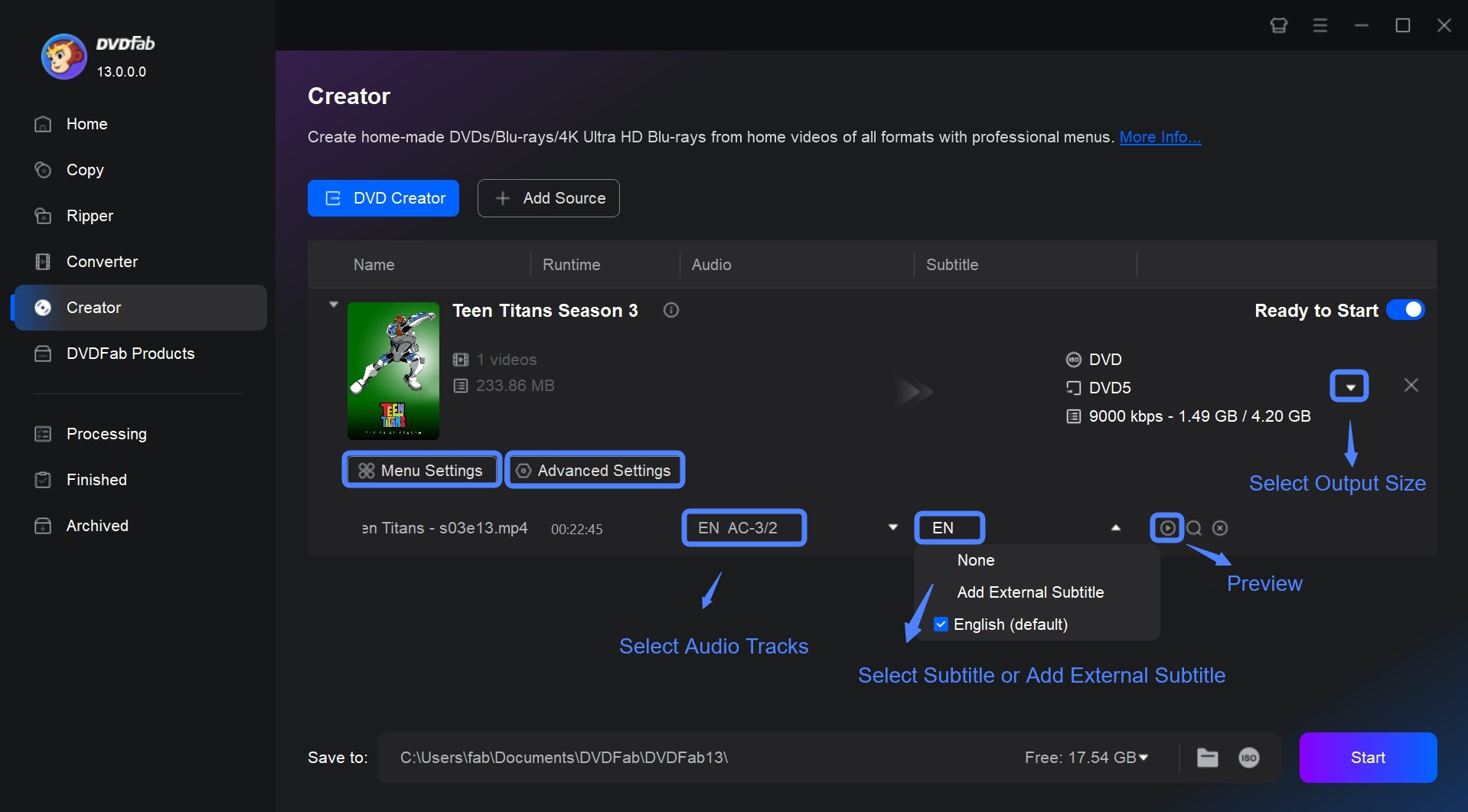
A Windows installer DVD and a playable video DVD solve different tasks. DVDFab DVD Creator authors authorized video files as DVD-5 or DVD-9 discs, ISO images, or VIDEO_TS folders with menu options; it does not make Windows installation media or a bootable OS USB.
DVDFab DVD Creator converts common video files into a playable DVD, ISO image, or VIDEO_TS folder and provides menu templates, chapter settings, and DVD-5 or DVD-9 output choices.
Supported OS:
Free Download Windows 11/10/8.1/8/7
Free Download macOS 10.13 - 15.x
How to use:
- Load the authorized source video into DVD Creator.
- Choose the DVD size, output structure, chapters, and menu design.
- Select a blank DVD, ISO file, or VIDEO_TS folder as the destination and start authoring.
Quick Recommendation by Task
Task fit matters more than finding one universal utility. My decision rule is to choose the least complicated tool that still provides the boot control the target PC actually requires.
- Choose Microsoft Media Creation Tool for a guided official Windows installer.
- Choose Rufus for an official Windows ISO plus explicit partition and boot-mode controls.
- Choose Ventoy when one reusable drive must hold multiple ISO files.
- Choose DVDFab DVD Creator only for an authorized playable video DVD, ISO image, or VIDEO_TS folder.
After choosing and writing the installation media, the remaining question is whether the target PC can detect and boot it. The checks below isolate the most common writing, firmware, and partition problems.
Fix Bootable USB Problems
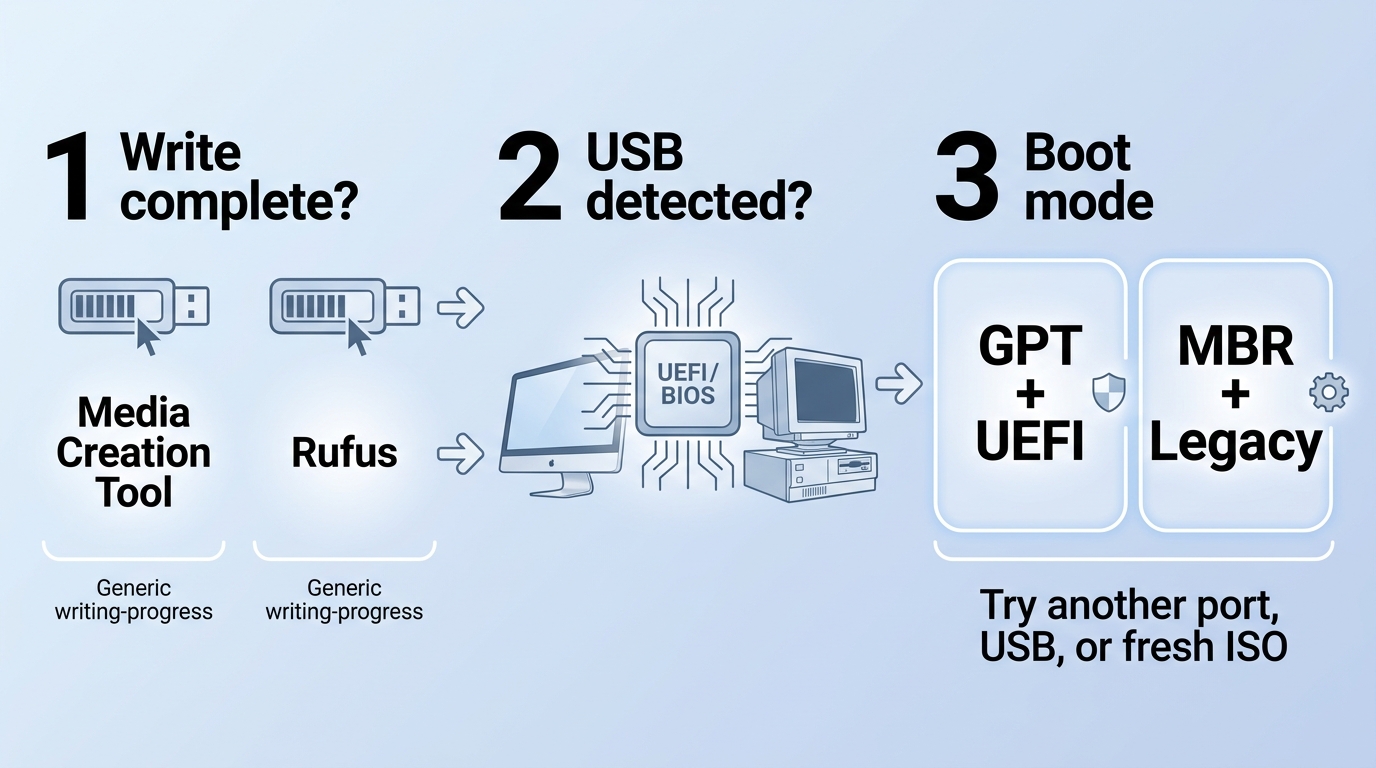
A failed installer usually points to one of three stages: the USB was not written correctly, the firmware cannot see it, or the boot mode does not match the drive. Diagnose those stages in that order before downloading everything again.
USB Missing in BIOS or UEFI
When a bootable USB is not detected, first confirm that the creation tool reported a completed write. Reconnect the drive, try another USB port, open the one-time boot menu, and check whether the UEFI bootable USB appears by its device name.
- Test the drive on another computer to see whether it is readable.
- Try a direct motherboard port instead of a hub or adapter.
- Confirm that USB boot is available in the firmware boot menu.
- Recreate the installer on another drive if detection remains inconsistent.
Secure Boot and Partition Mismatches
A Secure Boot USB problem often comes from a mismatch between the drive's partition scheme and the target PC's firmware mode. For a modern Windows 11 PC, recreate the media with settings intended for UEFI and GPT rather than changing unrelated firmware options.
If the system returns to the internal drive or loops back to the boot menu, confirm that the USB entry marked UEFI is selected. On older hardware, check whether the machine expects legacy BIOS and MBR, then recreate the drive to match that requirement.
Stalled Downloads and Write Failures
If Media Creation Tool stalls, confirm free storage, network stability, administrator access, and a healthy USB drive. If repeated attempts fail, download a fresh ISO from Microsoft and write it with Rufus, or retry with another USB port and drive.
When Rufus reports a write error, close software that may be using the drive, reconnect it, and start again. A failure at the same point on the same device is a strong reason to test a different USB drive rather than repeatedly changing boot settings.
FAQs
Is the Windows USB/DVD Download Tool still supported by Microsoft?
Microsoft's current guidance centers on the Windows 11 and Windows 10 software-download pages and Media Creation Tool, not the Windows 7-era utility. Use Microsoft's current pages rather than a mirror that presents the old program as an official download.
Do I need an 8 GB USB drive to install Windows 11?
Yes. Microsoft calls for a blank USB drive with at least 8 GB for the current creation workflow. Back up the drive first because the process erases its existing contents.
Should I use Rufus or the Media Creation Tool?
Use Media Creation Tool for the simplest guided Microsoft workflow. Use Rufus when you already have an official ISO or need more control over the partition scheme and firmware target.
Can I create a Windows bootable USB from a Mac?
Microsoft's Media Creation Tool and Rufus do not run natively on macOS. Use a macOS-compatible ISO-writing workflow or prepare the drive on Windows, starting with a Windows ISO obtained from Microsoft.
Conclusion
The Windows USB/DVD Download Tool now makes sense mainly as a reference for an older ISO-writing workflow, not as the first choice for creating current Windows 10 or Windows 11 media. I would start with Microsoft Media Creation Tool for a guided single installer, use Rufus when the target PC requires explicit UEFI, BIOS, GPT, or MBR settings, and choose Ventoy only when a reusable multiboot drive is genuinely useful.
Whichever method you choose, obtain the installation files from Microsoft, back up the selected USB drive, and match the media to the target PC's firmware before writing it. If the actual goal is a playable video DVD rather than a Windows installer, switch to a DVD burning software such as DVDFab DVD Creator instead of using boot-media software.

 How to Convert MP4 to DVD Format for Free on Windows, Mac & OnlineBy Diana Smith - Sep 8, 2026
 How to Burn DVD with Subtitles: Add SRT/ASS or Hardcode CaptionsBy Diana Smith - Sep 3, 2026
![18 Best Free DVD Burner Software for Windows [2026 Review]](https://images.dvdfab.cn/media/Best_Free_DVD_Burner_Software_for_Windows_16sgci.png/public) 18 Best Free DVD Burner Software for Windows [2026 Review]By Diana Smith - Sep 3, 2026
18 Best Free DVD Burner Software for Windows [2026 Review]By Diana Smith - Sep 3, 2026![How to Convert MTS/M2TS Files to DVD: Tested 2 Methods [2026]](https://images.dvdfab.cn/media/How_to_Convert_MTS_and_M2TS_Files_to_DVD_phce29.png/public) How to Convert MTS/M2TS Files to DVD: Tested 2 Methods [2026]By Wenny Yan - Aug 31, 2026
How to Convert MTS/M2TS Files to DVD: Tested 2 Methods [2026]By Wenny Yan - Aug 31, 2026