DVD9 to DVD5: Fix the Insert DVD-9 Prompt

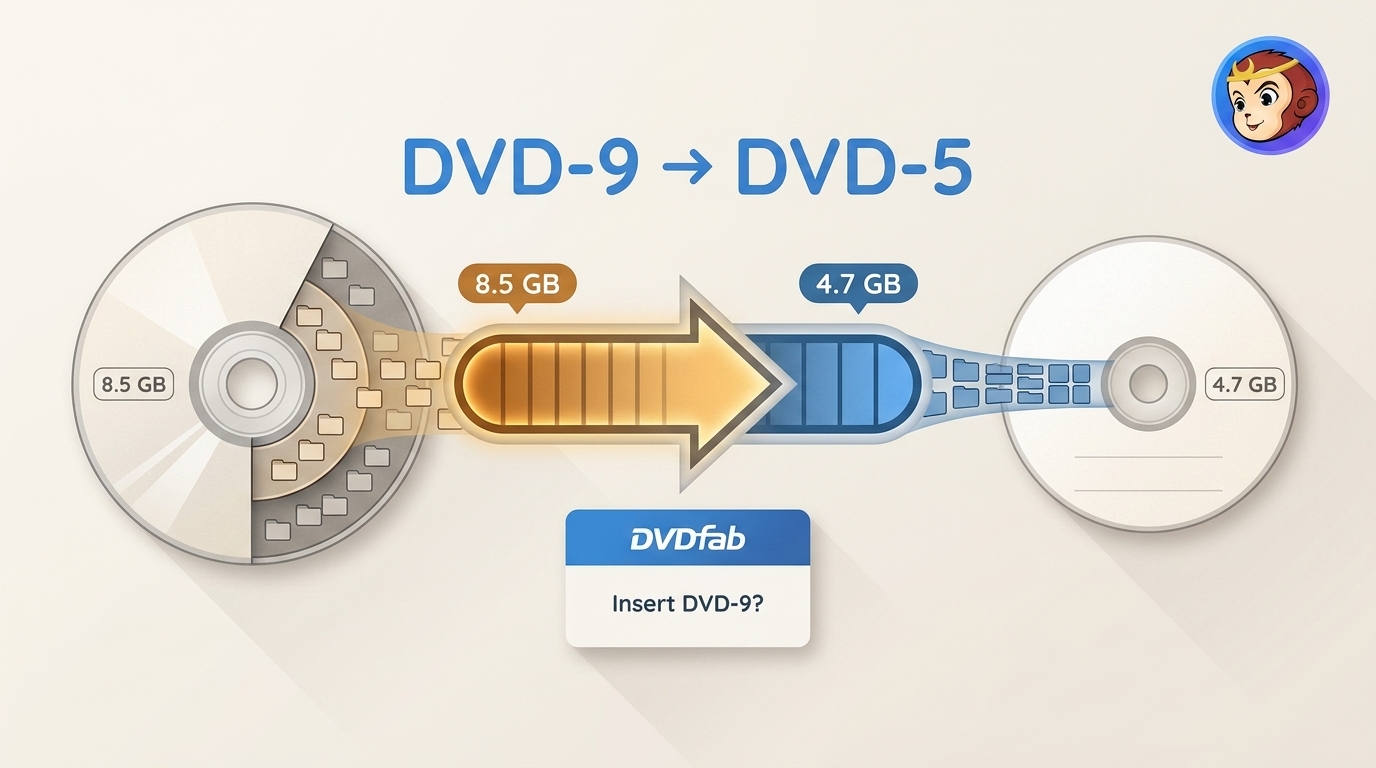
If DVDFab asks for a DVD-9 while you are trying to convert DVD9 to DVD5, the selected output size, calculated compression, or blank media usually does not match the intended DVD-5 workflow. Fix the mismatch before replacing the disc or restarting the burn.
With DVDFab DVD Copy, you can confirm DVD-5 output, check whether the compressed result fits the writable target, then choose an ISO, DVD folder, or compatible blank disc. The DVD5 vs DVD9 comparison below explains when compression is reasonable and when DVD-9 is the better target.
Why DVDFab Requests a DVD-9 Disc
Output Size Is Still Set to DVD-9
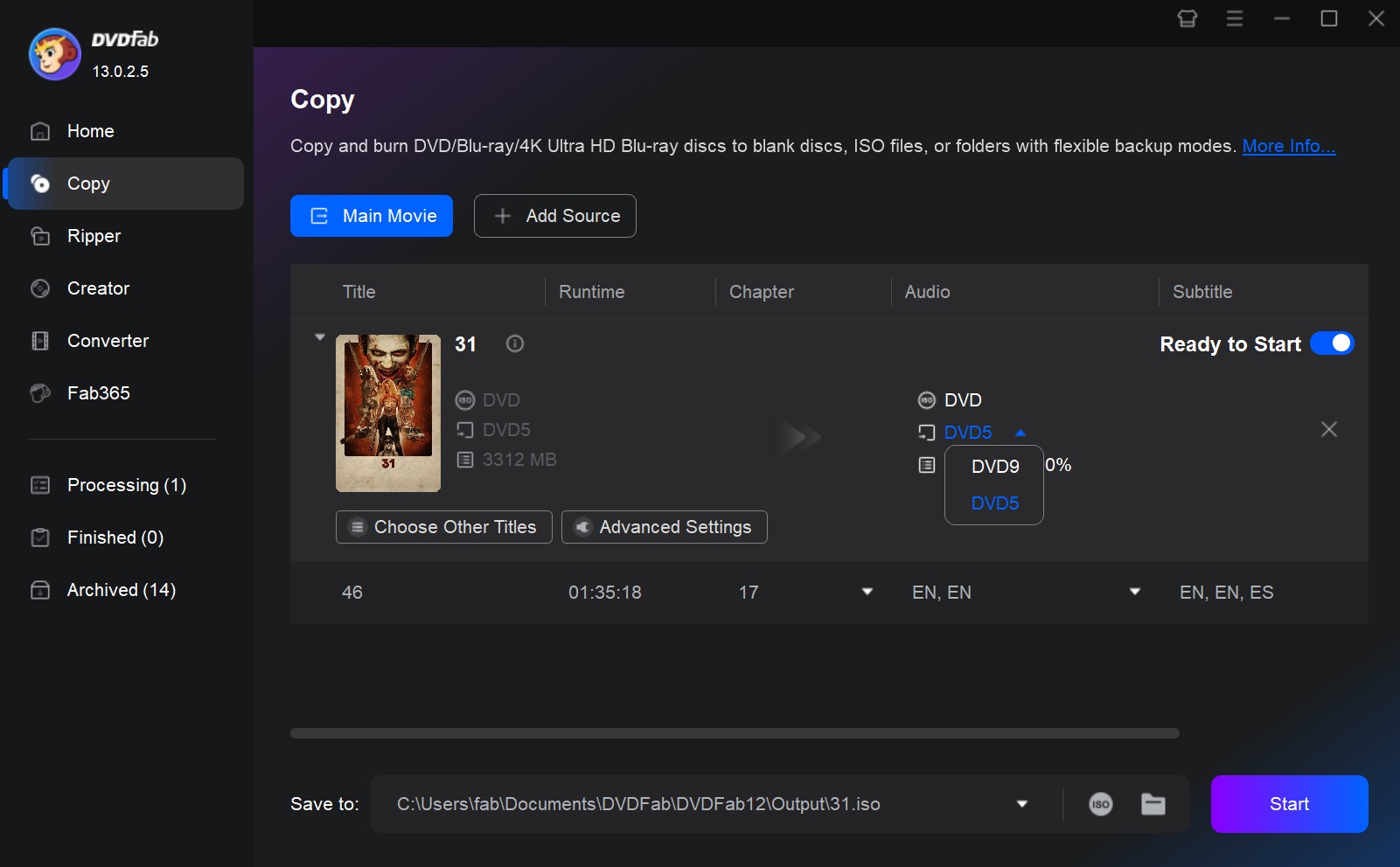
If DVD-9 is still selected in the Copy or Creator module, DVDFab will expect dual-layer media. Select DVD-5 when the intended target is a single-layer disc, then confirm the calculated output size before starting.
Open the Output Size menu and select DVD-5. Review the displayed compression and target size because changing the selector alone is not enough if the calculated output still exceeds the writable limit. If the required compression is too strong, reduce nonessential content or keep DVD-9 as the target.
Compressed Output Exceeds DVD-5 Capacity
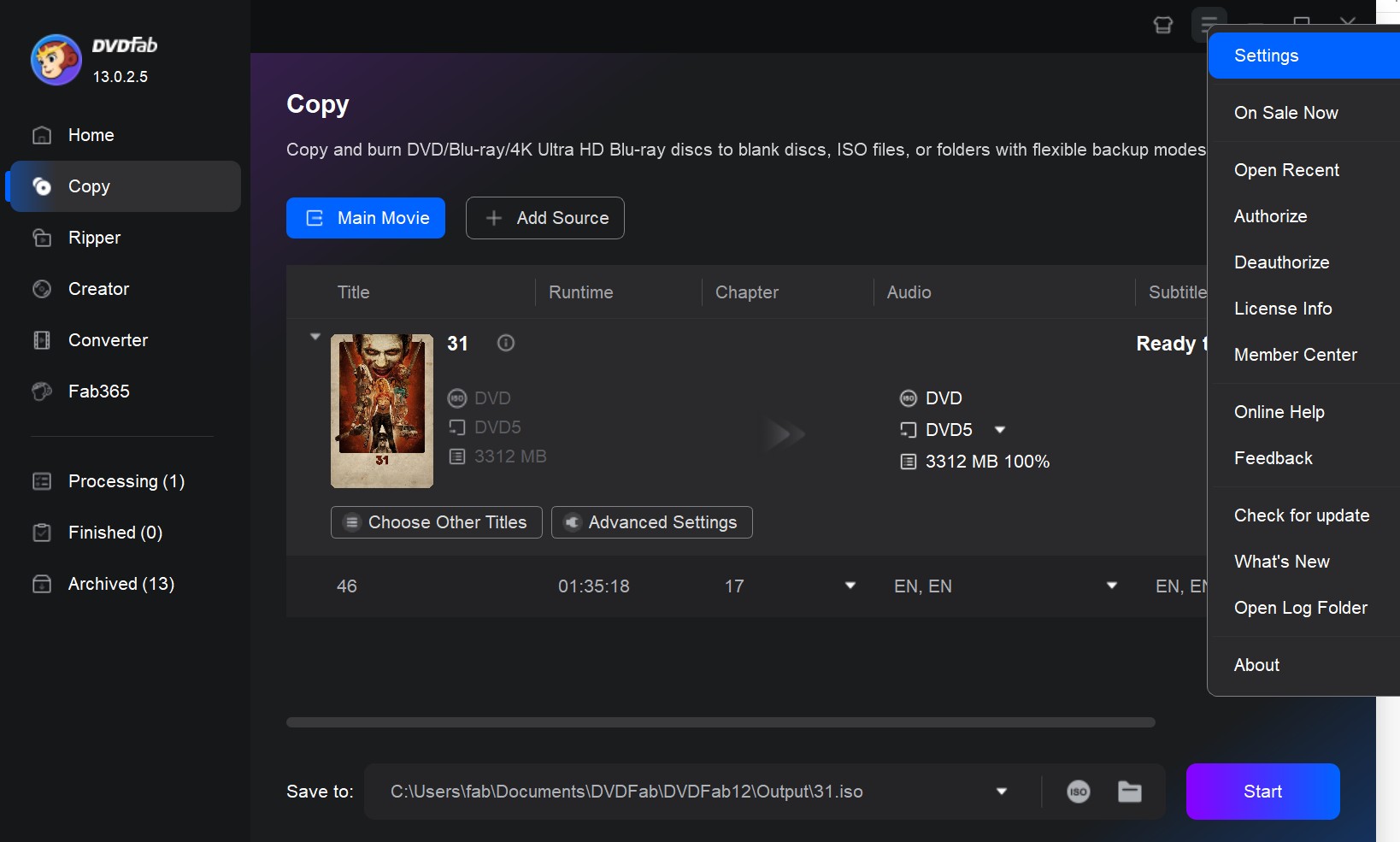
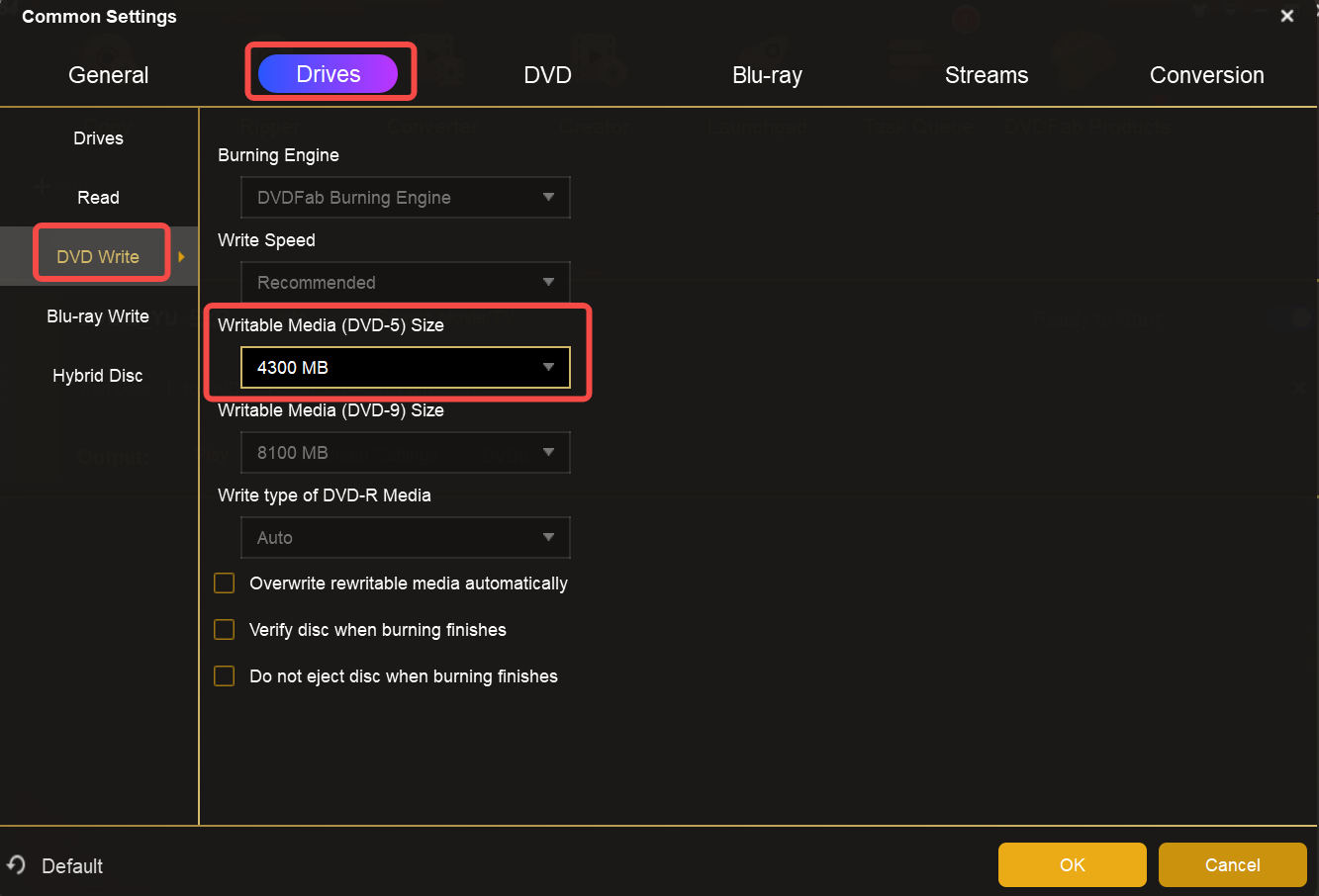
DVD-5 has a nominal capacity of 4.7 GB, but the writable-media target configured in authoring software may be lower. In DVDFab, open Common Settings>Drives>DVD Write and confirm that the calculated output fits the selected DVD-5 target.
If the result remains too large, choose Main Movie instead of Full Disc or remove unused audio tracks, subtitles, and extras. These changes reduce compression pressure; use a dual-layer disc only when DVD-9 remains the intended output.
The important check is whether the calculated output fits the writable target selected in DVDFab. Do not treat one manually entered size as a universal limit for every disc and burner combination.
Blank Disc or Drive Problems
After ruling out an output-size mismatch, check whether the blank disc matches the selected target and whether the burner recognizes it. Replacing the disc is appropriate only after the DVD-5 size and compression settings have been confirmed.
To avoid this problem
- Confirm that the blank disc type matches the selected DVD-5 or DVD-9 output.
- Inspect the surface for dirt, scratches, or other damage, then confirm that the burner detects the media.
Protection-Related Read Errors Need Separate Diagnosis
A source scan or read error can occur while handling protected disc content, but it is not the same as a DVD-9 insertion prompt. The insertion prompt is primarily tied to output size, calculated compression, or target media.
Update DVDFab and reload the source. If scanning or reading still fails, record the disc type and the point of failure, then contact DVDFab support so the read error can be diagnosed separately from the burn settings.
DVD5 vs DVD9 Capacity and Quality
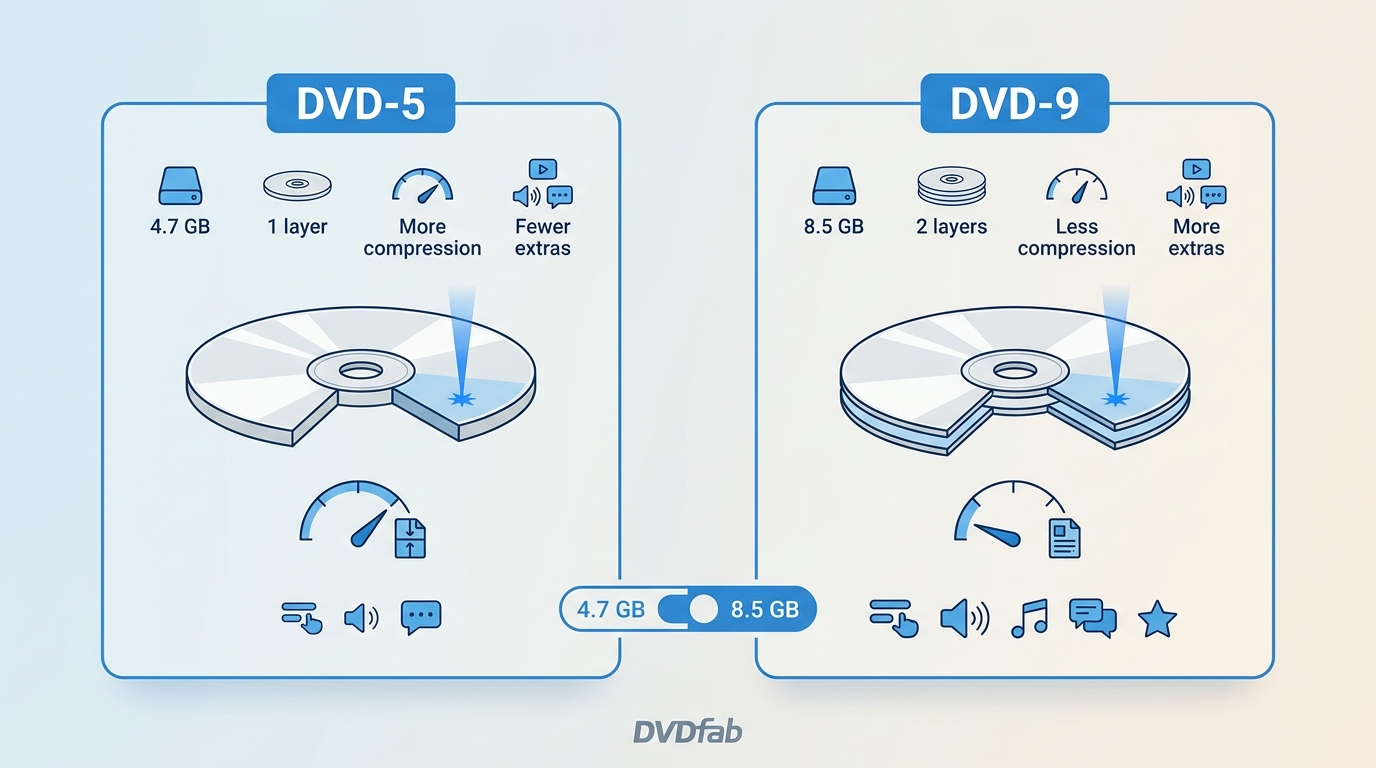
DVD-5 and DVD-9 are two common DVD formats distinguished mainly by their layer structure and storage space. That difference determines how much compression may be required when the same movie, menus, audio tracks, subtitles, and extras are retained.
A comparison of DVD capacity also needs to distinguish nominal capacity from the writable target configured in burning software. The final output must fit that selected target, not merely the capacity printed on the media package.

DVD-5 and DVD-9 mainly differ in capacity, layer structure, and the amount of compression required. The comparison below helps you decide whether a smaller DVD-5 target is practical or whether DVD-9 is the better choice for retaining quality and extra content.
| Features | DVD-5 | DVD-9 |
| Nominal Capacity | 4.7 GB | 8.5 GB |
| Layers / Typical Media | Single layer / single-layer recordable DVD | Dual layer / dual-layer recordable DVD |
| Compression Pressure | Higher when a larger source is reduced to DVD-5 | Lower because the target provides more storage space |
| Quality Trade-off / Best Fit | Stronger compression may reduce fine detail; best for smaller projects | More room for bitrate, menus, and extras; best for longer projects |
DVD-9 reduces compression pressure because it provides more capacity, but it does not make DVD-Video inherently uncompressed. The practical benefit is room for a higher video bitrate or more retained content.
Convert DVD9 to DVD5 Without Sacrificing Key Content
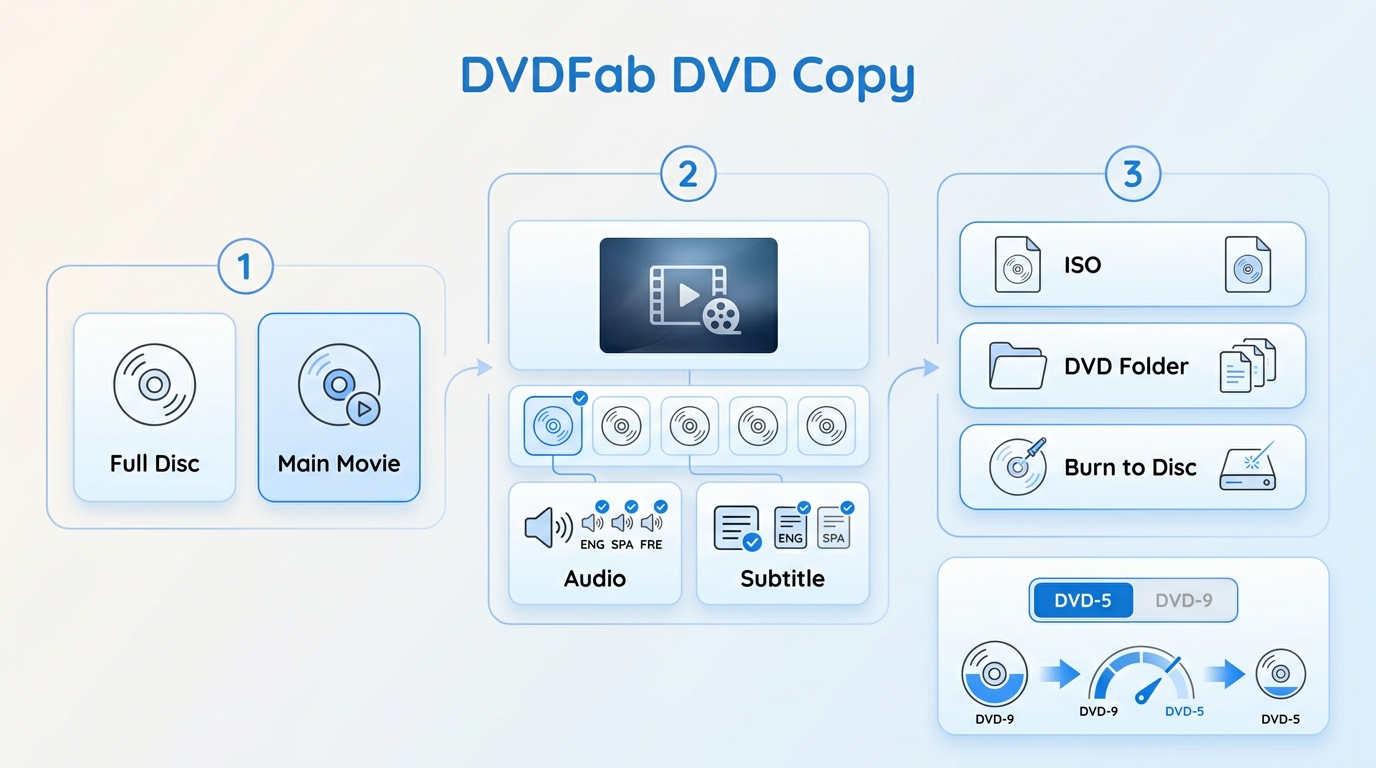
DVDFab DVD Copy can compress a DVD-9 to fit a DVD-5 or create 1:1 copies from DVD-9 to DVD-9 and DVD-5 to DVD-5. It offers six modes: Full Disc, Main Movie, Clone/Burn, Merge, Split, and Customize. For DVD-9 to DVD-5 compression, use Full Disc, Main Movie, or Customize, while Clone/Burn is intended for lossless 1:1 copying. In supported modes, you can select the titles, chapter ranges, audio tracks, and subtitles to keep, then preview the content before starting the copy.
FAQs
When Is DVD-9 Better Than DVD-5?
Keep DVD-9 when retaining the full disc would require aggressive compression on DVD-5, especially for long titles or visually complex scenes where reduced bitrate may soften fine detail or create visible artifacts. This route also requires compatible dual-layer blank media, a burner that supports it, and a playback device that can read the finished disc.
Can I convert DVD9 to DVD5 online?
A physical-disc workflow normally requires local access to the optical drive, source structure, and burn destination. An online service may accept uploaded files, but it generally cannot read a DVD directly from your drive or control a local disc burn.
Can I use a free tool to compress DVD9 to DVD5?
Free and trial tools exist, but available Copy modes, output controls, support for newer disc protections, and usage limits vary. DVDFab DVD Copy offers a trial for up to three DVDs within 30 days, which is enough to check source recognition and output compatibility before choosing a license.
Do I need a dual-layer burner after converting to DVD5?
No dual-layer target is required if the final output fits DVD-5. You still need a burner that recognizes the selected single-layer blank media. Reserve dual-layer media for a DVD-9 output and confirm that both the burner and playback device support it.
Why does a compressed DVD show artifacts or lose detail?
Visible artifacts can appear when too much video data is compressed into the DVD-5 target, particularly in scenes with motion, grain, smoke, water, or dense detail. Review the compression level, switch to Main Movie, or remove nonessential extras and unused tracks before reducing video quality further.
Conclusion
When DVDFab asks for a DVD-9 during a DVD9-to-DVD5 job, I would first check the selected output size and calculated result instead of immediately replacing the blank disc. Set the target to DVD-5, confirm that the output fits the configured writable capacity, and reduce unneeded content with Main Movie or Customize when appropriate. Only move on to the blank media and burner after those settings are correct.
DVD-5 is practical when the selected movie and tracks can fit without excessive compression. If preserving the full disc, menus, extras, and fine image detail would require too much reduction, DVD-9 is the more sensible target. The goal is not to force every source onto a smaller disc, but to choose the capacity that gives the required content an acceptable balance of size and quality.
Legal note: Use disc-copying features only with discs you legally own or are authorized to copy, follow applicable laws in your location, and do not distribute the copied files.

 8 Best Free ISO Burners for Windows and Mac in 2026: Tested PicksBy Diana Smith - Sep 16, 2026
![How to Remove DVD Copy Protection: 6 Software Options [2026]](https://images.dvdfab.cn/media/How_to_Remove_Copy_Protection_from_DVD_upluh5.png/public) How to Remove DVD Copy Protection: 6 Software Options [2026]By Diana Smith - Sep 10, 2026
How to Remove DVD Copy Protection: 6 Software Options [2026]By Diana Smith - Sep 10, 2026![How to Copy a DVD to Another DVD or Computer [2026]](https://images.dvdfab.cn/media/how-to-copy-dvd-HblP_v1600r.jpg/public) How to Copy a DVD to Another DVD or Computer [2026]By Diana Smith - Aug 25, 2026
How to Copy a DVD to Another DVD or Computer [2026]By Diana Smith - Aug 25, 2026![How to Burn ISO to DVD on Windows 11 and Mac [2026]](https://images.dvdfab.cn/media/Screenshot_2026-08-07_at_10.57.26_d3iqro.png/public) How to Burn ISO to DVD on Windows 11 and Mac [2026]By Diana Smith - Aug 7, 2026
How to Burn ISO to DVD on Windows 11 and Mac [2026]By Diana Smith - Aug 7, 2026