How to Compress ISO Files: 4 Methods for Storage, Playback, and Archives

Summary: Software ISOs barely shrink with general-purpose archivers because their internal files are already compressed; movie DVD ISOs can drop 50-80% when re-encoded. The methods below cover that range: 7-Zip for free lossless archiving, DVDFab for maximum size reduction via format conversion, ISO Compressor for PSP and Wii game files, and UnZiper for browser-based use.
Table of Contents
Here's the short answer: how to compress ISO files depends on what the image contains and what you need afterward. Software and OS ISOs often shrink very little because their packages are already compressed. A movie DVD ISO can become a smaller playback file through video re-encoding, while PSP and Dolphin libraries need emulator-supported formats.
To compress an ISO file, choose among four methods. This article compares 4 methods: 7-Zip for reversible archives, DVD ripping software for smaller playback files, ISO Compressor for legacy PSP-to-CSO conversion, and UnZiper for device-side browser compression. Preserve the original structure for archiving, convert to video for playback, and use CSO or RVZ only where the target software supports it. This guide explains how to compress ISO files without confusing a smaller video file with a smaller burnable DVD image.
Compress ISO File: What and Why
What is an ISO File
An ISO file is a sector-by-sector copy of an optical disc stored as a single file. It captures the exact data layout of a CD, DVD, or Blu-ray, including the file system structure, so the result behaves identically to the original disc when mounted or burned. Common uses include software distribution, OS installation media, and guidance on how to rip copy-protected DVDs for authorized backups.
Why Compress an ISO File
The practical reasons are straightforward: smaller files transfer faster, fit more easily into backup drives, and cost less to store in cloud services. Expected savings depend heavily on the ISO contents; software and operating-system images often contain packages that are already compressed, so even a high compression setting may produce only a small reduction. Below are the specific benefits worth weighing before you start.
- Storage savings: Movie DVD images may shrink substantially after video re-encoding, while software ISOs and OS installation images often show limited savings with general-purpose archivers.
- Faster transfers: A smaller file transfers more quickly over a local network or upload service than the original image.
- More efficient archiving: Compressed files make long-term disc backups more manageable, particularly for large libraries.
- Bandwidth savings: Uploading or syncing a compressed ISO to cloud storage uses less data, which matters on metered connections
Different Ways to Compress ISO (Lossless or Lossy)
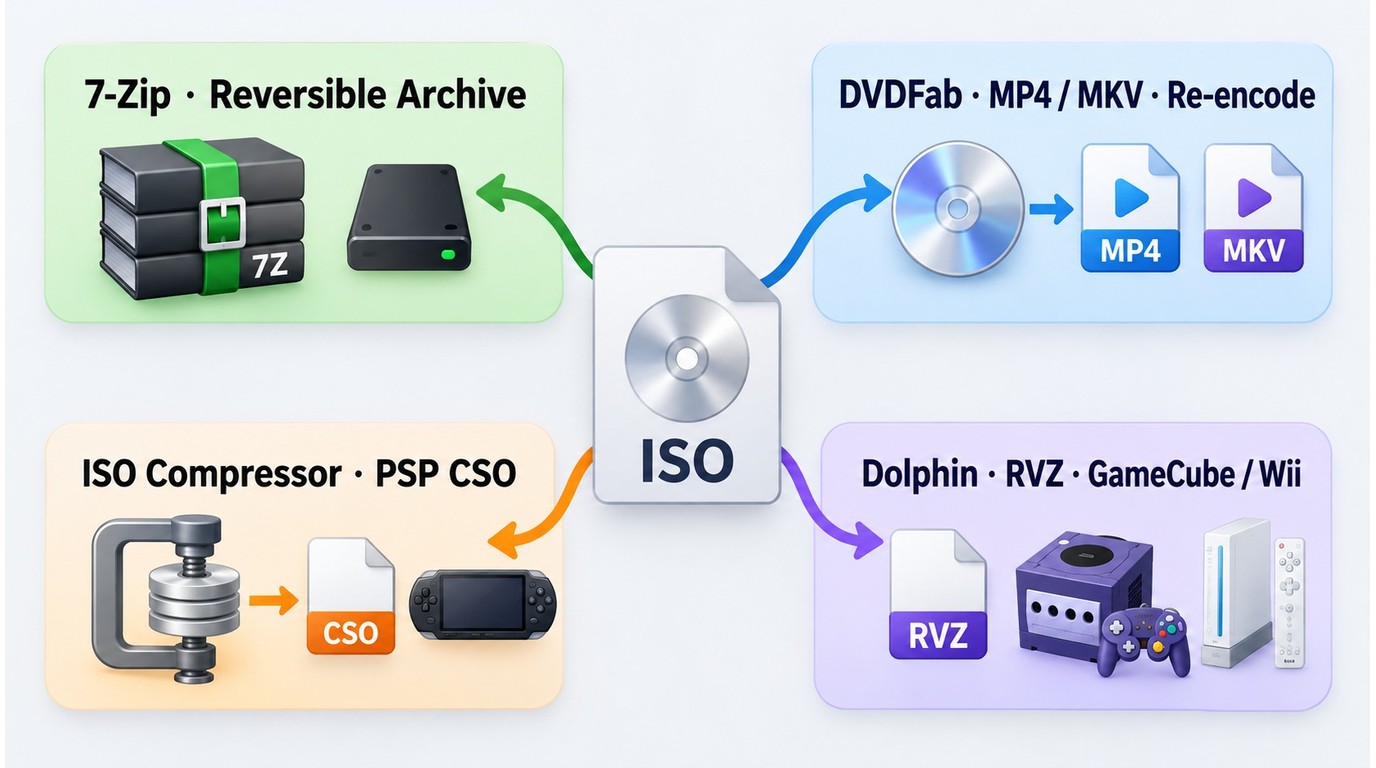
The right compression approach depends on whether you need to preserve the exact file structure or are willing to accept a different output format in exchange for a smaller size. Below is a breakdown of both approaches, including the specialized formats used for game ISOs. I would choose by ISO contents and the required end state instead of simply selecting the highest compression setting.
| ISO type | Recommended output | Likely savings | Direct use or extraction | Reversibility |
| OS or software ISO | 7z or ZIP archive | Low; files are often pre-compressed | Extract before mounting | Reversible |
| Movie DVD ISO | MP4 or MKV for playback | Potentially substantial after re-encoding | Play as video; reburning needs a DVD-video image | Not reversible to the original ISO |
| PSP ISO | CSO for compatible PSP tools | Source-dependent | Direct use requires PSP or emulator support | Reversible to ISO |
| GameCube or Wii ISO | RVZ for Dolphin | Source-dependent, lossless | Real-time use in compatible Dolphin versions | Reversible |
| General data ISO | 7z, ZIP, or another supported archive | Varies by file contents | Extract before normal ISO use | Reversible |
For game images, direct use depends on support from the target emulator and version.
Compress ISO with DVD Ripping Software
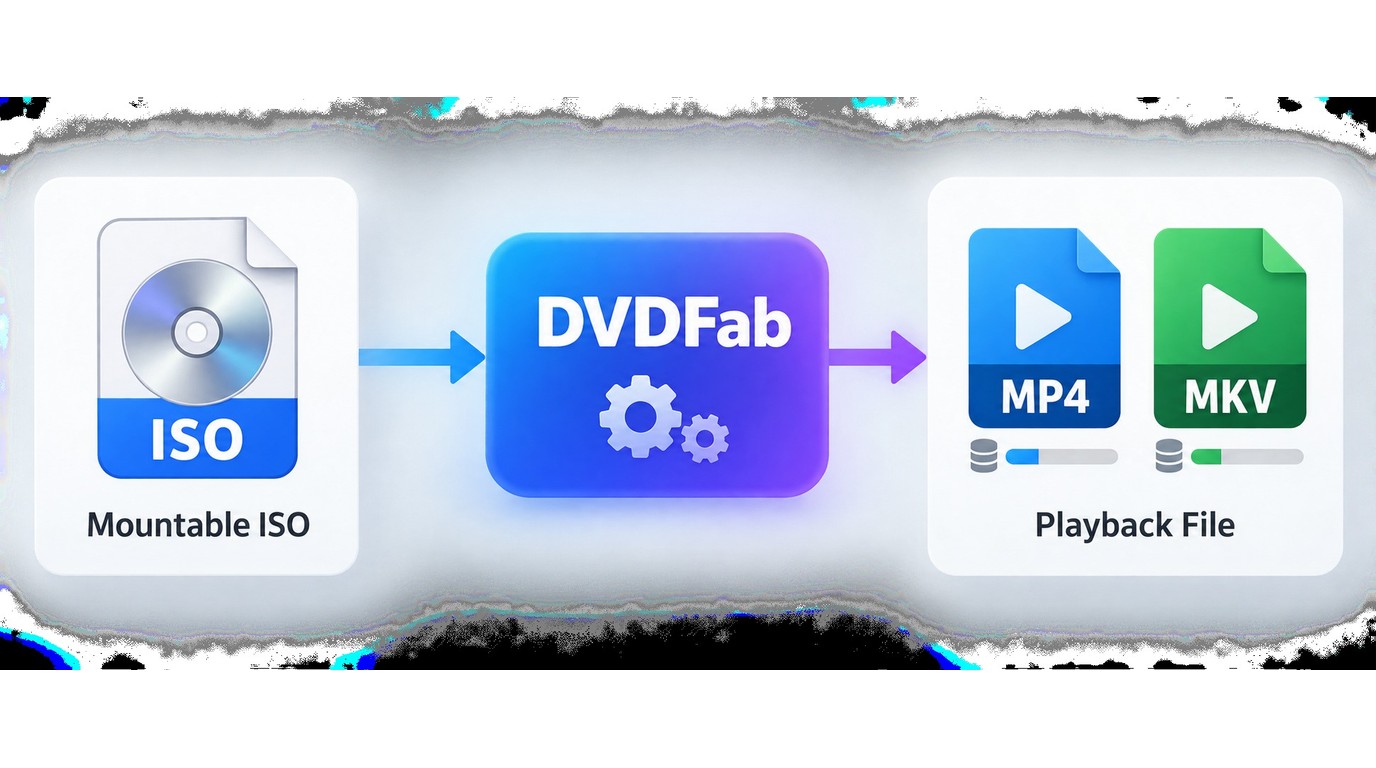
Compressing a DVD-video ISO can mean creating a smaller playback file or preparing a smaller image for reburning. Converting a DVD-video ISO to MP4 or MKV creates a video file; shrinking it for reburning requires a burnable DVD-video image that fits the target disc. DVDFab DVD Ripper serves the playback-file route, not the smaller-burnable-ISO route, so it suits readers who value playback compatibility over preserving a mountable disc image.
DVDFab DVD Ripper
DVDFab DVD Ripper takes a different approach to ISO compression than archiving tools: instead of wrapping the ISO in a smaller container, it converts the disc content into a standard video format, which is why the size reduction is so much larger. A typical DVD ISO that starts at 4.7 GB can become a 1-2 GB MP4 file. That trade-off works well when your goal is playback on a TV, phone, or media player rather than preserving a bootable or mountable disc image. It supports copy-protected discs and handles the conversion in one step without requiring a separate decrypter.
Key Features
- Removes old and new copy protection for DVDs your legally own
- Converts ISO images to MP4, MKV, and other 1,000+ output formats
- Uses GPU acceleration to reduce conversion time on supported hardware
- Play converted files on 260+ device presets
- Includes video editing tools for trimming, cropping, and bitrate adjustment
- Preserves original metadata including chapter titles and subtitles
Where it falls short
- Output is a video file, not an ISO; use the free trial to check whether the output suits your playback device and hardware
- The free version has conversion limits
Steps to Compress ISO Files with DVDFab DVD Ripper
Step 1: Download and launch DVDFab software from the official download page. Tap the Ripper module from the left section and upload the needed ISO videos.
Free Download Windows 11/10/8.1/8/7
Free Download macOS 12 or newer
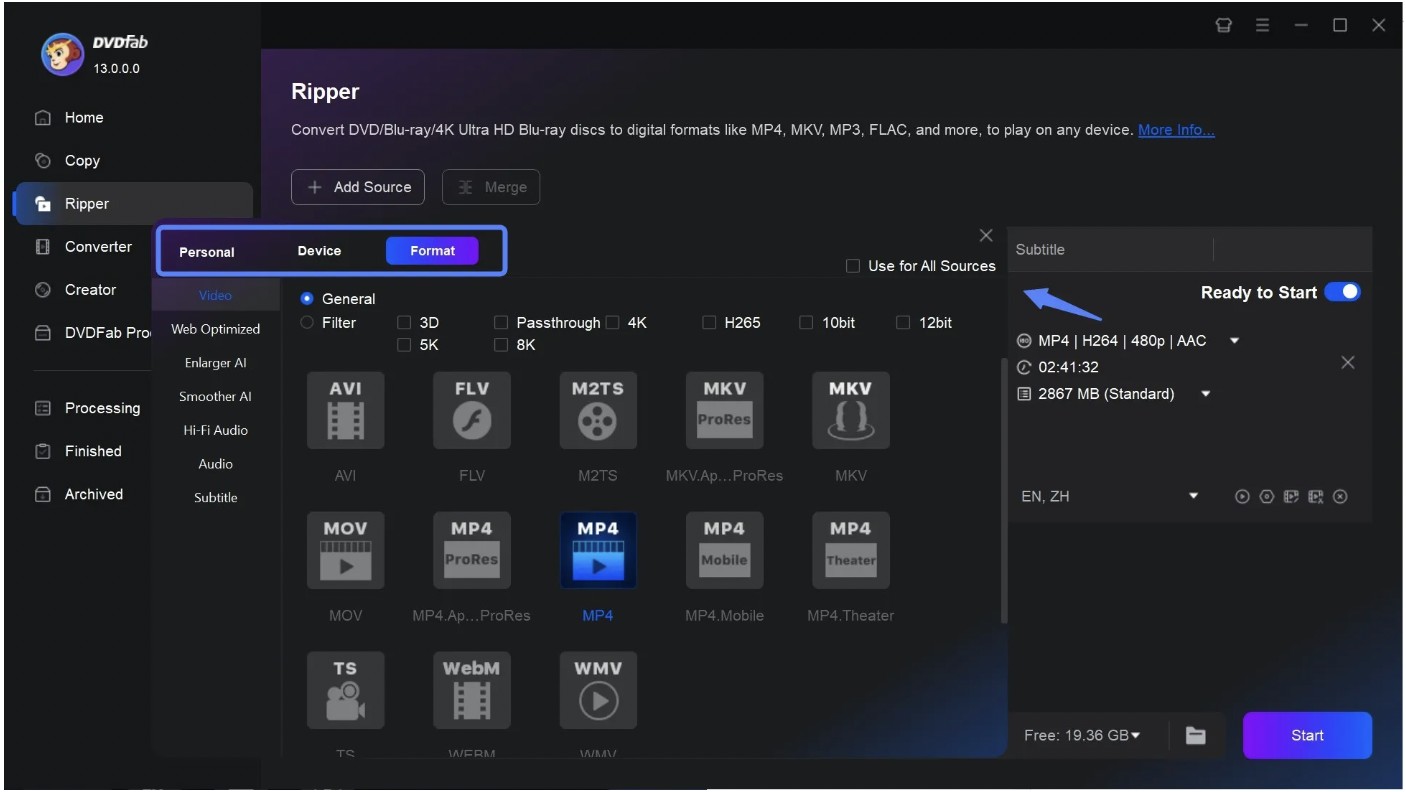
Step 2: Select Choose Other Profile and then go to Format. Choose Video and pick an output format.
- MP4 (H.264) is the most compatible option for general playback, and the ISO to MP4 guide covers that output choice.
- MKV works better if you want to preserve multiple audio tracks or subtitles, as explained in the ISO to MKV guide.
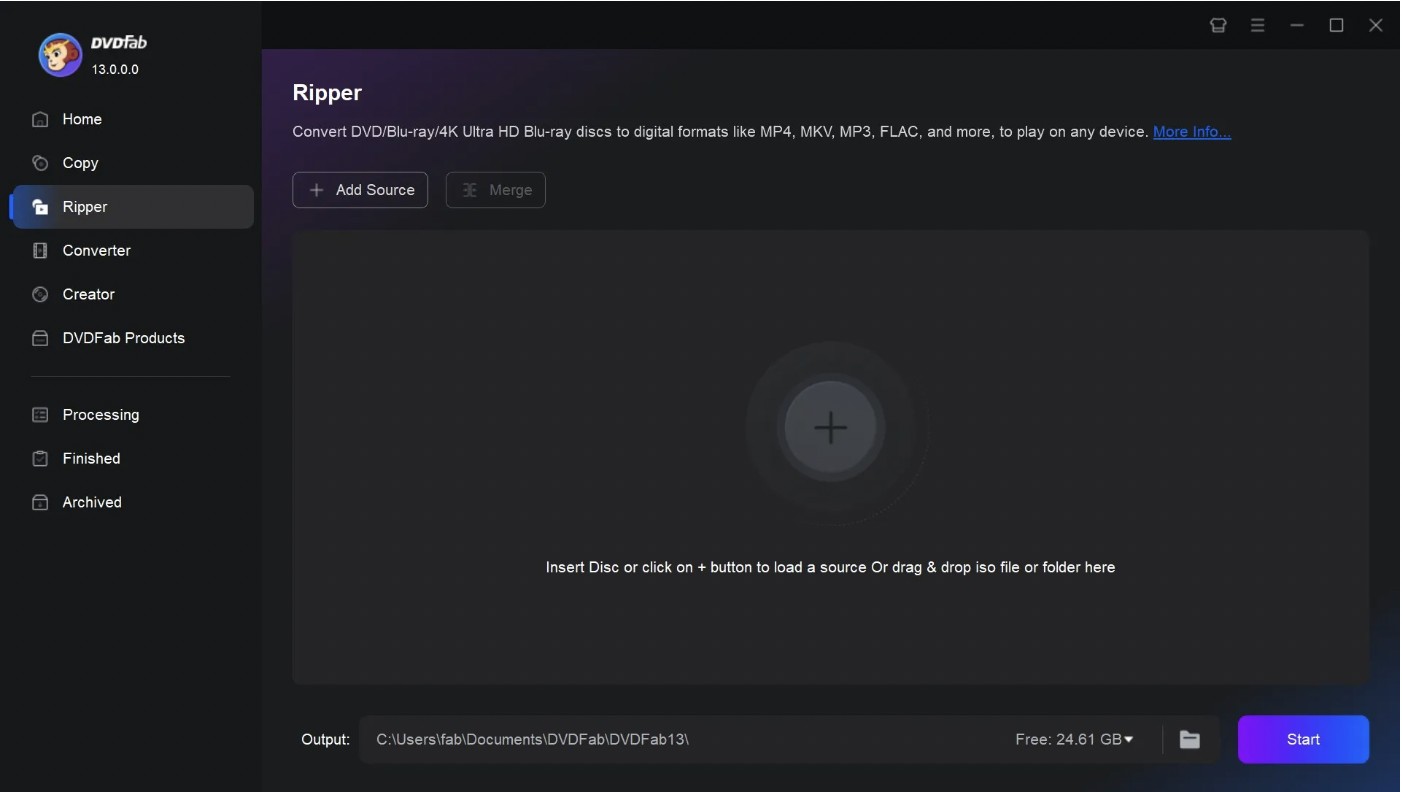
Step 3: Open Advanced Settings to adjust video resolution, frame rate, and bitrate. Lowering the bitrate is the primary lever for reducing file size. For standard-definition DVD content, a bitrate of 1,500-2,500 kbps produces a good balance between size and quality.
Utilize Video Edit if you need to trim specific chapters, adjust brightness, or add a watermark to the output. This step is optional.
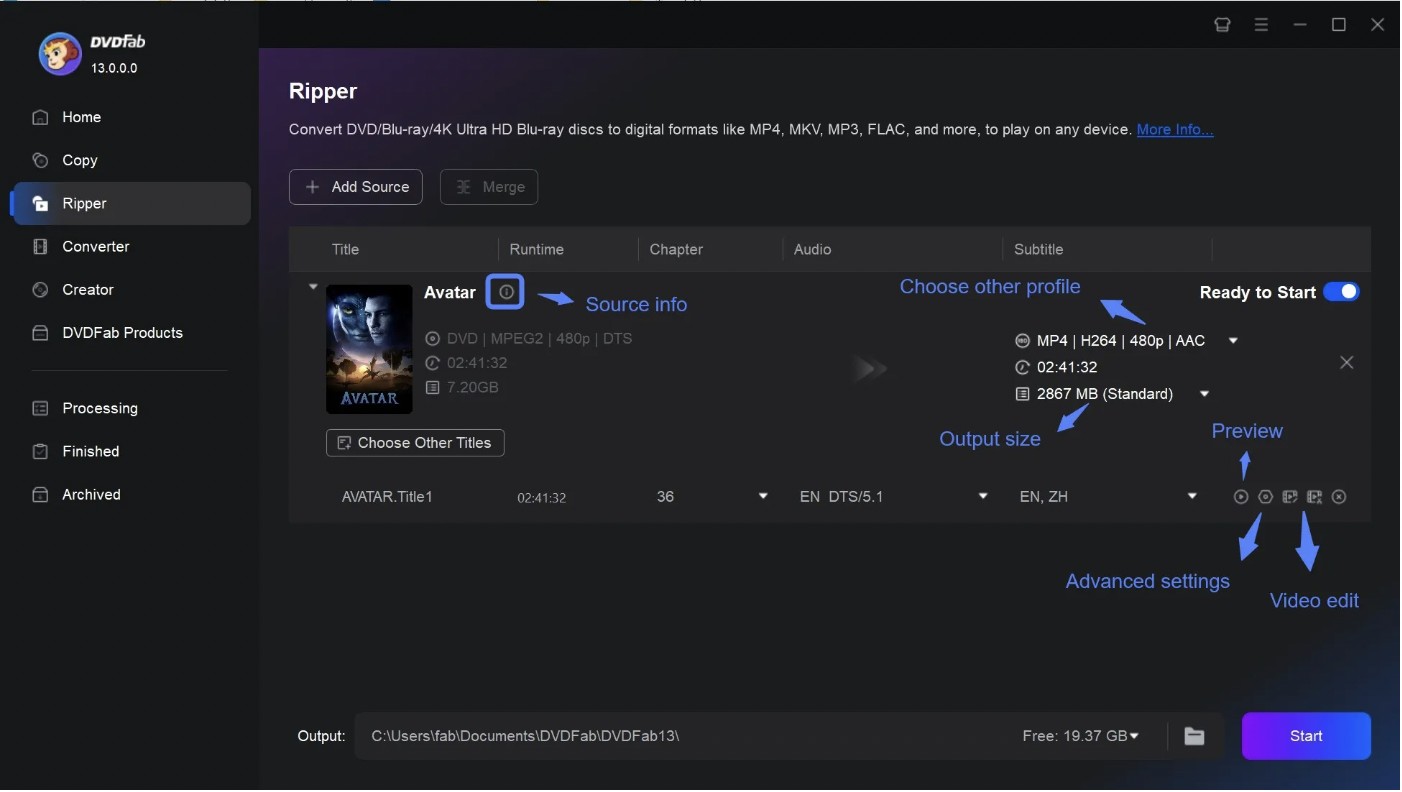
Step 4: Finally, click Start begin conversion. Processing time depends on disc length, output settings, and whether your system supports GPU acceleration.
Compress ISO with Browser and Legacy Tools
If you want to keep the ISO file format intact rather than converting to video, dedicated compressors and archiving tools are the right fit. The two options below cover offline and online use cases. Both produce smaller files than the original ISO, but the output format affects how you can use them afterward.
ISO Compressor
ISO Compressor is a legacy Windows utility for compressing PSP ISO files into CSO files. It can also decompress CSO files back to standard ISO files. Primarily used for gaming files, it supports PSP ISO files. RVZ is Dolphin's lossless compressed format for GameCube and Wii disc images and supports real-time use; CSO remains a PSP-oriented format. Direct use requires support from your emulator and its version. ISO Compressor's official page lists its latest update as September 3, 2025 and requires legacy Windows components, including .NET Framework 2.0. ISO Compressor can quickly compress files to reduce their size and save disk space. This helps you play the games from the memory stick.
- Free for personal use, with no file size limits or account requirements
- Converts PSP ISO files to CSO format
- Decompresses CSO files back to standard ISO when needed
- Supports compression levels from Low to Ultra
- No macOS or Linux version is available
- Designed for PSP ISO to CSO conversion
The following Windows steps cover this legacy PSP-to-CSO use case.
How to Compress an ISO file with ISO Compressor
Step 1: Visit the official ISO Compressor site. And click Download to install the ISO Compressor app on your Windows system.
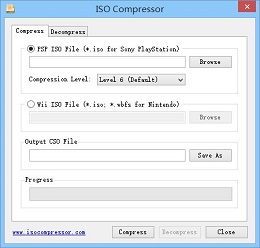
Step 2: Launch the installed app and click Browse. Select the ISO file you wish to compress.
Step 3: Select the compression options, such as "output format" and "compression level". Pick from Low, Medium, High, and Ultra.
Then, pick the output location for saving your newly compressed ISO.
Step 4: Tap the Compress button and wait for the process to complete. Compression time scales with file size and the compression level you selected.
UnZiper (Online Tool)
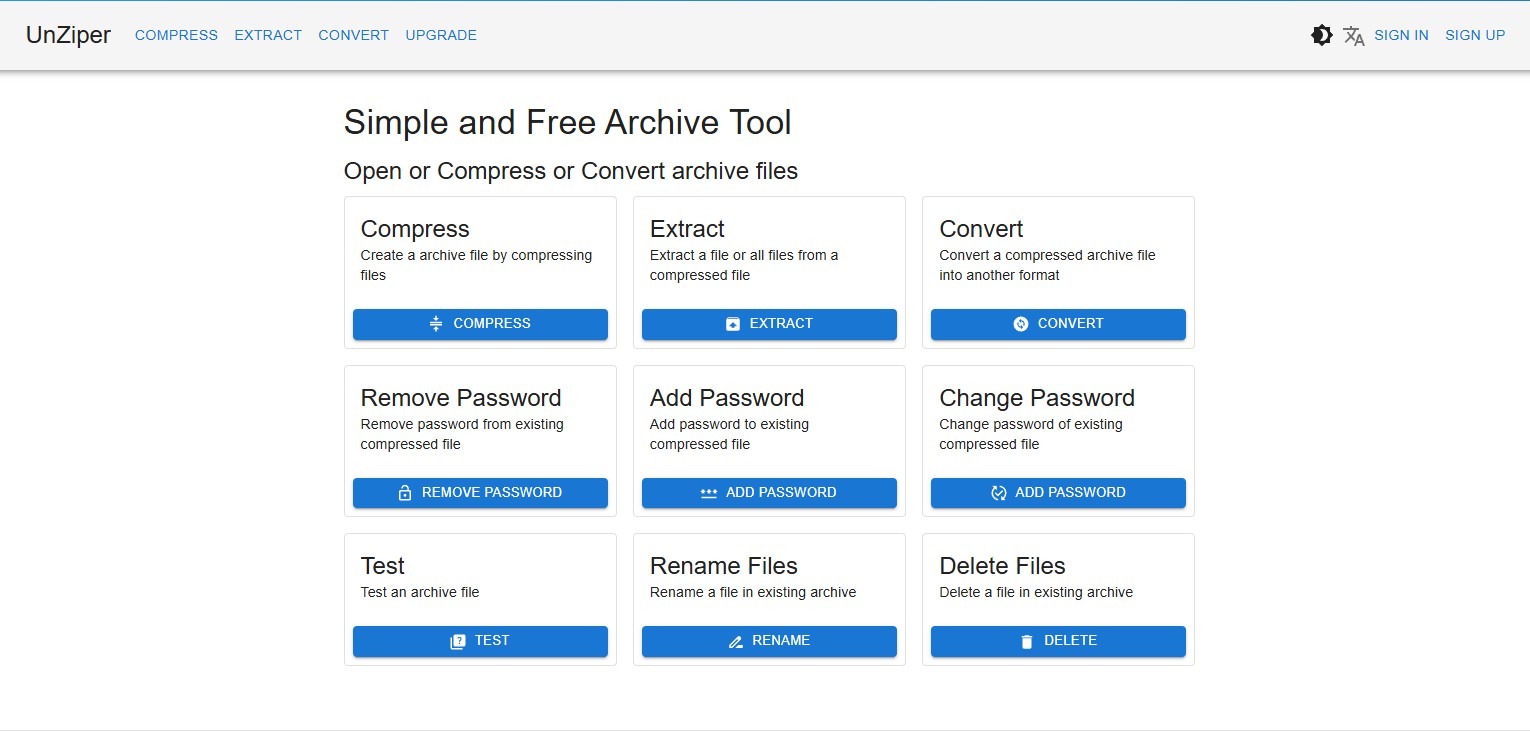
UnZiper is a browser-based file compression tool that handles ISO files along with other formats. It requires no installation, works on any platform, and processes files without requiring an account. UnZiper processes ISO files on the user's device rather than uploading them to a server; its page describes a theoretical 4 GB ceiling tied to available device memory. It is useful for a quick local browser workflow, but it is not ideal for very large ISOs or readers who need advanced format controls.
- Works in any browser with no installation or sign-up required
- Supports multiple compression formats and allows optional password protection
- Handles files on any OS, including macOS and Linux, where desktop-only tools are not an option
- Browser and device memory can limit the size of an ISO it processes
- Advanced format controls are limited
- Limited features and customization options
- Processing speed can vary by device and browser
How to Compress ISO file Online with UnZiper
Step 1: Open the UnZiper online tool on your web browser.
Step 2: Add all the ISO files you wish to compress. You can either click the input area to choose files or use the drag-and-drop section to proceed.
Note: You can set a password.
Step 3: UnZiper will automatically detect your source format (ISO). If it doesn't, then use the Format selector.
Step 4: Tap Compress to compress and download the ISO file automatically. Click the Reset button to compress new files.
Compress ISO with 7-Zip (Free Archiver Method)
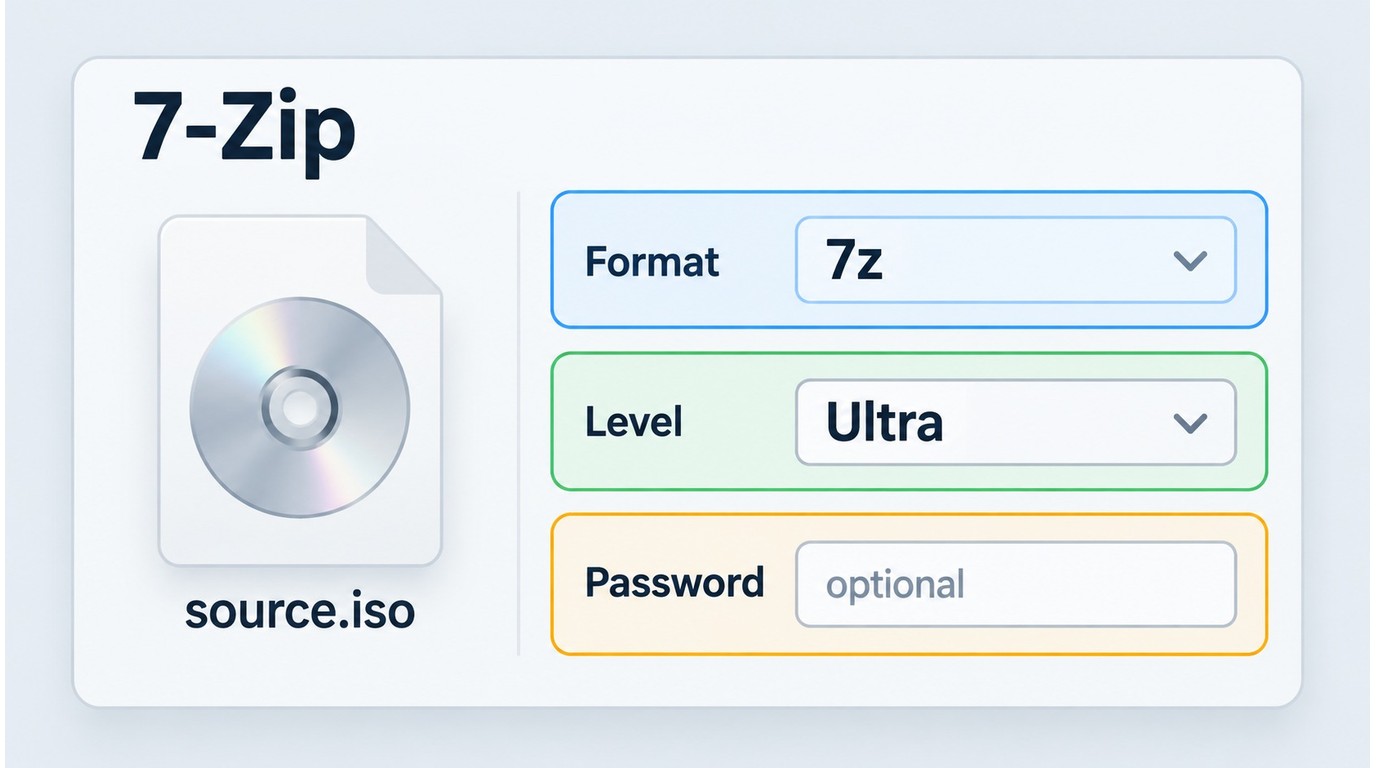
7-Zip is a free file archiver with Windows installers and console builds for macOS and Linux. It does not convert the ISO to a different format: it wraps the original file in a compressed archive (.7z or .zip). This means the ISO stays intact inside the archive, and you can extract it back to the original size whenever needed. The trade-off is that you need to extract the archive before mounting or using the ISO. For long-term storage of software, OS images, or game backups where mountability is not a daily requirement, this approach is practical and costs nothing. 7-Zip suits reversible storage when extraction before use is acceptable, but maximum settings often add time without meaningful savings on already-compressed software ISOs.
Software ISOs typically compress 1-5% with 7-Zip because their internal packages are already compressed. Movie DVD ISOs, which contain uncompressed MPEG-2 video, often compress significantly more.
- No file size limits or usage restrictions
- Supports multiple archive formats including .7z, .zip, and .tar
- Optional password protection for encrypted archives
- It must be extracted to an ISO first
- Compression ratio for software ISOs is typically low
- The grind can be a major drag
How to Compress an ISO File with 7-Zip
Step 1: Open 7-Zip File Manager and navigate to the folder containing your ISO file.
Step 2: Select the ISO file and click the Add button. Alternatively, right-click the ISO file in Windows Explorer, hover over 7-Zip in the context menu, and select Add to Archive.
Step 3: In the archive settings dialog, choose your output format (7z gives better compression than zip) and set a compression level. For maximum size reduction, select Ultra. If you want to add password protection, enter a password in the Encryption section.
Step 4: Click OK to start compression. 7-Zip will create the archive in the same folder as the original ISO by default.
On macOS and Linux, the official 7-Zip packages are console builds, so use a terminal instead of the Windows File Manager and Explorer steps above.
FAQs
Will compressing an ISO file cause data loss?
It depends on the method. Tools like 7-Zip, ISO Compressor, and UnZiper use lossless compression, which preserves every byte of the original ISO. You can extract the archive and get back the exact original file. DVDFab DVD Ripper, by contrast, re-encodes the video content into a different format: this reduces size significantly but is not reversible, and the output is a video file rather than a mountable disc image. Choose lossless archiving if you need to preserve the original structure; choose format conversion if playback size is the priority.
Can I mount a compressed ISO directly without extracting it first?
Not with standard archive formats like .zip or .7z. To mount the ISO, you need to extract the archive first, which restores the full original size. If direct-mount access is important, specialized formats handle this differently: CSO remains a PSP-oriented format, while RVZ is Dolphin's lossless compressed format for GameCube and Wii disc images and supports real-time use. CHD is also supported by multiple emulators, including MAME, RetroArch, and Mednafen. For everyday DVD ISO management, however, archiving with 7-Zip for storage and extracting before mounting remains the most practical approach.
Why is my ISO barely smaller after compression?
This is a common result when compressing software ISOs or OS installation discs. These files contain packages (like .deb, .rpm, or .cab files) that are already compressed internally, so general-purpose archivers like 7-Zip have little redundancy left to remove. Movie DVD ISOs behave differently: they store raw MPEG-2 video, which compresses more effectively. If you need meaningful size reduction on a software ISO, the practical options are to use a higher compression level or to strip unnecessary files from the disc image manually, though the latter requires specialized tools and is not straightforward.
Will a compressed game ISO still load smoothly?
Compatibility depends on the format supported by the target software, not compression alone. CSO is a PSP-oriented format, while RVZ is Dolphin’s lossless compressed format for GameCube and Wii disc images with real-time use in compatible versions. Check the emulator’s supported formats before converting, because an unsupported compressed image may require extraction or conversion before it can load.
Conclusion
The right compression approach for an ISO depends on what is inside it and what you plan to do with the result. For long-term storage of software, OS images, or general disc backups, 7-Zip gives you a free, reversible archive with no format lock-in. For movie DVD ISOs where playback size matters more than preserving the disc structure, format conversion with a ripper reduces the file far more than archiving can. For PSP game ISOs, use CSO with compatible PSP software; for GameCube and Wii libraries, use RVZ with a compatible Dolphin version.

 4 Free DVD Rippers for Windows 10/11: Best Tools & Step-by-Step GuideBy Diana Smith - Oct 13, 2026
![How to Convert DVD to AVI Free: 3 Current Options [2026]](https://images.dvdfab.cn/artifact/2026/09/17/2HqH4KgGwIXxwkHdUUZtp0D98DCpL4gS/feature_cover.jpg) How to Convert DVD to AVI Free: 3 Current Options [2026]By Diana Smith - Oct 12, 2026
How to Convert DVD to AVI Free: 3 Current Options [2026]By Diana Smith - Oct 12, 2026 How to Copy DVD to Computer on Windows & Mac: Rip and Direct CopyBy Wenny Yan - Oct 12, 2026
 Free DVD Decoder for Windows XP and Windows 11: 3 Ways to Play DVDsBy Diana Smith - Sep 23, 2026