5 Safe Steps to Clean DVD, CD, and Blu-ray Discs

Summary: How to clean DVD discs safely is straightforward: use a clean microfiber cloth, distilled water only when needed, straight center-to-Edge strokes, and complete drying. This is a safe way to clean DVDs and a safe starting point for a Blu-ray disc; scratches and read errors need diagnosis, not harder rubbing.
Start by removing reversible surface grime, then assess scratches or other physical damage only if playback problems remain. That order matters because cleaning removes contamination, while damaged layers, cracks, and deep scratches need a different response.
Clean First, Repair Scratches Second
Five Safe Cleaning Steps
Step 1: Hold the disc correctly
Hold the disc by its outer Edge or center hole. Avoid touching the reading surface, where fingerprints and grit can interfere with playback.
Step 2: Remove loose grit
Use a manual air puffer or gently shake away loose dust. Do not wipe until visible grit has been removed, since particles can leave new scratches.
Step 3: Dampen a microfiber cloth if needed
For fingerprints or light grime, lightly dampen a clean microfiber cloth with distilled water. The cloth should be barely moist, not wet enough to leave droplets on the disc.
Step 4: Wipe from center to Edge
Use straight, light strokes from the center hole to the outer Edge. Rotate the disc between strokes. Circular rubbing follows the data track and can make a scratch more likely to affect playback.
Step 5: Dry completely
Use a dry section of the microfiber cloth with the same center-to-Edge strokes, then let the disc air dry fully before playback or storage. Do not use heat to speed up drying.
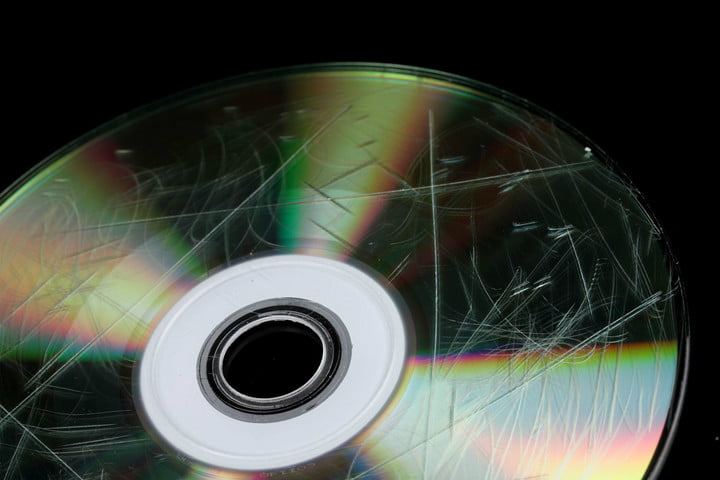
Scratches are physical damage, so cleaning cannot restore missing data or damaged layers. Light read-surface scratches may interfere less after careful treatment, but deep scratches, circular scratches, label-side damage, and cracks need a different response. Detailed options for repairing a scratched DVD are most relevant after surface grime has been ruled out.
If several clean discs show the same read errors in one player, the disc may not be the cause. In that case, DVD lens cleaners can help address a dirty player lens.
Before you begin:
- Clean only the reading side. On DVDs, label-side damage can reach layers that surface cleaning cannot repair.
- Do not put a cracked disc into a drive. Rotation can cause it to break apart.
| Disc condition | Safest next step | What to avoid |
| Dust or fingerprints | Dry microfiber cloth | Paper towels |
| Sticky residue | Distilled water, then mild soap | Harsh cleaners |
| Light surface scratches | Consider professional resurfacing | Routine abrasives |
| Deep or circular scratches | Stop rubbing; assess damage | More polishing |
| Label-side damage or cracks | Do not use the disc | Putting it in a drive |
| Continued read errors | Try another clean player | Repeated cleaning |
Cleaning removes contamination. Repair, retirement, or preservation addresses physical damage. Starting with an abrasive remedy is the avoidable mistake most likely to turn a cleaning problem into a damage problem.
Cleaning Heavy Grime and Sticky Residue
Fingerprints, grease, drink residue, food splatters, and built-up dust usually respond to a gentle wet-cleaning sequence. For disc cleaning at home, including stained older discs you are deciding what to do with, start with distilled water before escalating to mild soap or alcohol.
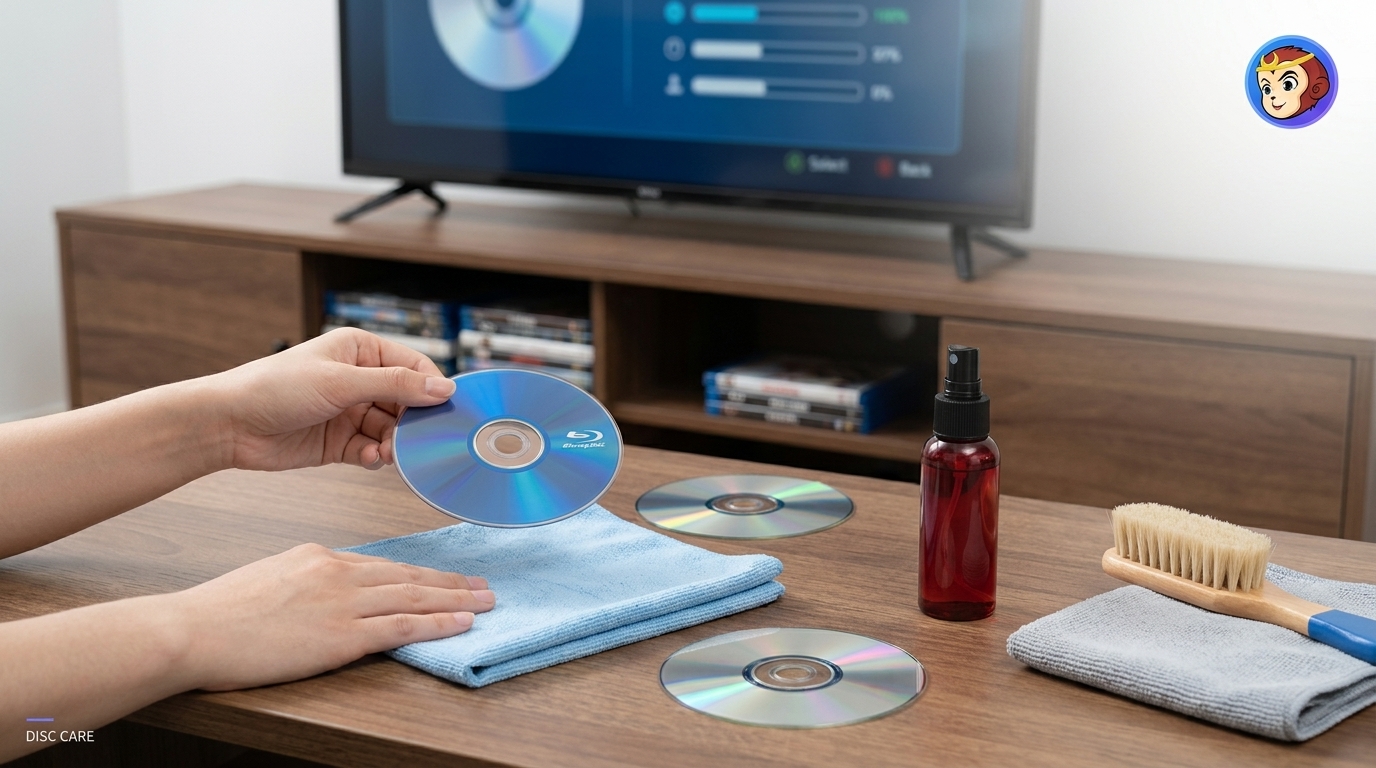
Materials you can use:
- Soft microfiber cloth (or a lint-free, soft cotton cloth)
- Distilled water (to avoid mineral buildup)
- Isopropyl alcohol for oily residue
- Mild dish soap (optional for heavy stains)
- A soft-bristled brush (optional for stubborn grime)
- Manual air puffer (optional, for removing dust)
For light fingerprints and dust
Hold the disc by its Edge or center hole, remove loose dust, then wipe it lightly from center to Edge with a clean microfiber cloth dampened with distilled water. Dry it completely before use.
For heavy grease or sticky residue
For oily residue that remains after water, use a small amount of diluted isopropyl alcohol on a cloth corner and wipe lightly. For sticky residue, use a few drops of mild dish soap in distilled water, then wipe again with a separate cloth section lightly dampened with distilled water to remove cleaner residue.
If light passes leave streaks, switch to a clean section of cloth and remove any remaining cleaner with distilled water. If the surface and playback do not improve after repeated gentle cleaning, stop rather than increasing pressure or adding abrasives.
Drying: Let the disc air dry in a ventilated area until it is completely dry before placing it in a player or case. A damp disc can cause read errors.
When to stop cleaning: If repeated gentle cleaning does not improve playback, more rubbing is unlikely to help. The problem may be a scratch rather than surface grime, or damage to the reflective layer that no surface treatment can reach. Digitizing the disc while it still partially plays is a more productive use of effort.
Cleaning Blu-ray Discs Safely
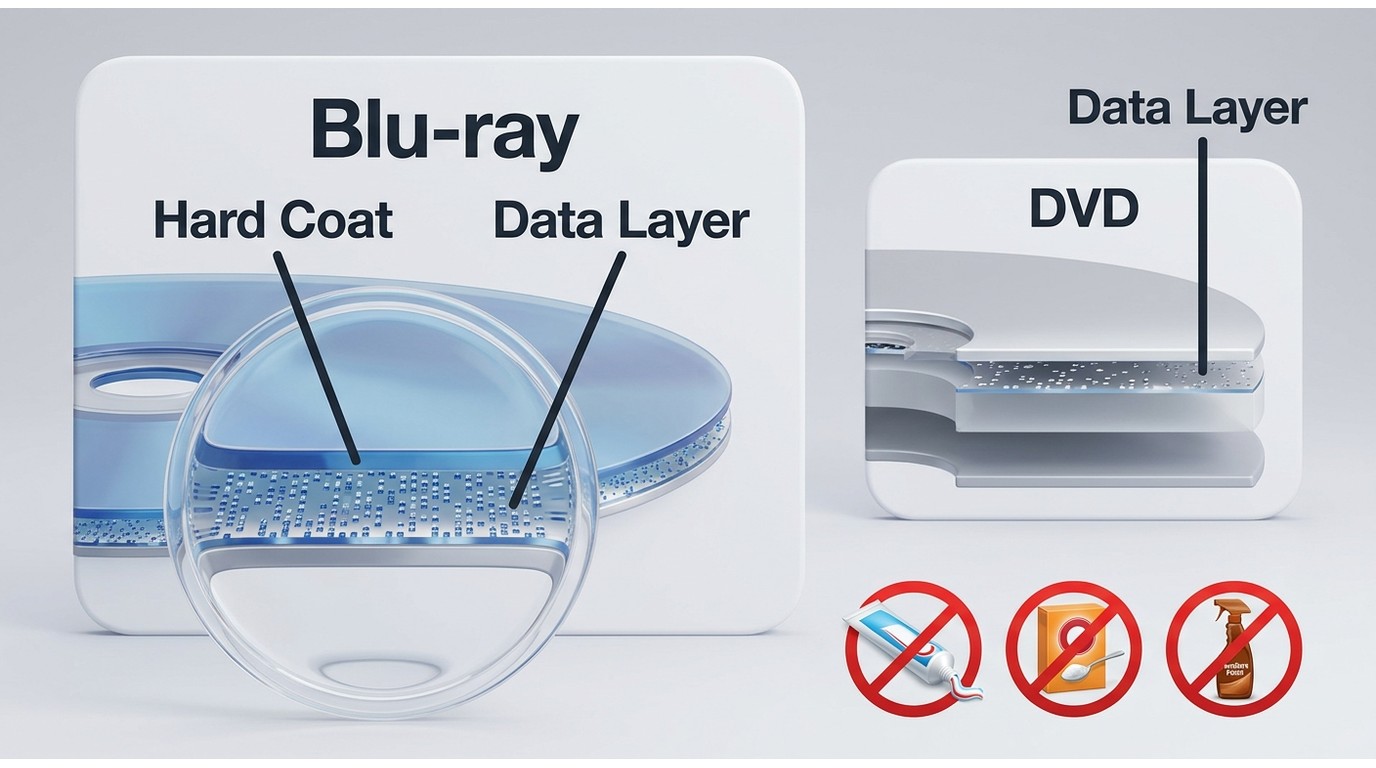
CDs, DVDs, and Blu-ray discs should be held by the Edge or center hole, cleaned with a soft cloth in straight center-to-Edge strokes, and dried completely. The material difference in Blu-ray versus DVD discs matters because Blu-ray data sits much closer to the reading surface beneath a thin hard coat. That coating resists everyday scratches, but abrasive cleaning agents can damage it.
The practical rule: do not use toothpaste, furniture polish, or any paste-type abrasive on a Blu-ray disc. These materials wear through the hard coat and can damage the data layer directly underneath. The same applies to petroleum jelly and baking soda pastes. Stick to liquids only.
What is safe to use:
- Soft microfiber cloth
- Distilled water
- Isopropyl alcohol for oily residue
- Mild dish soap solution (for heavy grime only)
Use a Manual Air Puffer
Use a manual air puffer to remove loose dust before cloth contact, reducing the chance of dragging grit across the hard coat. Canned compressed air is not the default because propellant and rapid temperature changes can damage the disc surface.
Inspect the Disc
Hold it at an angle under a light. Fingerprints and smudges appear as dull patches. Identifying where the grime is concentrated before you start helps you work more efficiently with less total wiping.
Wipe with a Damp Microfiber Cloth
Dampen a microfiber cloth with distilled water or isopropyl alcohol and wring it until barely moist. Wipe in straight strokes from the center to the Edge with light pressure and no circular rubbing.
Dry the Disc Completely
For alcohol: let the disc air dry completely before use.
For water or dish soap: pat with a dry microfiber cloth, then air dry fully before use.
Repeat Only if Needed
If smudges remain, dampen a fresh section of cloth and repeat with light, even pressure. Pressing harder does not clean more effectively and increases scratch risk on the hard coat.
What Changes for CDs
For CDs, use the same gentle method described above. A CD that still skips after careful cleaning may have scratches or layer damage, so do not keep rubbing it with increasingly abrasive materials. Abrasive scratch remedies are especially unsuitable for Blu-ray discs because of their protective coating.
What You Should Never Use to Clean a Disc
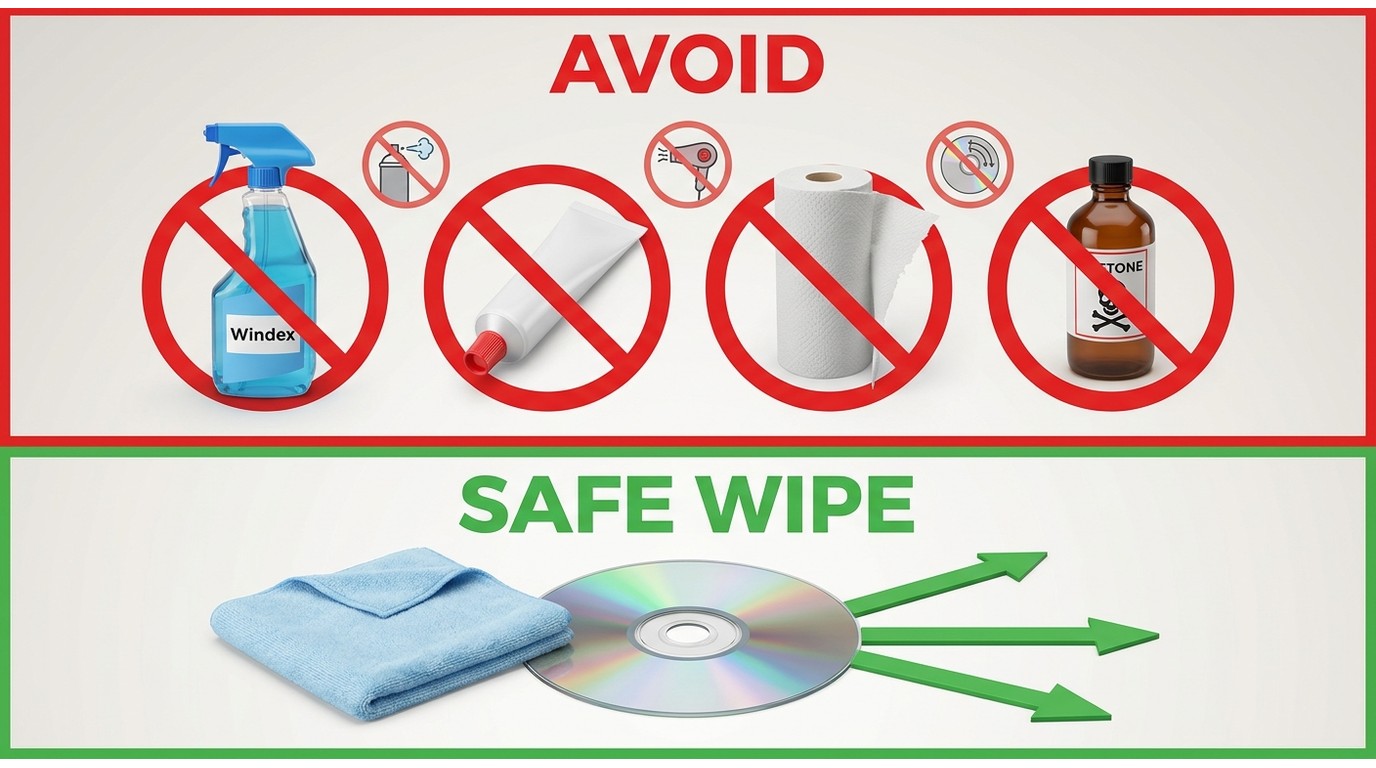
Stronger cleaners and rougher cloths do not make a disc cleaner. Glass cleaner such as Windex, furniture polish, abrasive toothpaste, and other household remedies can leave residue or damage the reading surface, especially when used repeatedly.
- Do not use organic solvents such as acetone or benzene
- Do not use kitchen paper towels, tissues, or any rough cloth
- Do not use strong household cleaners (strong alkalis, strong acids, heavy-duty degreasers, abrasive cleaners)
- Do not use a high-heat hair dryer
- Do not clean the disc too frequently (every wipe carries a small risk of micro-scratches)
- Do not use canned compressed air designed for electronics
- Do not use hard water when cleaning discs
- Do not wipe in circles along the disc surface
Handle and Store Discs Safely
Clean a disc only when it is visibly dirty or shows playback symptoms. Make sure it is fully dry, and return it to a clean case after use. In my experience with disc storage and backups, prevention is more reliable than repeated cleaning.
Preserve a Disc That Still Reads
Cleaning removes what is on the disc surface. It cannot repair a disc where the reflective or data layer has already been damaged, and it does not prevent further deterioration over time. Disc rot, a gradual oxidation of the reflective layer, can eventually make a disc unreadable regardless of storage conditions or cleaning history.
Many collectors address this by digitizing discs while they still play reliably, rather than waiting until there is a problem. A ripped copy on a hard drive does not degrade, cannot be scratched, and plays without depending on the physical condition of the disc.
The best software to digitize your DVDs is DVDFab DVD Ripper. It handles most commercial protection schemes, including CSS, APS, RC, and Sony DADC. The software can also retry problem sectors during the rip, which means it sometimes successfully reads discs that skip or stutter in a standard player.
Save a Personal Digital Copy with DVDFab DVD Ripper
Step 1: Download and install the tool on your PC. Open the tool and select Ripper module.
Free Download Windows 11/10/8.1/8/7
Free Download macOS 12 and newer
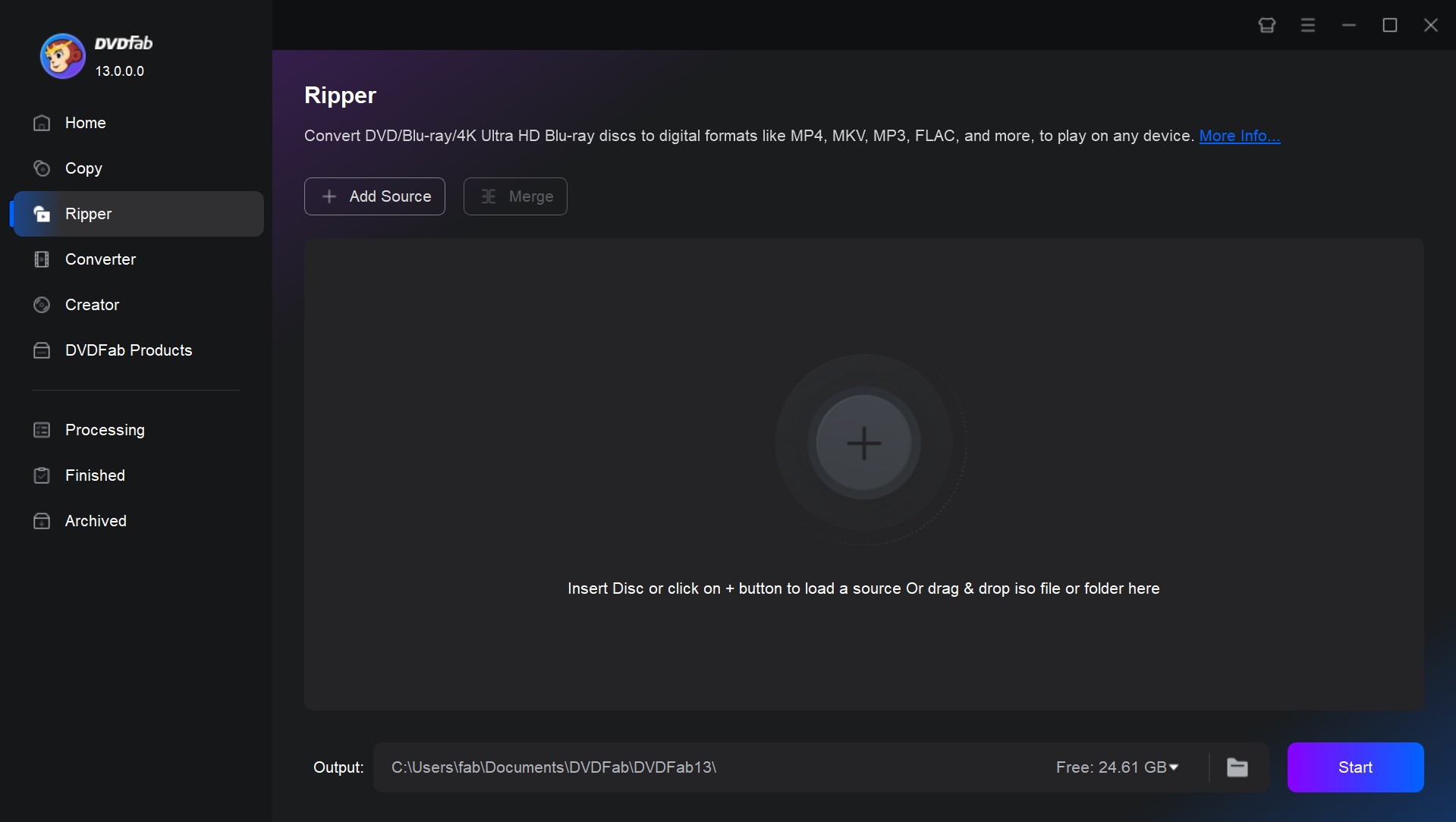
Step 2: Insert the DVD into the drive. Allow DVDFab to access the disc automatically from your drive.
Step 3: After the disc loads, select an output folder and open Choose Other Profile to select a format.
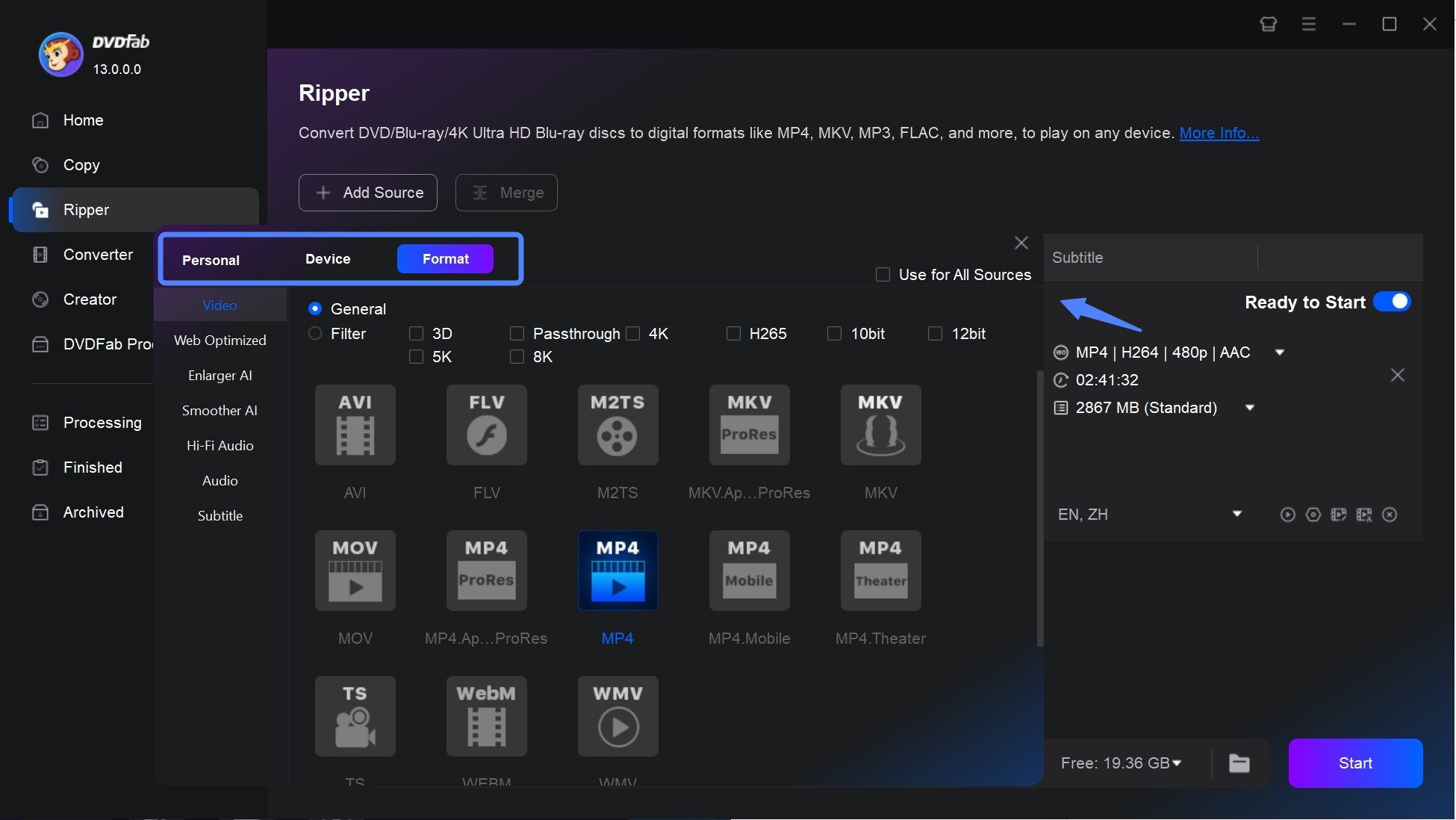
Step 4: Review the selected format and output folder, then select Start to save the DVD to your chosen location.
FAQs
Are eyeglass wipes safe for cleaning DVDs?
Alcohol-free, non-abrasive, lint-free eyeglass wipes may be suitable if they leave no lotion or fragrance residue. A clean microfiber cloth lightly dampened with distilled water remains the more conservative default, especially for collectible discs.
Can a Scratched DVD Be Repaired?
Sometimes, but only when the damage is limited to the read surface of a DVD. Professional resurfacing may help with suitable light scratches, while deep scratches, label-side damage, delamination, and cracks cannot be repaired through cleaning.
Does Toothpaste Fix DVD Scratches?
No reliable repair is guaranteed. Toothpaste is abrasive, not routine disc care, and it should never be used on Blu-ray discs. It cannot restore damage to the data or reflective layers.
When Is Professional Resurfacing Worth Trying?
It can be worth trying for a valuable DVD with light-to-moderate read-surface scratches after gentle cleaning fails. Resurfacing is not appropriate for cracks, label-side damage, delamination, or severely damaged Blu-ray coatings.
Conclusion
Start with the least aggressive effective method for any disc: a clean microfiber cloth and distilled water only when needed. For sticky residue, move carefully from water to mild soap or diluted alcohol. If the disc still skips, assess it for physical damage instead of continuing to rub.
Professional resurfacing can be worth trying for a valuable DVD with suitable surface scratches. When a legally owned DVD still reads but continues to deteriorate, saving a personal local copy may preserve access better than repeated cleaning.

![How to Rip DVDs for Plex: Guide to Formats, Tools, and Library Setup [2026]](https://images.dvdfab.cn/media/Screenshot_2026-09-08_at_18.53.34_j36v3l.png/public) How to Rip DVDs for Plex: Guide to Formats, Tools, and Library Setup [2026]By Diana Smith - Sep 8, 2026
How to Rip DVDs for Plex: Guide to Formats, Tools, and Library Setup [2026]By Diana Smith - Sep 8, 2026![Top 12 DVD to MP4 Converter Software for Win & Mac [2026 Tested]](https://r3.dvdfab.cn/upload/resource/convert-dvd-to-mp4-p2X3.jpeg) Top 12 DVD to MP4 Converter Software for Win & Mac [2026 Tested]By Diana Smith - Sep 4, 2026
Top 12 DVD to MP4 Converter Software for Win & Mac [2026 Tested]By Diana Smith - Sep 4, 2026 10 Best DVD Rippers for Windows & macOS: 2026 TestedBy Diana Smith - Sep 2, 2026
![How to Rip Audio from DVD with 5 Best Free DVD Audio Extractors [2026]](https://images.dvdfab.cn/media/how_to_rip_audio_from_dvd_5r8iyw.png/public) How to Rip Audio from DVD with 5 Best Free DVD Audio Extractors [2026]By Diana Smith - Aug 31, 2026
How to Rip Audio from DVD with 5 Best Free DVD Audio Extractors [2026]By Diana Smith - Aug 31, 2026