How to Convert VHS to Digital: 4 Tested Ways to Digitize VHS Tapes

Summary: How to convert VHS to digital depends on whether you still have a working VCR. A capture card is usually the best home option, a standalone converter is simple, DVD-to-digital works if you already record tapes to disc, and a service is the easiest choice without a VCR. Expect real-time capture, modest VHS quality, and plan backups from day one.
Table of Contents
That box of VHS tapes is not getting safer with age. Tape can stretch, mold can spread, and VCRs are harder to find each year. If you want to learn how to convert VHS to digital, start with one question: do you still have a working VCR? If I did not have a VCR, I would not buy a USB capture card first. I would either borrow or buy a tested VCR, or use a professional VHS-to-digital service.
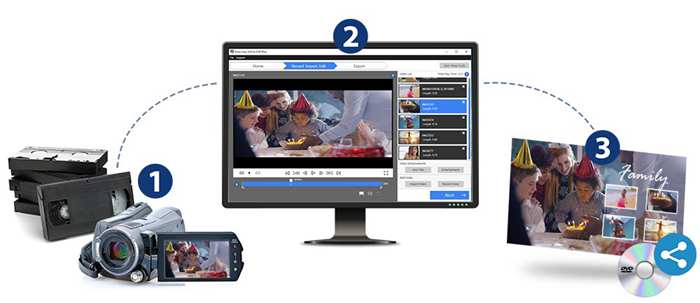
Quick Answer: Best Ways to Convert VHS to Digital
Before you choose a method, set two expectations.
First, most home VHS conversion is real-time. A 2-hour tape takes about 2 hours to capture, plus setup, testing, and saving time.
Second, VHS quality is limited. VHS has roughly 240 lines of picture detail inside a 480i video signal. Capturing at 720x480 can preserve the tape well, but it will not turn VHS into HD.
| Method | Needs a working VCR? | Typical cost | Time needed | Best for |
|---|---|---|---|---|
| Capture card + software | Yes | About $70–$100, plus VCR if needed | Real-time capture | Best home balance of cost, control, and quality |
| Standalone converter | Yes | About $70–$180, plus VCR if needed | Real-time capture | Simple recording without computer capture software |
| VHS to DVD, then convert DVD to digital | Yes, or a VCR/DVD recorder combo | Used combo often $100–$300, plus blank discs and ripper software | Real-time DVD recording, then ripping | Good if you also want a DVD copy first |
| Professional service | No | About $20–$35 per tape (kit pricing varies) | Usually 2–12 weeks | Best for converting VHS to digital without a VCR |
If you have a working VCR, Method 1 is the most flexible home option. If you do not have a VCR, go straight to Method 4 unless you are willing to buy or borrow a tested playback deck. A capture card and a standalone converter do not play VHS tapes by themselves.
Method 1. Convert VHS to Digital with a Capture Card and Software
A USB capture card is a good choice if you already have a working VCR and want control over the final video file. The capture card sits between your VCR and computer. It receives the VHS video signal and records it as a digital file.
Popular options include Elgato Video Capture, usually around $85–$90, and VIDBOX Video Conversion Suite, often around $70–$90. Both usually include RCA composite inputs. If your VCR has S-Video output, use it for a cleaner picture when the capture card supports it.
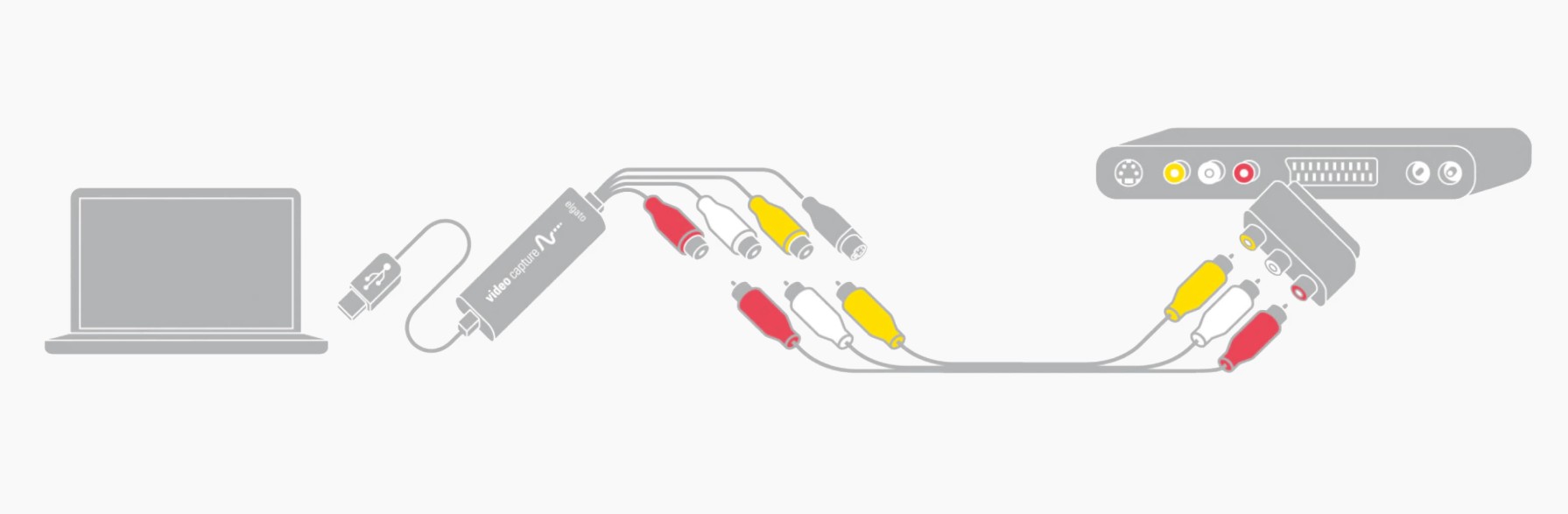
What you need
- A working VCR or VHS camcorder
- A USB capture card such as Elgato Video Capture or VIDBOX
- RCA cables, or S-Video plus red/white audio cables
- A Windows or Mac computer
- Enough storage space
- Optional: a head-cleaning tape if playback is noisy
A capture card does not replace a VCR. It only records the signal from a playback deck.
Recommended VHS to Digital Converter Suites
VIDBOX Video Conversion Suite
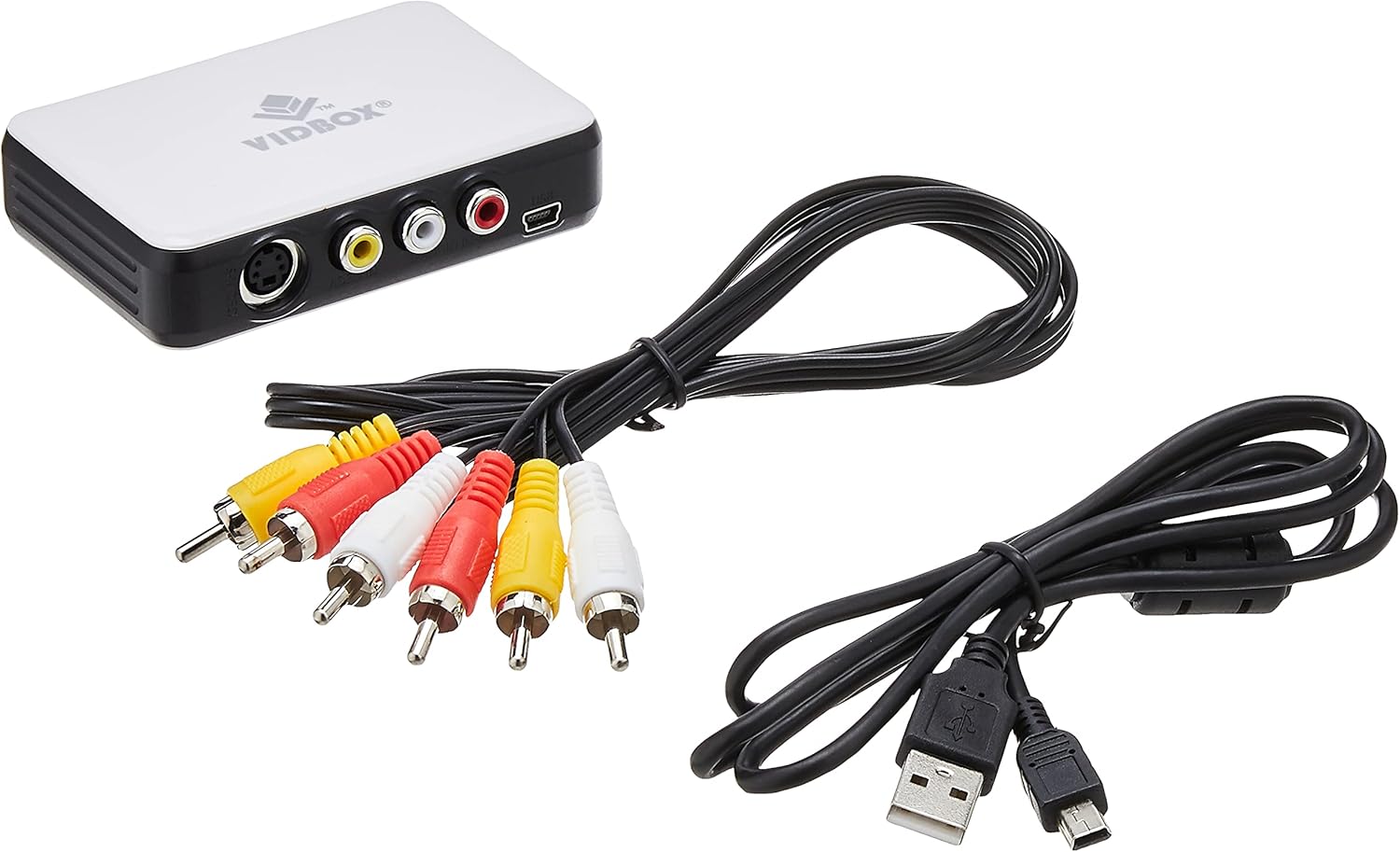
- Price: USD 79.99
VIDBOX includes a USB capture dongle, RCA cable, and software. It converts VHS to MP4 or MPEG-2 on Windows or macOS and also supports DVD authoring. It works with NTSC, PAL, and SECAM tapes, and step-by-step visuals help beginners through setup. The software does not allow editing while recording — you must wait for the capture to finish before making cuts. For those who prefer disc output, see this guide on DVD burning software.
Elgato Video Capture
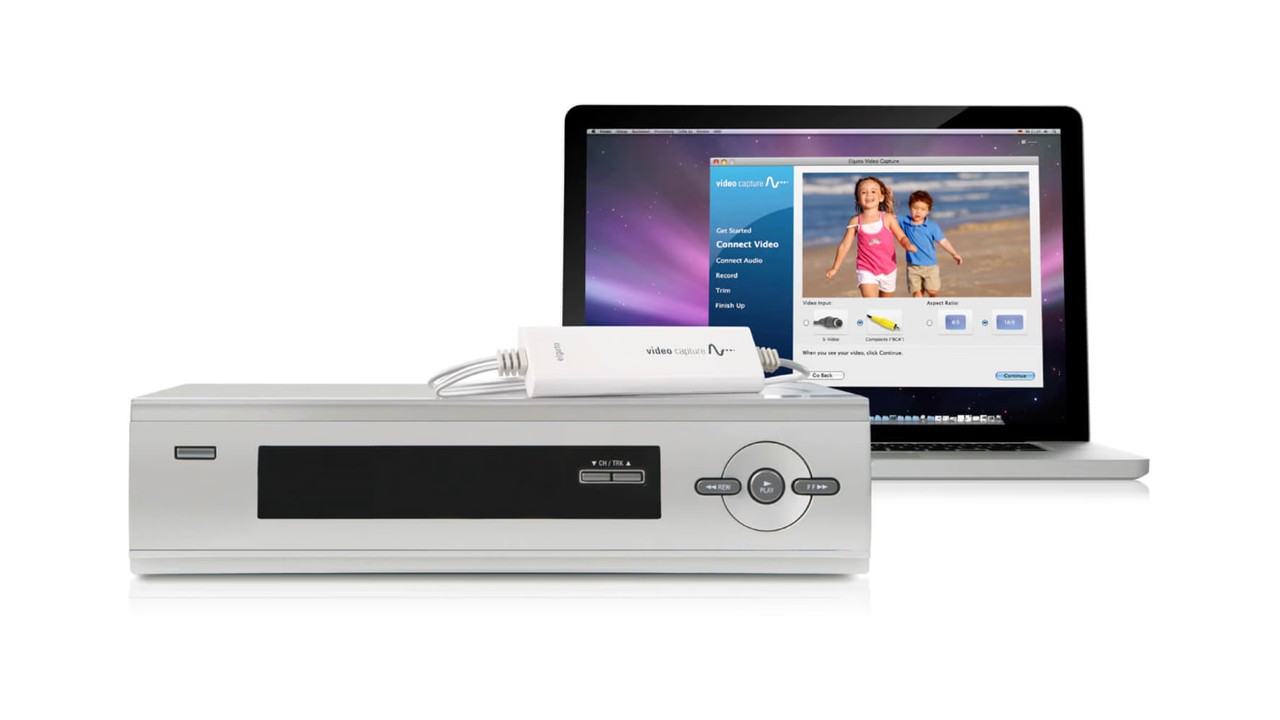
- Price: USD 89.99
Elgato is a USB 2.0 adapter that digitizes VCR, DVR, and camcorder output on Mac or PC. The included app handles input selection, basic trimming, and exporting. It ships with composite and S-Video options, and some regional versions include a SCART adapter. Output is H.264 in MP4 or MOV.
How to Digitize VHS with VHS to Digital Converter Suite
Step 1: Connect the VCR to the capture card using yellow RCA video plus red and white audio. Use S-Video if both units support it.
Step 2: Plug the capture card into your computer and install the software.
Step 3: Open the capture software, choose the correct input source, and set the aspect ratio to 4:3.
Step 4: Play a short section of tape first to test the picture and audio.
Step 5: Rewind the tape to the start, press record in the software, then press play on the VCR.
Step 6: Let the tape run in real time. A 2-hour tape needs about 2 hours to capture.
Step 7: Save the final file as MP4/H.264 if the software allows.
- Good balance of cost and control
- Works well for multiple tapes
- Easy to save directly as MP4
- Lets you check and name files while recording
- You still need a working VCR
- Capture is real-time
- Bad tapes may need extra cleaning
- Cheap capture sticks can have audio sync issues
Method 2. Convert VHS to Digital with a Standalone Converter
A standalone VHS converter records video to a memory card or USB drive without computer capture software. It still needs a VCR to play the tape.
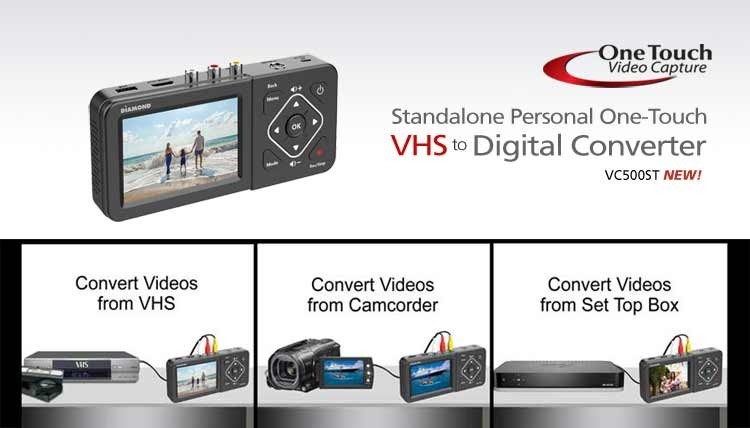
Many older guides recommend the Diamond VC500ST. This model is often listed as discontinued or unavailable, so check current stock before ordering. A current alternative is the ClearClick Video to Digital Converter 3.0, usually around $160–$180. Lower-cost converters from brands like DIGITNOW are often $70–$120, but quality and support vary.
What you need
- A working VCR or VHS camcorder
- A standalone video converter
- RCA cables, or S-Video if supported
- A memory card or USB drive
- Power adapter for the converter
How to Convert VHS to Digital with Standalone Digital Converter
Step 1: Connect the VCR to the standalone converter with RCA cables.
Step 2: Insert the SD card or USB drive into the converter.
Step 3: Turn on the VCR and check the preview.
Step 4: Set the recording quality to 720x480 for NTSC, or 720x576 for PAL.
Step 5: Press record on the converter, then press play on the VCR.
Step 6: Wait for the tape to finish. Capture time equals tape length.
Step 7: Stop the recording and copy the file to your computer.
Step 8: Rename the file with a clear date and tape title.
- No computer capture software needed
- Simple for basic home use
- Small screen helps preview the tape
- Good for quick MP4 files
- You still need a working VCR
- Capture is real-time
- Some models compress too much
- Diamond VC500ST availability should be checked before using it as a current pick
Method 3. Convert VHS to Digital with VCR/DVD Combo and DVD Ripper
This method suits people who prefer physical media, want more robust backups, or already own a VCR/DVD recorder. You can first transfer VHS to DVD as a newer physical storage format. As a newer type of physical media, Blu-ray (BD) and DVD are much more convenient than VHS, take up less space, are widely used for commercial releases with collectible value, and are less prone to damage than VHS. After making the DVD, you can use ripping software to convert it to a digital format, giving you a safer two-layer backup. In the tutorial below, I'll demonstrate with the popular Funai Combination VCR and DVD Recorder and DVDFab DVD Ripper.
What you need
- A VCR/DVD recorder combo, or a VCR connected to a DVD recorder
- Blank DVD-R or DVD+R discs
- RCA cables if using separate units
- A computer with a DVD drive
- DVDFab DVD Ripper for turning the recorded DVD into a digital file
How to Transfer VHS to Digital with VCR/DVD Combo and DVD Ripper
Step 1: Power on the Funai combo and TV, insert your VHS on the VCR side and a blank DVD-R/+R on the DVD side, select the DVD's input so you see the VCR picture, and choose SP mode.
Step 2: Press Record on the DVD side, then immediately press Play on the VCR side to copy the tape in real time.
Step 3: Press Stop when done, then open the DVD menu/Setup and choose Finalize so the disc plays on other DVD players and your computer.
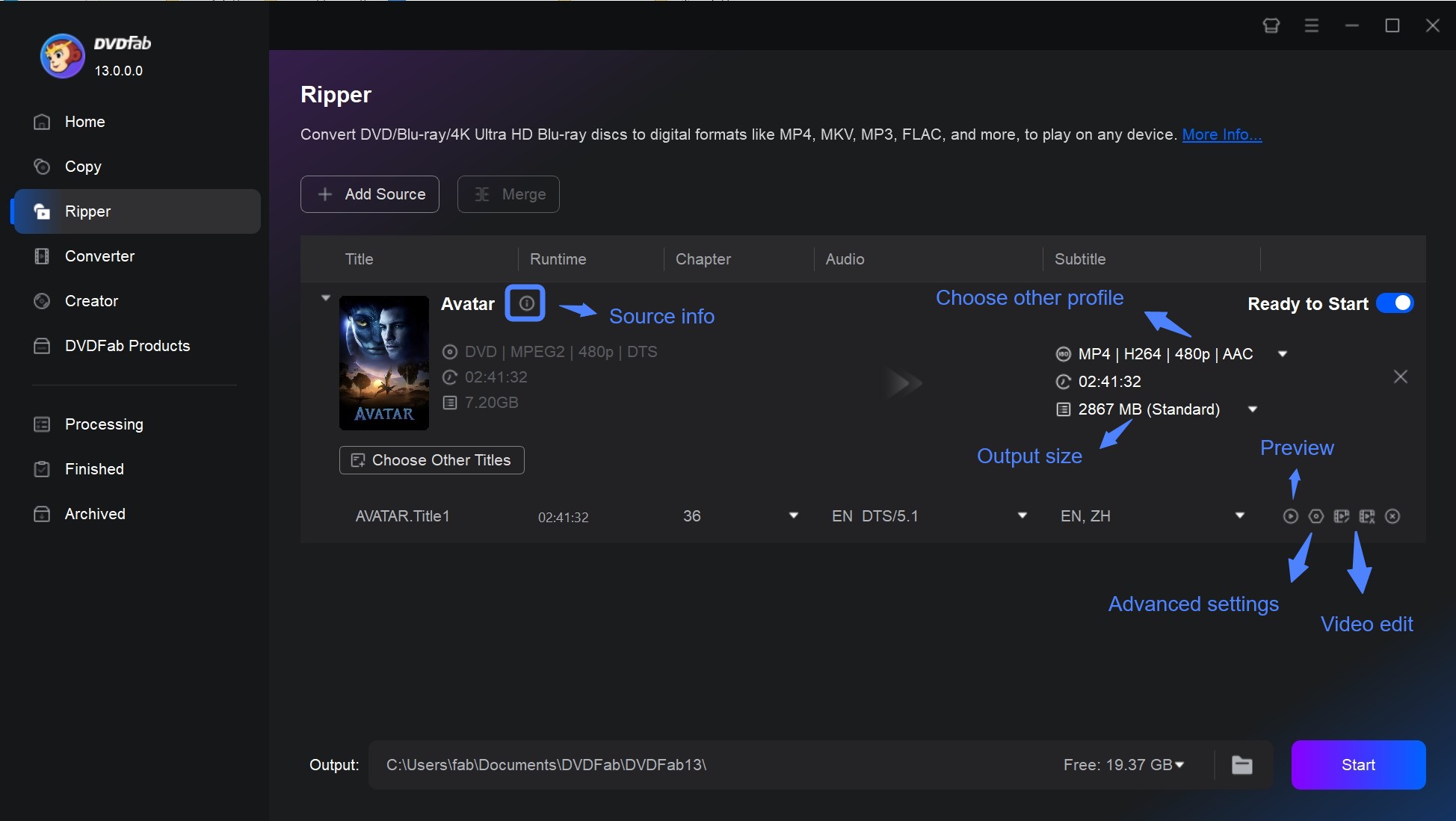
Step 4: Open DVDFab and click on the Ripper mode. Insert the DVD into your PC or upload the ISO file/folder by clicking the Add button.
Step 5: Click on "Choose Other Profile" to select a specific output format. You have the option to choose audio tracks and subtitles, adjust video and audio settings, and more.
Step 6: Save your video either on your computer's hard drive or on your mobile device. Simply click on the Start button to convert VHS to digital videos such as MP4 video.
- Good if you want a DVD copy before MP4 files
- Works well with a VCR/DVD recorder combo
- DVDFab DVD Ripper fits naturally after the DVD is finalized
- Good for organizing family tapes by disc first
- VCR/DVD recorder is an external device that takes up space
- DVD recording quality depends on the recorder mode and tape condition
Method 4. Use a Professional VHS-to-Digital Service
If you searched for how to convert VHS to digital without a VCR, this is usually the best answer. A professional service has playback decks and staff who handle the transfer. You mail in the tapes and wait for the finished files.
Nostalgic Media
Nostalgic Media specializes in transferring VHS, home movies, photos, slides, and audio recordings to digital. They offer custom editing, color correction, and audio enhancement. Average turnaround is about 7 business days. Each tape comes with a free DVD, and quantity discount pricing can bring the per-tape rate down to around $7.50.
Legacybox
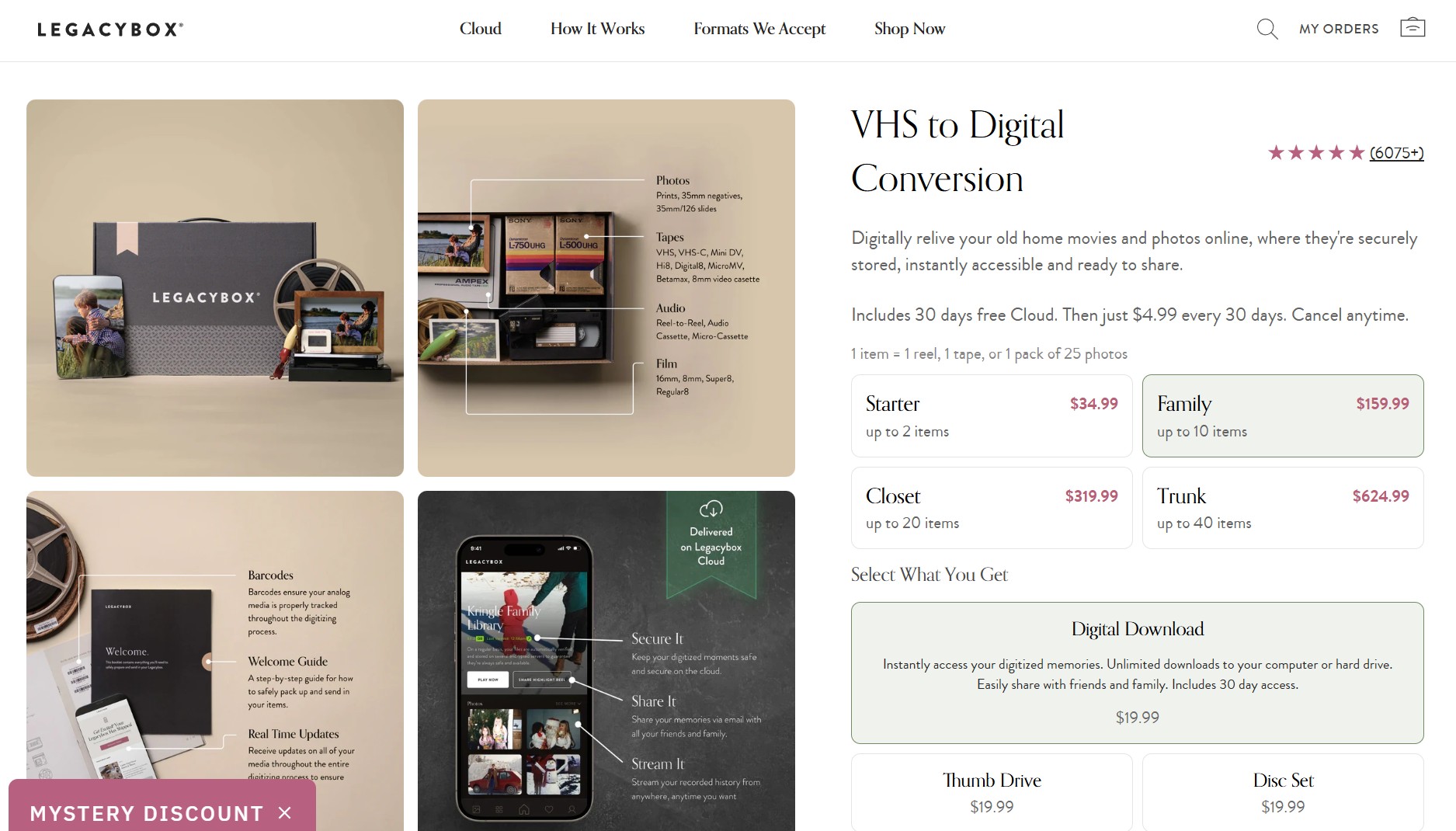
Legacybox sells prepaid kits covering a set number of items (1 item equals 1 tape, 1 film reel, or 25 photos). You pack your media with the included labels and prepaid UPS label, then choose digital download, thumb drive, or DVD delivery. Pricing: 2-item kit around $34.99, 10-item around $159.99, 20-item around $319.99, and 40-item around $624.99. Processing typically takes 4–6 weeks, with expedited options.
YesVideo
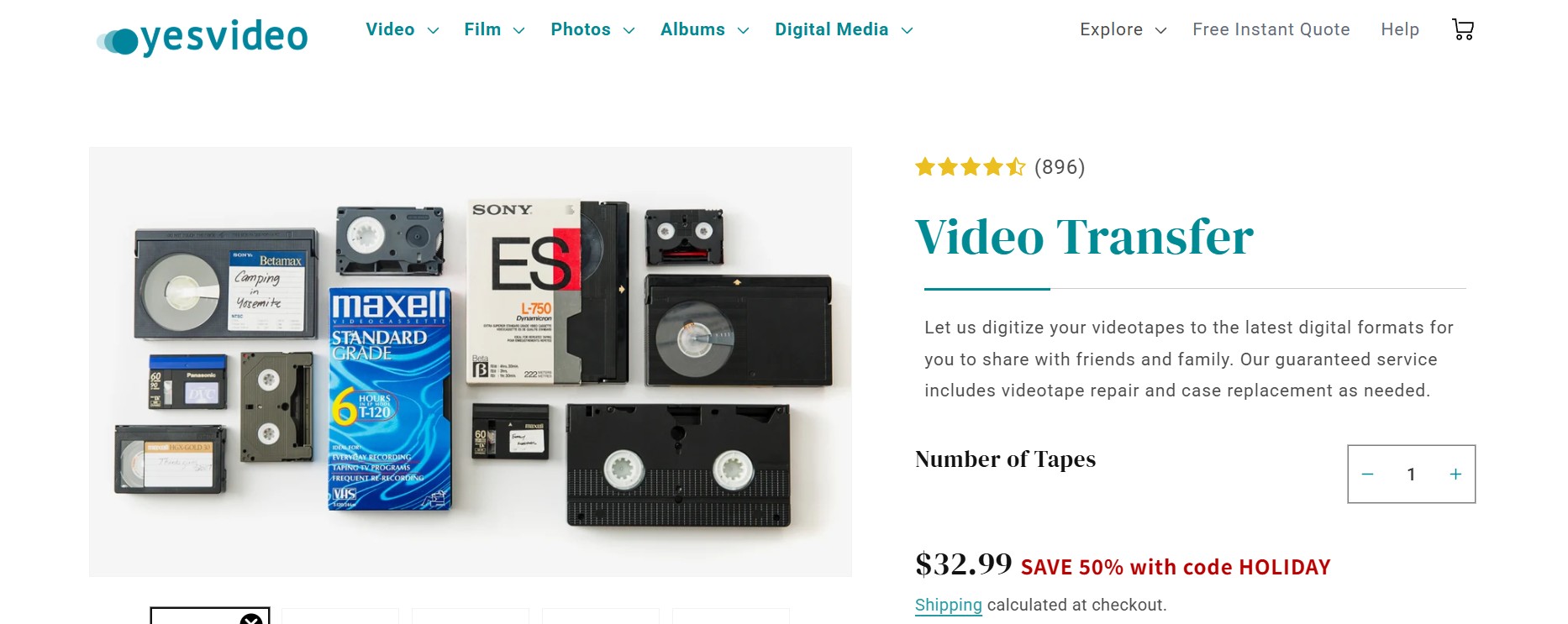
YesVideo transfers videotapes to digital files with MemoryCloud access where you can view and download. You can add USB or DVD delivery. The service includes basic tape repair, mold cleaning, and PAL conversion. Pricing is around $32.99 per videotape for the base transfer.
Tips before mailing tapes
- Label each tape clearly.
- Write down the count of tapes you are sending.
- Use tracked shipping.
- Check whether original tapes are returned.
- Ask about mold or damaged tape conditions before shipping.
- Best option if you have no VCR
- No capture hardware setup at home
- Useful for small batches of important tapes
- Some services handle mixed old media formats
- Costs more per tape than DIY
- You must ship original tapes
- Turnaround can take weeks
- Pricing and delivery options vary by service
How to Store and Back Up Your Digital VHS Files
After converting VHS to digital, do not keep the only copy in one place.
For most users, the best everyday format is MP4 with H.264 video and AAC audio. Keep the aspect ratio at 4:3 and capture at 720x480 for NTSC or 720x576 for PAL. MP4/H.264 plays on phones, TVs, tablets, and computers. If your capture software saves a larger master file, keep it if you have space.
Follow the 3-2-1 backup rule:
- Keep 3 copies of each video.
- Store them on 2 different storage types, such as a computer and an external hard drive.
- Keep 1 copy off-site, such as cloud storage or a drive at a separate location.
Cloud options include Google Drive, iCloud, OneDrive, Dropbox, or Backblaze. Use clear file names such as: 1994-07_Family_Birthday_Tape01.mp4
Check your backups once a year and replace failing drives before they stop working.
You can also convert VHS tape to DVD for additional long-term preservation. The average lifespan of a manufactured DVD is often quoted at 25 to 100 years depending on your storage conditions.
FAQs
What is the best way to convert VHS to digital?
If you have a working VCR, a USB capture card such as Elgato Video Capture or VIDBOX is usually the best home method. If you do not have a VCR, a professional VHS-to-digital service is usually the better choice.
How do I convert VHS to digital without a VCR?
To convert VHS to digital without a VCR, use a professional transfer service or borrow a tested VCR. Capture cards and standalone converters still need a VCR because they only record the video signal; they do not play VHS tapes.
How long does it take to convert VHS to digital?
Home VHS capture is real-time. A 2-hour tape takes about 2 hours to capture. Add time for setup, a short test, file saving, and backup. Professional services usually take several weeks.
Can I improve VHS quality when converting it to digital?
You can improve playback by using a clean VCR, trying S-Video, cleaning tape heads, and using deinterlacing. But VHS has about 240 lines of picture detail in a 480i signal, so it cannot become true HD.
What format should I use for digital VHS files?
MP4 with H.264 video and AAC audio is the best format for most users. Keep a high-bitrate version if you want an archive copy, and back up files using the 3-2-1 rule.
Final Thoughts
How to convert VHS to digital comes down to one main question: do you have a working VCR? If you do, a capture card is usually the best DIY method, while a standalone converter is simpler. If you want to record to DVD first, use Method 3 and then rip with DVDFab DVD Ripper. If you do not have a VCR, a professional service is the easiest path. No matter which method you choose, capture takes real time, VHS quality is limited, and backups matter as much as the conversion itself.

 4 Free DVD Rippers for Windows 10/11: Best Tools & Step-by-Step GuideBy Diana Smith - Oct 13, 2026
![How to Convert DVD to AVI Free: 3 Current Options [2026]](https://images.dvdfab.cn/artifact/2026/09/17/2HqH4KgGwIXxwkHdUUZtp0D98DCpL4gS/feature_cover.jpg) How to Convert DVD to AVI Free: 3 Current Options [2026]By Diana Smith - Oct 12, 2026
How to Convert DVD to AVI Free: 3 Current Options [2026]By Diana Smith - Oct 12, 2026 How to Copy DVD to Computer on Windows & Mac: Rip and Direct CopyBy Wenny Yan - Oct 12, 2026
 Free DVD Decoder for Windows XP and Windows 11: 3 Ways to Play DVDsBy Diana Smith - Sep 23, 2026